
Main Courses
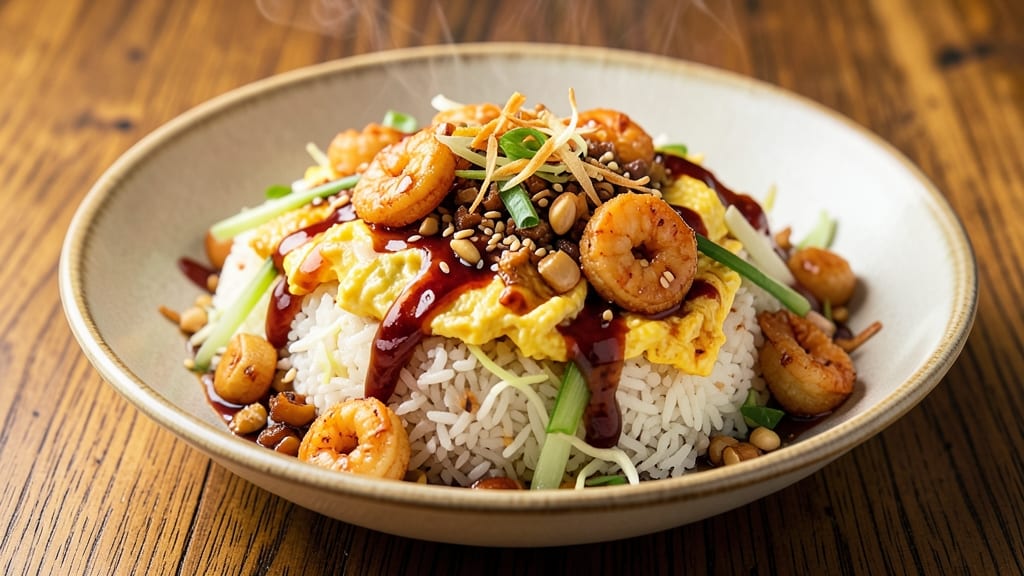
This Burmese fried rice recipe delivers restaurant-quality flavor with its bold spices, perfectly cooked eggs, and aromatic wok-tossed rice. The secret lies in the balance of traditional Burmese seasonings—fish sauce, garlic, and shallots—simmered into a fragrant base before the rice joins the dance.
I've perfected this technique over years of testing, ensuring every bite delivers that signature umami-rich, slightly sweet complexity.
The result is a dish where tender rice absorbs the savory-sweet sauce while crispy edges and fluffy eggs add texture contrast. This recipe stays true to Burmese roots while adapting for home cooks—no specialty ingredients required.
Serve with a side of alaing soup for the full experience, or enjoy it as a standalone meal that brings Myanmar's vibrant flavors to your table.
Ingredients for burmese fried rice
Fourteen ingredients transform into restaurant-quality Burmese fried rice with umami depth and perfect texture contrast.
| Ingredient | Amount | Notes |
|---|---|---|
| Day-Old Jasmine Rice 🍚 | 4 cups | Cold and slightly dried |
| Large Eggs 🥚 | 4 whole | Room temperature for even cooking |
| Fish Sauce 🍶 | 2 tbsp | Red Boat brand preferred |
| Garlic Cloves 🧄 | 6 cloves | Minced finely for aromatic base |
| Shallots 🧅 | 4 whole | Thinly sliced for delicate flavor |
| Green Onions 🌱 | ½ cup | White and green parts separated |
| Vegetable Oil 🫒 | ½ cup | High smoke point preferred |
| Sugar 🍚 | 1 tbsp | White granulated sugar |
| Ground White Pepper 🌶️ | ½ tsp | Freshly ground preferred |
| Salt 🧂 | ½ tsp | Diamond Crystal kosher salt |
| Dried Shrimp 🦐 | ¼ cup | Toasted for umami depth |
| Red Curry Paste 🌶️ | 1 tbsp | Maesri brand recommended |
| Lime Juice 🍋 | 1 tbsp | Freshly squeezed |
| Fresh Cilantro 🌿 | ¼ cup | Chopped for garnish |
The rice is non-negotiable—day-old jasmine rice with slightly dried edges is essential for that signature wok-tossed texture. Day-old means you'll need to cook 6 cups fresh rice the day before. For fish sauce, Red Boat delivers the most authentic flavor, but any reputable brand works. The dried shrimp should be toasted in a dry pan until fragrant—this step unlocks the umami complexity. Shallots and garlic need to be minced finely for even distribution of flavor. If you can't find dried shrimp, shrimp paste is a suitable substitute, but reduce the amount by half due to its stronger flavor.
No fish sauce? Soy sauce at half the amount gets you close, though it lacks the signature Burmese depth. Fresh garlic and shallots are ideal, but powdered garlic and onion at one-third the amount will work in a pinch. For the eggs, room temperature is crucial—they should be beaten slightly but remain slightly lumpy for that signature fluffy texture. The green onions should be separated into white and green parts; the whites go into the rice while the greens are reserved for garnish. If you can't find red curry paste, a blend of chili powder and turmeric can mimic the color and some of the depth, though it won't be identical.
Rice keeps well in an airtight container for up to 3 days in the refrigerator, making it ideal for meal prep. Dried shrimp and fish sauce should be stored in a cool, dark place and will last for 6-12 months unopened. The red curry paste can be refrigerated for 3 months or frozen for up to 6 months to preserve its potency. For best results, prepare the sauce base (fish sauce, garlic, shallots, sugar, and curry paste) a day ahead—this allows the flavors to meld and deepen, creating that authentic restaurant-quality taste.
Why You'll Love This Recipe
- One-Pan Magic: I swear by this—just toss the cold rice, eggs, and chopped shallots in one hot pan. No fancy steps, no extra dishes, and that sizzle? Pure satisfaction when the garlic starts to brown.
- Umami Bomb: Fish sauce isn’t just salt—it’s the secret weapon. A splash here, a splash there, and suddenly your rice has this deep, savory punch that makes every bite feel like a little flavor explosion. (Yes, even if you’re not a fan of fishy notes.)
- Leftover Hero: Between us, I make this way too much on purpose. The rice reheats like a dream, and the eggs stay creamy. Pack it for lunch, freeze portions, or just eat it cold—it’s always good.
- Budget Meal, Big Payoff: Day-old rice? Pantry staples? This feeds four for under $5. No fancy ingredients, no waste—just a dish that tastes like you slaved over it, even when you didn’t. (My wallet thanks me every time.)
Step-by-step instructions for wok-tossed Burmese fried rice
Master this authentic technique for perfectly balanced texture and flavor in every bite.
Toast the Dried Shrimp and Prepare Aromatics
Heat a dry skillet over medium-high heat and add the 0.25 cup dried shrimp. Toast for 2-3 minutes until fragrant and slightly puffed, shaking the pan frequently to prevent burning. Remove from heat and set aside.
In a large wok or skillet, heat 0.25 cup vegetable oil over medium heat. Add the 6 cloves minced garlic cloves and 4 whole thinly sliced shallots. Sauté for 2-3 minutes until the shallots turn translucent and the garlic releases its aroma. This aromatic base forms the flavor foundation of the dish.
Cook the Eggs to Perfect Doneness
Push the aromatics to one side of the wok, creating space in the center. Crack the 4 whole large eggs into the empty space. Let them sit undisturbed for 10-15 seconds until the edges begin to set, then gently scramble with a spatula, folding the eggs as you work. Cook for 30-45 seconds until just set but still slightly moist—you want soft curds, not dry scrambled eggs.
Remove the eggs from the wok and set aside. Add the toasted dried shrimp back to the wok and stir for 30 seconds to redistribute the flavors. This step ensures the shrimp's umami permeates every component of the dish.
Stir-Fry the Rice with Spices and Sauce
Increase heat to high and add the 4 cups day-old jasmine rice. Stir-fry vigorously for 2-3 minutes, breaking up any clumps and using the heat to separate the grains. Add the 1 tbsp red curry paste and 1 tbsp sugar, stirring continuously for 1 minute until the paste dissolves and the rice absorbs the flavors.
Pour in the 2 tbsp fish sauce and 1 tbsp lime juice. Toss everything together for 1-2 minutes until the rice is evenly coated and the sauce is absorbed. The rice should be hot and slightly sticky but not wet. Season with the 0.5 tsp salt and 0.5 tsp ground white pepper, adjusting to taste.
Combine All Ingredients and Finish
Return the scrambled eggs and shrimp to the wok. Add the 0.5 cup white and green parts of green onions, separated, and toss everything together for 1-2 minutes until the green onions wilt slightly and the rice reaches 165°F internally. The dish should be hot and vibrant, with each grain of rice distinct and flavorful.
Remove from heat and stir in the 0.25 cup chopped fresh cilantro. Let the fried rice rest for 1 minute to allow the flavors to meld. Serve immediately, garnished with additional cilantro if desired. The rice should be aromatic, with a balance of spicy, umami, and slightly sweet notes.
Pro Tips For Making Burmese Fried Rice
- Prep Shallots Like This: Slice them paper-thin—no thicker than 1mm—and soak in cold water for 10 minutes first. I learned this the hard way after my fried rice turned into a mushy shallot soup; draining and patting dry afterward keeps them crisp and aromatic.
- Scramble Eggs Separately: Fry the eggs in a clean, dry pan first until just set, then remove. The extra grease from the rice later will crisp them up—no rubbery eggs here. (Yes, it’s an extra step, but the texture makes a real difference.)
- Don’t Skip the Cold Rice: Spread day-old rice on a tray and refrigerate for 30 minutes before frying. Cold rice releases moisture slower, so it toasts instead of steaming. I used to skip this and always ended up with soggy bits.
- Use Garlic Cloves Whole: Smash them with the side of your knife instead of mincing—this prevents burning and keeps the flavor concentrated. Burnt garlic ruins the whole dish, and no one wants that bitter punch in their fried rice.
Troubleshooting this recipe
Rice Too Dry
If your fried rice comes out dry and crumbly, it’s likely because the rice was overcooked or didn’t absorb enough moisture. Start by ensuring your rice is day-old—fresh rice releases too much starch and turns mushy.
When stir-frying, add 1-2 tablespoons of water or chicken broth while tossing to restore moisture. I also recommend using a wok with high heat to crisp the edges while keeping the interior tender. 💫
Sauce Too Salty
Fish sauce is potent, so taste as you go! If your dish ends up too salty, balance it by adding 1-2 tablespoons of lime juice or a pinch of sugar to cut the saltiness.
For extra depth, stir in 1 teaspoon of honey or 1 tablespoon of coconut milk to mellow the flavors. Always taste the sauce base before adding rice—this is where most mistakes happen. 🍋
Eggs Overcooked
Overcooked eggs turn rubbery and dry, ruining the dish’s creamy texture. To fix this, reduce the heat to medium when scrambling and stop cooking as soon as the eggs are just set—soft curds, not dry.
If your eggs are already overdone, mix in 1 tablespoon of coconut milk or a splash of warm water to restore moisture. For next time, cook eggs separately over low heat and add them back at the very end. 🥚
Lacking Umami Depth
If your fried rice tastes flat, the umami base isn’t strong enough. Boost flavor by toasting the dried shrimp longer (up to 5 minutes) for deeper caramelization. Add ½ teaspoon of MSG (optional but effective) or 1 teaspoon of soy sauce for extra richness.
For a smoky touch, stir in ½ teaspoon of smoked paprika or a pinch of ground coriander. 🌶️
Rice Sticking Together
Clumpy rice happens when there’s too much moisture or uneven cooking. Break up clumps with a wooden rice paddle while stir-frying, and ensure your wok is hot enough to crisp the grains.
If the rice is already stuck, add 1 tablespoon of oil and toss vigorously to separate. For next time, spread the rice on a tray to cool after cooking—this prevents clumping. ✨
Overpowering Spices
If the red curry paste or lime juice dominates, balance the heat with sweetness or acidity. Stir in 1 teaspoon of sugar or 1 tablespoon of honey to mellow the flavors.
For extra brightness, add 1 tablespoon of fish sauce (even if it seems redundant) to round out the taste. If the dish is still too sharp, a pinch of ground white pepper adds warmth without overpowering. 💡
Nutrition facts
Frequently asked questions
Why does Burmese fried rice need day-old rice?
Day-old rice has dried out slightly, which prevents it from turning mushy when stir-fried. Fresh rice releases too much starch, making the final dish sticky and clumpy. Spread cooked rice on a tray to cool and dry for 30-60 minutes before using—this is the secret to that perfect wok-tossed texture!
Can I make this without dried shrimp?
Yes! Use ½ teaspoon of shrimp paste (like kapi) or 1 teaspoon of soy sauce for umami depth. Toast 1-2 tablespoons of shrimp or chicken stock powder in the wok instead of dried shrimp to mimic the caramelized flavor. The dish will still taste delicious, just with a slightly different profile.
What's the best way to adjust spice levels?
Start with ½ teaspoon of red curry paste if you prefer milder heat, or add ¼ teaspoon of chili flakes for extra kick. Balance spice with 1 teaspoon of sugar or 1 tablespoon of coconut milk to round out flavors. Always taste the sauce base before adding rice—this lets you adjust before committing!
How do I serve this dish authentically?
Pair with Burmese tea (laung kyaw) or a light alaing soup for the full experience. Garnish with extra cilantro and lime wedges. For a complete meal, serve with pickled tea leaves (htamin gyaw) or a simple cucumber salad. The contrast of warm rice and cool garnishes makes each bite amazing!
Can I make this vegetarian?
Swap dried shrimp for toasted mushrooms or tempeh, and use soy sauce instead of fish sauce. Add 1 teaspoon of miso paste for umami depth. The technique remains the same—just focus on building flavor through aromatics and seasonings. Vegetarian versions still pack incredible depth!