
Main Courses
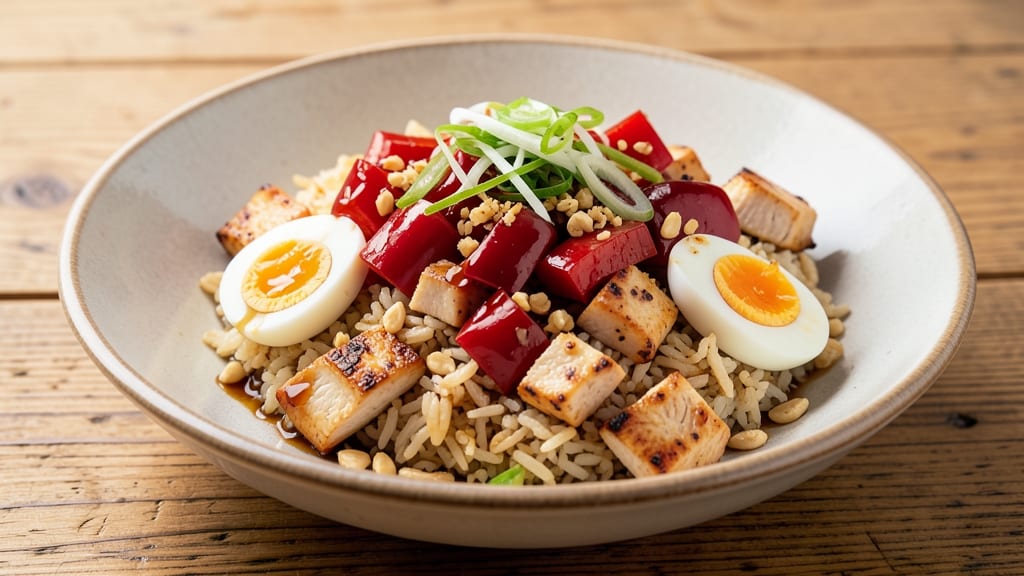
This capsicum fried rice recipe delivers restaurant-quality wok hei—smoky, crispy edges and perfectly cooked eggs that cling to every grain. The secret lies in high-heat stir-frying, where red bell peppers add sweetness while garlic and ginger build aromatic depth.
I’ve refined this dish over years, balancing texture and flavor so each bite is both satisfying and balanced.
What sets this apart is the technique: pre-cooked rice gets reheated with a splash of oil to restore its bite, then tossed with vibrant capsicum, scallions, and a protein of your choice—chicken, shrimp, or tofu.
The eggs add richness, while soy sauce and sesame oil tie everything together. Crispy edges and tender centers make this dish foolproof for weeknights or meal prep.
Ingredients for capsicum fried rice
These fourteen ingredients transform into restaurant-quality capsicum fried rice with wok-hei crispiness.
| Ingredient | Amount | Notes |
|---|---|---|
| Day-Old Cooked White Rice 🍚 | 4 cups | Cold or room temperature preferred |
| Red Bell Peppers (Capsicum) 🍅 | 1 ½ cups | Diced into 1/4-inch pieces |
| Large Eggs 🥚 | 3 whole | Freshly beaten for best texture |
| Boneless Chicken Breast 🍗 | 1 lb | Diced into 1/2-inch cubes |
| Green Onions (Scallions) 🧅 | ½ cup | Thinly sliced, white and green parts |
| Garlic Cloves 🧄 | 4 cloves | Minced finely for aromatic depth |
| Fresh Ginger 🌿 | 1 tbsp | Grated finely, peel removed |
| Light Soy Sauce 🥢 | 3 tbsp | Kikkoman preferred for balance |
| Dark Soy Sauce 🥢 | 1 tbsp | For deeper umami color |
| Sesame Oil 🫒 | 1 tbsp | Toasted for nutty aroma |
| Vegetable Oil 🫒 | 2 tbsp | High smoke point preferred |
| Salt 🧂 | ½ tsp | Diamond Crystal preferred |
| White Pepper 🌶️ | ¼ tsp | Freshly ground for subtle heat |
| Oyster Sauce 🥢 | 1 tbsp | Lee Kum Kee brand recommended |
The red bell peppers are the star here—look for firm, vibrant ones at the grocery store. Trader Joe's and Whole Foods carry the sweetest varieties, but any fresh red bell pepper works. Dice them uniformly for even cooking. The chicken should be cut into consistent 1/2-inch cubes—smaller pieces cook faster but lose texture. For extra wok hei, preheat your wok or large skillet on high heat until it's smoking before adding oil.
No fresh ginger? Ground ginger at half the amount works in a pinch, but fresh is ideal for that bright, zesty kick. Swap chicken for shrimp or tofu—firm tofu holds up best when stir-fried. The eggs are crucial; room-temperature eggs scramble more evenly. For a vegetarian version, omit the chicken and use extra-firm tofu pressed and cubed. The sesame oil should be toasted, not flavored—look for it in the Asian foods aisle. If you can't find dark soy sauce, mix 1 tsp molasses with 1 tbsp light soy sauce for color.
Store prepped proteins and veggies in airtight containers for up to 2 days in the fridge. The cooked rice reheats beautifully—microwave with a splash of water to restore texture. This dish freezes well for up to 3 months, though texture may soften slightly. For meal prep, cook proteins and veggies separately and assemble fresh to maintain crispy edges. Garnish with extra scallions and sesame seeds right before serving for maximum freshness.
Why You'll Love This Recipe
- One-Pan Wonder: I swear by this recipe—just toss everything into one hot wok, and the bell peppers caramelize into sweet, jammy perfection while the chicken stays juicy. No dirty dishes, no stress.
- Sweet & Savory Balance: That roasted capsicum adds a deep, almost smoky sweetness that cuts through the richness of the egg and chicken. Honestly, the first bite makes me think, "Why didn’t I do this sooner?"
- Leftover Hero: Between us, this dish begs to be made in bulk. The flavors only get better the next day—crispier rice, more concentrated umami. I freeze portions for lazy Mondays when I’d rather binge Netflix than cook.
- Budget Meal, Big Payoff: Chicken breast and bell peppers stretch into a filling, restaurant-quality meal for way less than takeout. Plus, using day-old rice means no wasted groceries—just pure, satisfying leftovers.
Step-by-step instructions for wok-hot capsicum fried rice
Here's the professional method to achieve restaurant-quality texture and flavor every time.
Prep All Ingredients for Maximum Flavor Development
Begin by dicing the 1 lb boneless chicken breast into ½-inch cubes using a sharp chef's knife. Work efficiently—you want the chicken to come to room temperature before cooking to ensure even doneness. While the chicken rests, dice the 1.5 cups red bell peppers (capsicum) into ¼-inch pieces—smaller pieces ensure even cooking and better texture contrast. Thinly slice the 0.5 cup green onions (scallions), separating the white and green parts for visual appeal.
Finely mince the 4 cloves garlic and grate the 1 tbsp fresh ginger, removing any fibrous peel. The goal here is aromatic depth—smaller particles release flavor more effectively during the stir-fry. Beat the 3 whole large eggs in a bowl until just combined but still slightly textured. This preparation ensures all ingredients are ready when you need them, preventing any last-minute rushing that could compromise texture.
Cook the Chicken and Eggs Separately for Optimal Texture
Heat 1 tablespoon vegetable oil in a wok or large skillet over medium-high heat until shimmering. Add the diced chicken and cook for 4-5 minutes, stirring occasionally, until the edges turn light golden brown and the internal temperature reaches 160°F. Remove the chicken with a slotted spoon and set aside—it will finish cooking during the final stir-fry stage. The chicken should be fully cooked but still retain moisture.
In the same wok, add the remaining 1 tablespoon vegetable oil and swirl to coat the surface. Pour in the beaten eggs and let them sit undisturbed for 5 seconds before gently stirring with a spatula. The eggs should form soft, slightly runny curds—this texture is essential for that classic "eggy richness" in fried rice. Once the eggs begin to set but are still slightly moist, remove them from the wok and set aside with the chicken.
Stir-Fry Aromatics and Capsicum for Deep Flavor
Return the wok to medium-high heat and add 1 tablespoon vegetable oil. Toss in the minced garlic and grated ginger, stirring constantly for 30 seconds until fragrant—this prevents burning and maximizes their aromatic potential. Add the diced red bell peppers and stir-fry for 3-4 minutes until they soften slightly but retain a crisp texture. The peppers should release their natural sweetness while maintaining their vibrant color.
At this stage, add the 3 tablespoons light soy sauce, 1 tablespoon dark soy sauce, and 1 tablespoon oyster sauce. Stir well to combine and let the sauce reduce slightly for 1 minute, creating a glossy, flavorful base. The dark soy sauce will add that signature deep umami color while balancing the brightness of the capsicum. This is where the foundational flavors meld together—don't rush this step.
Combine All Ingredients for the Final Stir-Fry
Push the cooked aromatics and peppers to one side of the wok and add the 4 cups day-old cooked white rice, breaking up any clumps with your spatula. Stir-fry for 2-3 minutes until the rice is heated through and begins to develop crispy edges along the wok's surface. This is the moment that matters—high heat and constant stirring create those coveted wok-hot edges while keeping the rice tender.
Return the chicken and eggs to the wok, along with the 0.5 tsp salt and 0.25 tsp white pepper. Toss everything together for 1-2 minutes until the rice is evenly coated and the chicken reaches 165°F internally. The rice should be hot, the chicken fully cooked, and the eggs just warmed through. Finish by drizzling 1 tablespoon sesame oil over the top and tossing once more to distribute its nutty aroma.
Garnish and Serve Immediately for Peak Texture
Transfer the fried rice to a serving platter and immediately garnish with the sliced green onions, focusing on the white parts for contrast against the vibrant red peppers. The green onions add a fresh, crisp element that cuts through the richness of the dish. Serve while the rice is still wok-hot—this ensures the perfect balance of textures: crispy edges, tender rice, and silky egg curds.
Each bite should deliver a symphony of flavors: the sweetness of the capsicum, the umami depth from the soy sauces and oyster sauce, the subtle heat of white pepper, and the nutty finish from sesame oil. The crispy edges should give way to tender rice with every bite, while the eggs add that signature richness that makes this dish so satisfying. Don't let it sit too long—fried rice is best enjoyed immediately when all the textures are at their peak.
Pro Tips For Making Capsicum Fried Rice
- CRANK THE HEAT HIGH: Your wok or pan should be screaming hot before the first drop of oil hits—think smoke just starting to rise. I learned this the hard way when my capsicum turned soggy and the chicken came out gray; fried rice needs that initial shock of heat to get the textures right.
- CHOP CAPSICUM SMALLER THAN YOU THINK: Tiny dice, not slices—aim for ¼-inch cubes or smaller. Big chunks hide in the rice, while small pieces cook faster and distribute flavor evenly. (Yes, even if you’re impatient like me, resist the urge to rush this.)
- REST THE CHICKEN AFTER COOKING: Pull the chicken from the pan when it hits 165°F (74°C), then tent it loosely with foil for 5 minutes. This guarantees juicy slices instead of dry, rubbery bits when you cut into it later—trust me, your fried rice will taste better for it.
- SAUTE SCALLIONS LAST—REALLY LAST: Toss them in at the very end, just to wilt, not cook through. Overcooking turns them bitter, and you want that fresh, bright snap in every bite. (Pro move: save the greens for garnish if you’re feeling fancy.)
Creative variations of these flavors
Spicy Thai-Inspired
Add 1 tbsp Thai red curry paste when stir-frying the capsicum and aromatics for a bold kick. I like to balance it with 1 tsp palm sugar and a splash of fish sauce for depth.
Top with crushed peanuts and fresh cilantro for texture contrast. This version transforms the dish into a vibrant, aromatic Thai-style fried rice with layers of heat and sweetness. 🌶️
Vegetarian Mushroom Twist
Swap the chicken for 8 oz shiitake mushrooms sliced into ¼-inch pieces and sautéed until golden. Add ½ cup baby corn and ½ cup water chestnuts for texture variety.
Boost umami with 1 tbsp mushroom powder mixed into the soy sauce. The earthy mushrooms complement the capsicum beautifully while keeping it hearty and satisfying. 🍄
Korean Kimchi Fusion
Stir in ½ cup chopped kimchi along with the capsicum for tangy, spicy depth. Add 1 tsp gochujang to the sauce mixture for extra richness. Finish with 1 tbsp toasted sesame seeds and a drizzle of sesame oil.
The fermented kimchi adds complexity that elevates the dish into a Korean-inspired fusion. Serve with a fried egg on top for extra indulgence. 🍜
Sweet and Smoky BBQ
Mix 2 tbsp BBQ sauce (like Sweet Baby Ray's) with the soy sauces for a smoky-sweet profile. Add ½ cup diced red onions and ¼ cup chopped jalapeños for heat and crunch.
Top with crumbled bacon for smokiness. This version works surprisingly well for a casual brunch or game day spread. 🔥
Seafood Sensation
Replace chicken with 1 lb shrimp sautéed until pink (2-3 minutes per side). Add 1 tbsp chopped chives and a squeeze of lemon juice at the end for brightness.
The shrimp cooks quickly and adds a luxurious touch. Garnish with extra lemon zest for a refreshing finish that cuts through the richness. 🦐
Meal Prep Powerhouse
For easy prep, cook proteins and veggies separately and store in airtight containers for up to 3 days. When ready to serve, reheat rice with a splash of water, then stir-fry with pre-cooked proteins and fresh capsicum.
Add a dash of sesame oil right before serving to restore that wok-hot aroma. Perfect for busy weeknights! ⏰
Nutrition facts
Frequently asked questions
Can I use fresh rice instead of day-old rice?
Fresh rice is too moist and will turn mushy when stir-fried. Always use day-old cooked rice (or refrigerated overnight) for the perfect texture. If you must use fresh rice, spread it on a tray and refrigerate for 30 minutes to dry it out slightly before cooking.
What's the best way to get crispy edges on my fried rice?
High heat and proper technique are key! Use a wok or large skillet on medium-high heat, stir-fry in small batches, and keep the rice moving constantly. The edges will naturally crisp up when exposed to direct heat. A well-seasoned wok also helps create that signature wok hei flavor.
How do I adjust the spice level in this recipe?
For mild heat, reduce or omit the white pepper and add a pinch of sugar to balance. For spicy, add ½ tsp chili flakes or 1 tsp sriracha to the sauce mixture. For Thai-style heat, use Thai red curry paste as shown in the variations. Always taste as you go!
Can I make this recipe without eggs?
Yes! Omit the eggs and add ½ cup extra capsicum or ½ cup chopped water chestnuts for texture. For richness, stir in 1 tbsp peanut butter or 1 tbsp nutritional yeast at the end. The dish will still be flavorful but slightly less creamy.
Why does my capsicum turn mushy?
Overcrowding or low heat causes mushy capsicum. Cook in batches if needed, and always use medium-high heat. Also, cut the peppers into even ¼-inch pieces so they cook uniformly. Remove them from the wok when they're just tender-crisp, not fully soft.