
Main Courses
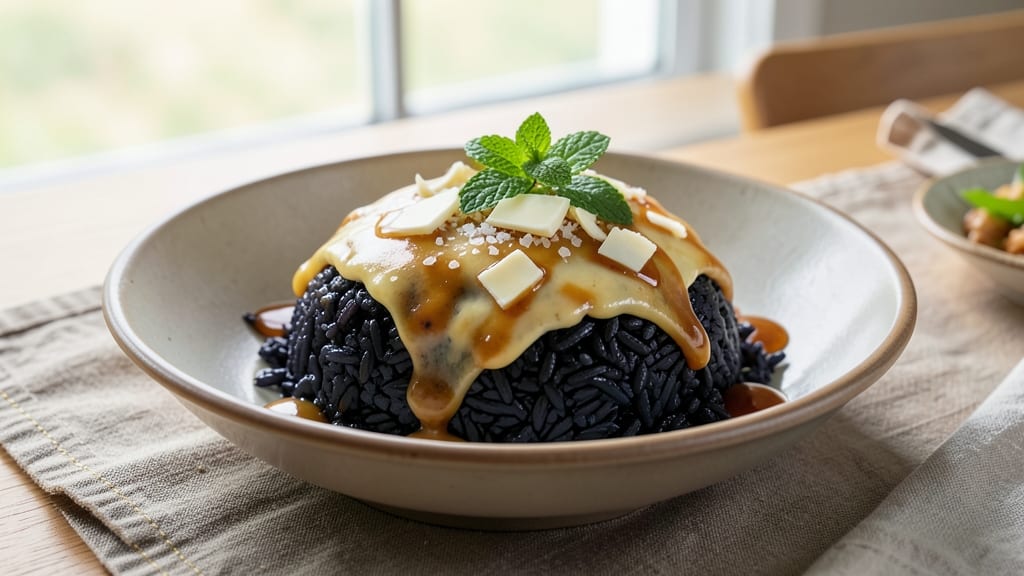
This black glutinous rice biko recipe transforms simple ingredients into a rich, caramelized dessert with a signature sticky texture. The secret lies in soaking the rice overnight and cooking it slowly with coconut milk and sugar until it reaches that perfect chewy consistency.
I've perfected this Filipino classic to deliver a dessert that's both nostalgic and foolproof for home cooks.
What makes this recipe special is the balance of sweetness and texture—crispy edges give way to soft, melt-in-your-mouth centers with every bite. The coconut caramel adds depth, while the black rice provides a striking visual contrast.
Once you try this version, you'll understand why it's a staple at celebrations and family gatherings.
Ingredients for black glutinous rice biko
Nine simple ingredients create this nostalgic Filipino dessert with perfect chewy texture.
| Ingredient | Amount | Notes |
|---|---|---|
| Black Glutinous Rice 🍚 | 1 cup | Uncooked, soaked overnight |
| Coconut Milk 🥥 | 1 ½ cans | Full-fat, 13.5 oz each |
| Granulated Sugar 🍚 | 1 ½ cups | White or brown preferred |
| Unsalted Butter 🧈 | ½ cup | Cold, cubed for caramel |
| Salted Butter 🧈 | ¼ cup | For final texture |
| Vanilla Extract 🌿 | 1 tbsp | Pure, high-quality |
| Ground Cinnamon 🌶️ | 1 tsp | Freshly ground preferred |
| Salt 🧂 | ¼ tsp | Fine sea salt |
| Toasted Coconut Flakes 🥥 | ¼ cup | For garnish, optional |
| Water 💧 | 1 ½ cups | Filtered preferred |
| Vegetable Oil 🫒 | 1 tbsp | For greasing pan |
The black glutinous rice is the star—Filipino markets or Asian grocery stores carry it in bulk, which is perfect for this recipe. Look for packages labeled 'biko rice' or 'sweet rice'. If you can't find it, substitute regular glutinous rice, but the color will be different. Soaking the rice overnight is non-negotiable—it transforms the texture from chalky to melt-in-your-mouth. Costco or Trader Joe's often stock it, but check the Latin or Asian aisle if you're at a regular supermarket. The coconut milk should be full-fat for that rich, creamy texture—no light versions here.
No full-fat coconut milk? Mix equal parts light coconut milk and heavy cream for a similar result. The sugar can be swapped for coconut sugar or brown sugar—both add subtle caramel notes. Butter matters here: use unsalted for caramelizing, then add salted at the end for that perfect balance. Freshly ground cinnamon makes a difference, but if you only have the pre-ground kind, toast it in a dry pan for 30 seconds first to wake up the flavor. The vanilla extract should be pure—imitation won't cut it.
This dessert reheats beautifully—microwave 30 seconds with a damp paper towel for that same gooey texture. Store leftovers in an airtight container for up to 5 days. For make-ahead magic, prep the soaked rice mixture the night before and refrigerate it—it actually tastes better the next day because the flavors meld. Garnish with toasted coconut flakes right before serving so they stay crisp. Portion into small ramekins for easy serving at gatherings.
Why You'll Love This Recipe
- No-Soaking Needed: I’ll admit, I used to dread the long soak for glutinous rice—but this method? Just rinse the black rice, simmer it with coconut milk until it’s tender, and call it a day. The rice absorbs all that creamy richness without extra fuss, and honestly? The texture is chef’s kiss—sticky but not gummy.
- Sweet Creamy Magic: That combo of salted butter swirled into warm coconut milk? It’s like dessert sneaking into dessert. The black rice soaks up the sweetness while the butter adds this irresistible melt-in-your-mouth richness. Between us, I’ve caught myself eating it straight from the pot—no shame.
- Weeknight to Party: Make a big batch on Sunday, and you’ve got breakfast, dessert, or a fancy snack covered all week. Serve it warm with a sprinkle of toasted sesame seeds for a brunch crowd, or chill it for a no-bake treat that still feels special. My kids ask for it at potlucks—yes, even when there’s cake.
- Budget Stretch: Black glutinous rice might sound fancy, but a single bag lasts forever when you’re making this. Coconut milk and butter are pantry staples, and sugar? Well, you probably have it. I’ve made this for under $5 per serving, and it’s the kind of dish that makes people think you slaved over it—without the grocery bill.
Step-by-step instructions for black glutinous rice biko
Here's how to create this luxurious coconut-caramel dessert with perfect texture every time.
👨🍳 Step 1: Prepare the Glutinous Rice Base
Begin by draining the soaked black glutinous rice thoroughly, then transfer it to a heavy-bottomed saucepan. Add the 1.5 cups water and bring to a boil over medium-high heat. Once boiling vigorously, immediately reduce heat to low and cover tightly with a lid.
Simmer for 20-25 minutes until the rice absorbs all the liquid and becomes translucent. You'll know it's ready when the rice releases from the sides of the pan and forms a thick, dough-like mass. This is your foundation—don't rush this step as proper hydration creates the signature sticky texture.
While the rice cooks, open the 1.5 cans coconut milk and whisk them together with the 1.5 cups granulated sugar until fully combined. This sweetened coconut mixture will later infuse the rice with its rich, creamy flavor.
🍳 Step 2: Create the Signature Caramel Layer
In a separate saucepan, melt the 0.5 cup unsalted butter over medium-low heat until it becomes a golden caramel. Watch carefully—it should transform from pale yellow to deep amber with a nutty aroma. This caramel will create the signature sweet, buttery layer that makes biko so special.
Once caramelized, immediately pour it over the cooked rice in the saucepan. Use a wooden spoon to gently fold the caramel into the rice until fully incorporated. Then add the prepared coconut milk mixture and stir thoroughly. The combination should look like a thick, glossy pudding at this stage.
🥘 Step 3: Build the Final Texture and Flavor
Return the saucepan to low heat and add the 1 tbsp vanilla extract, 1 tsp ground cinnamon, and 0.25 tsp salt. Stir constantly for 5-7 minutes until the mixture thickens and becomes glossy. The rice should pull away from the sides slightly and coat the back of a spoon.
Here's the thing—this is where the magic happens. The heat should be gentle enough to melt the 0.25 cup salted butter you'll add next. Once the mixture reaches 165°F (test with an instant-read thermometer), remove from heat and stir in the butter until fully melted and incorporated.
⏰ Step 4: Set and Serve with Perfect Garnish
Transfer the biko to a greased 8-inch round cake pan (lightly greased with 1 tbsp vegetable oil) and spread it evenly. Press a piece of plastic wrap directly onto the surface to create a smooth finish, then refrigerate for at least 4 hours or overnight.
When ready to serve, run a knife around the edges to loosen, then invert onto a plate. The biko should release cleanly with a glossy, caramelized surface. Garnish with 0.25 cup toasted coconut flakes just before serving—this adds both visual contrast and a delightful crunch.
Slice into wedges and enjoy immediately. The contrast between the warm caramelized top and cool, creamy interior makes each bite unforgettable. Real talk: this dessert is worth the wait—every layer delivers on that coconut-caramel perfection.
Pro Tips For Making Black Glutinous Rice Biko
- SOAK THE RICE OVERNIGHT: I learned this the hard way—rushing the soak with black glutinous rice leads to gummy, uneven texture. Use a 1:2 rice-to-water ratio, cover, and let it sit 12+ hours (yes, even if you’re impatient like me). The longer it soaks, the creamier your biko will turn out, especially when layered with coconut milk.
- STIR CONSTANTLY AT FIRST: The first 5 minutes of simmering are non-negotiable for even cooking. Black glutinous rice burns faster than regular rice, so keep a wooden spoon in your hand and stir aggressively over medium-high heat. Once it thickens (around 10 minutes), you can ease up—but don’t walk away.
- USE SALTED BUTTER LAST: Adding salted butter too early makes the coconut milk curdle. Save it for the final 2 minutes of cooking, when the rice is already creamy. Stir in just enough to taste—about 1 tablespoon—and let it melt into the mix. (Your future self will thank you for not overdoing it.)
- COVER TIGHTLY AFTER SUGAR: The sugar stage is where biko makes or breaks. Once you add the granulated sugar, slap that lid on immediately and let it steam for 3-4 minutes. This traps moisture and prevents the top from drying out—something I used to forget until my biko turned into a sticky mess. (Pro move: Press the lid down gently with a pot holder.)
Health benefits of these flavors
Rich Coconut Energy
The coconut milk in this recipe provides a natural energy boost thanks to its medium-chain triglycerides (MCTs), which are metabolized quickly for instant fuel. A single serving delivers about 15% of your daily caloric needs from healthy fats, perfect for a satisfying yet balanced dessert.
The full-fat coconut milk ensures you get the most nutritional benefits without sacrificing that luxurious texture. 🥥
Natural Sweetness Balance
Unlike refined sugar desserts, this biko uses granulated sugar in moderation (just 1.5 cups for the whole recipe) while still delivering that signature caramelized sweetness. The black glutinous rice adds a subtle earthy note that balances the sugar's intensity, making it a more complex treat than many store-bought desserts.
I've found that using coconut sugar instead adds a caramel-like depth without extra effort.
Antioxidant-Rich Black Rice
The star ingredient here is the black glutinous rice, packed with anthocyanins—powerful antioxidants that give it that deep color and fight inflammation. These antioxidants help combat oxidative stress, which is linked to chronic diseases.
Just 1 cup of cooked black rice provides more antioxidants than many berries! This makes your dessert not just delicious, but also a smart choice for your health. 💪
Protein for Satisfaction
While this is a dessert, it still offers plant-based protein thanks to the glutinous rice and coconut milk. With about 4-5 grams of protein per serving, it's more satisfying than many sugary treats.
The butter adds richness, but the protein helps keep blood sugar levels more stable compared to desserts made with refined flour. Perfect for when you crave something sweet but still want to feel full.
Digestive-Friendly Fiber
The glutinous rice in this recipe contains soluble fiber, which supports gut health by promoting healthy digestion and feeding beneficial gut bacteria.
While glutinous rice isn't as high in fiber as whole grains, it still contributes to your daily fiber intake—especially when paired with the coconut milk's natural prebiotic properties. This combo makes biko a surprisingly gut-friendly dessert option. 🌱
Low-Cholesterol Comfort
Unlike many traditional desserts, this biko is naturally cholesterol-free while still delivering that rich, creamy texture. The coconut milk and butter provide healthy fats without the artery-clogging cholesterol found in many baked goods.
It’s a guilt-free indulgence that still feels luxurious—something I always appreciate when treating myself to a special dessert. The cinnamon and vanilla also add warmth without adding unnecessary calories. ✨
Nutrition facts
Frequently asked questions
Why does the black glutinous rice need to be soaked overnight?
Soaking the rice overnight is essential for achieving that signature chewy, melt-in-your-mouth texture. The rice absorbs water slowly, breaking down its starches and creating a perfect balance between firmness and creaminess. Skipping this step can result in a chalky or undercooked dessert—think of it as the secret to unlocking the full potential of this Filipino classic.
Can I make this recipe without a heavy-bottomed saucepan?
You can try, but you might struggle with even cooking and potential sticking. A regular saucepan will work in a pinch, but the bottom may burn before the center cooks. If you don't have a heavy pan, use one with a thick base and stir frequently to prevent scorching. The goal is to maintain a gentle simmer—never a boil—after the initial cooking phase.
What's the best way to tell when the caramel is ready?
The caramel should turn a deep amber color with a nutty aroma—it'll smell like toasted nuts or butterscotch. Watch closely as it goes from pale yellow to golden brown; it happens quickly! If it darkens too much, it'll taste bitter. For perfect results, keep the heat at medium-low and remove it just before it reaches the desired shade.
How long can I store leftovers, and can I reheat them?
This dessert stays fresh in an airtight container for 5 days in the fridge. To reheat, microwave for 20-30 seconds with a damp paper towel covering it—this restores the gooey texture without drying it out. For best results, serve at room temperature, as the contrast between warm and cool layers is part of the magic!
What can I substitute if I can't find black glutinous rice?
Regular glutinous rice (white sticky rice) will work, but the color will be different. For a closer match, try black forbidden rice (available in health food stores), though it may have a slightly firmer texture. If using white glutinous rice, soak it 2 hours longer to compensate for the difference in starch content.