
Main Courses
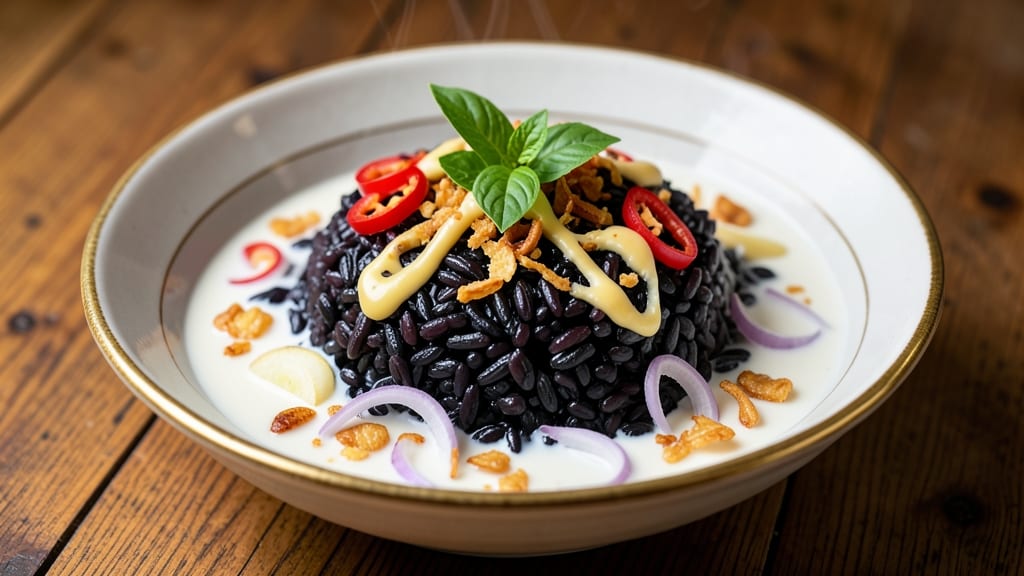
This black rice and coconut milk recipe transforms humble ingredients into a fragrant, nutty bowl that balances earthy depth with creamy sweetness. The deep purple-black grains soak up coconut milk’s richness while absorbing aromatic spices, creating a dish that’s as visually striking as it is flavorful.
What makes this recipe special is how effortlessly it adapts—equally at home as a satisfying breakfast, a light lunch, or even a dessert when sweetened.
With just 30 minutes of active prep and 45 minutes of simmering, you’ll achieve perfectly tender black rice infused with coconut’s velvety texture and warm spices.
The result is a bowl that’s both comforting and elegant, where each bite delivers layers of nutty black rice, fragrant coconut milk, and subtle spice notes that linger. This is the kind of dish that elevates simple ingredients into something restaurant-worthy without requiring advanced techniques.
Ingredients for black rice and coconut milk
Simple yet transformative ingredients create this fragrant black rice bowl with nutty depth and velvety coconut richness.
| Ingredient | Amount | Notes |
|---|---|---|
| Black Rice (Forbidden Rice) 🌾 | 1 cup | Uncooked, rinsed thoroughly |
| Full-Fat Coconut Milk 🥥 | 13 ½ oz | Canned, unsweetened preferred |
| Fresh Coconut Water 💧 | ½ cup | For added hydration |
| Fresh Ginger Root 🧄 | 1 ½ oz | Peeled, finely grated |
| Garlic Cloves 🧄 | 4 cloves | Peeled, minced finely |
| Yellow Onion 🧅 | 1 whole | Medium size, diced small |
| Cinnamon Sticks 🌿 | 2 whole | Or 1 tsp ground cinnamon |
| Cardamom Pods 🌿 | 5 whole | Lightly crushed |
| Star Anise Pods 🌿 | 2 whole | Lightly crushed |
| Bay Leaves 🌿 | 2 whole | Dried, standard size |
| Sea Salt 🧂 | 1 ½ tsp | Diamond Crystal preferred |
| White Miso Paste 🥫 | 1 tbsp | For umami depth |
| Coconut Sugar 🍯 | 2 tbsp | Or maple syrup substitute |
| Fresh Lime Juice 🍋 | 2 tbsp | Freshly squeezed |
| Toasted Coconut Flakes 🥥 | ¼ cup | For garnish, optional |
The black rice is the foundation here—look for forbidden rice at specialty stores or Asian markets, as it's rarely stocked in conventional grocery chains. Trader Joe's carries it in their frozen section, but the fresh version yields better texture. For the coconut milk, full-fat canned versions like Aroy-D or Thai Kitchen deliver the richest flavor, while the water adds a subtle sweetness that balances the spices. Fresh ginger and garlic should be vibrant and firm—no wrinkled roots or discolored cloves. The miso paste is non-negotiable for that umami depth that elevates the dish from ordinary to extraordinary.
No fresh ginger? Powdered ginger at half the amount works in a pinch, though it lacks the same complexity. Running short on star anise or cardamom? A pinch of ground cloves can stand in, but the aroma will differ slightly. The coconut sugar can be swapped for maple syrup or agave, though coconut sugar's caramel notes complement the dish beautifully. For those avoiding coconut entirely, cashew cream (blended soaked cashews with water) makes an excellent substitute—just reduce the liquid slightly to maintain texture. The bay leaves and cinnamon sticks can be omitted if you prefer a milder profile, but they're worth the minimal effort for that authentic spice infusion that defines this recipe.
Store the cooked black rice in an airtight container with a thin layer of coconut milk on top to prevent drying—keeps fresh for 4-5 days in the fridge. For longer storage, freeze portions in single-serving containers for up to 3 months. The toasted coconut flakes should be stored in a cool, dark place and used within 6 months of opening. This dish reheats beautifully—simply add a splash of water or coconut milk when warming to restore moisture. The flavors actually deepen overnight, making it perfect for meal prep.
Why You'll Love This Recipe
- One-Pot Magic: The rice, coconut milk, and ginger all simmer together—no separate pots, no constant stirring. Just toss everything in, set a timer, and walk away while it develops that deep, nutty aroma.
- Creamy Yet Bright: Full-fat coconut milk makes it rich, but the coconut water keeps it light and refreshing. That ginger-garlic punch? It’s the kind of balance that makes you want to eat it straight from the pot.
- Weeknight to Party: Same recipe works for a lazy Tuesday night or a dinner guest. Serve it with grilled fish or a simple salad, and suddenly you’ve got an impressive dish without the fuss.
- Budget-Friendly Luxury: Black rice might sound fancy, but it’s cheaper than you think—and the coconut milk stretches far. Leftovers reheat beautifully, so you’re feeding your family well without breaking the bank.
Step-by-step instructions for fragrant spice-infused black rice bowl
Transform simple ingredients into a rich, aromatic dish with layered flavors and nutty depth.
Prepare the Spiced Coconut Base
In a medium saucepan, combine the 13.5 oz full-fat coconut milk, 0.5 cup fresh coconut water, 2 whole cinnamon sticks, 5 whole cardamom pods, 2 whole star anise pods, and 2 whole bay leaves. Bring to a gentle simmer over medium heat until the liquid reaches 180°F—you'll notice the spices release their essential oils, filling the kitchen with warm, earthy aromatics.
While the coconut mixture heats, finely grate the 1.5 oz fresh ginger root and mince the 4 cloves garlic cloves. Add these to the simmering coconut liquid along with the 1 tbsp white miso paste and 2 tbsp coconut sugar. Stir continuously for 5 minutes until the mixture thickens slightly and the ginger becomes translucent. This step builds the aromatic foundation that will infuse every grain of black rice.
Cook the Black Rice to Perfect Texture
In a separate pot, rinse the 1 cup black rice (forbidden rice) thoroughly under cold water until the water runs clear—this removes excess starch that can make the rice gummy. Drain well and transfer to a clean pot. Add the spiced coconut mixture from Step 1, along with 1.5 tsp sea salt, and bring to a boil over high heat. Once boiling, immediately reduce heat to low, cover tightly, and simmer for 35-40 minutes without lifting the lid.
After 30 minutes, check for doneness by pressing a grain against the side of the pot with a fork—it should be tender but still hold its shape. If the liquid hasn't fully absorbed, continue cooking for another 5 minutes. The rice should finish cooking in the residual heat, absorbing all the coconut milk's richness while maintaining its distinctive chewy texture. This low-and-slow approach ensures each grain develops maximum nutty flavor.
Build the Aromatic Onion-Ginger Base
While the rice cooks, dice the 1 whole yellow onion into small, even pieces. In a small skillet over medium heat, sauté the onions with 1 tsp sea salt until deeply caramelized—12-15 minutes—until they develop a deep golden color and sweet aroma. Remove from heat and set aside, reserving the caramelized onion fond in the pan.
In the same skillet, add the remaining 1 tsp sea salt and the reserved caramelized onion fond. Deglaze with 2 tbsp fresh lime juice, scraping up all the browned bits. This bright, tangy mixture will cut through the richness of the coconut milk, balancing the dish's flavors. Keep warm until ready to serve.
Assemble and Garnish the Final Bowl
Gently fluff the cooked black rice with a fork, being careful not to break the grains. Divide among 4 serving bowls, creating a base layer. Ladle the remaining spiced coconut mixture over each portion, ensuring even distribution. The rice should be completely submerged in the fragrant coconut sauce.
Top each serving with the caramelized onion-lime mixture and sprinkle with 0.25 cup toasted coconut flakes for texture and visual appeal. The contrast of crisp coconut against the creamy rice creates an exciting mouthfeel. Serve immediately while the coconut milk is still warm, allowing the aromatic spices to mingle with each bite for maximum flavor impact.
Pro Tips For Making Black Rice And Coconut Milk
- Rinse Black Rice Twice: Black rice is stubborn about starch—give it a thorough rinse in cold water, then repeat after soaking. I learned this the hard way when my first batch turned gluey instead of fluffy. The extra rinse cuts down on that gummy texture later, especially when mixed with coconut milk’s natural thickness.
- Sauté Ginger-Garlic First: Cook your minced ginger and garlic in a dry pot for 30 seconds before adding coconut milk. This builds a fragrant base that won’t get lost in the creamy sauce. (Yes, even if you’re impatient like me—wait those 30 seconds.)
- Simmer Low and Slow: Once the coconut milk joins the rice, keep the heat at a gentle simmer, not a boil. I used to rush this, and the rice would split or turn mushy. Low and slow (about 15-20 minutes) keeps the grains intact and lets the flavors meld.
- Use Fresh Coconut Water: Swap canned water for fresh coconut water if you can—it adds a bright, almost floral note that cuts through the richness. If you’re using canned, at least drain it well to avoid watering down the dish. (Your future self will notice the difference.)
Essential equipment for great black rice and coconut milk
Rice Cooker Essentials
For this recipe, a multi-function rice cooker like the Cuisinart CRC-325 is my go-to—it handles both grains and liquids perfectly. The slow-cook setting mimics the low-and-slow simmer needed for black rice, while the keep-warm function maintains ideal temperatures.
If you don’t have one, a heavy-bottomed pot with tight-fitting lid (like Le Creuset Dutch oven) works just as well. 🌾
Spice Infusion Tools
A mortar and pestle is perfect for lightly crushing cardamom and star anise pods to release their aromatic oils without over-grinding. For fresh ginger and garlic, a microplane gives you the finest texture for even infusion.
I also recommend a small saucepan with tight lid (like All-Clad Stainless Steel) for the spiced coconut base—it prevents spills while simmering.
Caramelization Station
Caramelizing onions requires patience, so a non-stick skillet (like Calphalon Classic) prevents sticking and makes cleanup easier. For extra control, I use a heat diffuser (like Ozeri Touchstone) to maintain even, gentle heat—this prevents burning while developing deep sweetness.
A fine-mesh strainer helps remove spices from the coconut milk after infusion, leaving a smooth sauce.
Garnish & Serve
Toasted coconut flakes need a lightly oiled baking sheet (I use Mise en Place silicone mat) for even toasting. A small bowl with slotted spoon makes it easy to drain excess oil.
For serving, I love using wide, shallow bowls (like Corelle Stoneware) to showcase the dish’s vibrant colors and textures. A lime juicer (like OXO Good Grips) ensures fresh, seedless juice for bright finishing touches. 🥥
Budget-Friendly Swaps
No rice cooker? A heavy pot with tight lid works—just monitor heat closely. Skip the mortar and pestle? A rolling pin works for crushing spices (though it’s less precise). For caramelizing onions, a stainless steel skillet (like Farberware Classic) is affordable and durable.
The key is patience—low heat prevents burning, and stirring occasionally ensures even cooking. Every tool helps, but the dish still shines with basic equipment! 💡
Nutrition facts
Frequently asked questions
Can I use brown rice instead of black rice in this recipe?
The nutty depth and striking color of black rice are what make this dish special, but you can substitute 1 cup brown rice if needed. However, the texture will be lighter and less chewy, and the visual impact will differ significantly. For a closer match, try wild rice blend, which has a similar earthy flavor profile.
How can I make this dish vegan?
This recipe is already vegan-friendly! Simply ensure your coconut milk is unsweetened and plant-based, and verify that your miso paste contains no fish ingredients. The coconut sugar can be swapped for maple syrup or agave if preferred. All other ingredients are naturally vegan.
What if I don't have fresh coconut water?
Don't worry—you can substitute it with water or additional coconut milk in equal amounts. The dish will still be delicious, though the subtle coconut sweetness will be slightly less pronounced. For extra richness, add 1 tsp coconut sugar to compensate.
Can I prepare this ahead of time?
Cook the black rice and coconut mixture 1-2 days ahead and store it in an airtight container. Reheat gently with a splash of water or coconut milk to restore moisture. The flavors actually deepen over time, making it perfect for meal prep. Just add fresh caramelized onions and toasted coconut flakes when serving.
What's the best way to toast coconut flakes?
Spread 0.25 cup coconut flakes on a lightly oiled baking sheet and bake at 350°F for 5-7 minutes, stirring once halfway, until golden and fragrant. Watch closely to prevent burning—they toast quickly! For a stovetop method, cook over low heat in a dry skillet for 3-4 minutes, stirring constantly.