
Main Courses
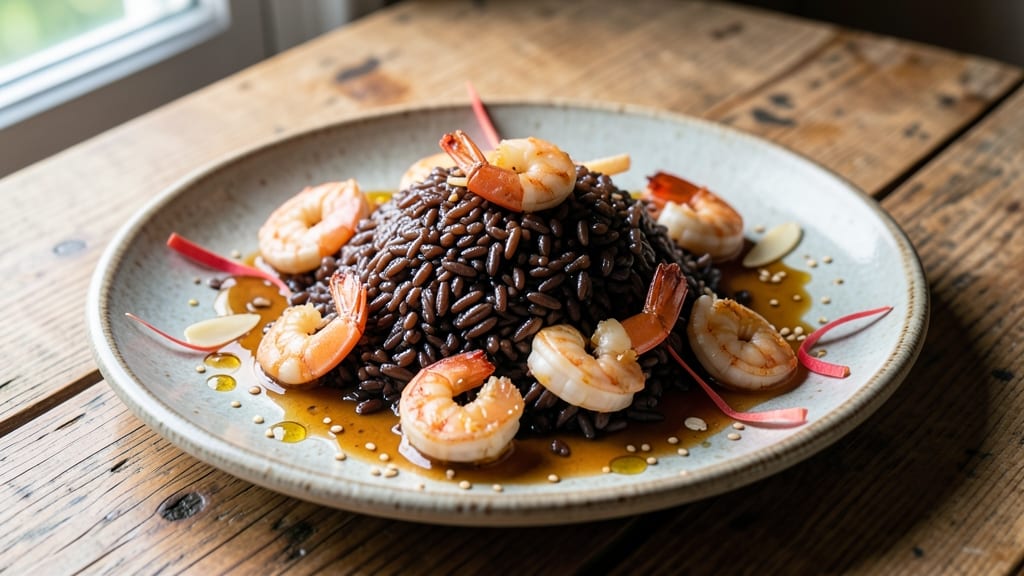
This black rice and shrimp recipe delivers a bold, umami-packed wok stir-fry that transforms simple ingredients into a restaurant-worthy meal. The deep purple-black rice adds an earthy richness, while plump shrimp and aromatic stir-fry sauce create a perfect balance of textures and flavors.
I've perfected this technique to ensure tender shrimp and perfectly cooked rice, all ready in just 25 minutes—ideal for a quick yet impressive weeknight dinner.
What makes this dish special is the combination of smoky wok hei flavor with the natural sweetness of shrimp and the nutty depth of black rice. The recipe includes a simple yet impactful sauce featuring soy sauce, garlic, and ginger, which enhances the umami without overpowering the delicate shrimp.
Garnishing with fresh herbs and a squeeze of lime adds brightness, making every bite feel fresh and vibrant. This dish is not only visually stunning but also packed with protein and nutrients, making it a satisfying meal for any occasion.
Ingredients for black rice and shrimp
Fifteen ingredients transform into a restaurant-worthy wok stir-fry with deep umami and vibrant colors.
| Ingredient | Amount | Notes |
|---|---|---|
| Black Rice 🍚 | 1 cup | Uncooked, rinsed thoroughly |
| Large Shrimp 🦐 | 1 ½ lb | Peeled, deveined, tails on |
| Garlic Cloves 🧄 | 6 cloves | Minced finely for sauce |
| Fresh Ginger 🌿 | 2 tbsp | Grated finely, aromatic |
| Low-Sodium Soy Sauce 🍶 | ⅓ cup | For umami depth |
| Sesame Oil 🫒 | 1 tbsp | Toasted for aroma |
| Vegetable Oil 🫒 | 2 tbsp | High smoke point |
| Lime Juice 🍋 | 2 tbsp | Freshly squeezed |
| Cilantro Leaves 🌿 | ¼ cup | Chopped for garnish |
| Red Bell Pepper 🧅 | 1 whole | Thinly sliced, seeds removed |
| Green Onion 🧅 | 3 whole | Thinly sliced, white and green |
| Salt 🧂 | 1 tsp | Diamond Crystal preferred |
| Black Pepper 🌶️ | ½ tsp | Freshly cracked |
| Honey 🍯 | 1 tbsp | Light variety for balance |
| Red Chili Flakes 🌶️ | ½ tsp | Optional for heat |
Black rice is the star here—look for it in the Asian foods aisle at stores like Whole Foods or H Mart, where it's typically sold in vacuum-sealed bags. The shrimp should be plump and translucent, with a firm texture when pressed. If using frozen shrimp, thaw them in cold water for 10 minutes before using. For the garlic and ginger, freshly minced delivers the most aromatic punch, but if you're short on time, jarred minced garlic works in a pinch. The red bell pepper adds both color and a subtle sweetness that balances the dish's umami richness.
No black rice? Substitute with wild rice or brown rice, though the visual contrast will be lost. Frozen shrimp is perfectly fine—just pat them dry before cooking to ensure a good sear. If you're avoiding soy sauce, coconut aminos provide a similar umami profile without the sodium. For extra heat, swap the chili flakes for Sichuan peppercorns, which add a tingling sensation. The lime juice can be substituted with lemon juice, though lime offers a brighter acidity that pairs better with the shrimp. Fresh herbs like cilantro and green onion are ideal, but dried oregano or basil can be used in a pinch at half the quantity.
Store uncooked black rice in an airtight container in a cool, dark place for up to 6 months. Cooked rice reheats best in the microwave with a splash of water to restore moisture. Shrimp should be cooked immediately after thawing—never refreeze. The stir-fry sauce components keep separately for 1 week in the fridge, but combine them just before serving to preserve freshness. Garnishes like cilantro and lime juice are best added right before eating to maintain their vibrant flavors. This dish tastes even better the next day, as the flavors meld and the rice absorbs the sauce's umami notes.
Why You'll Love This Recipe
- One-Pan Magic: I swear by this—just toss everything (shrimp, rice, garlic, ginger) into one pot, add water, and let it simmer. No chopping boards, no extra dishes, and that deep, nutty aroma fills the kitchen by the time it’s done.
- Umami Bomb: That soy sauce and ginger? It’s where this dish gets its soul. The shrimp soaks up the flavor like a sponge, and the black rice—oh man, it’s got this earthy richness that makes every bite feel like a little celebration.
- Lunchbox Hero: Between us, this is my go-to for meal prep. Cold or reheated, it’s still packed with protein and those chewy, slightly sticky rice grains. Pack it in containers, and you’ve got a lunch that’ll have coworkers asking for seconds.
- Budget Win: Honestly, shrimp can be pricey, but buying them frozen and in bulk stretches this recipe farther than you’d think. Plus, black rice is cheaper than you’d expect, and the flavor makes it feel like a splurge without breaking the bank.
Step-by-step instructions for black rice and shrimp stir-fry
Master this umami-packed wok technique for perfectly balanced flavors and textures.
Cook the Black Rice to Al Dente Perfection
Rinse the 1 cup black rice thoroughly under cold water until the water runs clear—this removes excess starch that can make the rice gummy. Combine the rinsed rice with 2 cups water in a small pot and bring to a boil over high heat. Once boiling, immediately reduce heat to low and cover tightly with a lid.
Simmer for 25-30 minutes until the rice absorbs all the liquid but still has a slight bite—this al dente texture is crucial for stir-fry. You'll notice the rice turns dark purple-black as it cooks. After removing from heat, let it steam covered for an additional 5 minutes before fluffing with a fork. The rice should be tender but still hold its shape when tossed in the wok later.
Prepare the Shrimp and Aromatics
Pat the 1.5 lb large shrimp completely dry with paper towels—this ensures they sear properly instead of steaming. Season both sides generously with ½ teaspoon salt and ¼ teaspoon black pepper, then set aside. For the aromatics, finely mince the 6 cloves garlic and grate the 2 tbsp fresh ginger using a microplane. Thinly slice the 1 whole red bell pepper and 3 whole green onions, keeping the white and green parts separate.
Here's the thing—don't overcrowd your wok later. Keep the shrimp separate until cooking time, and store the sliced vegetables in individual piles. This organization prevents soggy vegetables and ensures everything cooks at the right moment. The shrimp should be at room temperature when you're ready to cook them for even browning.
Build the Umami-Packed Sauce
Heat a wok or large skillet over medium-high heat until hot. Add the 2 tbsp vegetable oil and swirl to coat. Add the minced garlic and grated ginger, cooking for 30 seconds until fragrant but not browned—burnt garlic ruins the sauce. Immediately pour in the ⅓ cup low-sodium soy sauce, 1 tbsp honey, and ½ teaspoon red chili flakes (if using). Stir constantly for 1 minute until the sauce begins to thicken slightly.
This is where the magic happens: the soy sauce develops depth while the honey adds subtle sweetness to balance the heat. The sauce should coat the back of a spoon but remain pourable. If it thickens too quickly, add 1 tablespoon water to maintain consistency. Keep the wok moving constantly to prevent scorching at the bottom.
Stir-Fry the Shrimp and Vegetables
Working quickly, add the 1.5 lb shrimp to the wok in a single layer. Let them sear undisturbed for 1-2 minutes until the bottoms turn opaque and golden. This initial sear locks in juices and creates texture contrast. Stir gently to release the shrimp from the pan, then add the sliced red bell pepper and white parts of the green onions. Cook for 2 minutes until the peppers soften slightly but still retain their shape.
Add the cooked black rice and remaining green onion tops, tossing everything together for 2-3 minutes until the rice is heated through and the shrimp reaches 145°F internally. The rice should be evenly coated with the sauce but still distinct. If the mixture seems dry, add 1 tablespoon lime juice to brighten and moisten everything. The final dish should have vibrant colors—deep purple rice, pink shrimp, and bright green onions.
Finish with Lime and Garnish
Remove the wok from heat and stir in the 2 tbsp lime juice and 1 tbsp sesame oil. The lime juice cuts through the richness while the sesame oil adds nutty aroma. Taste and adjust seasoning—you may need to add a pinch more salt or a splash of soy sauce if needed. The dish should balance sweet, savory, spicy, and tangy flavors.
Garnish immediately with the ¼ cup chopped cilantro leaves and serve while hot. The contrast between the cool, fresh cilantro and the warm stir-fry creates the perfect finishing touch. This dish holds well for 30 minutes if covered, but the textures are best enjoyed immediately. Pair with steamed greens or a simple cucumber salad to complete the meal.
Pro Tips For Making Black Rice And Shrimp
- Rinse Black Rice Twice: That dark water isn’t just for show—it’s packed with tannins that make rice mushy. Swap the usual quick rinse for two thorough rinses (each with cold water), then let it soak 30 minutes before cooking. I learned this the hard way after serving a bowl where the rice had the texture of oatmeal.
- Sear Shrimp in Batches: Crowd the pan and you’ll steam shrimp instead of sear them. Use a 12-inch skillet and cook shrimp in two batches—just 1-2 minutes per side—until they’re opaque and slightly curled. Overcook them, and they’ll turn rubbery faster than you can say "low-sodium soy sauce."
- Mince Ginger Like You Mean It: No food processor? Fine, but don’t just chop it—smash the ginger with the flat side of your knife first, then mince into a paste. This releases more flavor, and you’ll need about 1 tablespoon for the whole dish. (Yes, even if the recipe says "grated.") I was skeptical until I tried it—now I never go back.
- Deglaze with Soy Sauce Early: Let that shrimp sear until the pan is browned, then immediately pour in 1 tablespoon of soy sauce while the pan’s still hot. The caramelized bits dissolve into the sauce, adding depth instead of sitting as gritty residue at the bottom. Skip this, and you’re missing half the flavor.
Dietary considerations for this recipe
Gluten-Free Adaptations
This recipe is naturally gluten-free as long as you use certified gluten-free soy sauce (like San-J Tamari) and double-check your sesame oil and honey brands. I always keep a bottle of gluten-free soy sauce on hand for stir-fries—it’s a game-changer for avoiding cross-contamination.
The black rice itself is gluten-free, and shrimp is a safe protein. Just avoid regular soy sauce, which often contains wheat. ✨
Low-Sodium Options
For a lower-sodium version, reduce the soy sauce to 2 tablespoons and boost umami with 1 teaspoon fish sauce or 1 tablespoon coconut aminos instead. I also recommend using no-salt-added shrimp and skipping the added salt entirely—you’ll still get plenty of flavor from the garlic, ginger, and lime.
Taste as you go and adjust gradually. 💡
Vegetarian Swap
To make this vegetarian, swap the shrimp for 1.5 lb extra-firm tofu pressed and cubed, or 1 lb king oyster mushrooms sliced into thick strips. For tofu, marinate in 2 tablespoons soy sauce and 1 tablespoon sesame oil for 15 minutes before cooking.
Mushrooms need 3-4 extra minutes in the wok to develop their meaty texture. The black rice and sauce will still shine! 🌱
Allergen Awareness
This dish contains shrimp (shellfish), sesame (in oil), and soy (in sauce)—common allergens. Always check labels on soy sauce and sesame oil for hidden allergens. If avoiding sesame, replace the 1 tablespoon sesame oil with 1 teaspoon neutral oil and garnish with toasted pumpkin seeds instead.
For soy-free, use coconut aminos or tamari. 🚨
Protein Boost
Add ½ cup edamame or ½ cup cooked quinoa to increase protein and fiber. I like adding edamame in the last 2 minutes of stir-frying so it stays crisp.
For extra richness, stir in 1 tablespoon peanut butter (ensure no cross-contamination) at the end—it adds a creamy texture that pairs perfectly with the shrimp. 💪
Kid-Friendly Adjustments
Mild it for kids by omitting the red chili flakes and reducing lime juice to 1 tablespoon. Cut the shrimp into bite-sized pieces and serve with a side of steamed rice cakes or cucumber slices for dipping.
The black rice’s mild flavor makes it approachable, and the sweetness of the bell pepper balances the savory sauce. 👶
Nutrition facts
Frequently asked questions
Can I substitute frozen shrimp for fresh in this recipe?
Use 1.5 lb frozen shrimp, but thaw them properly first. Place them in a colander and run under cold water for 5 minutes, then pat completely dry with paper towels. This prevents steaming and ensures a perfect sear. Never microwave-thaw shrimp—it makes them rubbery.
How do I make the black rice less sticky?
Rinse the rice 3-4 times until the water runs clear before cooking to remove excess starch. Use a 1:2 rice-to-water ratio (1 cup rice to 2 cups water) and cook at low heat after the initial boil. Let it steam covered for 5 minutes off heat before fluffing—this helps firm up the texture.
What's the best way to reheat leftovers?
Reheat in a skillet over medium heat with 1 tablespoon water or broth to restore moisture. Stir frequently for 3-4 minutes until warmed through. Microwave reheating works too, but cover with a damp paper towel to prevent drying. Add a splash of lime juice when serving to revive freshness.
Can I make this dish spicier?
Yes! Add 1 teaspoon of Sichuan peppercorns (toasted and crushed) to the sauce for a tingling heat, or increase the red chili flakes to 1 teaspoon. For extra kick, stir in 1 tablespoon chopped Thai bird's eye chilies with the shrimp. Balance with more lime juice to prevent overpowering the dish.
Why did my shrimp turn rubbery?
Overcooking or improper thawing are the most common causes. Shrimp should cook for only 2-3 minutes total in the wok. If using frozen shrimp, ensure they're fully thawed and patted completely dry before cooking. Also, avoid overcrowding the pan—cook in batches if needed to maintain even heat.