
Salads
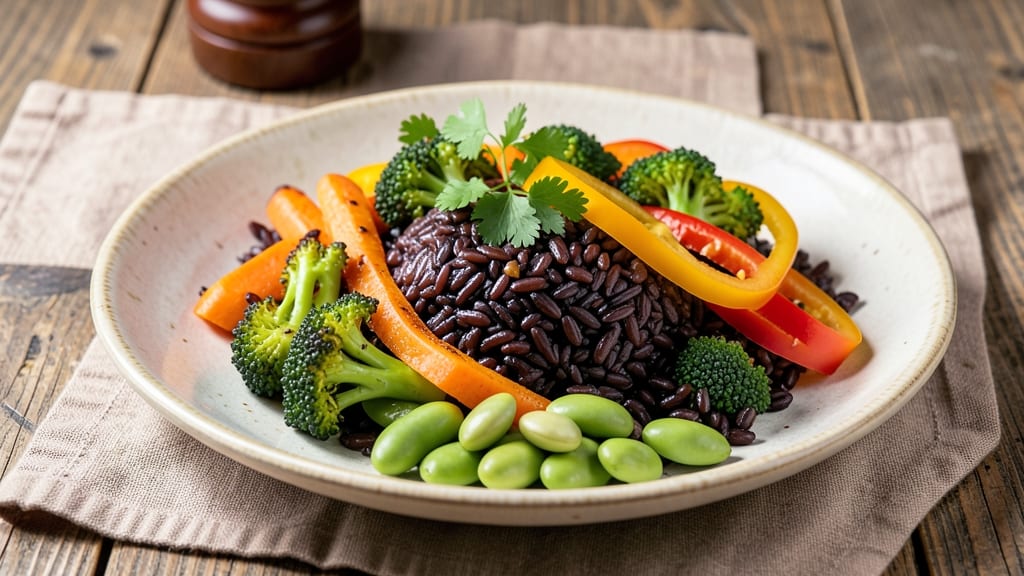
This black rice and vegetables recipe delivers a nutrient-packed power bowl that's as visually stunning as it is delicious. The deep purple hue of black rice isn't just beautiful—it's packed with antioxidants, fiber, and plant-based protein that transforms ordinary vegetables into a health-boosting meal.
Perfect for meal prep or weeknight dinners, this dish proves nutritious eating can be both satisfying and elegant.
What sets this recipe apart is the balanced combination of chewy black rice, crisp-tender vegetables, and a simple yet flavorful seasoning blend that enhances rather than overpowers the natural tastes. With just 30 minutes of active prep time and minimal ingredients, you'll create a dish that's restaurant-quality at home.
The secret lies in proper rice preparation—soaking and rinsing thoroughly ensures perfectly tender grains every time.
Ingredients for black rice and vegetables
Nutrient-dense black rice and vibrant vegetables combine for a visually striking, antioxidant-rich power bowl.
| Ingredient | Amount | Notes |
|---|---|---|
| Black Rice (Forbidden Rice) 🌾 | 1 ½ cups | Uncooked, rinsed thoroughly |
| Water 💧 | 3 cups | Filtered preferred for clarity |
| Baby Carrots 🥕 | 1 ½ cups | Whole or sliced into sticks |
| Broccoli Florets 🥦 | 2 cups | Fresh, cut into bite-sized pieces |
| Bell Peppers (Red, Yellow, or Orange) 🌶️ | 1 ½ cups | Diced, any color variation |
| Edamame (Frozen) 🌱 | 1 cup | Shelled, thawed in cold water |
| Sesame Oil (Toasted) 🫒 | 1 tbsp | For aroma, not cooking |
| Tamari or Coconut Aminos 🍶 | 2 tbsp | Gluten-free soy sauce alternative |
| Lime Juice (Fresh) 🍋 | 1 tbsp | Brightens the dish |
| Sesame Seeds (Toasted) 🌰 | 1 tbsp | For garnish and crunch |
| Fresh Cilantro (Coriander) 🌿 | ¼ cup | Chopped, for freshness |
| Extra-Virgin Olive Oil 🫒 | 1 tbsp | For sautéing vegetables |
| Garlic Cloves 🧄 | 3 cloves | Minced, for depth of flavor |
| Ginger Root (Fresh) 🌿 | 1 tbsp | Grated, for subtle warmth |
The black rice is the heart of this dish—forbidden rice from specialty stores or Asian markets delivers the deepest color and richest texture. Lundberg Farms or Trader Joe's carry excellent options, but any well-rinsed black rice works. The key is thorough rinsing before cooking to remove excess starch and achieve that signature chewy texture. For vegetables, freshness matters most—carrots should be crisp, broccoli vibrant green, and bell peppers firm. If using frozen edamame, thaw in cold water for 10 minutes before draining—this preserves texture better than microwaving.
No sesame oil? Toasted peanut oil works as a neutral substitute, though it lacks the nutty aroma. Tamari or coconut aminos can be swapped for low-sodium soy sauce, but reduce the amount by half since these are saltier. Fresh lime juice is ideal, but bottled lime juice works in a pinch—just add an extra pinch of salt. For the garlic and ginger, jarred minced garlic saves time, but fresh always tastes superior. If cilantro isn't your favorite, basil or parsley add a similar freshness, though with a different flavor profile. The bell peppers can be swapped for zucchini or snap peas if you prefer milder flavors.
Black rice keeps well in the fridge for 4-5 days when stored in an airtight container, though it's best enjoyed within 2 days for optimal texture. The cooked vegetables hold up for 3 days if stored separately in sealed containers, but they're at their peak freshness within 24 hours. For meal prep, assemble the bowls just before serving—this preserves the crisp-tender texture of the vegetables. The dressing components (tamari, lime, sesame oil) can be pre-mixed and stored for 1 week in the fridge, though the fresh herbs should be added right before eating for maximum flavor.
Why You'll Love This Recipe
- One-Pot Magic: I swear by this recipe—just toss the rice, veggies, and water into a pot, then let it simmer. No fancy techniques, no last-minute grocery runs, and honestly? The black rice soaks up all the veggie flavors like a sponge.
- Earthy & Sweet Bite: That deep purple rice isn’t just pretty—it’s ridiculously good. The carrots stay crisp, the bell peppers add a bright crunch, and the broccoli? Perfectly tender without turning to mush. (Yes, even my picky husband finishes his plate.)
- Meal Prep MVP: Between us, this is my go-to for lunches all week. Cook a big batch on Sunday, and you’ve got a grab-and-go bowl that stays fresh in the fridge. I’ll be real: I’ve eaten this cold and reheated—both times, it’s a win.
- Budget-Friendly Powerhouse: Black rice might sound fancy, but it’s cheaper than quinoa and lasts forever. Baby carrots and bell peppers are pantry staples, and you’re getting a full, balanced meal for less than takeout. My wallet and my family thank me every time.
Step-by-step instructions for black rice and vegetables power bowl
This method delivers perfectly balanced texture and vibrant flavors through precise timing and technique.
Prepare the Black Rice Foundation
Rinse the 1.5 cups black rice (forbidden rice) thoroughly under cold water until the water runs clear. This removes excess starch that can make the rice gummy. Transfer the rinsed rice to a medium saucepan and add the 3 cups water. Bring to a boil over medium-high heat, then immediately reduce to a simmer.
Cover with a tight-fitting lid and cook for 30 minutes without peeking. The rice is done when all liquid is absorbed and the grains are tender with a slight bite. If any water remains after 30 minutes, continue simmering uncovered for another 2-3 minutes to evaporate completely. Let the rice sit covered for 5 minutes off heat—this resting period allows the grains to fully hydrate and develop their signature deep purple hue.
Sauté Aromatics and Vegetables
While the rice cooks, heat the 1 tablespoon extra-virgin olive oil in a large skillet over medium heat. Add the 3 minced garlic cloves and 1 tablespoon grated fresh ginger root, cooking for 30 seconds until fragrant but not browned. This quick sautéing unlocks their full flavor without burning.
Add the 1.5 cups diced bell peppers and 1.5 cups baby carrots, stirring to coat in the oil. Cook for 5 minutes until the carrots begin to soften and the peppers release their juices. Add the 2 cups broccoli florets and continue cooking for another 4 minutes, stirring occasionally. The vegetables should be tender-crisp with vibrant color—this ensures they hold their texture while still contributing to the dish's nutritional profile.
Prepare the Edamame and Seasoning
In a separate bowl, drain and rinse the 1 cup thawed edamame under cold water to remove any excess starch. Heat a small skillet over medium heat and add the 1 tablespoon toasted sesame oil. Add the edamame and cook for 2 minutes, just until warmed through. Remove from heat and set aside.
In the same skillet used for the vegetables, reduce heat to low and add the 2 tablespoons tamari or coconut aminos. Stir to deglaze the pan, scraping up any browned bits that contain concentrated flavor. Add the 1 tablespoon fresh lime juice and stir until combined. This creates a bright, umami-rich base that will complement the earthy black rice.
Assemble and Garnish
Transfer the cooked black rice to a large serving bowl. Gently fold in the sautéed vegetables and warmed edamame, being careful not to overmix and break the rice grains. The dish should have a visually appealing contrast of deep purple rice with bright orange, green, and white vegetables.
Drizzle the lime-tamari mixture evenly over the bowl and toss lightly to coat. Sprinkle with the 1 tablespoon toasted sesame seeds and 0.25 cup chopped fresh cilantro. The sesame seeds add a satisfying crunch while the cilantro introduces a fresh, herbal note that cuts through the richness of the dish. Serve immediately while the vegetables retain their crisp texture and the flavors are at their peak.
Pro Tips For Making Black Rice And Vegetables
- SOAK THE RICE FIRST: Black rice stays stubbornly firm if you skip this—soak it for at least 4 hours (or overnight if you’re planning ahead). I learned this the hard way when my first batch turned out chewy instead of tender; the longer it soaks, the better it absorbs water and cooks evenly.
- CUT VEGETABLES UNIFORM: Slice carrots into matchsticks, broccoli into even florets, and chop bell peppers into similar-sized pieces—this ensures everything cooks at the same pace. Uneven cuts mean some veggies will turn mushy while others stay crunchy, and nobody wants that.
- DON’T SKIP THE STEAM: Start by steaming the veggies for 3-4 minutes before adding them to the rice—this jumpstarts their cooking and keeps them vibrant. I used to toss everything in raw, and the broccoli always ended up sad and limp by the end.
- USE A LITTLE FAT: A teaspoon of oil or butter in the pot prevents the rice from sticking and adds a subtle richness that balances the earthy black rice. Sounds small, but dry rice is a nightmare to scrape off the bottom—trust me, you’ll regret skipping this.
Make-ahead tips for this recipe
Rice Prep Ahead
Cook the black rice 2 days in advance and store it in an airtight container at room temperature. The grains continue developing their rich flavor and deep purple color.
Reheat gently in a steamer or microwave with a damp paper towel for 2-3 minutes—never overheat or it turns mushy. 🌾
Veggie Prep Strategy
Roast all vegetables 1 day ahead at 400°F for 20-25 minutes with 1 tbsp olive oil, ½ tsp salt, and ¼ tsp black pepper. Store in separate containers to maintain crispness.
For edamame, blanch frozen pods in boiling water for 2 minutes, then shock in ice water. Drain and store in the fridge—they stay tender for 3 days.
Dressing Pre-Mix
Combine the tamari, lime juice, and sesame oil in a small jar up to 1 week ahead. Store in the fridge and shake before using.
Add fresh herbs and sesame seeds right before serving to preserve their vibrant flavors. This keeps your meal prep efficient without sacrificing freshness. ✨
Portion Control
Divide the black rice and vegetables into 4 meal-prep containers immediately after assembly. Use 1 cup rice per container and top with ½ cup vegetables. The dressing should be added fresh to prevent sogginess. Label containers with dates—they stay fresh for 4 days in the fridge. 📅
Freezer Adaptations
For longer storage, freeze the unassembled components separately. Cooked black rice freezes well for 3 months in a freezer-safe bag with all air removed. Vegetables freeze best when blanched first—toss in ice water, drain, and freeze on a tray before transferring to bags.
Thaw overnight in the fridge before reheating. ❄️
Nutrition facts
Frequently asked questions
Why does black rice turn purple when cooked?
This stunning color comes from anthocyanins—powerful antioxidants in the rice's outer layer. These pigments intensify when cooked with slightly alkaline water (like filtered water) and become even deeper when the rice rests after cooking. The longer you store cooked black rice, the richer its hue gets!
Can I substitute other vegetables in this recipe?
Swap bell peppers for zucchini or snap peas, and carrots for sweet potato cubes. For extra protein, add chickpeas or tofu cubes cooked with the edamame. Just ensure total cook time matches your chosen veggies—harder vegetables like sweet potatoes need 8-10 minutes of sautéing.
How do I prevent black rice from becoming mushy?
Three key steps: 1) Rinse thoroughly to remove starch, 2) Use a 1:2 rice-to-water ratio (never more water), and 3) Rest covered for 5 minutes off heat. If your rice still feels undercooked after 30 minutes, add 2 tbsp water and cook uncovered for 2 more minutes—never overcrowd the pot.
Is this recipe gluten-free?
Yes! All ingredients are naturally gluten-free, but check your tamari/coconut aminos label—some brands add wheat. For extra safety, use certified gluten-free soy sauce. The sesame oil and edamame are also typically gluten-free, though always verify packaging if you have severe sensitivities.
Can I make this dish spicy?
Add ½ tsp red pepper flakes when sautéing the vegetables, or stir in 1 tbsp sriracha with the tamari-lime dressing. For heat lovers, toss in 2 tbsp chopped jalapeños with the edamame. Start with small amounts—black rice absorbs flavors intensely!