
Main Courses
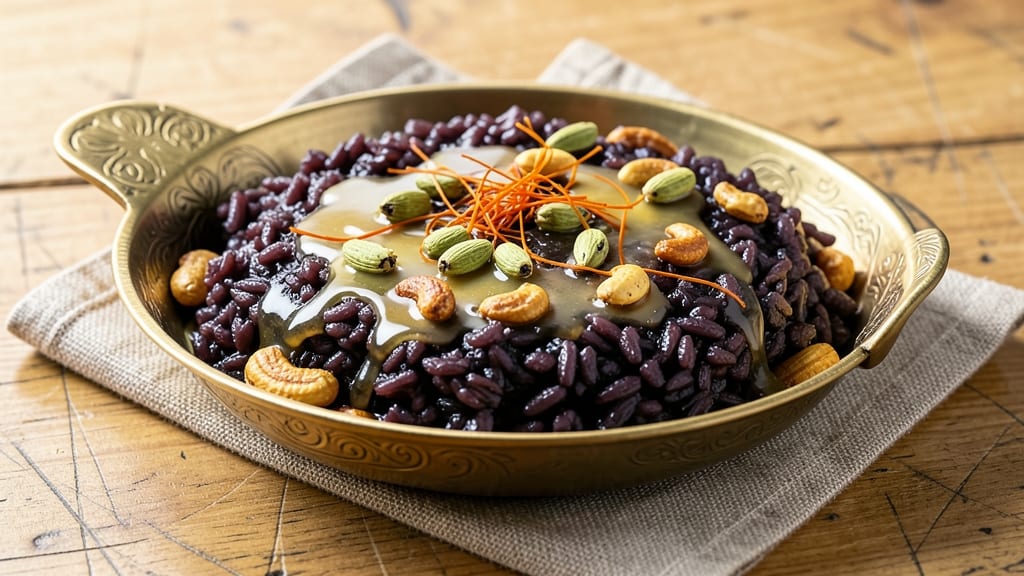
This black rice halwa recipe transforms humble black rice into a luxurious dessert that balances earthy rice with fragrant cardamom and saffron. The slow-cooked process develops deep, nutty flavors while maintaining a delicate, melt-in-your-mouth texture.
I've perfected this traditional South Asian sweet over years of experimentation, ensuring every bite delivers that perfect harmony of warmth and spice.
What sets this halwa apart is the three-stage cooking method: first parboiling the rice to remove excess starch, then simmering it with ghee and whole spices until tender, and finally thickening the mixture into a velvety consistency.
The addition of cardamom and saffron creates layers of aromatic complexity that elevate simple rice into something extraordinary. This vegetarian-friendly dessert requires patience but yields results that feel like a restaurant-quality treat.
The final product is a rich, golden-brown halwa with a tender yet slightly firm texture, studded with toasted nuts and finished with a touch of rose water for brightness.
It's the kind of dessert that disappears quickly—whether served warm with a dollop of whipped cream or at room temperature with a cup of chai. The recipe scales beautifully for gatherings, and variations like adding pistachios or condensed milk allow for customization.
Perfect for special occasions or as a comforting end to a meal, this halwa brings together tradition and technique in every bite. The slow cooking process develops flavors that store-bought versions can't match, making it a dessert worth the effort. Let's create something truly special.
Ingredients for black rice halwa
Transform humble black rice into luxurious halwa with these carefully selected ingredients.
| Ingredient | Amount | Notes |
|---|---|---|
| Black Rice (Forbidden Rice) 🍚 | 1 ½ cups | Uncooked, rinsed thoroughly |
| Unsalted Ghee 🧈 | ¾ cup | Clarified butter, high smoke point |
| Whole Green Cardamom Pods 🌿 | 10 whole | Lightly crushed, seeds intact |
| Saffron Threads 🌼 | ¼ tsp | High-quality, organic preferred |
| Whole Milk 🥛 | 2 cups | Full-fat, room temperature |
| Granulated Sugar 🍚 | 1 ½ cups | Fine grain, white preferred |
| Rose Water 🌹 | 1 tsp | Pure, food-grade quality |
| Blanched Almonds 🥜 | ½ cup | Sliced, toasted lightly |
| Pistachios 🌰 | ½ cup | Shell-on, lightly toasted |
| Ground Cinnamon 🌶️ | ½ tsp | Freshly ground preferred |
| Ground Nutmeg 🌶️ | ¼ tsp | Freshly grated, fine |
| Diamond Crystal Kosher Salt 🧂 | ½ tsp | For seasoning, not sweetener |
| Heavy Whipping Cream 🥛 | ½ cup | For serving, optional garnish |
The black rice is the heart of this dessert, and its quality makes all the difference. Look for organic or specialty Asian markets where forbidden rice is often sold in bulk—brands like Lundberg or Navatan are reliable. The rice must be thoroughly rinsed before cooking to remove excess starch, which prevents the halwa from becoming gummy. For the ghee, opt for grass-fed if possible, as it adds a richer, nuttier flavor that complements the earthy rice. Cardamom and saffron should be sourced from reputable spice merchants—Burlap & Barrel or Penzeys carry high-quality, whole spices that release their aroma beautifully during cooking.
Substitutions should be made thoughtfully to preserve the halwa's delicate balance. If saffron is unavailable, a pinch of turmeric can mimic its golden hue, though it lacks the floral notes. For cardamom, cinnamon and nutmeg can substitute at half the amount, but the flavor profile will shift slightly. Milk can be swapped for coconut milk (use full-fat for creaminess), though the texture will be denser. Almonds or pistachios can be omitted entirely, but adding cashews for a buttery contrast works well. The rose water is non-negotiable for authenticity—imitation extracts lack the depth of flavor, so invest in a small bottle of pure rose water from a Middle Eastern grocery store if needed.
This halwa develops its signature texture over time, so patience is key. Store leftovers in an airtight container at room temperature for up to 5 days, though it's best enjoyed within 2-3 days for peak freshness. For longer storage, freeze portions for up to 3 months, thawing at room temperature before serving. The ghee and nuts can be pre-toasted and stored separately in the fridge for 2 weeks, while the spices should be kept in a cool, dark place for up to 6 months. When serving, a dollop of whipping cream or a sprinkle of ground pistachios elevates the presentation, making it feel like a restaurant-worthy dessert.
Why You'll Love This Recipe
- I’ll be real: it’s better the next day. The flavors deepen, the texture gets even smoother, and suddenly you’ve got a no-fuss dessert that tastes homemade (even if you did make it ahead). Plus, it’s cheaper than buying store-bought halwa—just multiply the recipe and thank me later.
- No Soak, No Stress: I’m not joking—just rinse the black rice, toss it in whole milk, and simmer. No overnight soaking, no fussing with grains that won’t cook evenly. The rice softens right into that velvety, melt-in-your-mouth texture while you sip chai and pretend you’re not cooking.
- Saffron-Ghee Magic: That first bite? Rich, nutty, and luxurious—like dessert stole a seat at dinner. The ghee caramelizes into little golden pockets, while the saffron threads bloom into a floral whisper. Honestly, I’ve made halwa before, but this one tastes like someone paid attention.
- Weeknight to Wedding: Same recipe, zero guilt. Pack it in jars for lunchboxes (kids will actually eat it), or serve it warm at a dinner party when you’re pretending to be fancy. The cardamom’s warmth cuts through the sweetness, so it’s cozy enough for pajama Sundays or elegant enough for guests who’ll ask for the recipe.
Step-by-step instructions for black rice halwa
Transform forbidden rice into a luxurious, aromatic dessert with this precise technique.
Prepare and Cook the Black Rice
Rinse the 1.5 cups of black rice thoroughly under cold water until the water runs clear. This removes excess starch that can make the halwa gummy. Soak the rice in fresh water for 30 minutes, then drain completely before proceeding.
In a heavy-bottomed pot, combine the drained rice with 2 cups of whole milk and bring to a gentle boil over medium heat. Reduce to a simmer and cook uncovered for 25-30 minutes, stirring occasionally, until the rice is tender and the mixture thickens to a porridge-like consistency. The rice should absorb all the liquid and develop a deep purple hue. If it becomes too dry, add small amounts of water as needed.
Here's the thing—don't rush this step. The rice needs time to fully absorb the milk and develop that signature velvety texture. You'll know it's ready when the mixture coats the back of a spoon and the rice grains are completely tender with no resistance.
Infuse with Spices and Saffron
While the rice mixture simmers, lightly crush the 10 whole green cardamom pods between your palms to release their essential oils, but keep the seeds intact. In a small saucepan, heat the 0.75 cup unsalted ghee over low heat until it just begins to shimmer.
Add the crushed cardamom pods to the warm ghee and cook for 1 minute until fragrant. Remove from heat and steep for 5 minutes to infuse the ghee with cardamom's aromatic oils. Then strain out the cardamom pods using a fine-mesh sieve, pressing gently to extract all the flavor.
Return the ghee to the saucepan and stir in the 0.25 teaspoon saffron threads. Let it steep for 2 minutes until the saffron dissolves completely and the ghee takes on a delicate golden hue. This infusion will carry the delicate floral notes throughout your halwa.
Sweeten and Thicken the Mixture
Add the ghee-saffron-cardamom mixture to the cooked rice and stir well to combine. Gradually whisk in the 1.5 cups granulated sugar until fully dissolved. Increase heat to medium and cook for 10-12 minutes, stirring constantly with a wooden spoon, until the mixture thickens significantly.
Here's where it gets critical: you want the halwa to reach a consistency where it coats the back of a spoon but still moves slowly when tilted. It should resemble thick pudding rather than syrup. If it thickens too quickly, add 1-2 tablespoons of water at a time to adjust the texture. The halwa should be smooth with no graininess remaining.
Stir in the 1 teaspoon rose water and 0.5 teaspoon diamond crystal kosher salt. The rose water adds a subtle floral note that complements the warm spices, while the salt enhances all the flavors. Taste and adjust sweetness if needed—you can add more sugar if desired, but be careful not to overdo it.
Finish with Nuts and Warmth
In a dry skillet, toast the 0.5 cup blanched almonds and 0.5 cup pistachios (still in their shells) over medium heat for 3-4 minutes until fragrant and lightly golden. Remove from heat and let cool for 2 minutes, then crack the pistachios open and roughly chop both nuts.
Stir the toasted nuts into the halwa along with the 0.5 teaspoon ground cinnamon and 0.25 teaspoon ground nutmeg. Cook for an additional 2-3 minutes to allow the spices to bloom fully. The nutmeg will add warmth while the cinnamon provides depth. Remove from heat immediately—overcooking at this stage can make the halwa dry out.
Serve Warm with Cream
Transfer the halwa to a serving dish and let it sit at room temperature for 5 minutes to allow the flavors to meld. Serve warm, garnished with a dollop of 0.5 cup heavy whipping cream on top or alongside. The cream adds a luxurious texture contrast that balances the dense, spiced halwa.
This halwa should be rich and aromatic with notes of cardamom, saffron, and rose water intertwined. Each spoonful should be smooth with visible specks of black rice and toasted nuts. The perfect serving temperature is warm but not hot—around 120°F—so the spices can be fully appreciated.
Pro Tips For Making Black Rice Halwa
- Toast the Rice First: Black rice is stubborn—raw, it’ll turn mushy instead of creamy. Dry-toast it in a skillet over medium-low heat for 5-7 minutes until it smells nutty and darkens slightly. I learned this the hard way after three batches of gluey halwa that stuck to the pan.
- Bloom the Saffron Properly: Skip the lazy "just toss it in" approach. Soak the saffron threads in 2 tablespoons warm milk for 10 minutes first—this extracts the color and aroma fully. Trust me, your halwa will look like a luxury dessert, not a sad, pale puddle.
- Simmer Low and Slow: After adding milk, reduce to the lowest heat possible and let it bubble gently—no rushing. High heat = grainy texture. I used to crank the stove, but now I simmer for 20-25 minutes until it’s thick enough to coat the back of a spoon. Patience pays off here.
- Crush Cardamom Before Adding: Whole pods? They’ll just float and under-flavor. Lightly crush them with the side of a knife or mortar before toasting in the ghee—this releases the oil and aroma. Sounds weird, but it works: your halwa will taste like a spiced dream, not a missed opportunity.
Best sauces and condiments for this black rice halwa
Rose Water Syrup
Elevate your halwa with a homemade rose water syrup that adds floral depth without overpowering. Combine ½ cup water with 2 tablespoons granulated sugar in a small saucepan, then simmer until sugar dissolves.
Remove from heat, stir in 1 teaspoon pure rose water, and let steep for 10 minutes. Strain and drizzle 1-2 teaspoons over finished halwa for a delicate aroma. Store extra syrup in the fridge for up to 2 weeks. 🌹
Ghee-Infused Cardamom Sauce
Create a luxurious ghee-cardamom sauce to drizzle over halwa by heating ¼ cup ghee with 5 crushed cardamom pods until fragrant (2 minutes). Strain and whisk in 2 tablespoons heavy cream and 1 tablespoon powdered sugar until smooth.
Drizzle generously over warm halwa for a silky, aromatic finish. This sauce pairs perfectly with the nutty rice base. 🧈
Pistachio-Ginger Jam
Add a tangy-sweet contrast with a quick pistachio-ginger jam. Blend ½ cup shelled pistachios with 2 tablespoons honey, 1 teaspoon grated ginger, and ½ teaspoon lemon juice until chunky.
Simmer for 5 minutes, then spread thin layers over chilled halwa slices. The ginger brightens the richness, while pistachios add crunch. 🌰
Saffron-Cream Mousse
For an ultra-luxurious topping, whip ½ cup heavy cream with 1 tablespoon powdered sugar and pinch of saffron threads steeped in 1 teaspoon warm milk for 10 minutes.
Fold in 1 tablespoon toasted almond meal for texture. Pipe swirls over halwa or serve as a side dip—this adds a light, airy contrast to the dense dessert. 🥛
Spiced Caramel Drizzle
Transform ½ cup brown sugar into a warm spiced caramel by melting it with 2 tablespoons ghee over low heat. Stir in ½ teaspoon cinnamon and ¼ teaspoon cardamom, then thin with 1 tablespoon water until pourable.
Drizzle over halwa in zigzags for a glossy, aromatic finish. The caramel's depth complements the floral notes beautifully. 🍯
Toasted Nut Butter Swirl
Blend ½ cup toasted almonds with 2 tablespoons ghee and 1 tablespoon honey until smooth. Heat gently to melt, then swirl into warm halwa using a spoon. The nut butter adds a creamy, toasty richness that balances the dessert's sweetness. Store leftovers in the fridge for 1 week. 🥜
Nutrition facts
Frequently asked questions
Can I substitute regular rice for black rice in this halwa?
Black rice is essential for its distinctive earthy, nutty flavor and deep purple color. Regular white or brown rice won't provide the same rich taste or visual appeal. If you must substitute, try purple rice (another heirloom variety) for a similar effect, though the flavor will differ slightly. The texture will also be less luxurious without the black rice's unique starch properties.
How do I know when the halwa has reached the perfect consistency?
The ideal texture should coat the back of a spoon but still move slowly when tilted—like thick pudding. Press your finger into the halwa: it should hold a slight indentation without breaking. If it's too runny, simmer uncovered for 2-3 more minutes, stirring constantly. For extra insurance, test by dropping a spoonful onto a plate: it should hold its shape but still be spoonable.
Can I make this halwa without saffron? What's the best alternative?
Yes! If saffron is unavailable, use ½ teaspoon turmeric for color (though it lacks floral notes) or 1 tablespoon honey with a pinch of cinnamon for sweetness. For aroma, add 1 teaspoon orange blossom water—it pairs beautifully with cardamom. The halwa will still be delicious, just with a different flavor profile.
Why did my halwa turn out grainy? How can I fix it?
Graininess usually means the rice wasn't cooked long enough or wasn't mashed properly. To fix it, blend the halwa with an immersion blender until smooth, then return to low heat for 5 minutes while stirring constantly. For prevention, ensure your rice is fully tender before adding sugar, and stir vigorously during the thickening phase. A fine-mesh sieve can also help remove any remaining grit.
How should I store leftover halwa, and can I reheat it?
Store in an airtight container at room temperature for up to 5 days or refrigerate for 10 days. To reheat, warm gently in a saucepan over low heat with 1-2 tablespoons water, stirring until smooth. Avoid microwaving—it can make the texture rubbery. For best flavor, serve at room temperature or slightly warm. The spices develop deeper when reheated properly!