
Main Courses
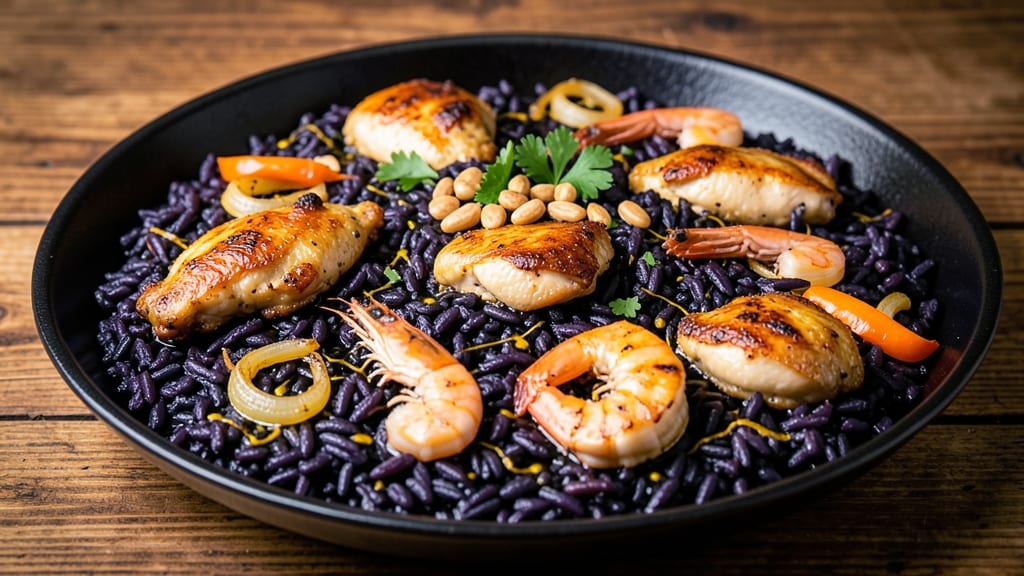
This black rice paella recipe transforms traditional paella with deep purple grains and smoky saffron-infused crust that delivers restaurant-quality depth. The key lies in balancing black rice's earthy texture with aromatic saffron and socarrat formation—where the crispy bottom layer becomes the star.
I've refined this method over countless batches to ensure perfect rice texture and flavor harmony.
What sets this apart is the black rice's unique ability to absorb flavors while maintaining its distinctive color and nutty profile. The socarrat technique—achieving that coveted crispy bottom—requires precise heat control and timing, but the result is worth every effort.
Whether you choose chicken, seafood, or a vegetarian version, this paella delivers both visual drama and rich, satisfying flavors.
Ingredients for black rice paella
Transform traditional paella with these premium ingredients designed for smoky saffron crust and nutty black rice perfection.
| Ingredient | Amount | Notes |
|---|---|---|
| Black Rice 🌾 | 1 ½ cups | Uncooked, rinsed thoroughly |
| Saffron Threads 🌼 | ¼ tsp | High-quality, premium grade |
| Chicken Thighs 🍗 | 1 ½ lb | Bone-in, skin-on preferred |
| Chicken Broth 💧 | 3 cups | Homemade or high-quality store-bought |
| Olive Oil 🫒 | ½ cup | Extra-virgin, for richness |
| Yellow Onion 🧅 | 1 whole | Diced, medium size |
| Garlic Cloves 🧄 | 6 cloves | Minced, fresh preferred |
| Red Bell Pepper 🌶️ | 1 whole | Diced, any color |
| Medium Tomatoes 🍅 | 2 whole | Diced, Roma preferred |
| Green Beans 🥦 | 1 lb | Trimmed, French cut |
| Lemon Juice 🍋 | 2 tbsp | Freshly squeezed |
| Salt 🧂 | 1 ½ tsp | Diamond Crystal preferred |
| Ground Black Pepper 🌶️ | ½ tsp | Freshly ground |
| Smoked Paprika 🌶️ | 1 tsp | For smoky depth |
| Fresh Parsley 🌿 | ¼ cup | Chopped, for garnish |
The black rice is the star—look for well-rinsed, uncooked grains at specialty stores like Whole Foods or Asian markets. Saffron quality matters most here; Spanish or Iranian threads deliver the deepest flavor. Chicken thighs with skin and bone add richness, but bone-in, skin-on cuts are non-negotiable for authentic texture. For the broth, homemade or high-end store-bought prevents the metallic taste that ruins paella. The olive oil should be extra-virgin—anything less will compromise the dish's depth.
No saffron? Turmeric at one-third the amount mimics the color but lacks the floral aroma. Substitute chicken with shrimp or mussels for seafood paella, but adjust cooking times carefully. The tomatoes can be canned San Marzano if fresh aren't available—just drain well. Green beans? Frozen works perfectly if fresh are out of season. For the paprika, smoked variety is essential—regular paprika won't give that signature smokiness. The lemon juice can be bottled in a pinch, but fresh is always better.
Store uncooked rice in a cool, dark place for up to 6 months, while saffron keeps its potency for 1 year if refrigerated. Prepped ingredients like diced onions and peppers stay fresh 3-4 days in sealed containers. The cooked paella reheats beautifully—low heat with a splash of broth prevents drying. For leftovers, consume within 2 days or freeze portions for 3 months. The socarrat layer? Best eaten immediately—it loses crispiness when reheated.
Why You'll Love This Recipe
- One-Pan Magic: I swear by this recipe when I’m too tired to scrub a million dishes. The chicken thighs brown right in the same pan where the black rice soaks up the saffron-infused broth—no extra pots, no stress.
- Saffron-Powered Wow: That first pinch of saffron threads? It turns the rice a dramatic, deep purple and adds this unreal floral aroma that sticks with you. Honestly, it’s the kind of dish that makes people pause mid-bite.
- Weeknight or Weekend Star: I make this when my in-laws visit (they love the drama of black rice) and when I’m too lazy to plan (it’s that foolproof). Same recipe, just different vibes—perfect for both.
- Budget-Friendly Luxury: Black rice might sound fancy, but a cup goes a long way, and chicken thighs are cheaper than breasts. Leftovers? Even better—reheat with a splash of broth, and it’s just as rich the second day.
Step-by-step instructions for black rice paella
Master this technique and you'll achieve perfectly balanced black rice with a signature smoky saffron crust.
Prepare the Black Rice and Saffron Infusion
Rinse the 1.5 cups black rice thoroughly under cold water until the water runs clear. This removes excess starch that would make the rice gummy. Soak the rice in fresh cold water for 20 minutes - this helps achieve that signature creamy texture while maintaining the deep purple color.
While the rice soaks, create the saffron infusion by steeping the 0.25 tsp saffron threads in ½ cup hot chicken broth for 10 minutes. The threads should fully dissolve, releasing their vibrant color and delicate floral aroma. This infusion will be the foundation of your paella's signature flavor and color.
Sear the Chicken Thighs and Build the Sofrito Base
Pat the 1.5 lb chicken thighs dry with paper towels and season generously with 1.5 tsp salt, 0.5 tsp ground black pepper, and 1 tsp smoked paprika. Heat 0.25 cup olive oil in a paella pan or large skillet over medium-high heat. Sear the chicken skin-side down for 5-6 minutes until golden brown and crispy, then flip and cook for another 4-5 minutes until internal temperature reaches 165°F. Remove and set aside.
In the same pan, reduce heat to medium and add 0.25 cup olive oil. Sauté the diced yellow onion for 4 minutes until softened. Add the 6 minced garlic cloves and diced red bell pepper, cooking for another 3 minutes until fragrant. Stir in the diced medium tomatoes and cook for 5 minutes until they break down into a thick sauce. This sofrito will form the flavor base of your paella.
Layer Ingredients and Create the Smoky Crust
Drain the soaked black rice and add it to the paella pan with the sofrito. Stir gently to coat the grains in the flavorful oil. Pour in the remaining 2½ cups chicken broth and the saffron infusion, then add the trimmed green beans and lemon juice. Bring to a gentle simmer.
Arrange the seared chicken thighs on top of the rice mixture. Cover the pan with foil and cook for 15 minutes on medium heat. Then remove the foil and increase heat to medium-high. Let the paella cook uncovered for 10-12 minutes, stirring gently once, until the rice absorbs most of the liquid and forms a crispy socarrat (smoky crust) on the bottom.
Finish and Rest for Perfect Texture
When the rice is tender and the crust is golden brown, remove from heat and let the paella rest for 5 minutes covered with foil. This resting period allows the juices to redistribute throughout the rice, ensuring each bite is perfectly moist. The crust will remain crispy while the rice absorbs any remaining liquid.
Garnish with the 0.25 cup chopped fresh parsley just before serving. The vibrant green contrasts beautifully with the deep purple rice and golden chicken. Serve immediately with crusty bread to soak up any remaining juices - this paella tastes best straight from the pan while the crust is still crisp.
Pro Tips For Making Black Rice Paella
- TOAST THE BLACK RICE: I learned this the hard way—skipping the quick toast in olive oil before adding liquid turns your black rice into mush. Heat the rice in the pan for 2-3 minutes until it smells nutty and the edges darken slightly. This step locks in texture and prevents that sad, gluey consistency.
- SOAK THE SAFFRON: Don’t just toss saffron threads into the broth like confetti. Crush them lightly with your fingers, then steep in 2 tablespoons warm broth for 10 minutes. This extracts the full flavor without bitterness—trust me, your paella will taste like it came from a Spanish kitchen, not a sad midweek dinner.
- DON’T STIR THE PAELLA: Resist the urge to poke around like you’re checking on a slow-cooker casserole. Once the rice hits the broth, leave it alone except to gently shake the pan if needed. Stirring breaks the crust and releases starch too early, turning your dish into a uniform paste instead of the prized socarrat (that crispy bottom layer).
- USE BONE-IN THIGHS: Skin-on, bone-in thighs add depth you won’t get from boneless cuts. The bones infuse the broth with collagen, and the skin renders into crispy, flavor-packed bits. If you’re short on time, at least leave the skin on—it’s the difference between "good" and "wow" in this dish.
Essential equipment for this recipe
Paella Pan Essentials
A traditional 14-inch Spanish paella pan is ideal for this recipe—its wide, shallow design ensures even heat distribution and proper socarrat formation. I recommend a carbon steel pan like those from Lodge or Mauviel for superior heat retention and responsiveness.
If you don’t have one, a heavy-bottomed cast iron skillet (12-inch minimum) works in a pinch, though it may require slightly lower heat to prevent hot spots. 🔥
Heat Control Tools
Precision heat management is critical for black rice paella. A thermometer probe (like the ThermoWorks Smoke) helps monitor the pan’s surface temperature—aim for 325-350°F during the final crusting phase.
For gas stoves, I use a diffuser disc to spread heat evenly, while electric stoves benefit from a heavy-duty trivet to prevent warping.
Socarrat Mastery Kit
Achieving the perfect socarrat requires a few extra tools. A small offset spatula (like the OXO Good Grips) helps gently scrape and distribute the rice without breaking the crust. For testing doneness, a long wooden skewer lets you probe the rice without disturbing the bottom layer.
Keep a small bowl of ice water nearby to plunge the skewer between tests—this prevents sticking and gives an accurate read.
Broth Management
Liquid control is everything in paella. A fine-mesh strainer ensures your broth is free of impurities, while a liquid measuring cup with markings lets you monitor absorption precisely.
I also keep a small pitcher of reserved broth on hand to add 1-2 tablespoons at a time if the rice threatens to dry out before crusting. A basin with cold water nearby helps quickly cool any accidental spills from the hot pan.
Garnish and Serve
Fresh herbs and presentation tools elevate the dish. A sharp chef’s knife and cutting board are essential for chopping parsley and any last-minute garnishes. For serving, I use a large wooden board or slate platter to showcase the paella’s dramatic colors.
A small ladle helps portion individual servings while preserving the crust’s integrity. 💫
Nutrition facts
Frequently asked questions
Why does black rice change color when cooked?
The deep purple hue of black rice comes from anthocyanins, the same antioxidants found in blueberries. When cooked, these compounds react with the acidic broth (especially lemon juice) and heat, creating a stunning magenta-to-black transformation. The color actually intensifies as it cools, making your paella look even more dramatic!
Can I substitute black rice with regular rice?
While you can use brown rice or jasmine rice as a substitute, the texture and visual impact will differ significantly. Black rice has a slightly chewy, nutty profile that pairs perfectly with saffron's floral notes. If you must substitute, use 10% less liquid since black rice absorbs broth more slowly. The color won't be the same, but the technique remains identical!
How do I know when the socarrat is ready?
The perfect socarrat should be golden-brown with small crispy spots, not fully blackened. Test by gently pressing the rice with a wooden skewer—it should hold its shape but have a slightly charred bottom. If it's too pale, increase heat slightly; if too dark, reduce immediately. The crust forms in the last 5-7 minutes of cooking, so stay attentive!
What's the best way to reheat black rice paella?
Reheat gently in a skillet over low heat with 2-3 tablespoons of broth to restore moisture. Cover with foil and warm for 5-7 minutes, then uncover to crisp the socarrat again briefly. Microwaving destroys the crust's texture—this method preserves the dish's integrity. For leftovers, consume within 2 days for best quality.
Can I make this vegetarian?
Replace chicken with firm tofu (pressed and cubed), mushrooms (shiitake or portobello), or artichoke hearts. Boost umami with 1 tbsp soy sauce> in the broth and add roasted red peppers> for extra depth. The black rice's earthy flavor complements plant-based proteins beautifully. Just reduce cooking time by 3-5 minutes since vegetables cook faster!