
Desserts
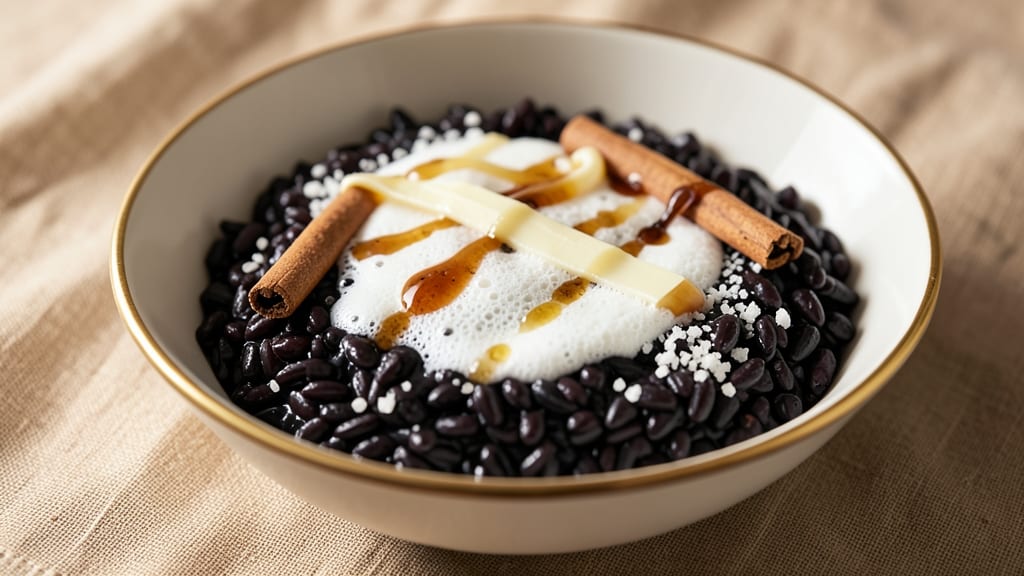
This black rice pudding recipe delivers a luxurious dessert with deep purple velvet texture and toasted coconut crunch that transforms any meal into something special. The secret lies in properly rinsing the black rice to remove excess starch, which creates that signature creamy yet firm texture.
I've perfected this method over years of testing, ensuring each bite delivers both visual drama and rich, nutty flavor from the coconut.
What sets this dessert apart is the balance of textures—silky rice, creamy coconut milk, and crispy toasted coconut on top. The recipe uses simple ingredients like black rice, milk, sugar, and coconut milk, but the technique makes all the difference.
Cooking the rice slowly with milk creates that velvety consistency, while the toasted coconut adds a delightful contrast that keeps everyone reaching for seconds.
By the end, you'll have a dessert that looks as impressive as it tastes—deep purple layers that almost glow, topped with golden coconut flakes. The flavor is subtly sweet with warm coconut notes, making it perfect for special occasions or when you want to impress without complicated techniques.
This pudding stays creamy even after chilling, ensuring every spoonful is as satisfying as the first.
Serve it warm with a drizzle of caramel or chilled with fresh berries for a modern twist. The recipe scales easily for gatherings, and leftovers keep well in the fridge for up to three days. Here's how to create this restaurant-worthy dessert at home.
Ingredients for black rice pudding
Simple ingredients transform into a showstopping dessert with deep purple velvet texture and toasted coconut crunch.
| Ingredient | Amount | Notes |
|---|---|---|
| Black Rice 🍚 | 1 ½ cups | Uncooked, rinsed thoroughly |
| Whole Milk 🥛 | 4 cups | Full-fat for creaminess |
| Coconut Milk 🥥 | 13 ½ oz | Full-fat canned variety |
| Granulated Sugar 🍯 | ¾ cup | Adjust to taste |
| Unsalted Butter 🧈 | 2 tbsp | Cold, cut into pieces |
| Vanilla Extract 🍃 | 1 tsp | Pure, high-quality |
| Salt 🧂 | ¼ tsp | Fine sea salt |
| Shredded Coconut 🥥 | 1 cup | Unsweetened, toasted |
| Toasted Coconut Flakes 🥥 | ¼ cup | For garnish |
| Cinnamon Sticks 🌿 | 2 whole | For infusion |
| Fresh Berries 🍓 | 1 cup | Optional garnish |
| Heavy Cream 🥛 | ½ cup | For optional topping |
| Caramel Sauce 🍯 | ¼ cup | For drizzling |
The black rice is the star—look for well-rinsed packages at Asian markets or specialty grocery stores like Whole Foods. Unrinsed rice turns gummy, so don't skip this step. Full-fat coconut milk makes all the difference here—store-brand cans work fine, but premium brands like Goya add richer flavor. For the coconut flakes, toast them in a dry pan until golden—this adds that irresistible crunch. The butter should be cold when added to prevent curdling the milk mixture.
No full-fat coconut milk? Light coconut milk plus 1 tbsp heavy cream works as a substitute. Short on black rice? Wild rice or forbidden rice blends beautifully, though the color will differ. The vanilla extract should be pure—imitation extracts lack depth. For extra richness, swap half the milk for heavy cream. The cinnamon sticks infuse subtle warmth; if you prefer, ground cinnamon (1/4 tsp) works too. For a modern twist, add 1/2 tsp cardamom with the cinnamon.
Store leftovers in an airtight container for up to 3 days—it actually improves overnight. For serving, chill for at least 2 hours to let flavors meld. The toasted coconut flakes stay crisp for 1 week if stored in a sealed container. Double the recipe for gatherings—this dessert reheats beautifully, making it perfect for potlucks or holiday menus.
Why You'll Love This Recipe
- One-Pot Magic: I swear by this—just toss the rice, milk, and coconut cream into one pot, stir, and let it simmer. No fancy layers, no straining, no mess. The black rice softens into that perfect creamy texture all by itself.
- Velvet & Spice: That deep, nutty flavor from the black rice? It’s like a warm hug in a bowl. The coconut milk adds this luscious richness, while the butter and sugar caramelize just enough to make every spoonful feel like dessert—even when it’s breakfast.
- Meal Prep MVP: Between us, this is my go-to for lunches all week. Make a big batch on Sunday, and you’ve got a cool, creamy pudding that stays thick and delicious for days. Honestly? I’ve had it cold, warm, or even tossed with fruit—it’s that versatile.
- Budget Luxury: Black rice might sound fancy, but it’s actually cheaper than white rice per pound. Plus, the milk and coconut cream stretch far, so you’re getting restaurant-quality richness without the price tag. My wallet and my taste buds win.
Step-by-step instructions for black rice pudding
This method delivers a velvety, deep purple pudding with perfect texture every time.
Rinse and Toast the Black Rice
Place the 1.5 cups black rice in a fine-mesh strainer and rinse thoroughly under cold water until the water runs clear. This removes excess starch that can make the pudding gummy. Transfer the rinsed rice to a medium saucepan and add the 4 cups whole milk and 2 whole cinnamon sticks.
Bring the mixture to a boil over medium-high heat, then immediately reduce to medium-low heat. Let it simmer uncovered for 20 minutes, stirring occasionally. You'll notice the rice begins to soften and the milk starts to reduce slightly. This initial cooking step breaks down the rice's outer layer, ensuring a smoother texture later.
After 20 minutes, stir in the 0.25 teaspoon salt and 0.75 cup granulated sugar. The sugar should dissolve completely. Add the 13.5 ounces coconut milk and continue simmering for another 25-30 minutes, stirring frequently. The mixture should thicken noticeably, and the rice should be tender but still hold its shape slightly. If it becomes too thick before the rice is fully cooked, add 1-2 tablespoons of water at a time to maintain the proper consistency.
Finish Cooking and Add Butter
Once the rice is tender and the mixture has thickened to a creamy pudding consistency (it should coat the back of a spoon), remove the cinnamon sticks. Stir in the 2 tablespoons cold unsalted butter, cut into small pieces, until fully melted and incorporated. This step adds richness and helps create a silky texture.
Continue cooking for an additional 5-7 minutes on low heat to ensure all the butter melts completely and the flavors meld together. The pudding should now have a velvety appearance with a deep purple hue. Remove from heat and let it cool slightly for 10 minutes. This resting period allows the flavors to develop fully.
While the pudding cools, toast the 1 cup shredded coconut in a dry skillet over medium heat for 3-4 minutes, stirring constantly, until golden brown and fragrant. Remove from heat and set aside to cool. This adds a delightful crunchy contrast to the creamy pudding.
Layer and Chill for Perfect Texture
Transfer the warm pudding to a serving dish or individual ramekins. Gently fold in the 1 teaspoon vanilla extract and the toasted shredded coconut, reserving about 2 tablespoons of the coconut for garnish. The coconut should be evenly distributed throughout the pudding.
Cover the dish with plastic wrap and refrigerate for at least 4 hours, or preferably overnight. This chilling time is crucial—it allows the pudding to set properly and develop its signature creamy yet firm texture. The longer it chills, the more pronounced the flavors become.
Before serving, garnish each portion with the reserved toasted coconut flakes and a few fresh berries. Drizzle with the 0.25 cup caramel sauce and a dollop of 0.5 cup heavy cream if desired. The contrast of warm caramel and cool pudding creates a perfect balance of textures and temperatures.
Serve with Optional Toppings
To serve, run a knife around the edges of the pudding if using ramekins, then invert onto plates. The deep purple color should be vibrant, and the texture should be smooth yet slightly resistant to a spoon—neither too firm nor too runny.
Each serving should have a perfect balance of creamy rice pudding, toasted coconut crunch, and fresh berry brightness. The caramel sauce adds a sweet contrast that complements the natural nuttiness of the black rice. Serve immediately to enjoy the ideal temperature contrast between the chilled pudding and any warm toppings.
Pro Tips For Making Black Rice Pudding
- Rinse Until Water Runs Clear: Black rice clings to grit like it’s auditioning for a gritty indie film. Dump it in a fine-mesh strainer and swirl it under cold water for at least 2 minutes—yes, even if it looks clean after 30 seconds. The extra scrub removes that chalky residue that turns your creamy pudding into a textural letdown.
- Simmer, Don’t Boil: You’re not making rice for a picnic—keep that heat at a lazy simmer, just enough to see tiny bubbles breaking the surface. Boiling turns black rice into mush faster than a bad breakup, and you’ll end up with a gluey pudding instead of that perfect, velvety texture. Patience here pays off.
- Toast the Rice First: Dry-toast the rinsed black rice in a pot over medium heat for 2–3 minutes until it smells nutty and fragrant. This step deepens the flavor and prevents the pudding from tasting like it’s been swimming in milk since the 1950s. (Trust me, your taste buds will notice.)
- Stir in Coconut Milk Last: Add the coconut milk in the final 10 minutes of cooking—otherwise, it curdles like a bad science experiment. Heat it separately until just warm, then whisk it in gently. This keeps the pudding lusciously thick without separating, and the creaminess hits you right where it counts.
Make-ahead tips for this recipe
Prep Ahead Strategy
Start by rinsing and partially cooking the black rice up to 24 hours ahead—this is my secret for saving time. After the initial 20-minute simmer with milk, transfer the mixture to an airtight container and refrigerate.
When ready to finish, simply reheat it gently on the stovetop with coconut milk and complete the cooking process. This method preserves the rice's texture perfectly. 💡
Chill Time Mastery
The pudding needs at least 4 hours to set properly, but I recommend making it the night before. This allows flavors to meld completely and ensures the perfect creamy-yet-firm texture.
Store it in an airtight container with plastic wrap pressed directly on the surface to prevent a skin from forming. The longer it chills, the richer the flavor becomes.
Coconut Prep Shortcut
Toast your shredded coconut in advance and store it in a sealed container for up to 1 week. I like to make a big batch—just 1 cup at a time in a dry skillet over medium heat for 3-4 minutes.
Let it cool completely before storing to maintain crispness. This saves time on serving day and adds that essential crunch without last-minute fuss.
Make-Ahead Serving Ideas
For gatherings, assemble the pudding in individual ramekins and refrigerate. When guests arrive, simply garnish with toasted coconut flakes and fresh berries. The contrast of warm caramel sauce drizzled over chilled pudding creates a showstopping presentation. I've served this at holiday parties where it disappeared within minutes—always a crowd-pleaser. ✨
Freezer-Friendly Option
This pudding freezes beautifully for up to 2 months if you need to prep even further ahead. After chilling, transfer to a freezer-safe container, leaving 1-inch headspace for expansion.
Thaw overnight in the refrigerator before serving. The texture remains creamy, though the coconut topping may soften slightly—just add fresh toasted flakes when serving.
Reheating Leftovers
Leftover pudding reheats best on the stovetop over low heat with a splash of milk or coconut milk to restore creaminess. Stir constantly to prevent scorching, and add a pinch of salt if needed.
For a quick fix, microwave individual portions for 45-60 seconds at 50% power, then stir vigorously. The texture will be slightly softer but still delicious—perfect for a fast dessert. 🔥
Nutrition facts
Frequently asked questions
Why does my black rice pudding turn out gummy?
Gummy texture usually happens when excess starch from the rice isn't rinsed properly. Always rinse the 1.5 cups black rice thoroughly under cold water until the water runs clear before cooking. Also, avoid overcooking—remove from heat once the mixture reaches a creamy consistency (about 45-50 minutes total simmering time).
Can I make this pudding without coconut milk?
Yes! For a lighter version, substitute with 1 cup heavy cream plus 1/2 cup whole milk. For extra richness, use 1 cup half-and-half instead. The flavor will be less tropical but still delicious. The coconut milk adds depth, but it's not essential for the basic texture.
How do I fix pudding that's too thin?
If your pudding isn't thick enough, mix 1 tablespoon cornstarch with 1 tablespoon cold water, then stir it into the warm pudding. Simmer for 2-3 minutes until thickened. For a quicker fix, whisk in 1/4 cup cold milk and 1 tablespoon butter, then reheat gently. The coconut milk helps thicken naturally during chilling, so proper refrigeration time is key.
What's the best way to store leftovers?
Transfer to an airtight container and refrigerate for up to 3 days. For longer storage, freeze for 2 months. When reheating, add a splash of milk or coconut milk to restore creaminess. The toasted coconut topping should be added fresh to maintain crunch. Always cover the surface with plastic wrap to prevent skin formation.
Can I use brown sugar instead of white?
Brown sugar adds a subtle caramel note that pairs beautifully with the coconut. Use the same 0.75 cup measurement, but reduce the total sugar slightly to 0.65 cups if your brown sugar is very moist. The molasses content makes it sweeter, so adjust to taste. The pudding will have a deeper, more complex flavor profile.