
Main Courses
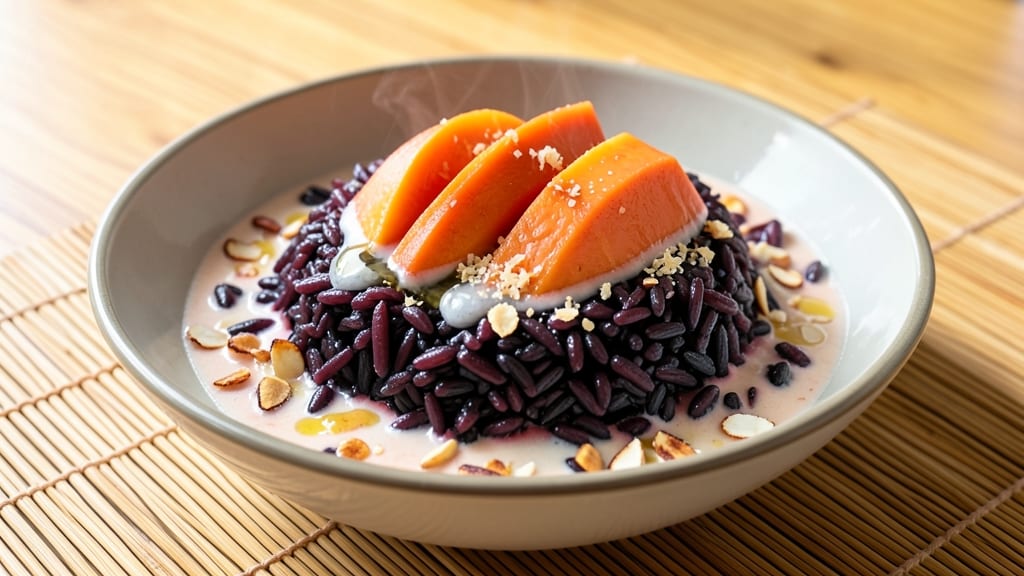
This black sticky rice with mango recipe transforms a traditional Southeast Asian dessert into a modern, restaurant-worthy treat that balances earthy depth with tropical sweetness. The key lies in perfectly cooking the black rice—its deep purple hue and naturally sweet, nutty flavor—while pairing it with ripe mango for a contrast that feels both luxurious and refreshing. What makes this recipe special is the silky texture of the rice, achieved through a gentle simmer with coconut milk and palm sugar, creating a dish that’s as visually stunning as it is delicious.
The result is a harmonious blend of flavors and textures: the creamy, slightly chewy black rice absorbs the aromatic coconut milk, while the mango adds a bright, juicy sweetness that cuts through the richness.
This dish is not only a celebration of tropical ingredients but also incredibly versatile—adapt it for dietary preferences by swapping palm sugar for coconut sugar or using coconut cream for a vegan twist.
Whether served as a dessert or a light, satisfying meal, this recipe delivers a taste of paradise in every bite.
Ingredients for black sticky rice with mango
Tropical flavors meet silky texture in this vegetarian dessert masterpiece.
| Ingredient | Amount | Notes |
|---|---|---|
| Black Sticky Rice 🍚 | 1 ½ cups | Uncooked, long-grain preferred |
| Coconut Milk 🥥 | 1 ½ cups | Full-fat, canned preferred |
| Palm Sugar 🍯 | ½ cup | Or coconut sugar as substitute |
| Ripe Mango 🥭 | 2 cups | Diced, medium-ripe preferred |
| Water 💧 | 2 cups | Filtered preferred for clarity |
| Coconut Oil 🫒 | 2 tbsp | For cooking rice, virgin preferred |
| Lime Juice 🍋 | 2 tbsp | Freshly squeezed, organic preferred |
| Vanilla Extract 🌸 | 1 tsp | Pure, high-quality preferred |
| Salt 🧂 | ½ tsp | Fine sea salt preferred |
| Toasted Coconut Flakes 🥥 | ¼ cup | For garnish, unsweetened preferred |
| Fresh Mint Leaves 🌿 | ¼ cup | Chopped, for garnish |
| Red Food Coloring 🎨 | ½ tsp | Natural, optional for color enhancement |
The black sticky rice is the heart of this dish—look for long-grain varieties at specialty Asian markets or well-stocked grocery stores like Whole Foods or Trader Joe's. If you can't find it, black jasmine rice works as a close substitute. The coconut milk should be full-fat for that rich, creamy texture; brands like Thai Kitchen or Aroy-D are reliable choices. Palm sugar adds that authentic sweetness, but coconut sugar is a perfect one-to-one swap if you prefer. For the mango, ripe but firm fruit is key—it should yield slightly to gentle pressure but not be mushy. If you're using canned mango, drain it well and pat dry to avoid excess moisture in your dish.
No palm sugar? Coconut sugar or brown sugar work beautifully—just reduce the amount slightly since they're denser. Short on coconut milk? Coconut cream gives you that same luxurious texture, though it's thicker so you may need to thin it with a splash of water. For the lime juice, fresh is non-negotiable—bottled lime juice lacks the bright acidity that cuts through the richness. If you're making this ahead, the rice keeps well in the fridge for up to 3 days, but the mango should be added fresh just before serving to maintain its vibrant color and texture. The red food coloring is optional but adds that stunning visual contrast—use natural beet powder if you want to keep it entirely plant-based.
This dish is best enjoyed fresh, but you can prep the rice mixture a day ahead and store it in an airtight container in the fridge. When ready to serve, simply reheat the rice gently with a splash of coconut milk, then fold in the fresh mango, lime juice, and garnishes. The coconut flakes and mint should be added just before serving to keep them crisp. This recipe keeps for 3-4 days in the refrigerator, though the texture of the mango may soften over time. For a vegan version, simply ensure your coconut milk and palm sugar are certified vegan—most brands are, but it's always good to double-check. The dish also freezes beautifully for up to 2 months, though the texture may be slightly altered upon thawing.
Why You'll Love This Recipe
- Here’s what sold me: the way the palm sugar melts into the coconut milk, creating this rich, velvety sauce that clings to the chewy rice. Then you slice in that ripe mango—suddenly, it’s like dessert and dinner had a beautiful, balanced baby. Honestly, I’ve made this three times this week.
- I’ll be real: this recipe stretches further than you’d think. A single batch feeds four for dinner, and the leftovers? Even better the next day—cold rice turns into a tropical pudding. Plus, black sticky rice is cheaper than you’d assume, and mango stays affordable when you’re smart about ripeness. Win-win.
Step-by-step instructions for black sticky rice with mango
Here's how to create a perfectly balanced dessert where silky rice meets tropical mango sweetness.
Prepare the Black Sticky Rice
Rinse the 1.5 cups black sticky rice thoroughly under cold water until the water runs clear. This removes excess starch that would make the rice gummy. Soak the rice in 2 cups water for 30 minutes—this hydration step ensures even cooking and prevents hard grains.
In a medium saucepan, combine the soaked rice with 2 cups water, 2 tbsp coconut oil, 0.5 tsp salt, and 0.5 tsp red food coloring. Bring to a boil over medium-high heat, then immediately reduce to a simmer. Cover tightly and cook for 25-30 minutes until the rice absorbs all liquid and becomes tender. The rice should be translucent with a slight sheen—this indicates perfect doneness. If it's still firm, add 2 tbsp water and cook another 5 minutes.
Cook the Mango-Coconut Mixture
While the rice cooks, prepare the mango mixture. In a separate saucepan, combine 1.5 cups coconut milk, 0.5 cup palm sugar, 2 tbsp lime juice, 1 tsp vanilla extract, and 2 cups ripe mango. Heat over medium-low heat until the sugar dissolves completely and the mixture reaches a gentle simmer.
Simmer for 8-10 minutes until the mango softens slightly and the mixture thickens into a light syrup. You'll know it's ready when it coats the back of a spoon smoothly. Remove from heat and let cool for 5 minutes—this prevents the rice from becoming mushy when combined later.
Combine and Garnish
Gently fold the cooked black sticky rice into the warm mango-coconut mixture using a silicone spatula. Work carefully to maintain the rice's texture while distributing the fruit evenly. The mixture should be creamy with visible rice grains—this indicates proper integration.
Transfer to serving bowls and let sit for 10 minutes to allow flavors to meld. Garnish each serving with 0.25 cup toasted coconut flakes and 0.25 cup chopped fresh mint leaves. The coconut adds nutty contrast while the mint brightens the tropical sweetness.
Serve Immediately
Serve the black sticky rice with mango while still warm for the best texture contrast. The rice should be tender yet slightly chewy, with pockets of creamy coconut-mango sauce throughout. The presentation should showcase the deep purple-black rice against the vibrant orange mango and green mint garnish.
This dessert balances rich coconut sweetness with the natural acidity of lime and mango. The black rice's earthy flavor grounds the tropical notes, creating a harmonious blend that's both exotic and comforting. Store leftovers in an airtight container for up to 2 days—reheat gently in the microwave with a splash of water to restore texture.
Pro Tips For Making Black Sticky Rice With Mango
- SOAK THE RICE OVERNIGHT: I learned this the hard way—black sticky rice needs at least 6 hours of soaking (yes, overnight is better) or it’ll turn out gummy instead of creamy. Rinse it first, then cover it with fresh water and a pinch of salt. Trust me, your future self will notice the difference when the grains stay distinct and tender.
- COOK IT LOW AND SLOW: Black sticky rice is stubborn—don’t rush it. After initial boiling, drop the heat to the lowest simmer possible (or switch to a pot-in-pot method if you’re nervous). Too much heat now means mushy rice later, and no one wants that when you’re going for that perfect, glossy texture. Patience here guarantees that chewy, satisfying bite.
- USE FIRM RIPE MANGO: Overripe mango turns to mush in coconut milk, and that’s a tragedy. Pick fruit that’s just soft to the touch but still holds its shape—think "yielding but not squishy." Slice it thin and toss in the last 10 minutes of cooking so it soaks up the coconut-palm sugar syrup without falling apart. (Pro move: reserve a few slices for garnish—they look better whole.)
- SWEAT THE PALM SUGAR: Don’t just dump palm sugar into the coconut milk—it’ll clump and leave grainy bits. Instead, melt it first: mix it with a splash of water in a small pan until it turns into a smooth syrup (about 2 minutes on medium). Then stir it into the warm coconut milk. This ensures a silky-smooth sauce that coats every grain of rice, not a gritty surprise.
Wine and beer pairings for these flavors
Tropical White Wine
For this dish, I recommend a dry Riesling from Thailand or Australia—its crisp acidity and subtle floral notes complement the coconut and mango beautifully. The slight sweetness in some Rieslings also mirrors the natural sugars in the fruit.
I love Yellow Tail Riesling for its approachable balance, or Cloudy Bay for a more premium experience. Serve slightly chilled (45-50°F) to enhance the refreshing contrast with the warm dessert. 🍷
Coconut-Inspired Cream Liqueur
A splash of coconut cream liqueur like Malibu or Coconut Rum (such as Bacardi Coconut) adds a luxurious touch. Mix 1 oz liqueur with 3 oz sparkling water and a squeeze of lime for a tropical cocktail that mirrors the dessert's flavors.
For a non-alcoholic option, use coconut water mixed with muddled mint and lime. The creamy texture enhances the dish's tropical profile without overpowering it.
Light Beer Pairings
If you prefer beer, opt for a light lager like Peroni or Heineken—their crisp, clean profiles won’t compete with the dessert’s rich coconut and mango flavors.
For a fruitier option, try a Belgian witbier such as Stella Artois Wit or Hoegaarden, which adds a subtle citrus and spice note that pairs wonderfully with the lime and mint garnish. Serve at 40-45°F to maintain the beer’s refreshing quality.
Spiced Rum Cocktail
For a bolder pairing, mix 1.5 oz dark rum (like Appleton Estate or Diplomático) with 0.5 oz lime juice, 0.5 oz honey syrup (equal parts honey and hot water), and a dash of cinnamon.
The warm spices echo the earthy black rice, while the rum’s depth balances the tropical sweetness. Serve over crushed ice for a refreshing contrast to the warm dessert. 🍹
Non-Alcoholic Sparkling Option
For a refreshing non-alcoholic match, try sparkling coconut water (like Vita Coco) chilled to 38-40°F. The effervescence cleanses the palate between bites, while the coconut flavor enhances the dessert’s tropical theme.
Garnish with a lime wedge and mint sprig for an elegant touch that ties back to the dish’s garnishes.
Nutrition facts
Frequently asked questions
Why does black sticky rice turn purple when cooked?
The deep purple-black color comes from anthocyanins—natural pigments in the rice that react to heat and acidity. These antioxidants give the rice its earthy, slightly nutty flavor while creating that stunning visual contrast with the bright mango. The red food coloring enhances the hue but isn't necessary for flavor.
Can I make this recipe without palm sugar?
Use coconut sugar as a 1:1 substitute—it has a similar caramel-like sweetness. For a more refined taste, brown sugar works too, though it has a slightly different molasses flavor. Reduce the amount by 10% since these sugars are denser than palm sugar.
How do I prevent the black rice from turning mushy?
Rinse the rice thoroughly before soaking to remove excess starch, and don't overcook it. The rice is done when it's tender but still holds its shape—test by pressing a grain between your fingers. If using a pressure cooker, reduce cooking time to 15 minutes instead of simmering. Always fold gently when combining with the mango mixture.
What's the best way to store leftovers?
Keep the rice mixture in an airtight container in the fridge for up to 3 days. For best texture, reheat gently in the microwave with 1 tbsp coconut milk and cover for 30 seconds. The mango should be added fresh before serving, as it softens when refrigerated. Freeze for up to 2 months but expect slight texture changes upon thawing.
Can I use canned mango instead of fresh?
Yes, but drain and pat the mango dry thoroughly to avoid a watery texture. For best results, use ripe mango chunks in juice (not syrup) and simmer slightly longer (5-8 minutes) to reduce excess moisture. Fresh mango adds brighter flavor and better presentation, but canned works in a pinch—just adjust the coconut milk ratio if needed.