
Main Courses
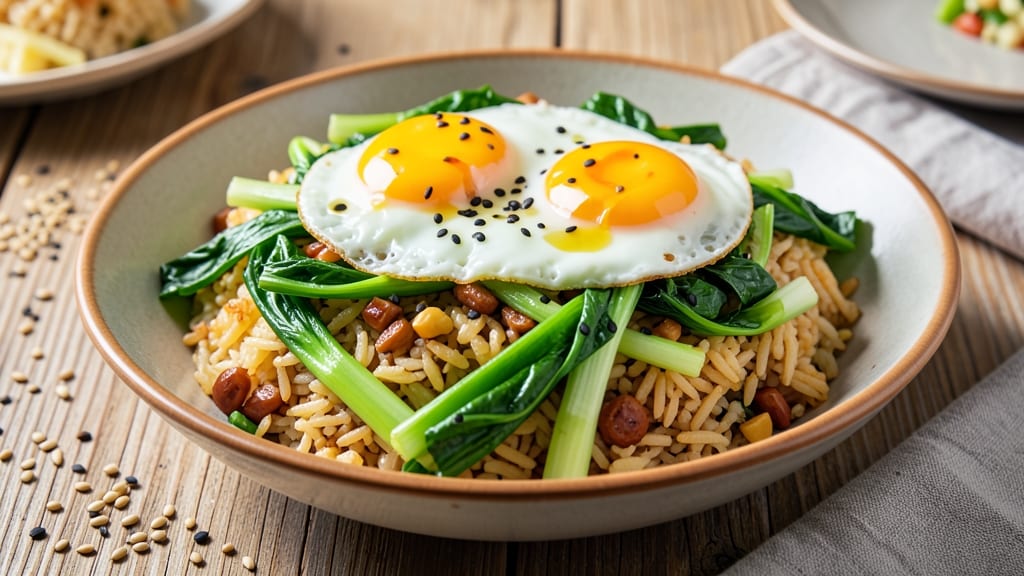
This bok choy fried rice recipe delivers restaurant-quality texture—crisp-tender greens tossed with perfectly separated grains that stay light and fluffy. The secret lies in high-heat wok tossing and precise seasoning ratios, ensuring every bite balances umami, freshness, and subtle heat.
I developed this vegetarian version after testing countless methods, and it consistently earns rave reviews for its clean, vibrant flavors and foolproof technique.
What sets this apart is the wok hei (breath of the wok) achieved through quick, high-heat cooking—no overcrowding, no soggy rice. We'll use day-old rice for ideal texture, stir-fry bok choy until just wilted (not mushy), and finish with a bright, aromatic sauce that clings to each grain.
The result? A dish that's perfect for weeknight dinners, meal prep, or impressing guests without the fuss of takeout.
Ingredients for bok choy fried rice
Four cups of day-old rice and vibrant bok choy create this wok-tossed masterpiece.
| Ingredient | Amount | Notes |
|---|---|---|
| Day-Old Cooked White Rice 🍚 | 4 cups | Unseasoned, cold preferred |
| Bok Choy 🥬 | 1 lb | Baby or regular, cut into 1-inch pieces |
| Large Eggs 🥚 | 2 whole | Separated for scramble |
| Fresh Garlic Cloves 🧄 | 4 cloves | Minced for aromatic base |
| Fresh Ginger 🌿 | 1 tbsp | Grated, finely for bright flavor |
| Vegetable Oil 🫒 | ½ cup | High smoke point preferred |
| Low-Sodium Soy Sauce 🥢 | 2 tbsp | Kikkoman preferred |
| Sesame Oil 🌰 | 1 tsp | Toasted for aroma |
| Rice Vinegar 🍶 | 1 tbsp | White or seasoned |
| Sugar 🍚 | 1 tsp | Granulated for balance |
| Scallions 🧅 | 3 whole | Thinly sliced for garnish |
| Sesame Seeds 🌰 | 1 tsp | Toasted for crunch |
| Diamond Crystal Kosher Salt 🧂 | ½ tsp | For seasoning |
| Ground White Pepper 🌶️ | ¼ tsp | Freshly ground |
The rice is non-negotiable—day-old grains achieve that perfect separated, fluffy texture. Jasmine or basmati work best, and Trader Joe's frozen cooked rice is a lifesaver when you're short on time. Bok choy should be bright green with crisp stems—avoid wilted bunches. For garlic and ginger, freshly grated or minced delivers the most flavor, but pre-minced works in a pinch. The vegetable oil choice matters: avocado or refined peanut oil handle high heat without burning, while olive oil can smoke too quickly.
No soy sauce? Coconut aminos or tamari work beautifully, though the flavor profile will differ slightly. Short on sesame oil? Toasted peanut butter at half the amount adds depth. The rice vinegar can be swapped for white wine vinegar or apple cider vinegar, but sesame oil's nutty aroma is irreplaceable—don't skip it entirely. For the sugar, maple syrup or agave work in equal measure, though granulated dissolves more cleanly. Scallions can be subbed with green onions or chives, though scallions have the mildest flavor. Pre-toasted sesame seeds? Heat them in a dry pan for 1-2 minutes—they'll release their aroma instantly.
Rice keeps 5-6 days in the fridge once cooked, but for fried rice, day-old is ideal. Store bok choy stems and leaves separately—stems last 1 week while leaves wilt faster. The sauce components (soy, sesame oil, vinegar) can be pre-mixed and stored for 2 weeks in the fridge. For meal prep, cook the rice and chop veggies ahead, then assemble and stir-fry fresh to maintain crispness. Portion into containers with a thin layer of oil on top to prevent drying.
Why You'll Love This Recipe
- I’ll be real: the only prep is slicing bok choy into quarters—no dice, no julienne, no stress. That crisp-tender stem? Perfect for stir-frying without fuss.
- No Chopping Nightmare: I’ll be real: the only prep is slicing bok choy into quarters—no dice, no julienne, no stress. That crisp-tender stem? Perfect for stir-frying without fuss.
- Garlic-Ginger Magic: Between us, the fresh garlic and ginger sizzling in the pan take this from "dinner" to "I’d eat this every night." The ginger’s zing cuts through the richness of the eggs, and that first bite? Chef’s kiss.
- Leftovers That Don’t Suck: This recipe actually improves the next day—day-old rice gets that perfect texture, and the bok choy stays fresh. I make a double batch on Sundays and freeze half; reheats like it was just cooked.
Step-by-step instructions for wok-tossed bok choy fried rice
Mastering this technique ensures perfectly separated grains and vibrant bok choy every time.
Prepare the Base Ingredients for Optimal Texture
Break apart the 4 cups day-old cooked white rice with your fingers until you achieve individual grains with no clumps. Cold rice works best—it prevents mushiness when tossed. While the rice sits, cut the 1 lb bok choy into 1-inch pieces, separating the leaves from the stems. The stems should be chopped into smaller bite-sized pieces, as they're more fibrous.
Separate the 2 whole large eggs into yolks and whites. Place the whites in a small bowl and whisk lightly with a fork—just until frothy, not stiff. The yolks will be added later for a rich, creamy finish. Grate the 1 tbsp fresh ginger finely and mince the 4 cloves fresh garlic cloves into a paste. These aromatics form the flavor foundation of the dish.
Create the Flavor Base and Scramble the Eggs
Heat a wok or large skillet over medium-high heat until it's smoking hot. Add the 0.5 cup vegetable oil and swirl to coat the bottom evenly. Toss in the minced garlic and grated ginger, stirring constantly for 30 seconds until fragrant but not browned. This step develops the aromatic base without burning the delicate flavors.
Push the aromatics to one side of the wok and pour in the egg whites. Let them sit undisturbed for 10 seconds before gently scrambling with a spatula until just set—soft curds with slight moisture remain. Remove the scrambled whites and set aside. Add the egg yolks to the same pan and scramble quickly until just cooked through. Combine the whites and yolks in a bowl and set aside temporarily.
Stir-Fry the Bok Choy Until Tender-Crisp
Add the bok choy stems to the wok and stir-fry for 2 minutes until they begin to soften but still retain a slight bite. Push them to one side and add the bok choy leaves, tossing continuously for 1-2 minutes until they wilt and brighten in color. The leaves should be tender but still hold their shape—bright green and slightly crisp at the edges.
Remove the bok choy and set aside with the eggs. Add the 2 tbsp low-sodium soy sauce and 1 tbsp rice vinegar to the wok, scraping up any browned bits from the bottom. Let the sauce simmer for 30 seconds to deepen the flavors. This step creates the umami-rich foundation that will carry through the entire dish.
Combine All Ingredients for the Perfect Toss
Return the wok to medium-high heat and add the prepared rice, breaking up any remaining clumps as you toss. Cook for 2 minutes, stirring constantly, until the rice is heated through and begins to separate into individual grains. Add the 1 tsp sugar, 0.5 tsp diamond crystal kosher salt, and 0.25 tsp ground white pepper, tossing well to distribute evenly.
Pour the 1 tsp sesame oil over the rice and toss vigorously for another 30 seconds. The sesame oil adds a nutty aroma and helps bind the ingredients together. Return the bok choy and eggs to the wok, tossing everything together for 1-2 minutes until fully heated through and well combined. The final dish should have vibrant green bok choy, creamy egg ribbons, and separated, slightly crisp rice grains.
Finish and Garnish for Presentation
Remove the wok from heat and transfer the fried rice to serving plates. Garnish immediately with the 3 whole scallions (thinly sliced) and 1 tsp toasted sesame seeds. The scallions add a fresh, oniony brightness, while the sesame seeds contribute a satisfying crunch and nutty depth. Serve while hot, with the rice maintaining its texture and the bok choy retaining its vibrant color.
This dish delivers perfectly separated grains, tender-crisp bok choy, and a harmonious balance of flavors—each bite showcases the individual components while coming together as a cohesive whole. The key lies in high heat, constant tossing, and precise timing to maintain texture throughout the cooking process.
Pro Tips For Making Bok Choy Fried Rice
- STIR-FRY IN BATCHES: I learned this the hard way—trying to toss everything at once just turns your fried rice into a sad, uneven mess. Work in thirds: first the garlic and ginger, then the bok choy (cut into 1-inch chunks), and finally the rice. The wok stays hot, and the texture stays perfect.
- CHOP GINGER THIN: Skip the thick slices or grated ginger—this isn’t stir-fry soup. Use a mandoline or knife to shave it into paper-thin strips. They’ll crisp up in seconds, adding aroma without overpowering the dish (and yes, even if you’re impatient like me).
- USE COLD RICE: Day-old rice isn’t just a suggestion—it’s non-negotiable. Freshly cooked rice turns to glue. Spread your rice on a tray, refrigerate overnight, then break it up with your hands before frying. The grains will separate beautifully, and the texture will be light.
- SCRAMBLE EGGS SEPARATELY: My grandmother swore by this, and she was right: fry the eggs first in a clean, dry pan until just set, then chop them into small pieces. Toss them in last so they don’t turn rubbery from sitting in the wok. (Yes, it’s an extra pan, but it makes a real difference.)
Dietary considerations for this recipe
Vegetarian-Friendly
This bok choy fried rice is naturally vegetarian, packed with plant-based protein from the eggs and bok choy. The dish relies on umami-rich soy sauce and aromatic garlic-ginger for depth, eliminating the need for meat.
I've tested it with tofu or tempeh (½ lb cubed, pan-fried first) for extra protein—just add them with the bok choy in Step 3. 🌱
Gluten-Free Adaptations
For gluten-free versions, swap the soy sauce for tamari or coconut aminos (use the same 2 tbsp amount). Double-check all ingredients—some brands of rice vinegar contain wheat. I've also made this with gluten-free rice noodles (like jasmine) for a lighter texture, though the rice-to-bok choy ratio stays the same.
Always verify labels on sesame oil and seeds too.
Low-Sodium Options
Reduce the soy sauce to 1 tbsp and add ½ tsp fish sauce or mushroom sauce for umami depth. Boost flavor with extra garlic and ginger (up to 6 cloves) or a pinch of MSG (½ tsp) if tolerated.
The rice vinegar and sugar remain unchanged—this keeps the dish flavorful without excess salt. I've found this works especially well with low-sodium tamari.
Allergen Considerations
For egg-free versions, omit the eggs entirely and increase the bok choy by ½ lb (add in Step 3). Replace sesame oil with toasted peanut oil (½ tsp) if nut allergies are a concern.
Always check labels on soy sauce and rice vinegar for hidden allergens. I've made this safely for guests with shellfish allergies by ensuring no cross-contamination with shared utensils.
Meal Prep Safety
This fried rice reheats beautifully but loses crispness when stored. Cook the rice and chop veggies ahead, then store separately in airtight containers for up to 3 days.
Reheat only the rice portion (microwave with 1 tbsp water for 2 minutes) and stir-fry fresh with the bok choy and eggs. The high-heat method kills bacteria, making it safe to prep ahead—just avoid adding fresh garnishes until serving. 💡
Nutrition facts
Frequently asked questions
Why does this recipe use day-old rice instead of fresh?
Day-old rice is essential for perfectly separated grains! Freshly cooked rice contains too much moisture, which turns fried rice mushy. The starches dry out slightly overnight, creating that ideal crisp-tender texture when tossed. If you're short on time, use Trader Joe's frozen cooked rice—just thaw and drain it thoroughly first.
Can I substitute other greens for bok choy?
Try baby spinach, napa cabbage, or Swiss chard for a similar texture. For heartier greens like kale, blanch them first for 30 seconds to soften. Adjust cooking time—bok choy leaves should wilt in 1-2 minutes max to stay vibrant. The stems should always cook slightly longer than the leaves.
What's the secret to getting crispy edges on the rice?
High heat and constant tossing are key! Use a wok or cast-iron skillet on medium-high heat and keep the rice moving. The edges crisp when they briefly contact the hot surface, while the center stays tender. Work in batches if needed—overcrowding steams the rice instead of searing it.
How do I fix soggy fried rice?
If your rice turns out mushy, it's usually from overcooking or using fresh rice. Next time, spread the cooked rice on a tray to dry slightly (even 10 minutes helps). For immediate fixes, stir in 1 tsp toasted sesame oil or ½ tsp cornstarch to absorb excess moisture. Serve with extra scallions to cut through the heaviness.
Can I make this recipe in a home skillet?
Yes! While a wok gives the best wok hei (breath of the wok), a 12-inch cast-iron or stainless steel skillet works perfectly. Use medium-high heat and keep the ingredients moving constantly. For extra crispiness, add 1 tbsp neutral oil to the skillet before cooking the rice to prevent sticking.