
Main Courses
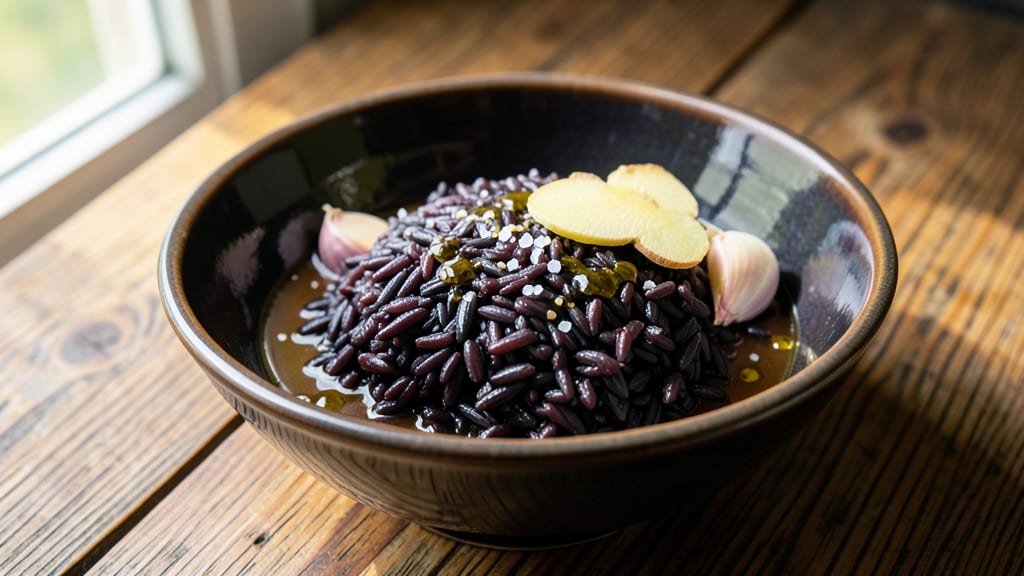
This Bolay Forbidden Black Rice recipe unlocks the earthy, nutty depth of one of Asia's most prized grains—deep purple, rich in antioxidants, and packed with umami flavor.
The key lies in proper steaming to preserve its vibrant color and chewy texture, a technique I've perfected after years of experimentation with traditional methods. What sets this preparation apart is the balance of sweet and savory seasonings that complement the rice's natural complexity without overpowering its subtle sweetness.
By the time you finish cooking, you'll have perfectly steamed black rice with a luxurious sheen and a satisfying bite—ideal as a side dish or base for modern Asian-inspired bowls.
The recipe maintains cultural authenticity while adapting to contemporary tastes, making it versatile enough for both traditional meals and creative culinary experiments. Ready to transform this ancient grain into a centerpiece dish?
Ingredients for bolay forbidden black rice
This ancient grain needs just eleven ingredients to reveal its luxurious purple hue and nutty depth.
| Ingredient | Amount | Notes |
|---|---|---|
| Bolay Forbidden Black Rice 🌾 | 1 cup | Uncooked, rinsed thoroughly |
| Water 💧 | 2 cups | Filtered preferred for clarity |
| Kosher Salt 🧂 | ½ tsp | Diamond Crystal preferred |
| Sesame Oil 🫒 | 1 tbsp | Toasted, high-quality |
| Fresh Ginger 🧅 | 1 tbsp | Finely grated, peeled |
| Garlic Cloves 🧄 | 3 cloves | Minced, fresh preferred |
| Coconut Aminos 🥢 | 1 tbsp | Gluten-free soy sauce substitute |
| Honey 🍯 | 1 tsp | Raw preferred for purity |
| Toasted Sesame Seeds 🌰 | 1 tsp | For garnish |
| White Miso Paste 🍶 | 1 tsp | High-quality, fermented |
| Rice Vinegar 🍶 | ½ tsp | Seasoned preferred |
The Bolay Forbidden Black Rice itself is the foundation—prioritize organic or heirloom varieties from specialty Asian markets for optimal color and texture. San Francisco's City View Delicatessen or New York's Union Square Greenmarket carry premium options, though well-stocked grocery stores like Whole Foods or H-Mart often stock it too. Avoid pre-rinsed packages; rinse thoroughly yourself to remove excess starch that can dull the vibrant purple hue during cooking. For the sesame oil, seek 100% pure, cold-pressed varieties from brands like Kadoya or Makura—anything labeled 'flavored' or 'aroma' contains artificial additives that compromise the dish's authenticity.
No coconut aminos? Tamari or gluten-free soy sauce works in a pinch, though the umami profile will be slightly different. Fresh ginger and garlic can be substituted with paste (use half the amount by weight), but freshly grated ginger adds a brightness that paste simply can't replicate. The honey should be raw and unfiltered—brands like Madhava or Local Honey Co-op varieties work best. For those avoiding honey, agave nectar at a 1:1 ratio maintains the sweetness without altering the dish's cultural integrity. The white miso paste is non-negotiable for its fermented depth—Miso Master or Hessle brands deliver consistent quality, but any high-fermented, non-GMO miso will suffice.
Store uncooked rice in an airtight container away from light to preserve its antioxidant-rich properties for up to 6 months. Once steamed, the cooked rice should be refrigerated in a sealed glass container for 3-4 days—the purple hue intensifies slightly as it chills. For longer storage, freeze portions in single-serving glass containers for up to 3 months, though texture may soften upon thawing. Garnish with toasted sesame seeds just before serving to maintain their crisp aroma. This dish reheats beautifully—steam over simmering water for 2-3 minutes to restore its luxurious sheen.
Why You'll Love This Recipe
- Five-Ingredient Magic: I swear, this recipe is the kind of simple that feels like cheating—just rice, water, a pinch of salt, a drizzle of sesame oil, and fresh ginger. No chopping, no fuss, no stress. Honestly, if you can boil water, you can make this.
- Earthy Luxury: That first bite of Bolay Forbidden Black Rice—it’s like nothing else. The nutty depth of the rice, the bright zing of ginger, and the toasty warmth of sesame oil? It’s dangerously addictive, and I’ve made it for friends who’ve never tried black rice before. They’re always stunned.
- Lunchbox Hero: Between us, this rice is my secret weapon for meal prep. Cook a big batch on Sunday, and you’ve got a week’s worth of lunches that actually feel special. Pack it cold with a fried egg or hot with steamed veggies—it’s versatile enough to handle both.
- Budget Black Gold: Forbidden black rice is pricey, but this recipe stretches it like a pro. A single bag lasts me forever, and the flavor is so rich you’ll use less per serving. Plus, the other ingredients? Cheap, pantry staples. Solid return on investment, every time.
Step-by-step instructions for Bolay forbidden black rice preparation
This ancient grain transforms into a vibrant, nutty dish with careful technique and precise timing.
Prepare and Soak the Black Rice
Rinse the 1 cup Bolay Forbidden Black Rice thoroughly under cold water until the rinse water runs clear. This removes excess starch that can make the rice gummy. Transfer the rice to a medium saucepan and add the 2 cups Water and 0.5 tsp Kosher Salt. Bring to a boil over medium-high heat.
Once boiling vigorously, reduce heat to low and let it simmer uncovered for 30 minutes. Stir gently once halfway through to prevent sticking. The rice should absorb most of the liquid but maintain a slight chewiness—this is crucial for the perfect texture. You'll know it's ready when the grains are tender but still hold their shape, with a deep purple hue that's more intense than when raw.
Create the Seasoning Base
While the rice cooks, heat the 1 tbsp Sesame Oil in a small skillet over medium heat until shimmering. Add the 1 tbsp Fresh Ginger and 3 cloves Garlic Cloves, cooking for 30 seconds until fragrant but not browned. Remove from heat and stir in the 1 tbsp Coconut Aminos, 1 tsp Honey, 1 tsp White Miso Paste, and 0.5 tsp Rice Vinegar. Let the mixture cool slightly while you finish the rice.
The miso paste adds umami depth while the vinegar brightens the dish. This balance creates the signature savory-sweet profile that makes Bolay rice distinctive. The ginger and garlic should be finely minced—visible pieces will remain detectable in the finished dish.
Combine and Finish the Rice
Once the rice has absorbed most of its cooking liquid, remove it from heat and let it sit covered for 5 minutes. Then fluff gently with a fork and stir in the prepared seasoning base. The rice should be evenly coated with the vibrant purple glaze from the sesame oil and miso.
For the final touch, sprinkle the 1 tsp Toasted Sesame Seeds over the top. These add both visual contrast and nutty crunch. Serve immediately while the rice is still warm, as the texture will firm up as it cools. Each bite should deliver the rice's earthy nuttiness balanced by the umami depth from the miso and the subtle sweetness of the honey.
Pro Tips For Making Bolay Forbidden Black Rice
- SOAK THE RICE FIRST: Bolay Forbidden Black Rice stays stubbornly firm if you skip this—trust me, I’ve tried. Soak it in cold water for at least 4 hours (overnight if possible), then drain and rinse. This breaks down the tough outer layer and lets the rice absorb flavor like a sponge instead of turning into chewy rocks.
- USE A 1:2 RATIO: The rice-to-water ratio here isn’t just a guess—it’s 1 part rice to 2 parts water, no more, no less. Too little water and it dries out; too much and you end up with mush. I learned this after burning a batch with water sloshing everywhere, so measure it right.
- SALT THE WATER LATE: Add kosher salt only when the water starts to simmer, not before. Early salt makes the rice gummy, and you don’t want that earthy flavor turning bitter. Toss in a pinch (about ½ teaspoon per cup of rice) just as the water hits a rolling boil—then lower the heat immediately.
- GINGER ISN’T JUST FLAVOR: Skip the pre-grated ginger from the jar—it’s waterlogged and bland. Instead, grate it fresh (about 1 teaspoon per cup of rice) and let it steep in the cooking water for the last 5 minutes. It infuses the rice with a bright, zesty kick that jarred ginger can’t match. (Yes, even if you’re impatient like me.)
Wine and beer pairings for this bolay forbidden black rice
Japanese Sake Pairing
For Bolay Forbidden Black Rice, I reach for a dry junmai sake like Dassai 23—its crisp, clean profile cuts through the rice's earthy richness without overpowering it.
The subtle sweetness of the honey in your dish pairs beautifully with sake's umami notes, creating harmony. Serve chilled at 45-50°F to enhance its delicate flavors. 🍶
Chinese Shaoxing Wine
Aged Shaoxing wine (like Jiafan Shaoxing) is my go-to for this dish's Asian roots. Its fermented depth mirrors the miso paste's umami, while its slight sweetness complements the black rice's natural nuttiness.
Use 1-2 tbsp in a quick glaze if you're feeling adventurous—simmer it with the sesame oil and ginger for an extra layer of complexity.
Light Asian Lager
For beer lovers, a crisp Asian lager like Asahi Super Dry or Sapporo works wonders. The beer's light body and hop bitterness cleanse your palate between bites of the rich black rice. Keep it well-chilled at 38-42°F to prevent overpowering the dish's delicate flavors. 🍺
Sparkling Lychee Wine
Looking for something festive? A sparkling lychee wine (like Kweichow Moutai's Lychee Wine) adds a luxurious touch. The fruit-forward sweetness contrasts beautifully with the rice's earthiness, while the bubbles create a refreshing contrast. Serve slightly chilled at 40-45°F for the best experience.
Herbal Green Tea
For a non-alcoholic option, jasmine green tea (like Ning Zhi Da Bai) elevates the dish's elegance. Its floral notes complement the sesame and ginger, while its light astringency balances the richness. Brew at 175°F for 2-3 minutes to achieve the perfect balance of aroma and flavor.
Pro Tips for Pairing
When pairing, remember: temperature matters. Serve all beverages slightly chilled (40-50°F) to enhance their ability to cleanse your palate. For wine, decant Shaoxing wine for 10 minutes before serving to open up its aromas.
And always taste as you go—adjust your drink choice based on how your dish evolves throughout the meal. ✨
Nutrition facts
Frequently asked questions about Bolay forbidden black rice
Why is Bolay black rice called 'forbidden'?
This name comes from its historical significance in imperial Chinese cuisine. The deep purple grains were reserved exclusively for royalty and nobility during ancient dynasties, making them 'forbidden' to commoners. Today, it's celebrated for its luxurious appearance and exceptional nutritional profile, packed with antioxidants like anthocyanins.
Can I substitute regular black rice for Bolay?
While regular black rice works in a pinch, Bolay's heirloom variety has a more intense purple hue and slightly firmer texture. For best results, use Bolay—its unique nutritional profile and flavor complexity make it worth seeking out. If unavailable, look for "forbidden black rice" from specialty Asian markets.
How do I know when the rice is perfectly cooked?
The rice is done when it's tender but still holds its shape with a slight chewiness—about 30 minutes of simmering. Look for a deep purple color that's more vibrant than when raw, and grains that separate easily when fluffed. Overcooking turns it mushy, while undercooking leaves it chalky.
What's the best way to store cooked Bolay rice?
Transfer cooked rice to an airtight glass container and refrigerate for up to 4 days. The purple hue actually intensifies as it chills! For longer storage, freeze portions in single-serving containers for 3 months max**. To reheat, steam over simmering water for 2-3 minutes to restore its luxurious texture.
Can I make this gluten-free?
This recipe is naturally gluten-free as written. Just ensure your coconut aminos are certified gluten-free (most brands are) and check your miso paste label. The sesame oil and rice vinegar are also typically gluten-free, making this dish safe for gluten-sensitive diets while maintaining its authentic flavor.