
Main Courses
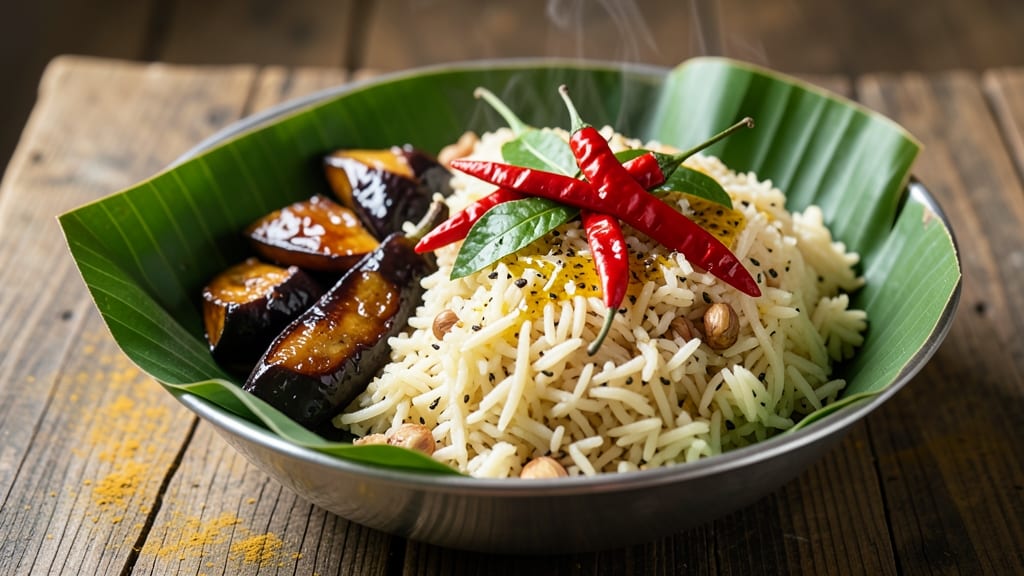
This brinjal rice recipe in Tamil brings the comforting flavors of home to your table, where tender eggplant and fragrant basmati rice unite in perfect harmony. 💛 The secret lies in the traditional spice tempering—mustard seeds, curry leaves, and fenugreek—that transforms simple ingredients into a dish bursting with South Indian soul.
Every bite carries the essence of Tamil cuisine, made even more special when served with sambar or a dollop of yogurt.
What makes this recipe truly special is its authenticity—no shortcuts, just the time-honored method of cooking rice with eggplant in one pot, infused with aromatic spices. The result? A dish that’s rich in flavor, satisfyingly hearty, and deeply rooted in tradition.
Whether you're feeding your family or treating yourself, this vazhai arisi delivers comfort in every mouthful.
Ingredients for brinjal rice recipe in tamil
Authentic Tamil flavors start with these simple yet transformative ingredients.
| Ingredient | Amount | Notes |
|---|---|---|
| Long-Grain Basmati Rice 🍚 | 1 ½ cups | Uncooked, rinsed thoroughly |
| Eggplant (Brinjal) 🍆 | 2 medium | Whole, Indian variety preferred |
| Mustard Seeds 🌱 | 1 tbsp | Whole, yellow variety |
| Curry Leaves 🌿 | ¼ cup | Fresh, tightly packed |
| Fenugreek Seeds 🌱 | ½ tsp | Lightly crushed |
| Dried Red Chilies 🌶️ | 4 whole | Kashmiri or red chili |
| Asafoetida (Hing) 🌿 | ¼ tsp | Pure powdered form |
| Cumin Seeds 🌱 | 1 tsp | Toasted for aroma |
| Onion 🧅 | 1 medium | Finely chopped |
| Tomato 🍅 | 2 medium | Chopped, ripe |
| Ginger 🧄 | 1 inch | Fresh, grated |
| Garlic Cloves 🧄 | 6 cloves | Peeled, minced |
| Turmeric Powder 🌿 | ½ tsp | Freshly ground preferred |
| Salt 🧂 | 1 ½ tsp | Adjust to taste |
| Coconut Oil 🫒 | ½ cup | For tempering |
| Plain Yogurt 🥛 | ¼ cup | For garnish |
The eggplant and basmati rice form the heart of this dish, but the spices make it special. Indian eggplant varieties like Kakkari or Pusa Purple hold their shape better than Western types. For curry leaves, local markets or Indian grocery stores carry the freshest batches—look for vibrant green leaves, not wilted ones. Fenugreek seeds should be light brown and smell aromatic; avoid dark or musty ones. The mustard seeds and dried chilies are best bought in small quantities from spice shops—they retain flavor longer than supermarket versions. Toast your cumin seeds in a dry pan for 30 seconds before adding to the rice for deeper flavor.
No curry leaves? Fresh bay leaves work in a pinch, but the flavor won't be identical. Substitute dried red chilies with Kashmiri red chili powder at half the amount—it's milder but adds sweetness. For a quicker prep, use frozen chopped onions and garlic (thaw first), though fresh is always better. The turmeric should be bright yellow—if it's grayish, it's lost potency. For extra richness, add 1 tbsp coconut milk to the rice during cooking. The yogurt garnish balances the dish—use whole milk yogurt for creaminess, or Greek yogurt for tang.
Rice and eggplant keep best in airtight containers in the fridge for 3-4 days. Reheat gently with a splash of water—microwaving can make the eggplant soggy. The spices lose potency after 2 months, so store them in a cool, dark place. For meal prep, cook a double batch—this reheats beautifully for lunches. The coconut oil used for tempering can be reused once if stored properly; never reuse oil with raw eggplant—always cook it fresh for safety.
Why You'll Love This Recipe
- One-Pot Magic: The brinjal and rice cook together—no separate pans, no extra bowls. Just toss everything in, let the mustard seeds sizzle, and walk away. My hands stay clean, and the kitchen stays tidy. (Honestly, that’s half the battle won.)
- Tamil Comfort in Every Bite: That first crackle of mustard seeds, the earthy brinjal soaking up the spices, the fenugreek adding depth—it’s the kind of flavor that makes you pause mid-bite. The rice turns fragrant and light, while the brinjal stays tender with just enough bite. My husband calls it "home in a bowl," and he’s not wrong.
- Lunchbox Hero: Pack this for work or school—it reheats beautifully and keeps for days. The rice stays fluffy, the brinjal holds its shape, and the spices don’t fade. I’ve sent this in containers for three days straight, and no one’s complained. (Yes, even my picky teen.)
- Budget-Friendly Staple: Brinjal and rice are cheap, but this tastes like a restaurant dish. Mustard seeds and curry leaves cost pennies but make all the difference. I stretch one brinjal into two meals, and the leftovers? Even better the next day. My wallet and my taste buds win.
Step-by-step instructions for eggplant rice with South Indian spice harmony
Master this traditional Tamil dish with aromatic tempering and perfectly cooked eggplant.
🍳 Step 1: Prepare the Eggplant and Rice
Wash the 2 medium eggplant (brinjal) thoroughly and cut into 1-inch cubes. Set aside. Rinse the 1.5 cups long-grain basmati rice under cold water until the water runs clear, then soak in fresh water for 20 minutes. This removes excess starch and prevents mushy rice.
In a separate bowl, combine the eggplant cubes with 0.5 tsp turmeric powder and 1 tsp salt. Toss gently to coat evenly. The turmeric will infuse color and subtle earthiness into the eggplant while cooking. Let it sit for 10 minutes while you prepare the tempering.
🔥 Step 2: Create the Aromatic Tempering
Heat 0.5 cup coconut oil in a heavy-bottomed pot over medium heat. Add the 1 tsp cumin seeds and let them sizzle for 30 seconds until they release their nutty aroma. Add the 1 tbsp mustard seeds and 4 whole dried red chilies—they'll pop audibly when ready.
Immediately add the 0.25 cup curry leaves and 0.5 tsp fenugreek seeds, stirring constantly. The curry leaves should sizzle and darken slightly. After 30 seconds, add the 0.25 tsp asafoetida (hing)—this is when the tempering reaches its peak aromatic potential. Remove from heat momentarily to prevent burning.
🥘 Step 3: Cook the Eggplant and Prepare the Base
Return the pot to medium heat and add the 1 medium finely chopped onion, 1 inch grated ginger, and 6 minced garlic cloves. Sauté for 4-5 minutes until the onions turn golden brown and the raw garlic smell disappears. Add the 2 medium chopped tomatoes and cook for another 3 minutes until they soften.
Stir in the eggplant mixture and cook for 8-10 minutes until the eggplant softens but retains its shape. The eggplant should be tender enough to pierce easily with a fork but not falling apart. This step develops the eggplant's natural sweetness while absorbing the aromatic spices.
🍳 Step 4: Combine Rice and Finish Cooking
Drain the soaked rice and add it to the pot with the eggplant mixture. Stir gently to combine, then add 1 cup water (or enough to cover the rice by about ½ inch). Bring to a boil, then reduce heat to low, cover, and simmer for 15 minutes. Avoid lifting the lid during cooking to maintain even heat distribution.
After 15 minutes, check if the rice is tender. If it's still slightly firm, add ¼ cup hot water and cook for another 5 minutes. The rice should be cooked through with a slight bite—this ensures it doesn't turn mushy. Fluff gently with a fork to separate the grains.
🍽️ Step 5: Garnish and Serve
Remove from heat and let the rice sit covered for 5 minutes. Stir in the 0.25 cup plain yogurt gently to cool the rice slightly and add a creamy contrast. Garnish with additional curry leaves and a sprinkle of salt if needed. Serve hot with a dollop of yogurt on top for authentic presentation.
The final dish should have fragrant layers of spices, tender eggplant, and perfectly cooked rice with a slight texture contrast. Each bite should deliver the smoky aroma of the tempering, the earthy sweetness of the eggplant, and the subtle tang of yogurt.
Pro Tips For Making Brinjal Rice Recipe In Tamil
- Salvage Soggy Brinjal: Cut the eggplant into even 1-inch chunks and sprinkle them with double the salt you’d use for other veggies—let them sit for 10 minutes, then pat very dry with a kitchen towel. This isn’t just about removing moisture; it’s about preventing the brinjal from turning into a mushy, watery mess in your rice. I learned this the hard way when my first batch released enough liquid to turn the rice into a sad, diluted porridge.
- Temper Mustard Last: Wait until the very end—right after the rice is cooked but before you mix it in—to add the mustard seeds, curry leaves, and fenugreek. Heat a teaspoon of oil in a small pan first, let the mustard pop crisply, then pour the whole tempering over the rice. This keeps the aroma intact and stops the mustard from burning or losing its sharp, nutty punch.
- Rinse Rice Twice: Don’t just rinse your basmati once—give it two quick rinses in cold water, then let it soak for 20 minutes. The first rinse removes surface starch, the second ensures no gritty bits sneak into your dish. After soaking, drain well and spread the rice on a tray to dry slightly before cooking. This isn’t fussy; it’s what keeps your brinjal rice from turning gluey.
- Char the Brinjal: Before adding the eggplant to the rice, sear the cut pieces in a dry pan over medium-high heat for 2–3 minutes until they develop dark spots. The smoky flavor cuts through the richness of the brinjal and adds depth that raw or lightly cooked pieces just can’t match. Sounds weird, but it works—your rice will taste like it’s been simmering for hours, not minutes.
Regional styles of these flavors
Tamil Nadu Style
In Tamil Nadu, this dish is called vazhai arisi and is a staple in homes for its simplicity and bold flavors. The key difference here is the use of Kashmiri red chilies for a subtle sweetness, balanced by mustard seeds that pop dramatically when tempered.
Locals often serve this with sambar and a side of curd rice for a complete meal. The eggplant is never overcooked—it should remain slightly firm to hold its shape. 💛
Kerala Adaptation
Kerala's version, known as brinjal rice, incorporates more coconut milk (about 2 tbsp) into the tempering, giving it a richer, creamier texture. They also add grated coconut (about 2 tbsp) at the end for extra depth.
The rice is often cooked with less water to achieve a drier, fluffier consistency, similar to Kerala-style appam rice. This version pairs beautifully with avial, a yogurt-based vegetable stew.
Andhra Fusion
In Andhra Pradesh, this dish takes on a slightly spicier profile with the addition of green chilies (about 2-3) in the tempering. The asafoetida (hing) is often doubled to 0.5 tsp for a stronger, umami punch.
Andhra cooks also prefer longer soaking time for the rice (up to 30 minutes) to achieve a firmer bite. This version is typically served with pachadi (a tangy chutney) and ghee-roasted papads for crunch.
Modern Twist
For a contemporary take, many urban chefs add roasted cumin powder (about 1 tsp) to the eggplant before cooking, enhancing its nutty aroma. Some also blend the cooked eggplant with the rice for a smoother texture, almost like a brinjal rice porridge.
Garnish with crispy fried shallots for a restaurant-worthy finish. This version works well as a meal prep dish—store in airtight containers for up to 4 days in the fridge.
Festive Variations
During festivals like Pongal or Diwali, Tamil households elevate this dish by adding gold leaf (varak) and cashew nuts (about 10-12) to the tempering. The rice is often cooked with ghee instead of coconut oil for a richer flavor.
For a vegan-friendly version, skip the yogurt garnish and instead drizzle tamarind chutney for a tangy contrast. This festive version is traditionally served with payasam (a sweet dessert) to balance the meal.
Nutrition facts
Frequently asked questions
Can I substitute regular rice for basmati in this brinjal rice?
While you can use regular long-grain rice, basmati is preferred for its distinct aroma and fluffy texture. If substituting, use 1.25 cups instead of 1.5 cups since it absorbs water differently. For extra authenticity, try ponni rice (a Tamil Nadu variety) which cooks similarly to basmati.
Why does my eggplant turn mushy when cooking?
Overcooking or too much water causes mushy eggplant. Cook it for only 8-10 minutes until tender but still firm. For extra firmness, add 1 tsp lemon juice when tossing with turmeric before cooking. Also ensure your pot isn't too large—crowding makes steam build up unevenly.
What's the best way to make this dish spicier?
For extra heat, add 1 green chili (finely chopped) to the tempering or increase dried red chilies to 6-8. For smoky depth, toast 1 tsp black peppercorns with the mustard seeds. For a fiery kick, mix in 1 tsp red chili powder with the rice after cooking. Always adjust to taste!
Can I make this brinjal rice in a pressure cooker?
Yes! After Step 3 (cooking eggplant with spices), add rice and 1.5 cups water, then pressure cook for 2 whistles. Let pressure release naturally for 10 minutes before opening. The yogurt should be added after cooking to prevent curdling from heat. This method cuts cooking time to just 15 minutes!
How do I store leftovers properly?
Cool the brinjal rice completely, then store in an airtight container in the fridge for up to 4 days. Reheat gently with 2 tbsp water in a pot over low heat (microwaving makes eggplant soggy). For longer storage, freeze portions for up to 3 months. Thaw overnight in the fridge before reheating.