
Main Courses
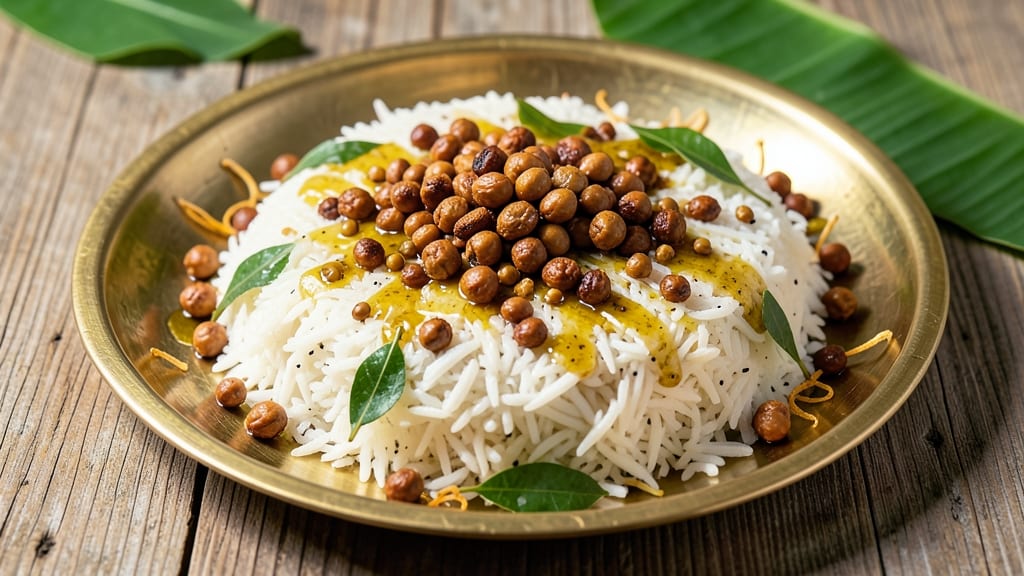
A brinji rice recipe from Venkatesh Bhat delivers the perfect balance of nutty crunch from black chickpeas and fragrant, herb-infused rice—just like Chef Venkatesh Bhat makes it. The secret lies in the tempering: mustard seeds popping, urad dal sizzling, and curry leaves releasing their earthy aroma into the warm rice. This dish transforms simple ingredients into a restaurant-worthy meal with minimal effort.
The rice absorbs a savory gravy infused with cumin, coriander, and turmeric, while the chickpeas add a satisfying crunch that disappears with every bite. Garnished with fresh coconut and fried onions, it’s a dish that feels both comforting and celebratory.
Whether served for a family dinner or a special occasion, this authentic South Indian classic never disappoints.
Ingredients for brinji rice recipe venkatesh bhat
Authentic South Indian flavors meet restaurant-quality simplicity with these essential ingredients.
| Ingredient | Amount | Notes |
|---|---|---|
| Black Chickpeas (Brinji) 🌾 | 1 ½ cups | Dry roasted, soaking optional |
| Long-Grain Basmati Rice 🍚 | 2 cups | Uncooked, rinsed thoroughly |
| Urad Dal (Split Black Gram) 🌱 | ¼ cup | Dry roasted until golden |
| Mustard Seeds 🌿 | 1 tbsp | Whole, dark variety preferred |
| Curry Leaves 🌿 | 10 whole | Fresh, lightly crushed |
| Cumin Seeds 🌶️ | 1 tsp | Toasted until aromatic |
| Green Chilies 🌶️ | 2 whole | Slit lengthwise for tempering |
| Fresh Coconut (Shredded) 🥥 | ½ cup | Unsweetened, finely grated |
| Red Onions 🧅 | 1 whole | Finely chopped, fried crisp |
| Ghee or Coconut Oil 🫒 | ½ cup | For tempering and frying |
| Ground Turmeric 🌿 | ½ tsp | Freshly ground preferred |
| Ground Coriander 🌿 | 1 tsp | Freshly ground for brightness |
| Salt 🧂 | 1 ½ tsp | Adjust to taste |
| Water 💧 | 4 cups | For rice cooking |
| Asafoetida (Hing) 🌿 | ⅛ tsp | Pinch for aroma |
The black chickpeas are the heart of this dish—soak them overnight if you prefer softer texture, but dry roasting enhances their nutty flavor. For urad dal, opt for the whole split variety from Indian grocery stores like Patel Brothers or Apna Bazaar—they carry the best quality. Curry leaves must be fresh; frozen loses its earthy aroma. If unavailable, dried curry leaf powder works at half the quantity, though it lacks depth. Mustard seeds should be dark and whole—yellow mustard seeds won’t give the same robust flavor. For coconut, fresh is ideal, but unsweetened desiccated coconut from Trader Joe’s is a convenient substitute.
No urad dal? Toor dal (pigeon pea) can replace it, though the texture will differ slightly. Mustard seeds can be skipped if you dislike their sharpness, but the tempering loses its signature aroma. For green chilies, adjust heat by using 1-2 for mild or 3-4 for spicy. Ghee is traditional, but coconut oil works beautifully—lightly toasted for deeper flavor. Asafoetida (hing) is non-negotiable for that authentic South Indian touch; if unavailable, garlic powder at a quarter teaspoon adds a similar depth. Fried onions can be store-bought if needed, but homemade (fried until crisp) elevates the dish.
Store uncooked rice in an airtight container for up to 6 months, while black chickpeas keep for 3-4 months in the pantry. Fresh coconut lasts 5-7 days refrigerated, but desiccated coconut stays fresh for 6 months. The tempering spices (cumin, mustard seeds, curry leaves) should be stored in dark glass jars to preserve their potency for up to 6 months. This dish reheats beautifully—garnish with extra coconut and fried onions before serving for maximum freshness. For meal prep, portion into containers with a light drizzle of ghee to keep the rice moist for 3-4 days in the fridge.
Why You'll Love This Recipe
- One-Pot Magic: I swear by this recipe when I’m too tired to wash pots—just soak the brinji and urad dal together, toss in the rice, and let the spices work their charm. The mustard seeds and curry leaves sizzle right in the same pot, so cleanup is basically nonexistent.
- Umami Bomb: Between the earthy brinji, the nutty urad dal, and that first crackle of mustard seeds, this dish is ridiculously flavorful without needing fancy ingredients. Honestly, the way the dal and rice meld with the chickpeas’ natural sweetness? It’s the kind of taste that makes you pause mid-bite.
- Lunchbox Hero: This keeps perfectly for days—pack it for work, toss it in kids’ lunchboxes, or reheat for dinner with zero fuss. (Yes, even on a Tuesday night.) The brinji holds its shape, and the dal adds that creamy texture that turns it into a meal, not just rice.
- Budget Superstar: A bag of brinji and urad dal lasts me weeks, and basmati rice? Always affordable. For under $5, I feed four people a meal that feels special—not to mention, the mustard seeds and curry leaves add that restaurant-worthy aroma without breaking the bank.
Step-by-step instructions for brinji rice with savory herb gravy
Master this traditional Karnataka specialty with its signature nutty crunch and aromatic gravy.
Prepare the Base Ingredients for Perfect Texture
Begin by dry roasting the 1.5 cups black chickpeas (brinji) in a heavy skillet over medium heat for 8-10 minutes, stirring constantly until they turn a rich golden brown and release a toasty aroma. This step develops their signature nutty flavor and ensures they remain crisp rather than mushy. Transfer them immediately to a bowl and set aside.
In the same skillet, dry roast the 0.25 cup urad dal (split black gram) over medium-low heat for 5-6 minutes until it turns a deep golden color and smells distinctly nutty. The dal should be uniformly toasted with no pale spots remaining. Add this to the bowl with the brinji and let both cool slightly while you prepare the remaining base ingredients.
Create the Flavorful Tempering Base
Heat 0.25 cup ghee or coconut oil in a large pot over medium heat until it shimmers. Add the 1 whole red onion that's been finely chopped and fry until it turns a deep golden brown, about 8-10 minutes. The onions should be crisp and caramelized with no raw taste remaining. Remove them with a slotted spoon and set aside for later.
To the same pot, add the 1 tbsp mustard seeds and let them splutter for 10 seconds before adding the 1 tsp cumin seeds. Once the cumin begins to sizzle, add the 10 whole curry leaves and 2 whole green chilies (slit lengthwise). Cook for 30 seconds until the curry leaves turn dark green and the chilies soften slightly. This aromatic tempering forms the flavor foundation of the dish.
Cook the Rice and Combine All Elements
Add the 2 cups long-grain basmati rice to the pot with the tempering and stir to coat it evenly with the aromatic oils. Pour in 4 cups water and add the 1.5 tsp salt, 0.5 tsp ground turmeric, and 1 tsp ground coriander. Bring to a boil, then reduce heat to low and simmer covered for 15 minutes until the rice is 80% cooked and the water has been absorbed.
Gently fold in the prepared black chickpeas and urad dal, the crisp fried onions, and the 0.5 cup shredded fresh coconut. Sprinkle the 0.125 tsp asafoetida (hing) over everything and mix gently. The hing will release its distinctive aroma, enhancing the dish's complexity. Cover and cook on low heat for another 5 minutes to allow all ingredients to meld together.
Finish with Perfect Texture and Flavor Balance
Remove from heat and let the brinji rice sit covered for 5 minutes to allow the flavors to fully develop. The black chickpeas should maintain their crisp texture while the rice remains separate and fluffy. If the rice feels slightly undercooked, add 2-3 tablespoons water and cook uncovered for 2 more minutes.
Garnish with additional shredded coconut and serve immediately with a side of yogurt or raita. The dish should have a perfect balance of textures - the crisp brinji and urad dal contrasting with the soft rice, all bound together by the rich, herb-infused gravy. The nutty aroma should be prominent with subtle spice notes from the green chilies and mustard seeds.
Pro Tips For Making Brinji Rice Recipe Venkatesh Bhat
- SOAK BRINJI OVERNIGHT: I learned this the hard way—skipping the soak makes brinji turn mushy and lose that satisfying bite. Toss them in water with a pinch of salt for 8-10 hours (yes, even if you're impatient like me). The longer they soak, the creamier they get when cooked, and they won’t split apart like overcooked lentils.
- TEMPER MUSTARD LOW: Mustard seeds burn faster than you think, especially in a hot pan. Start with a tablespoon of oil, then add seeds on medium-low heat—just until they pop. If you rush it, you’ll end up with bitter smoke instead of that nutty aroma that defines this dish. Trust the process.
- SPLIT DAL UNTIL SLIGHTLY GREEN: Split urad dal should be cooked until it’s just past the mushy stage—when it turns a bright, vibrant green. Overcooking turns it gray and slimy, which ruins the whole dish. Taste-test a grain: it should hold shape but still break easily. This is the thing that matters most.
- STIR RICE ONCE AFTER BOILING: After adding rice to the tempered dal, give it one gentle stir to distribute flavors. Then walk away. Peeking or stirring constantly turns rice mushy. Let it cook undisturbed for 10 minutes before fluffing—this guarantees separate grains, not gluey clumps. Your future self will thank you.
Dietary considerations for this dish
Vegetarian-Friendly Base
This brinji rice recipe is naturally vegetarian, making it perfect for plant-based diets. The black chickpeas (brinji) and urad dal provide a hearty protein boost—about 15 grams of protein per serving—while the ghee or coconut oil adds richness without animal products.
For extra protein, increase the urad dal to 0.5 cup for a more substantial dish. 🌱
Gluten-Free Assurance
All ingredients in this recipe are inherently gluten-free, including the basmati rice, black chickpeas, and urad dal. Just ensure your spices (like cumin or coriander) are certified gluten-free if you have sensitivities.
The mustard seeds and curry leaves are also safe for gluten-free diets. Always check labels on pre-packaged items like fried onions or desiccated coconut.
Nut-Free Adaptations
While the dish includes urad dal (a legume, not a nut), it’s naturally nut-free. For those avoiding legumes, substitute the black chickpeas with roasted cashews (0.5 cup) or peanuts (0.5 cup) for a similar crunch.
Replace the urad dal with toasted pumpkin seeds (0.25 cup) for a seed-based alternative. Always check for cross-contamination if allergies are severe.
Spice Level Control
Adjust the heat to your preference by modifying the green chilies. Use 1 chili for mild, 2-3 for medium, or 4+ for fiery spice. For extra heat, add ½ tsp red chili powder during tempering.
If avoiding heat entirely, skip the chilies and use 1 tsp grated ginger for warmth instead. The mustard seeds also add a sharp, pungent kick—reduce to ½ tbsp if sensitive to strong flavors.
Dairy-Free Options
The traditional recipe uses ghee, but coconut oil works perfectly as a dairy-free alternative. For extra richness, stir in 1 tbsp coconut cream at the end. The yogurt raita pairing can be made with coconut yogurt or dairy-free yogurt like So Delicious.
The dish remains flavorful without dairy, thanks to the robust spices and coconut.
Meal Prep Flexibility
Brinji rice reheats beautifully, making it ideal for meal prep. Store in airtight containers for up to 3 days in the fridge or 2 months in the freezer. To maintain texture, add 1 tsp water per cup when reheating.
For quick lunches, pack with steamed veggies or grilled chicken (if adding protein). The crispiness of the chickpeas softens slightly but remains delicious. ✨
Nutrition facts
Frequently asked questions
What makes black chickpeas (brinji) different from regular chickpeas?
Black chickpeas (brinji) have a distinct nutty, earthy flavor and firmer texture compared to regular chickpeas. They stay crisp when cooked properly, adding a satisfying crunch to the dish. Their dark color also makes this dish visually striking. Regular chickpeas would turn mushy and lack the same depth of flavor.
Can I substitute urad dal if I can't find it?
Yes! Use toor dal (pigeon pea) as a 1:1 substitute, though the texture will be slightly softer. For a seed-based alternative, try toasted pumpkin seeds (0.25 cup) instead. The key is maintaining the nutty crunch element—just adjust cooking times if using seeds, as they toast faster than dal.
Why does the recipe call for partially cooking the rice before adding chickpeas?
This two-step method ensures the rice absorbs the aromatic spices while the chickpeas maintain their crisp texture. Overcooking the rice first would make it mushy when combined with the chickpeas. The final 5-minute cook time after adding chickpeas lets flavors meld without compromising textures.
How do I prevent the black chickpeas from turning soggy?
Keep them separate from the rice until the very end and avoid stirring too much after adding them. Dry roast them thoroughly before cooking (until golden brown), and use minimal water when combining. If needed, add extra chickpeas to maintain crunch—soggy chickpeas ruin the dish's signature texture.
What's the best way to serve brinji rice?
Serve immediately with a side of yogurt raita or mango pickle to balance the richness. For a complete meal, add grilled fish or chicken curry. The contrast of cool yogurt with warm, spiced rice enhances every bite. Garnish with extra fried onions and coconut for restaurant-style presentation.