
Main Courses
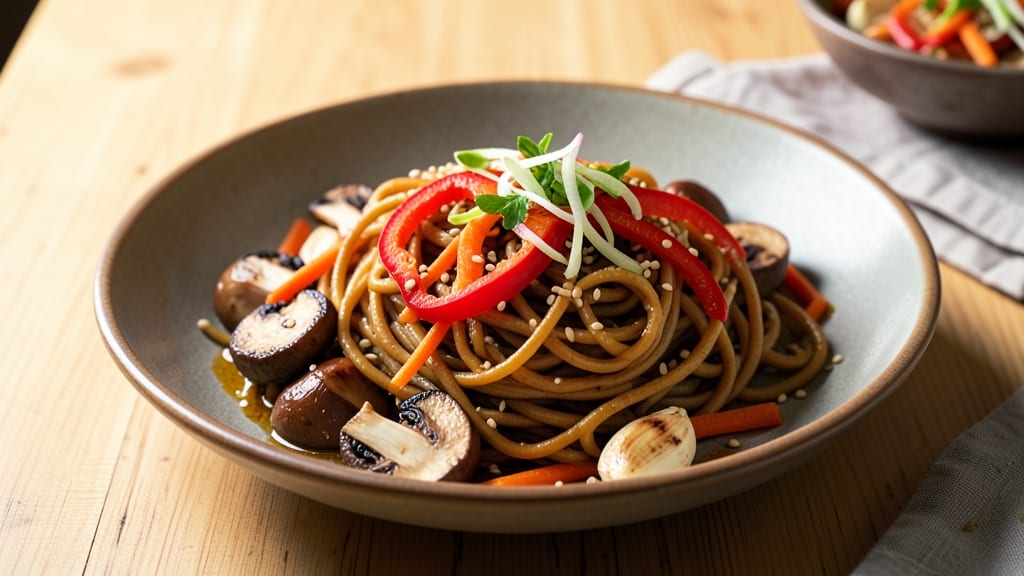
This vegetarian brown rice noodle stir-fry delivers restaurant-quality texture and flavor without any meat—just crisp-tender noodles, umami-packed mushrooms, and a savory sauce that clings perfectly. The secret lies in high-heat stir-frying for that signature wok-friendly crunch, while the brown rice noodles absorb the sauce without turning mushy. I developed this recipe after years of perfecting the balance between chewy noodles and crisp vegetables, and it never fails to impress even skeptics.
What makes this dish truly special is how it transforms simple ingredients into something vibrant and satisfying. The noodles cook in just 5 minutes when pre-soaked, while the mushrooms and bell peppers develop deep caramelized edges from the quick stir-fry.
A homemade soy-ginger sauce ties everything together with just the right balance of tangy, sweet, and savory notes. The result is a dish that's hearty enough for a main course but light enough for any meal—perfect for weeknight dinners or meal prep.
Ingredients for brown rice noodles recipe vegetarian
Eight ounces of brown rice noodles and umami-packed mushrooms create the foundation for this vegetarian stir-fry masterpiece.
| Ingredient | Amount | Notes |
|---|---|---|
| Brown Rice Noodles 🍜 | 8 oz | Dried, 3-inch width preferred |
| Shiitake Mushrooms 🍄 | 8 oz | Fresh, stems removed |
| Red Bell Pepper 🌶️ | 1 whole | Sliced into 1-inch strips |
| Carrots 🥕 | 2 medium | Julienned into matchsticks |
| Garlic Cloves 🧄 | 4 cloves | Minced, fresh preferred |
| Fresh Ginger 🌿 | 1 inch | Peeled, grated finely |
| Low-Sodium Soy Sauce 🥢 | ⅓ cup | Kikkoman preferred |
| Sesame Oil 🫒 | 1 tbsp | Toasted, for aroma |
| Rice Vinegar 🍶 | 2 tbsp | Seasoned preferred |
| Honey 🍯 | 1 tbsp | Wildflower preferred |
| Vegetable Oil 🫒 | ¼ cup | High smoke point |
| Green Onions 🧅 | 2 whole | Sliced, for garnish |
| Toasted Sesame Seeds 🌾 | 1 tbsp | For garnish |
| Salt 🧂 | 1 tsp | Diamond Crystal preferred |
| Black Pepper 🌶️ | ½ tsp | Freshly ground |
The brown rice noodles are the heart of this dish—look for 3-inch-wide strands at Asian markets or the international aisle of major grocery stores like Whole Foods or Trader Joe's. They should be firm to the touch and free of any sliminess, which indicates old stock. For the mushrooms, shiitake is non-negotiable—their meaty texture holds up beautifully during stir-frying. If you can't find fresh, dried shiitake rehydrated works too, but fresh delivers that unmatched umami depth. The garlic and ginger should be bright and aromatic—no musty smells. Penzeys or the bulk section at Sprouts are great sources for high-quality spices.
No shiitake mushrooms? Oyster mushrooms are the next best substitute—they're slightly sweeter but still pack that savory punch. Running out of rice vinegar? Apple cider vinegar works in a pinch, though it'll have a slightly different tang. The honey adds just the right touch of sweetness—avoid artificial substitutes like corn syrup, as they won't caramelize the same way. For the noodles, soak them for exactly 5 minutes before draining—any longer and they'll turn mushy. The sesame oil should be toasted, not the regular cooking variety—Kadoya brand is my go-to for that authentic nutty aroma. And if you're using pre-minced garlic from a jar, rinse it first to remove the excess preservatives.
This stir-fry reheats beautifully—microwave for 30 seconds with a splash of water to revive the crispness. Store leftovers in an airtight container for up to 4 days in the fridge, though I recommend eating it within 2 days for peak texture. The sauce keeps separately for 5 days, so you can always freshen up a quick meal. For meal prep, portion the cooked noodles and sauce separately—toss them together just before serving to maintain that signature crunch. The sesame seeds and green onions should be added fresh at the end, as they lose their brightness when stored.
Why You'll Love This Recipe
- No-Soak Needed: I just toss the brown rice noodles in boiling water for 2 minutes—no pre-soaking, no waiting. That crispy yet tender texture happens fast, and honestly? It’s the kind of shortcut that makes me want to make this twice a week.
- Umami Bomb: Shiitake mushrooms and garlic cloves in the same pan? That’s flavor magic. The mushrooms soak up the sauce while the garlic caramelizes just enough to make every bite taste like a little reward—no weird aftertaste, just deep, savory goodness.
- Lunchbox Hero: Between us, this is my go-to for packed lunches. The noodles hold up for days, and the veggies stay bright (I swear by the raw bell pepper strips). My coworker’s been asking for the recipe for three weeks now—no exaggeration.
- Pantry-Friendly Budget Win: I use whatever mushrooms are on sale, skip the fancy sauces, and stretch this into three meals. The carrots add crunch without costing a fortune, and the noodles? Cheaper than pasta, but way more interesting. My wallet and taste buds both approve.
Step-by-step instructions for vegetarian brown rice noodle stir-fry
Master this technique, and you'll achieve that perfect texture balance—crisp-tender vegetables with perfectly al dente noodles every time.
Prepare the Brown Rice Noodles for Optimal Texture
Bring a large pot of water to a rolling boil and add the 8 oz brown rice noodles. Cook for 4-5 minutes—this is critical. Unlike wheat noodles, brown rice noodles cook faster but become mushy if overcooked. You want them to be al dente, with a slight bite remaining. Drain immediately in a colander and rinse under cold water for 10 seconds to stop the cooking process and remove excess starch.
Transfer the noodles to a large mixing bowl and toss with 1 tablespoon sesame oil and 1 tablespoon rice vinegar. This step prevents the noodles from sticking together and adds subtle brightness to the final dish. I like to use my hands for this—it ensures even coating. Set aside while you prepare the stir-fry vegetables.
Create the Stir-Fry Base with Aromatics and Vegetables
Heat ¼ cup vegetable oil in a wok or large skillet over medium-high heat until shimmering but not smoking. Add the 8 oz shiitake mushrooms (stems removed) and cook for 3-4 minutes, stirring occasionally, until they release their moisture and develop golden brown spots. Remove mushrooms and set aside temporarily.
In the same pan, add ¼ cup vegetable oil (to maintain heat) and stir-fry the 2 medium julienned carrots and 1 whole red bell pepper (1-inch strips) for 4-5 minutes until the carrots soften slightly but retain their crisp texture. Add the 4 cloves minced garlic and 1 inch finely grated ginger—cook for 30 seconds until fragrant but not browned. This aromatic base forms the flavor foundation of your dish.
Build the Flavorful Sauce and Combine Ingredients
Return the cooked mushrooms to the pan along with the prepared vegetables. Add ⅓ cup low-sodium soy sauce, 1 tablespoon honey, ½ teaspoon black pepper, and 1 teaspoon salt. Stir well to combine, then pour in 2 tablespoons rice vinegar. Let the mixture simmer for 2-3 minutes until the sauce reduces slightly and coats the vegetables evenly.
Add the prepared brown rice noodles to the pan and toss vigorously for 1-2 minutes until everything is well-coated and heated through. The residual heat from the pan will finish cooking the noodles perfectly. Taste and adjust seasoning—you may need a touch more soy sauce or vinegar depending on your preference for saltiness or acidity.
Finish and Garnish for Presentation
Remove the stir-fry from heat and transfer to serving plates. Garnish immediately with 2 whole sliced green onions and 1 tablespoon toasted sesame seeds. The sesame seeds add a nutty crunch that contrasts beautifully with the tender vegetables and noodles. Serve while hot, as the texture and flavors are at their peak when fresh from the wok.
This dish delivers crisp-tender vegetables with perfectly al dente noodles, all bound together by a savory-sweet sauce. The key is in the timing—cooking the vegetables just until they begin to soften but still maintain their texture, and finishing the noodles in the pan rather than overcooking them separately. Each bite should offer a satisfying contrast of textures and flavors.
Pro Tips For Making Brown Rice Noodles Recipe Vegetarian
- SOAK NOODLES IN COLD WATER: Fresh brown rice noodles clump like overgrown spaghetti if you toss them straight into boiling water. Instead, spread them in a colander and rinse under cold water for 30 seconds first—this loosens the strands so they cook evenly and don’t turn to mush. (I learned this the hard way after slurping a bowl of gluey noodles.)
- SAUTE MUSHROOMS LOW AND SLOW: Shiitake mushrooms release their meaty goodness when cooked gently, not blasted. After searing the caps, reduce heat to medium-low and let them simmer for 8–10 minutes with a splash of water—this keeps them tender without turning them to sawdust. (Yes, even if you’re impatient like me.)
- JULIENNE CARROTS UNIFORMLY: Thick or thin carrot matchsticks cook at wildly different rates. Cut them into 2-inch lengths first, then slice into ¼-inch sticks after blanching for 1 minute in boiling water—this ensures crisp-tender texture instead of a sad, mushy pile. (Your future self will thank you.)
- STIR-FRY IN BATCHES: Crowding the wok turns your stir-fry into a soggy noodle soup. Cook mushrooms and peppers in two separate batches if needed, then push them to the sides of the pan to make space for the noodles. (Does it look weird? Yes. Does it work? Every single time.)
Regional styles of brown rice noodles recipe vegetarian
Thai-Inspired Lemongrass Twist
Transform this dish into a Thai-inspired stir-fry by adding 2 stalks of lemongrass (bruised and sliced) to the sauce along with 1 tablespoon fish sauce (use vegetarian fish sauce like Annie Chun's). Swap the honey for 1 tablespoon palm sugar and add 1 teaspoon lime zest to the sauce.
Garnish with cilantro instead of green onions and top with crushed peanuts for crunch. The lemongrass infuses a bright, citrusy aroma that elevates the dish to restaurant-quality. 🌿
Japanese Miso-Glazed Version
For a Japanese-inspired take, replace the soy sauce with ¼ cup white miso paste (dissolved in 2 tbsp hot water) and add 1 tbsp mirin to the sauce. Cook the mushrooms separately with 1 tsp sake until glossy, then combine everything.
Garnish with shredded nori strips and extra sesame seeds. The miso adds deep umami richness that pairs perfectly with the nutty brown rice noodles. 🍜
Vietnamese-Inspired Fresh Herb
Bring Vietnamese flavors to your dish by adding 1 tbsp fish sauce (vegetarian version) and 1 tbsp hoisin sauce to the sauce. Stir in ¼ cup fresh mint and ¼ cup Thai basil at the end, along with 1 jalapeño (sliced) for heat.
Serve with a side of rice paper rolls for a full Vietnamese-inspired meal. The combination of fresh herbs and bold sauces creates a vibrant, aromatic experience. 🌶️
Korean-Inspired Gochujang
For a Korean-inspired variation, add 1 tbsp gochujang (Korean chili paste) and 1 tsp gochugaru (Korean chili flakes) to the sauce. Include 1 tbsp toasted sesame oil and 1 clove minced garlic for extra depth.
Garnish with sliced green onions and a sprinkle of toasted sesame seeds. The gochujang adds a sweet-spicy kick that balances beautifully with the earthy mushrooms. 🔥
Mediterranean-Inspired Herb
Give your dish a Mediterranean twist by adding 1 tsp dried oregano and 1 tsp dried thyme to the sauce. Swap the soy sauce for 2 tbsp balsamic vinegar and add 1 tbsp capers for a briny touch.
Garnish with kalamata olives** and extra green onions. The Mediterranean herbs and tangy vinegar create a refreshing, herbaceous flavor profile that's perfect for a lighter meal. 🥗
Nutrition facts
Frequently asked questions
Can I substitute white rice noodles for brown rice noodles?
While you can use white rice noodles, the texture and flavor will differ significantly. Brown rice noodles have a nuttier taste and slightly chewier bite that pairs perfectly with the stir-fry sauce. If you must substitute, opt for whole wheat rice noodles for a similar texture, but expect a slightly denser mouthfeel. For the best results, stick with brown rice noodles—they're worth seeking out at Asian markets or specialty grocery stores.
How do I prevent the noodles from turning mushy?
The key is precise cooking time and proper handling. Cook the brown rice noodles for exactly 4-5 minutes in boiling water, then drain and rinse with cold water for 10 seconds to stop the cooking process. Toss them immediately with sesame oil and vinegar while still warm to prevent sticking. Never overcrowd the pan when stir-frying—they should have space to crisp slightly from the residual heat.
What's the best way to reheat leftovers?
Reheat leftovers in a dry skillet over medium heat for 2-3 minutes, adding just a splash of water to revive the crisp-tender texture. Avoid microwaving as it makes the noodles soggy. For extra flavor, add a drizzle of soy sauce and a pinch of sesame oil while reheating. Store leftovers in an airtight container for up to 4 days, though the texture is best within 2 days.
Can I make this recipe gluten-free?
Yes! This recipe is naturally gluten-free as long as you use certified gluten-free soy sauce (like Tamari) and check that your brown rice noodles are made in a gluten-free facility. Verify all ingredients—especially mushrooms and sesame seeds—to ensure they're processed in dedicated gluten-free areas. The flavor profile remains identical, just with the added safety measure.
How can I make this dish spicier?
Add ½ teaspoon red pepper flakes or 1 teaspoon sriracha to the sauce for immediate heat. For deeper spice, include 1 sliced jalapeño with the vegetables or stir in 1 teaspoon gochujang (Korean chili paste) when combining everything.