
Main Courses
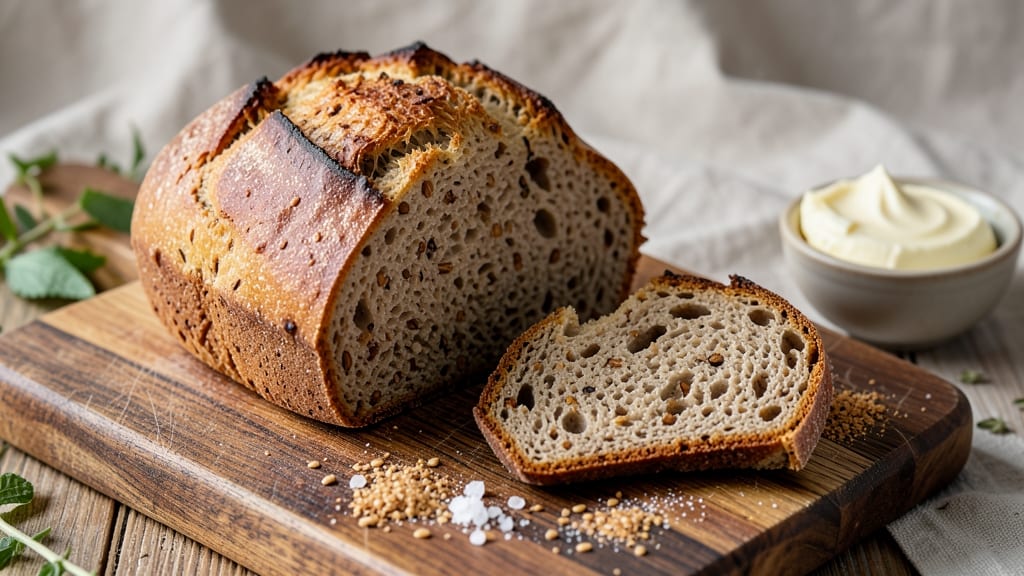
This brown rice sourdough bread delivers a nutty, fermented loaf with a crusty bite and airy crumb—perfect for sandwiches or toast. 🌟 The secret lies in blending whole-grain texture with traditional sourdough fermentation, creating a bread that’s both hearty and digestible.
Unlike dense whole-wheat loaves, this recipe balances hydration and fermentation for an open crumb structure, while brown rice flour adds subtle earthiness without heaviness.
With a foolproof starter activation (homemade or store-bought) and precise dough handling, you’ll achieve a loaf that’s crisp on the outside and tender inside. The brown rice integration—whether through flour substitution or soaked grains—enhances flavor and nutrition without compromising texture.
Whether you’re a beginner or seasoned baker, this method ensures consistent results every time.
Ingredients for brown rice sourdough bread
Precision-milled flours, fermented starter, and careful hydration create this nutty, crusty loaf with an open crumb.
| Ingredient | Amount | Notes |
|---|---|---|
| Active Sourdough Starter 🍞 | ½ cup | Unfed, bubbly starter (100% hydration) |
| Brown Rice Flour 🌾 | 2 cups | Finely milled, organic preferred |
| All-Purpose Flour 🌾 | 1 ½ cups | Bread flour for structure |
| Whole Wheat Flour 🌾 | ½ cup | For added nutrition |
| Granulated Sugar 🍚 | 1 tbsp | Feeds starter fermentation |
| Unsalted Butter 🧈 | ¼ cup | Cold, cubed for flavor |
| Active Dry Yeast 🍄 | ¼ tsp | Optional for extra rise |
| Kosher Salt 🧂 | 1 ½ tsp | Diamond Crystal preferred |
| Warm Water 💧 | 1 ½ cups | 95-105°F for hydration |
| Olive Oil 🫒 | 1 tbsp | Extra-virgin for dough handling |
| Rice Bran 🌾 | 1 tbsp | Enhances texture and browning |
| Cornmeal 🌽 | ¼ cup | For dusting and scoring |
| Ice Water ❄️ | ½ cup | For final dough shaping |
The brown rice flour is the heart of this recipe—Bob’s Red Mill or King Arthur brands yield the best texture. For the starter, if using a store-bought sourdough discard, feed it with equal parts flour and water for 4-6 hours before mixing. The rice bran isn’t just for flavor; it mimics the enzyme activity of whole grains, promoting better gluten development. If substituting white rice flour, reduce hydration by 5% to account for its lower protein content. For the yeast, Saf-Instant works best as it doesn’t require activation time.
No brown rice flour? Substitute with equal parts whole wheat flour, though texture will be denser. Swap olive oil for vegetable oil if preferred, but butter’s fat content improves crust development. Diamond Crystal kosher salt measures differently than Morton’s—use 1.75 tsp Morton’s if that’s what you have. For gluten-free adaptations, replace all flours with a 1:1 GF blend, but expect a more compact crumb. The ice water in the final mix prevents overproofing—measure it precisely, as temperature variations affect fermentation speed.
Store the starter in a glass jar with a loose lid at room temperature for up to 1 week. Mixed dough keeps 24 hours in the fridge before baking for improved flavor. Once baked, cool completely on a wire rack to prevent condensation. Wrap in a beeswax wrap or cloth for up to 5 days at room temperature, or freeze sliced bread for 3 months. For reheating, wrap slices in foil and warm at 350°F for 5-7 minutes to restore crispness.
Why You'll Love This Recipe
- No-Fuss Mix-In: The brown rice flour does all the heavy lifting—just toss it with your starter, flours, and a pinch of sugar. No kneading, no waiting hours, and honestly? The dough comes together faster than my morning coffee.
- Nutty Earthy Crunch: That brown rice flour adds a subtle toasty depth you won’t find in regular sourdough. Toast the loaf until the crust is golden, and you’ve got a bread with texture—crispy outside, tender inside—that keeps me reaching for seconds.
- Meal Prep MVP: Slice it, freeze it, and reheat straight from the fridge for breakfast toast or sandwiches. Between us, this bread lasts forever—perfect for lazy mornings or when you’ve got a houseful and zero time to bake fresh.
- Budget-Friendly Staple: Brown rice flour stretches your dough further, and whole wheat adds fiber without breaking the bank. I’ve made a whole week’s worth of lunches from one batch—no fancy ingredients, just smart swaps that taste like a treat.
Step-by-step instructions for brown rice sourdough bread
Master this nutty fermented loaf with a perfect crusty exterior and airy crumb.
👨🍳 Step 1: Mix the Starter and Wet Ingredients
In a large mixing bowl, combine the 0.5 cup active sourdough starter, 1.5 cups warm water, 1 tbsp granulated sugar, and 1 tbsp olive oil. The starter should be bubbly and active—this ensures proper fermentation. Use a wooden spoon to stir until the sugar dissolves completely, creating a smooth, slightly sticky mixture.
Next, add the 1.5 tsp kosher salt and 0.25 tsp active dry yeast (if using). The yeast will activate during the fermentation process, but we're including it here for an extra lift. Mix gently to distribute the salt and yeast evenly. Let this mixture sit at room temperature for 10 minutes while you prepare the dry ingredients. This brief rest allows the yeast to begin its work and the salt to fully dissolve.
👨🍳 Step 2: Combine Dry Ingredients and Form the Dough
In a separate bowl, whisk together the 2 cups brown rice flour, 1.5 cups all-purpose flour, 0.5 cup whole wheat flour, and 1 tbsp rice bran. The rice bran adds texture and enhances browning, giving your bread that beautiful crust. Sift the dry ingredients lightly to aerate them—this helps create a lighter, more open crumb structure.
Gradually add the dry ingredients to the wet mixture, stirring with a wooden spoon or dough whisk. The dough will be shaggy at first, but don't be tempted to add more liquid. Instead, let the gluten develop naturally as you mix. Once combined, turn the dough onto a lightly floured surface and knead for 8-10 minutes by hand, or use a stand mixer with a dough hook on medium speed for 5-6 minutes. You're looking for a smooth, slightly tacky dough that springs back when poked—this indicates proper gluten development.
⏰ Step 3: Bulk Ferment at Room Temperature
Place the dough in a lightly oiled bowl, cover it with a damp kitchen towel, and let it ferment at room temperature (70-75°F) for 4-6 hours. The dough should rise by about 50-75% during this time, and you'll see bubbles forming on the surface and along the sides of the bowl. Poke the dough gently with a wet finger—if it springs back slowly (not immediately), it's ready for the next step.
Here's where the magic happens: the brown rice flour and sourdough starter work together to create a complex, nutty flavor profile. If your kitchen is cooler (below 70°F), extend the fermentation time to 8-10 hours to allow the dough to develop fully. The longer fermentation also enhances the bread's digestibility and flavor depth. Real talk: this step makes or breaks the final product—don't rush it.
🥘 Step 4: Shape, Rest, and Final Proof
Lightly flour a clean surface and turn out the dough. Gently shape it into a round loaf by folding the edges toward the center, creating surface tension. Place the shaped dough seam-side up in a lightly oiled 9x5-inch loaf pan. Brush the top with a bit of olive oil and sprinkle with 0.25 cup cornmeal for texture. Cover loosely with plastic wrap and let it rest for 30 minutes at room temperature.
After the rest, the dough should feel more relaxed and easier to handle. Preheat your oven to 375°F with a Dutch oven inside for 30 minutes—this creates steam for a better oven spring. Transfer the dough (still in the pan) to the hot Dutch oven and bake for 35-40 minutes, until the internal temperature reaches 205-210°F and the crust is deep golden brown. The bread should sound hollow when tapped on the bottom.
🔥 Step 5: Score and Cool for Maximum Crust
Remove the bread from the Dutch oven and transfer it to a wire rack. Immediately score the top with a sharp razor or serrated knife in a simple crosshatch pattern—this prevents over-expansion and gives a professional look. Return the bread to the oven (without the Dutch oven) and bake for an additional 10-15 minutes to set the crust fully. The crust should be crisp and slightly blistered, with a beautiful caramelized color.
Let the bread cool completely on the wire rack for at least 2 hours before slicing. This resting period allows the crumb to set and the flavors to meld. The longer you wait, the easier it will be to slice without crumbling. Once cooled, slice with a serrated knife for clean cuts that reveal the open, airy crumb and nutty brown rice flavor. Store wrapped at room temperature for up to 3 days or freeze for longer storage.
Pro Tips For Making Brown Rice Sourdough Bread
- WEIGH THE FLOURS: Brown rice flour is dense—don’t eyeball it. Use a kitchen scale for all flours (especially the brown rice) to avoid a dough that’s either too stiff or too sticky. I learned this the hard way when my first batch turned out like a brick.
- HYDRATE THE STARTER: Your sourdough starter should float in water before using—this means it’s active. If it’s sluggish, feed it 1:1:1 (starter:water:flour) twice daily for 24 hours. No float test? Your bread will rise unevenly, and the brown rice flour will make it gummy instead of chewy.
- SKIP THE WHOLE WHEAT RUSH: Whole wheat flour absorbs water faster than all-purpose. Mix it with the brown rice flour first, then add water gradually while stirring. If you dump everything in at once, you’ll end up with a gloppy mess that’s impossible to shape.
- PROOF IN COOL SPACE: Brown rice flour ferments slower than white flour, so don’t proof your dough in a warm oven—it’ll overproof before the crust sets. Let it rise at room temp (70°F/21°C) for 2–3 hours, then finish in the fridge overnight. The crust will crackle, and the flavor will deepen without the risk of a gummy center.
Dietary considerations for these flavors
Gluten-Free Adaptations
For a gluten-free version, replace all flours with a 1:1 gluten-free blend like King Arthur Measure for Measure or Bob's Red Mill 1-to-1. Reduce hydration by 5% since GF flours absorb less water.
Add 1 tsp xanthan gum to improve elasticity. Expect a denser crumb—this is normal! Use rice bran (already in the recipe) to mimic gluten's structure. 🌾
Low-Carb Options
Swap 2 cups brown rice flour for 2 cups almond flour (finely ground) and ½ cup coconut flour for a lower-carb loaf. Increase 1 tbsp rice bran to 2 tbsp for better texture.
Add 1 extra egg (for binding) and reduce water by ¼ cup. Bake in a 9x5-inch loaf pan at 350°F for 45-50 minutes—the crust will be crispier but less chewy. 🥖
Allergen-Free Adjustments
For nut-free adaptations, replace almond flour with sunflower seed flour (1:1). Ensure your sourdough starter is nut-free (check ingredients). If avoiding rice, use buckwheat flour (½ cup) + tapioca starch (1 cup) as a base.
For egg-free binding, add 1 tbsp ground flaxseed mixed with 3 tbsp water (let sit 5 minutes). Always test small batches first—fermentation times may vary. ✨
Vegan Substitutions
Replace unsalted butter with vegan butter (like Miyoko’s) or coconut oil (solid). For egg-free binding, use 1 tbsp ground flaxseed + 3 tbsp water per egg. Ensure your sourdough starter is vegan (no honey/dairy).
The dough will be slightly stickier—wet your hands when shaping. Proof times may extend by 30-60 minutes due to reduced gluten elasticity. 🌱
Diabetic-Friendly Tweaks
Use ½ cup brown rice flour and replace the rest with ½ cup oat fiber + ½ cup almond flour. Reduce granulated sugar to ½ tbsp and add 1 tsp cinnamon for blood sugar balance.
Let the dough ferment 12-16 hours in the fridge for slower starch breakdown. Bake at 350°F for 50-55 minutes—the crust will be lighter, but the crumb stays open. 💡
Kid-Friendly Modifications
Cut brown rice flour to 1 cup and add 1 cup whole wheat flour for milder flavor. Reduce rice bran to ½ tbsp to soften texture. Shape into mini loaves (6x3-inch pans) for easier handling.
Let kids help with cornmeal dusting or scoring—it’s a fun activity! Store in small portions to prevent staling. 👨👩👧👦
Nutrition facts
Frequently asked questions
Why does brown rice flour make sourdough bread denser?
Brown rice flour has less protein than all-purpose or bread flour, which means it develops less gluten during mixing. The solution is longer fermentation (up to 8 hours) and gentle handling to strengthen the dough naturally. The rice bran in this recipe helps compensate by adding structure and improving browning.
Can I substitute white rice flour for brown?
Yes, but expect a lighter color and slightly less nutty flavor. Reduce water by 5% since white rice flour absorbs less moisture. For best results, use 1 cup brown rice flour + 1 cup white rice flour to maintain some whole-grain texture and nutrition.
How do I know when my brown rice sourdough starter is ready?
Your starter is ready when it's bubbly, doubles in size within 4-6 hours after feeding, and has a slightly tangy aroma. For brown rice sourdough, feed it with equal parts brown rice flour and water (instead of white flour) to maintain consistency. A floating test works too—drop a spoonful in water; if it floats, it's active!
Why did my bread turn out gummy instead of crusty?
This usually happens from underbaking or not letting the bread cool properly. Bake until internal temp reaches 205-210°F and let it cool completely on a wire rack for 2+ hours before slicing. If the crumb still feels gummy, try reducing hydration by 10% next time.
Can I make this bread without a Dutch oven?
Use a baking sheet with a metal bowl inverted over the loaf to trap steam. Place a tray of boiling water in the oven for 10 minutes before baking to create steam. The crust won't be as crispy, but you'll still get a great oven spring and flavorful bread.