
Main Courses
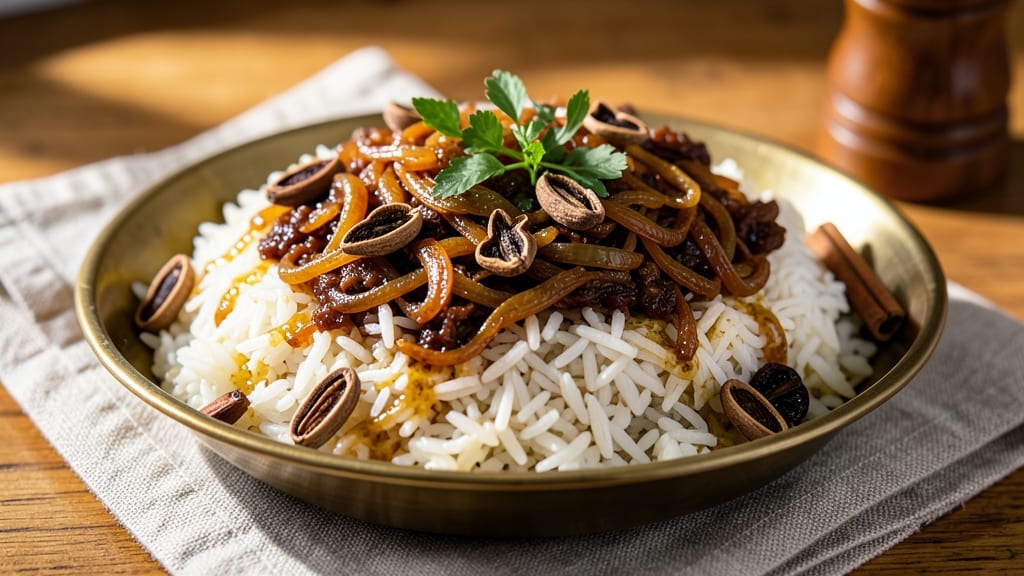
Bukhari rice transforms a simple meal into a celebration of Saudi tradition, where fragrant basmati rice meets caramelized onions and aromatic spices. This dish, traditionally served with tender lamb or chicken, delivers layers of flavor that make every bite feel like a homecoming. The secret lies in slow-cooking the rice with ghee and whole spices, creating a dish that's as comforting as it is authentic.
What sets Bukhari rice apart is its rich, golden hue and deep, spiced aroma—achieved through a blend of cardamom, cloves, and cinnamon. The caramelized onions add sweetness that balances the savory meat, while saffron infuses the rice with its signature golden color.
Perfect for gatherings or family dinners, this recipe captures the heart of Saudi cuisine in one fragrant, satisfying dish.
Ingredients for bukhari rice recipe saudi
Fragrant basmati rice, caramelized onions, and aromatic spices transform simple ingredients into Saudi tradition.
| Ingredient | Amount | Notes |
|---|---|---|
| Basmati Rice 🍚 | 1 ½ cups | Uncooked, long-grain preferred |
| Yellow Onions 🧅 | 2 whole | Thinly sliced for caramelization |
| Ghee 🧈 | ½ cup | Clarified butter for rich flavor |
| Cardamom Pods 🌿 | 6 whole | Green cardamom preferred |
| Cloves 🌶️ | 4 whole | Whole cloves for infusion |
| Cinnamon Sticks 🌿 | 2 whole | 1-inch pieces for aroma |
| Saffron Threads 🌼 | ¼ tsp | High-quality for golden hue |
| Water 💧 | 3 cups | Room temperature preferred |
| Salt 🧂 | 1 ½ tsp | Diamond Crystal kosher preferred |
| Bay Leaves 🌿 | 2 whole | Fresh for best flavor |
| Lemon Juice 🍋 | 1 tbsp | Freshly squeezed |
| Fresh Mint Leaves 🌿 | ¼ cup | Chopped for garnish |
The quality of your rice and ghee sets the foundation. Basmati rice from Middle Eastern markets delivers the best texture—look for grains that are long and separate easily. Ghee from grass-fed cows (like Gowardhan brand) adds richness without burning. For the spices, whole cardamom and cloves from Indian or Middle Eastern markets are ideal—they release more flavor when toasted. Saffron is non-negotiable here; Iranian saffron is the gold standard, but it's expensive. A small 0.25 tsp goes a long way—don't skimp on quality if you can afford it.
No cardamom pods? Ground cardamom at half the amount works, but whole pods infuse better. Substituting cinnamon sticks for powder? Toast the powder lightly first to deepen its aroma. Running low on bay leaves? Dried works at double the quantity, but fresh is superior. For the onions, yellow or red onions both work—just ensure they're thinly sliced for proper caramelization. The lemon juice balances the richness; freshly squeezed is best, but bottled works in a pinch (just add a pinch more salt).
Store cooked rice in an airtight container for up to 4 days in the fridge—it reheats beautifully. For longer storage, freeze portions for 3 months, though texture may soften slightly. The spices should be kept in a cool, dark place; whole spices last 6-12 months, while ground spices lose potency after 3-4 months. Garnish with fresh mint just before serving to preserve its vibrant color and bright flavor—it wilts quickly once chopped, so add it last.
Why You'll Love This Recipe
- One-Pot Magic: I swear by this recipe—just basmati rice, ghee, and a handful of whole spices. No extra pans, no fuss. The onions caramelize right in the pot while the rice cooks, so you’re basically done by the time you’ve cracked open a cardamom pod.
- Fragrant First Bite: That first whiff of toasted cloves and cardamom in warm ghee? It’s like a hug for your taste buds. The rice turns out fluffy with a delicate, nutty aroma—simple ingredients, but the flavor? Ridiculously good.
- Weeknight to Celebration: Between us, this is my go-to for lazy Mondays and when my in-laws visit. The same method works for both—just adjust the rice-to-water ratio. Honestly, it’s the kind of dish that feels special without trying too hard.
- Leftovers That Don’t Suffer: I make a big batch on Sundays because reheating bukhari rice is a dream. The ghee keeps it moist, and the spices stay vibrant. Plus, it’s budget-friendly—ghee’s rich but a little goes a long way, and basmati rice stretches across meals.
Step-by-step instructions for Bukhari rice recipe Saudi
Master this aromatic Saudi classic with perfectly caramelized onions and fragrant spices.
Prepare the Spiced Ghee Base
In a heavy-bottomed pot, melt the 0.5 cup Ghee over medium-low heat until completely liquid. Add the 2 whole Yellow Onions, sliced thinly, and cook them slowly for 15-20 minutes until they develop a deep golden brown color. This caramelization is key—don't rush it. You'll know they're ready when the onions are sweet-smelling and almost jam-like in texture.
Once the onions are caramelized, add the 6 whole Cardamom Pods, 4 whole Cloves, and 2 whole Cinnamon Sticks. Toast these spices in the ghee for 1-2 minutes until fragrant. The spices will release their essential oils, infusing the ghee with their warm, aromatic flavors. Remove the spices from the pot and set them aside—they've done their job. This step builds the rich, spiced foundation for your Bukhari rice.
Bloom the Saffron and Add Rice
In a small bowl, dissolve the 0.25 tsp Saffron Threads in 1 tablespoon of warm water. This ensures the saffron releases its vibrant color and floral aroma. Stir the dissolved saffron into the pot with the caramelized onions and ghee. Add the 1.5 cups Basmati Rice to the pot and stir gently for 1-2 minutes to coat each grain in the fragrant ghee mixture. This coating ensures even flavor distribution throughout the rice.
Add the 3 cups Water and 1.5 tsp Salt to the pot. Stir once more to combine, then bring the mixture to a gentle boil. Once boiling, reduce the heat to low and cover the pot with a tight-fitting lid. The rice should cook undisturbed for 15 minutes—this allows the grains to absorb the liquid evenly and develop a tender yet firm texture. Avoid peeking or stirring during this time, as it disrupts the cooking process and can lead to unevenly cooked rice.
Steam and Rest the Rice
After 15 minutes of cooking, remove the pot from the heat but leave the lid on. Let the rice steam for an additional 5 minutes. This resting period allows the residual heat to finish cooking the rice and ensures the grains are perfectly tender. The steam also helps the rice absorb any remaining liquid, resulting in a fluffy, separate texture.
Once the rice has rested, gently fluff it with a fork to separate the grains. Stir in the 1 tbsp Lemon Juice and 2 whole Bay Leaves, which add a bright, citrusy note and subtle herbal depth to the dish. Finally, garnish with the 0.25 cup Fresh Mint Leaves, chopped finely. The mint adds a refreshing contrast to the rich, spiced rice. Serve immediately while the flavors are at their peak and the rice is still warm and fragrant.
Adjust Consistency and Serve
If the rice is slightly undercooked or dry, you can add a splash of hot water to the pot, cover it again, and let it steam for an additional 2-3 minutes. This step ensures the rice reaches the perfect consistency—tender yet firm with a slight bite. Bukhari rice should be moist but not mushy, with distinct grains that hold their shape.
For an authentic Saudi presentation, serve the Bukhari rice in a large, shallow dish. Garnish with additional chopped mint leaves and a drizzle of the reserved ghee if desired. This fragrant, spiced rice pairs beautifully with grilled meats, yogurt-based dishes, or as a standalone centerpiece. The caramelized onions and warm spices create a dish that is both comforting and deeply flavorful—a true taste of Saudi Arabia.
Pro Tips For Making Bukhari Rice Recipe Saudi
- SOAK RICE 30 MINUTES: I learned this the hard way—skipping the soak makes the rice turn mushy or dry out too fast. Use twice the water by volume (1 cup rice, 2 cups water) and let it sit covered while you prep the onions and spices. The longer the soak, the fluffier the final result.
- FRY ONIONS LOW AND SLOW: High heat burns onions before they caramelize properly. Keep the flame at medium-low and stir constantly—aim for a deep golden color, not brown. This is where the flavor builds, so don’t rush it (yes, even if you’re impatient like me).
- CRUSH WHOLE SPICES: Whole cardamom and cloves release flavor better when lightly crushed—just a few taps with the back of a knife. This avoids bitterness and lets the aroma infuse the ghee properly. Skip the mortar and pestle unless you’re making a large batch.
- USE LESS WATER THAN YOU THINK: Bukhari rice needs minimal water—about 1.5 cups per cup of rice, not the 2 cups you’d use for plain basmati. The ghee and slow cooking seal in moisture, so resist the urge to add more. Undercooked rice is worse than slightly firm.
Troubleshooting great bukhari rice recipe saudi
Onions Too Pale?
If your caramelized onions aren’t turning golden brown, you’re likely cooking them too quickly. Slow down the heat to medium-low and use a heavy-bottomed pot—like a Le Creuset Dutch oven—to prevent burning.
Thinly slice the onions (about ⅛-inch thick) for even cooking. Patience is key: 15-20 minutes of undisturbed cooking will give you that perfect jam-like texture. 🧅
Rice Turning Mushy?
Overcooking or stirring too much ruins the texture. Once the rice starts boiling, reduce to low heat and never peek while cooking. If your rice is mushy, you likely used too much water—stick to the 3 cups for 1.5 cups rice ratio.
For extra insurance, use extra-long-grain basmati rice, which holds up better than regular basmati. 🍚
Spices Not Infusing?
Whole spices need time to bloom. Toast them in the ghee for 1-2 minutes until fragrant—this releases their oils. If your spices taste bland, they might be old.
Store them in an airtight container away from light, or buy fresh from a Middle Eastern market like Almar Market for better quality. 🌿
Saffron Not Coloring Rice?
Saffron needs warmth to release its color. Dissolve it in 1 tbsp warm water (not boiling) before adding to the rice. If your rice stays pale, your saffron might be low-quality.
Opt for Iranian saffron—it’s pricier but worth it. A tiny pinch (just ¼ tsp) makes a big difference! 🌼
Rice Sticking to Pot?
This usually means the pot isn’t heavy enough or the heat is too high. Use a stainless steel or cast iron pot (like a Lodge skillet) and keep the heat at low.
If it sticks, add 1 tbsp ghee to the pot before cooking to create a nonstick barrier. Never scrape the bottom—gently fluff with a fork instead. 🧈
Lemon Juice Too Sour?
Adjust the acidity to taste. Start with 1 tbsp lemon juice, then add more if needed—½ tsp at a time. If it’s still too sharp, balance it with a pinch of salt or a drizzle of ghee.
Freshly squeezed lemon juice is best, but bottled works in a pinch (just reduce to ½ tbsp). 🍋
Nutrition facts
Frequently asked questions
Can I use regular basmati rice instead of extra-long-grain?
Regular basmati works, but extra-long-grain holds its shape better for Bukhari rice's signature fluffy texture. For the best results, look for grains that are at least 2.5 inches long when uncooked. If you only have regular basmati, rinse it thoroughly before cooking to remove excess starch, which can make the rice stick together.
What's the best meat to serve with Bukhari rice?
Traditionally, Bukhari rice pairs perfectly with slow-cooked lamb or marinated chicken. For a modern twist, grilled beef or even shrimp work well too. The key is to choose a protein with rich, savory flavors that complement the rice's aromatic spices. Cook the meat separately and serve it alongside the rice for an authentic Saudi meal.
How do I store leftover Bukhari rice?
Keep leftovers in an airtight container in the fridge for up to 4 days. For longer storage, freeze portions for 3 months—though texture may soften slightly. To reheat, gently warm in a pot with a splash of water or ghee over low heat. Avoid microwaving, as it can make the rice dry out.
Can I make Bukhari rice without saffron?
While saffron gives Bukhari rice its signature golden hue, you can substitute with ½ tsp turmeric for color. However, saffron's unique floral aroma is irreplaceable. If using turmeric, reduce the amount slightly (start with ¼ tsp) to avoid an earthy taste. For best results, use high-quality saffron if possible.
Why does my Bukhari rice smell so strong?
The intense aroma comes from properly toasted whole spices! Cardamom, cloves, and cinnamon release their essential oils when toasted in ghee. If the smell seems overpowering, reduce the spice quantity slightly next time. For milder flavor, use ground spices at half the amount instead of whole pods.