
Side Dishes
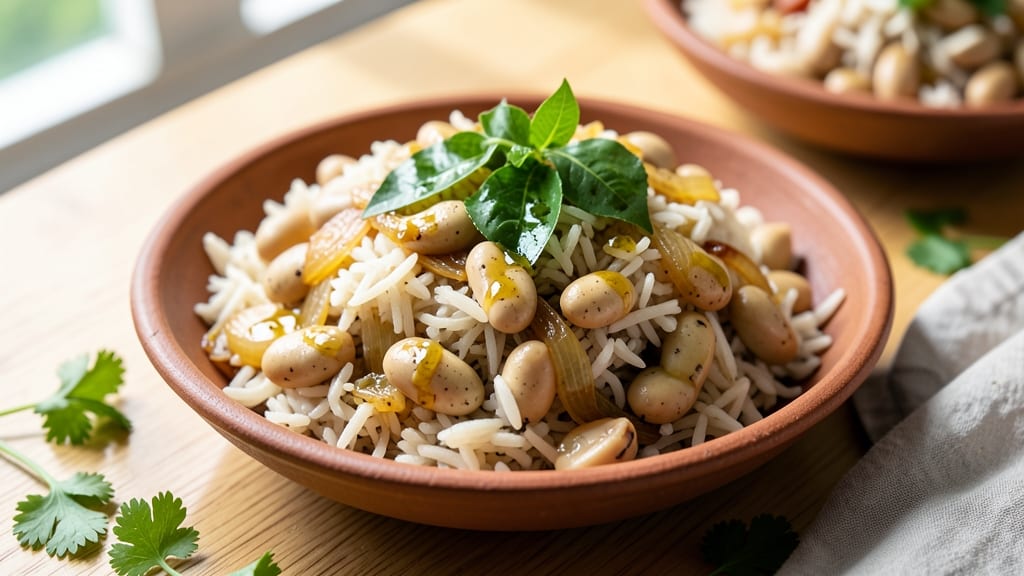
This Indian butter beans and rice recipe delivers cozy, spiced coconut curry comfort in a single pot—where fragrant basmati rice and tender butter beans simmer together in a velvety coconut-turmeric sauce.
The secret lies in tempering whole spices with mustard seeds and curry leaves, creating layers of aromatic depth that transform simple ingredients into a restaurant-worthy dish. Perfect for weeknight dinners or meal prep, this one-pot wonder balances protein, fiber, and warmth in every bite.
The dish begins with jeera (cumin) rice, toasted to release its nutty aroma before simmering in coconut milk and turmeric-infused water. Meanwhile, butter beans soften in the same fragrant broth, absorbing the earthy spices and creamy coconut base.
Topped with fresh cilantro and a squeeze of lemon, it’s a harmonious blend of textures—fluffy rice, tender beans, and a sauce that’s both rich and light. Serve with a side of yogurt raita or a cup of mint tea for the full Indian dining experience.
Ingredients for butter beans rice recipe indian
Fragrant basmati rice, tender butter beans, and aromatic spices create this comforting Indian coconut curry.
| Ingredient | Amount | Notes |
|---|---|---|
| Basmati Rice 🍚 | 1 cup | Uncooked, long-grain preferred |
| Butter Beans 🌿 | 1 ½ cups | Canned, drained and rinsed |
| Coconut Milk 🥥 | 1 can | Full-fat, 13.5 oz (400 ml) can |
| Yellow Onion 🧅 | 1 whole | Medium size, finely chopped |
| Garlic Cloves 🧄 | 4 cloves | Fresh, minced |
| Curry Leaves 🌿 | ¼ cup | Fresh, tightly packed |
| Mustard Seeds 🌶️ | 1 tbsp | Whole, yellow variety |
| Ground Turmeric 🌿 | 1 tsp | Freshly ground preferred |
| Ground Cumin 🌿 | 1 tsp | Toasted for deeper flavor |
| Ground Coriander 🌿 | 1 tsp | Freshly ground preferred |
| Ghee 🧈 | 2 tbsp | Clarified butter, for tempering |
| Fresh Cilantro 🌿 | ¼ cup | Chopped, for garnish |
| Lemon Juice 🍋 | 1 tbsp | Freshly squeezed |
| Salt 🧂 | 1 tsp | Adjust to taste |
| Water 💧 | 2 cups | For rice and beans |
The coconut milk is the heart of this dish—full-fat is non-negotiable for that velvety texture. Thai Kitchen or Aroy-D cans are my go-to, but any brand works as long as it's not watered down. Fresh curry leaves are essential for that authentic flavor, but if you can't find them, dried curry powder at half the amount will work in a pinch. The ghee adds richness, so don't skip it—Gujarat brand is best if you can find it, but regular ghee from the grocery store works too. For the mustard seeds, yellow gives the best flavor, though brown will work if that's what you've got.
No fresh curry leaves? Dried curry powder is the next best thing—use half the amount since dried spices are more concentrated. The butter beans can be swapped for chickpeas or black-eyed peas if needed, though butter beans hold their shape best. Short on ghee? Olive oil or coconut oil will work, though the flavor won't be identical. The basmati rice should be long-grain—jasmine rice won't give the same texture. For extra depth, toast the whole spices (cumin, coriander) in the ghee before adding water—this releases their full aroma.
This dish tastes even better the next day as flavors meld. Store leftovers in an airtight container in the fridge for up to 4 days, or freeze portions for 3 months. The rice and beans keep well separately too—great for meal prep. To reheat, add a splash of water or coconut milk to prevent drying out. The lemon juice should be added fresh before serving—it brightens everything up.
Why You'll Love This Recipe
- One-Pot Magic: I swear by this recipe when I’m too tired to wash pots. The rice and beans simmer together in the same pot—no straining, no extra bowls—just golden, fragrant grains with tender butter beans clinging to every bite. Honestly, I’ve made it after work when I just wanted to sit down, and it still tasted like I’d spent hours.
- Creamy Without Guilt: That coconut milk transforms this into something rich but not heavy. The onions caramelize just enough to add depth, while the garlic—oh, the garlic—roasts until it’s sweet and mellow, not sharp. It’s the kind of flavor that lingers, making you close your eyes halfway through the first bite.
- Lunchbox Hero: Between us, this is my go-to for meal prep. The rice stays firm for days, and the beans hold their shape, so you can pack it for lunches without soggy disasters. I’ll make a big batch on Sunday, and by Wednesday, I’m still eating it cold with a squeeze of lime—no reheating required.
- Budget Stretch: Butter beans are a pantry staple, and basmati rice lasts forever. A single can of beans and a small can of coconut milk stretch this into four servings that feel special. I’ll be real: I’ve served this at potlucks, and no one ever guessed it was as budget-friendly as it is.
Step-by-step instructions for spiced coconut butter beans and rice
This one-pot Indian curry delivers rich, aromatic flavors with minimal effort.
🍳 Step 1: Temper the Spices in Ghee
In a heavy-bottomed pot, heat the 2 tablespoons ghee over medium heat until it shimmers. Add the 1 tablespoon mustard seeds and let them sizzle for 30 seconds until they pop and turn golden. This is where the magic begins—those tiny seeds release their nutty aroma that forms the curry's foundation.
Next, add the 1 whole yellow onion and cook for 5-6 minutes until softened and golden brown at the edges. Stir occasionally to prevent burning. The onions should caramelize slightly, deepening their sweetness. Then add the 4 cloves minced garlic and 1 teaspoon each of ground turmeric, cumin, and coriander, stirring for 30 seconds until fragrant. You'll notice the spices bloom immediately, filling your kitchen with warm, earthy aromas.
🍳 Step 2: Toast Curry Leaves and Add Beans
Increase heat to medium-high and add the ¼ cup curry leaves. Toast them for 30 seconds until they darken slightly and release their citrusy aroma. This step is crucial—it prevents bitterness and brings out their unique flavor. Immediately add the 1.5 cups butter beans and stir to coat in the spiced ghee.
Pour in the 2 cups water and bring to a gentle boil. Then reduce heat to low-medium and let the beans simmer for 5 minutes until they begin to soften slightly. The liquid should reduce just enough to coat the beans but not completely evaporate. This prepares them to absorb the coconut milk's richness in the next step.
🥘 Step 3: Build the Coconut Curry Base
Open the 1 can coconut milk and pour in ¾ of the can (reserve the remaining ¼ cup for later). Stir well to combine with the beans. Add the 1 cup basmati rice and 1 teaspoon salt, then bring the mixture to a gentle simmer. The rice should be fully submerged in the coconut milk mixture.
Cover the pot and cook for 15 minutes on low heat, allowing the rice to absorb the coconut milk and the beans to meld with the spices. Stir gently once halfway through to prevent sticking. You'll know it's ready when the rice is tender but still has a slight bite—this ensures it won't turn mushy as it finishes cooking.
⏰ Step 4: Finish with Tempering and Garnish
Remove the pot from heat and stir in the remaining ¼ cup reserved coconut milk and 1 tablespoon lemon juice. This brightens the dish and balances the richness. Return the pot to low heat and let it sit uncovered for 5 minutes to thicken slightly.
Finally, garnish with the ¼ cup chopped fresh cilantro. The herbs add a fresh contrast to the creamy coconut and spiced beans. Serve immediately while warm, with the rice and beans perfectly tender and the coconut milk creating a luscious sauce that coats every bite. The lemon juice ensures a bright finish that cuts through the richness.
Pro Tips For Making Butter Beans Rice Recipe Indian
- SOAK BASMATI 20 MINUTES: The rice won’t separate properly if you skip this—even if you’re in a rush. Toss the grains in cold water for 20 minutes while you prep the beans and onions. (Yes, I know you want to dive right in, but trust me on this.)
- TOAST ONIONS LOW AND SLOW: Crank the heat to medium-low and let those onions caramelize for 8-10 minutes without stirring constantly. The deeper the color, the richer the flavor—just don’t walk away. (I learned this after burning three batches in a row.)
- DRAIN BEANS WELL: Rinse the butter beans in a colander, then shake them dry for 30 seconds. Extra moisture in the pot means your rice will turn out soggy, and nobody wants that. (Your future self will thank you.)
- ADD COCONUT MILK LAST: Stir it in only after the rice has absorbed most of the liquid—about 5 minutes before it’s fully done. This keeps the grains firm and lets the creaminess coat everything evenly. (Sounds weird, but it works.)
Storing and reheating this dish
Fridge Storage Tips
Let your butter beans and rice curry cool to room temperature for no more than 2 hours before storing. Transfer to an airtight glass container—I love using Pyrex with snap-on lids—and refrigerate for up to 4 days.
The flavors actually deepen overnight as the spices meld together. Always store with the lid slightly loose if you plan to reheat quickly, to prevent condensation buildup. 💫
Freezer-Friendly Prep
This dish freezes beautifully for up to 3 months with minimal texture loss. Portion into quart-sized freezer bags (remove excess air with a straw) or glass containers with 1-inch headspace for expansion.
Label with the date—trust me, you'll forget! For best results, freeze the curry before adding fresh cilantro and lemon juice. Thaw overnight in the fridge before reheating. ❄️
Stovetop Reheating
My preferred method is stovetop reheating—it preserves the creamy coconut texture perfectly. Transfer portions to a pot and add 2-3 tablespoons water or coconut milk per cup of curry. Heat over medium-low for 8-10 minutes, stirring occasionally.
The gentle heat prevents the rice from drying out. Taste and adjust salt or lemon juice—reheated curries often need a little brightness boost. 🔥
Microwave Shortcuts
For quick meals, microwave individual portions in a microwave-safe dish covered with a damp paper towel. Heat on 50% power for 2 minutes, stir, then continue in 30-second intervals until reaching 165°F.
Add a splash of coconut milk if the curry looks dry. The microwave method works best for single servings—just don't overdo it or the rice will turn mushy. 💡
Reviving Day-Old Rice
If your rice turns out slightly dry after reheating, here's my secret fix: Sprinkle 1 tablespoon cold water over the curry, cover, and let sit for 5 minutes before reheating.
The steam will restore moisture without making the dish watery. For extra richness, stir in ½ teaspoon ghee before serving. This trick works wonders for any leftover rice dishes! ✨
Nutrition facts
Frequently asked questions
Can I substitute butter beans with another type of bean?
Yes! You can swap butter beans for chickpeas or black-eyed peas, though the texture will differ slightly. Chickpeas hold up well in coconut milk, while black-eyed peas add a milder flavor. For a similar creamy texture, use 1.5 cups canned chickpeas (drained and rinsed) and adjust cooking time by 5-7 minutes if needed.
Why does my curry taste too spicy?
This likely means the mustard seeds or curry leaves weren't toasted enough before adding water. For milder flavor, reduce the mustard seeds to ½ tablespoon and skip the curry leaves if you're sensitive to heat. Alternatively, stir in 1-2 tablespoons yogurt or coconut milk at the end to balance the spices.
Can I make this recipe without coconut milk?
Replace the coconut milk with 1 cup heavy cream or evaporated milk for a similar richness. For a lighter option, use 1 cup vegetable broth + 2 tablespoons yogurt. The dish will still be flavorful, though the texture will be slightly thinner. Adjust salt accordingly if using broth.
How do I prevent the rice from turning mushy?
Cook the rice for exactly 15 minutes on low heat, then remove from heat immediately. If using basmati rice, rinse it thoroughly before cooking to remove excess starch. For extra insurance, stir in 1 tablespoon lemon juice at the end—it helps maintain the rice's structure. Avoid over-stirring while cooking!
What sides pair well with this dish?
This creamy curry pairs beautifully with cooling sides like cucumber raita, mango chutney, or a simple green salad with lemon dressing. For a complete meal, serve with roasted papadums or garlic naan. The acidity from raita or lemon balances the coconut richness perfectly.