
Main Courses
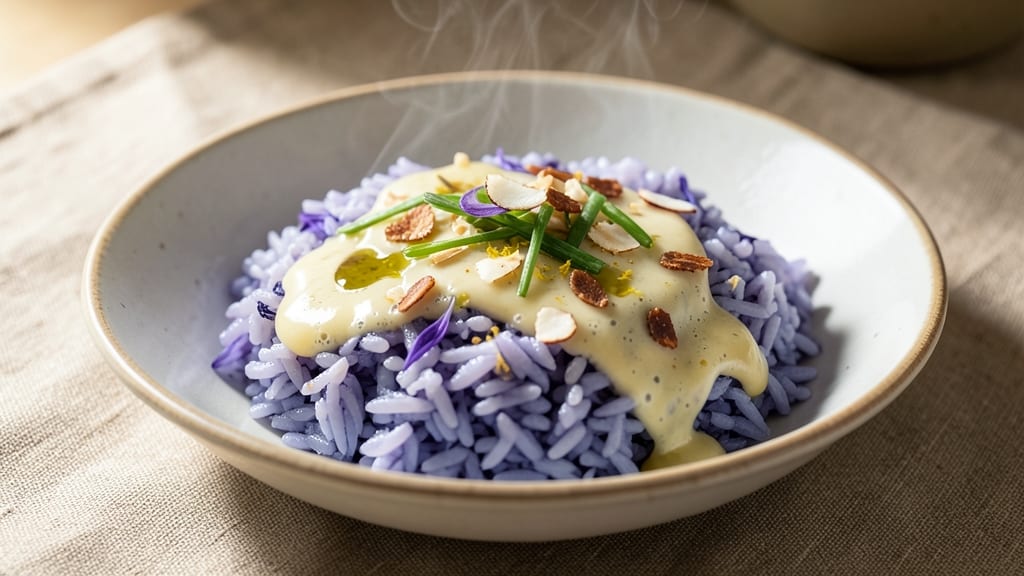
This butterfly pea flower rice recipe transforms ordinary rice into a stunning visual masterpiece while keeping flavors light and refreshing. The vibrant blue-purple hue shifts with pH levels—acidic ingredients like lemon juice turn it back to blue, creating a mesmerizing color show that’s as fun as it is delicious.
Perfect for special occasions or impressing guests, this one-pot dish delivers both beauty and simplicity.
The secret lies in infusing the rice with dried butterfly pea flowers during cooking, which releases a delicate floral aroma and subtle earthy notes. No special equipment is needed—just a few pantry staples and 30 minutes of hands-on time.
The result? A visually striking dish that’s equally satisfying to eat, with a gentle floral depth that pairs beautifully with proteins like grilled chicken or shrimp.
Ingredients for butterfly pea flower rice
Simple ingredients create this stunning, flavorful rice with vibrant blue-purple magic.
| Ingredient | Amount | Notes |
|---|---|---|
| Jasmine Rice 🍚 | 1 cup | Uncooked, long-grain preferred |
| Dried Butterfly Pea Flowers 🌸 | 2 tbsp | Food-grade, vibrant color |
| Vegetable Broth 💧 | 2 cups | Low-sodium preferred |
| Coconut Milk 🥥 | ½ cup | Full-fat for creaminess |
| Lemon Juice 🍋 | 1 tbsp | Freshly squeezed |
| Extra-Virgin Olive Oil 🫒 | 2 tbsp | For richness and balance |
| Garlic Cloves 🧄 | 3 cloves | Minced for aromatic depth |
| Fresh Ginger 🌿 | 1 tbsp | Grated, for zesty kick |
| Sea Salt 🧂 | 1 tsp | Fine grain preferred |
| Black Pepper 🌶️ | ½ tsp | Freshly ground |
| Cilantro Leaves 🌿 | ¼ cup | Chopped, for garnish |
| Lime Wedges 🍈 | 2 whole | For serving and color shift |
The dried butterfly pea flowers are the star—look for food-grade quality at specialty Asian markets or online retailers like Penzeys. The vibrant color comes from anthocyanins, which shift with pH levels. Whole Foods or Trader Joe's often carry them in the bulk spices section. Use the full-fat coconut milk for a luxurious texture, though light coconut milk works in a pinch. Jasmine rice is ideal for its delicate floral notes, but basmati rice will also work beautifully.
No dried butterfly pea flowers? Blue spirulina powder at one-third the amount creates a similar effect, though the color shift won't be as dramatic. Fresh ginger needs to be grated—pre-grated works but loses potency quickly. For extra zing, add a dash of chili flakes or a splash of vegan fish sauce for umami depth. The lemon juice is key for the color transformation—keep it fresh to avoid bitterness. If you're short on time, bottled lime juice works, but fresh is always better.
Store the dried flowers in an airtight container away from light—they keep for up to 1 year. The cooked rice reheats beautifully, but the color may fade slightly. For best results, serve immediately after cooking. The lime wedges should be kept separate until serving to preserve their acidity for the color shift. This dish makes a stunning side or main course and keeps well in the fridge for 3-4 days—perfect for meal prep.
Why You'll Love This Recipe
- One-Pot Magic: I swear by this recipe when I’m too wiped to deal with multiple pans. Toss the jasmine rice, dried butterfly pea flowers, broth, and coconut milk into one pot—set it to simmer—and walk away. The flowers steep right into the rice, turning it a dreamy blue that fades to lavender as you squeeze in lemon juice. No straining, no fuss, just hands-off perfection.
- Flavor Twist: Between us, this isn’t your basic rice. The butterfly pea flowers add this earthy, slightly floral note that’s so unexpected—like a secret ingredient. Then the coconut milk smooths it out, while the lemon juice cuts through the richness. It’s creamy, fragrant, and has this subtle tang that makes every bite feel like a little celebration.
- Weeknight to Party: Honestly, I make this for lazy dinners, but it also impresses at gatherings. Serve it as-is for a light, fragrant bowl, or pile it high with grilled chicken, tofu, or veggies for a full meal. The color alone makes it feel special—no one expects (or resists) a dish that looks this striking.
- Budget-Friendly Luxe: Jasmine rice and dried butterfly pea flowers are cheap staples, and coconut milk stretches far. A single batch feeds four, and leftovers reheat beautifully—no drying out, no weird textures. I’ll be real: it’s the kind of dish where I make double just to have it for lunch the next day. Practical? Absolutely. Delicious? Ridiculously so.
Step-by-step instructions for vibrant butterfly pea flower rice
Transform simple rice into a stunning blue-purple masterpiece with this one-pot technique.
Bloom the Butterfly Pea Flowers in Broth
In a medium saucepan, combine the 2 cups vegetable broth and 2 tbsp dried butterfly pea flowers. Bring to a gentle boil over medium-high heat, then immediately reduce to low heat and let simmer for 5 minutes. You'll see the water transform from clear to a vibrant blue-purple—this is your visual cue that the flowers have fully bloomed and infused their magic into the liquid.
Strain the broth through a fine-mesh sieve into a clean bowl, pressing gently on the flowers to extract every last drop of color. Set aside the infused broth—this is the foundation of your dish's dramatic color change. If any flower bits remain, don't worry; they'll dissolve completely during cooking. The key here is patience—the longer the flowers steep, the more intense the color will be when you add acid later.
Toast the Aromatics and Rice
In the same saucepan (no need to clean it—the flavorful residue adds depth), heat the 2 tbsp extra-virgin olive oil over medium heat. Add the 3 cloves minced garlic and 1 tbsp grated fresh ginger, cooking for 1-2 minutes until fragrant but not browned. This quick sauté unlocks their aromatic potential without burning.
Add the 1 cup jasmine rice, stirring to coat each grain in the aromatic oil. Toast the rice for 2 minutes, stirring frequently, until it becomes slightly translucent at the edges. This step develops the rice's nutty flavor and prevents mushiness. I like to listen for a gentle sizzling sound—this tells me the rice is ready for the next step. If it starts to brown too quickly, reduce the heat slightly.
Simmer with Coconut Milk and Seasonings
Pour the infused blue-purple broth over the toasted rice, along with the 0.5 cup coconut milk, 1 tsp sea salt, and 0.5 tsp black pepper. Stir gently to combine, then bring to a simmer over medium heat. Once bubbles form around the edges, reduce heat to low, cover with a tight-fitting lid, and let cook for 15 minutes without disturbing.
After 15 minutes, check the rice—it should be tender but still have a slight bite. If it's not quite done, continue cooking for another 2-3 minutes. The coconut milk adds a luxurious creaminess that balances the earthy rice. Here's the thing—don't peek too often. Every time you lift the lid, you release steam and potentially dry out the rice. Trust the timer and let the rice cook undisturbed.
Finish with Acid and Garnish
Once the rice is perfectly tender, remove from heat and stir in the 1 tbsp lemon juice. Watch as the vibrant blue-purple transforms into a soft lavender hue—this is the acid's magical reaction with the butterfly pea flowers. The lemon juice also brightens the dish and cuts through the richness of the coconut milk.
Let the rice sit covered for 5 minutes to steam gently. Then fluff with a fork and stir in the 0.25 cup chopped cilantro leaves. The contrast of the bright green against the purple rice creates a stunning visual effect. Serve immediately with the 2 lime wedges on the side—each squeeze will shift the color back to blue, creating an interactive dining experience that delights both eyes and palate.
Pro Tips For Making Butterfly Pea Flower Rice
- Bloom the Flowers First: Steep the dried butterfly pea flowers in hot (not boiling) vegetable broth for 10 minutes before adding to the rice—this pulls out the full color and flavor without overpowering. I used to toss them in dry, and the dish just looked pretty but tasted flat.
- Use Low Heat for Rice: Once the rice is absorbing liquid, drop the heat to the lowest setting and let it simmer uncovered. I learned this the hard way—high heat turns jasmine rice mushy, and you’ll end up with a sad, gluey mess instead of fluffy grains.
- Acid First, Not Last: Stir in the lemon juice before the coconut milk, not after. The acid cuts through the richness of the coconut and brightens the whole dish—adding it last just makes the flavors fight for attention.
- Toast the Rice Lightly: Sauté the uncooked jasmine rice in a dry pot for 1-2 minutes until fragrant—this deepens the nutty flavor and prevents the rice from turning gummy. Yes, it’s an extra step, but it makes a real difference in texture and taste.
Essential equipment for great butterfly pea flower rice
Basic Pantry Staples
You already own most of what you need—I'm talking about a medium saucepan (any size between 8-10 inches works perfectly) and a fine-mesh sieve for straining the vibrant broth. My go-to is a stainless steel colander from OXO because it's durable and rinses clean easily.
The saucepan doesn't need to be fancy—just make sure it has a tight-fitting lid for even cooking. 🔥
Specialty Tools
For the butterfly pea flowers, I recommend investing in a small airtight container (like a mason jar) to store them—it preserves their color and potency for months.
If you're prepping ahead, a microplane for fresh ginger and garlic makes mincing easier than knives. The OXO Good Grips version is my favorite because it's ergonomic and affordable.
Optional Upgrades
Want to take your rice game to the next level? A digital instant-read thermometer (like the Thermoworks Thermapen) helps monitor the broth temperature—ideal if you're experimenting with longer steeping times.
For plating, a small offset spatula (I use Mercer Culinary) gives you that restaurant-worthy presentation without smashing the grains.
Budget-Friendly Swaps
No fancy tools? No problem. Use a clean kitchen towel as a makeshift lid if you're missing one. For straining, a coffee filter in a bowl works in a pinch.
The key is patience—let the flowers steep fully even without perfect equipment. The magic happens in the waiting, not the tools. 💫
Color-Change Kit
For the interactive color show, grab small bowls (like IKEA 365+ ones) and mini spoons for serving. The lime wedges should be cut just before serving—use a sharp chef's knife or a mandoline for even slices. Trust me, your guests will love watching the purple turn blue with each squeeze!
Nutrition facts
Frequently asked questions
Why does the color change when I add lemon juice?
The dried butterfly pea flowers contain natural anthocyanins that react to pH levels. Acidic ingredients like lemon juice lower the pH, turning the vibrant purple back to blue. This dramatic color shift creates a fun visual effect that makes the dish extra special! The flowers stay purple when alkaline, so coconut milk keeps it that way during cooking.
Can I make this recipe without coconut milk?
Yes! For a lighter version, substitute with 1 cup vegetable broth or 1/2 cup full-fat Greek yogurt (for creaminess). The color will still develop, though coconut milk adds a luxurious texture that balances the floral notes. If using yogurt, stir it in at the very end to prevent curdling from the heat.
How do I store leftovers to keep the color vibrant?
Store cooked rice in an airtight container in the fridge for up to 3 days. The color may fade slightly, but reheating with a splash of lemon juice or lime juice before serving will restore the blue hue. For best results, serve fresh—this dish is at its most visually stunning when hot and just before adding acid.
What other ingredients can I add for extra flavor?
Try adding 1/2 cup diced bell peppers or 1/4 cup chopped scallions for crunch, or a pinch of turmeric for golden flecks. For protein, stir in 1/2 cup cooked chickpeas or top with grilled shrimp. The floral notes in the rice pair beautifully with mild, fresh ingredients—just avoid strong flavors that might overpower the delicate butterfly pea aroma.
Will this rice work for a vegan diet?
This recipe is naturally vegan—just ensure your vegetable broth is free from animal products. The coconut milk and lemon juice are also plant-based. For extra protein, serve with tofu, tempeh, or vegan meat alternatives. The vibrant color makes it perfect for vegan platters and special occasions!