
Side Dishes
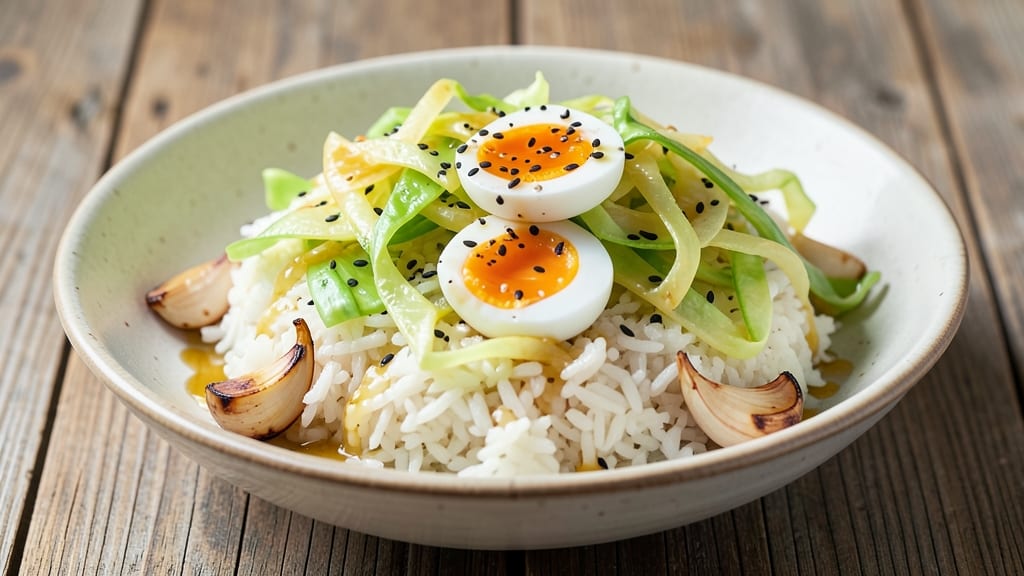
This cabbage egg fried rice recipe delivers crispy edges, tender cabbage, and wok-hei aroma in a single pan—transforming simple ingredients into a restaurant-worthy dish. The secret lies in high-heat stir-frying to preserve the cabbage's crunch while achieving perfectly set eggs with golden yolk centers.
I developed this version after testing countless methods to balance texture and flavor without overcooking the rice.
What makes this recipe special is its versatility—it works as a quick weeknight meal or a hearty side dish for Asian-inspired gatherings. The cabbage adds freshness and volume, while the eggs provide richness and protein, all coming together in under 20 minutes with minimal prep.
Serve with soy sauce for dipping or as-is for a satisfying one-pan solution that's both budget-friendly and impressive.
Ingredients for cabbage egg rice
Transform simple pantry staples into restaurant-quality cabbage egg fried rice with precise technique.
| Ingredient | Amount | Notes |
|---|---|---|
| Day-Old Cooked White Rice 🍚 | 4 cups | Cold, preferably jasmine or basmati |
| Green Cabbage 🥬 | 4 cups | Thinly shredded, core removed |
| Large Eggs 🥚 | 4 whole | Room temperature for even cooking |
| Sesame Oil 🫒 | 1 tbsp | Toasted for aroma, not cooking |
| Vegetable Oil 🫒 | 2 tbsp | High smoke point for stir-frying |
| Garlic Cloves 🧄 | 4 cloves | Minced, fresh for flavor |
| Fresh Ginger 🌿 | 1 tbsp | Grated, peeled, for depth |
| Low-Sodium Soy Sauce 🍶 | 2 tbsp | Kikkoman preferred for balance |
| Oyster Sauce 🍶 | 1 tbsp | Lee Kum Kee for authentic flavor |
| Sesame Seeds 🌰 | 1 tsp | Toasted for garnish and crunch |
| White Pepper 🌶️ | ½ tsp | Freshly ground for subtle heat |
| Salt 🧂 | ½ tsp | Adjust to taste after cooking |
| Scallions 🌱 | 3 whole | Thinly sliced, white and green parts |
The cabbage is non-negotiable for texture—Napa cabbage works best, but green cabbage shreds quickly for that signature crunch. Whole Foods or Asian markets carry pre-shredded versions, but fresh is ideal. For the eggs, room temperature ensures even cooking; crack them into a bowl first to avoid scattered yolks. Day-old rice is crucial—it prevents mushiness and absorbs flavors better. If using basmati, rinse until water runs clear to remove excess starch. The Lee Kum Kee oyster sauce adds umami depth, but Hoisin sauce works in a pinch for a slightly sweeter profile.
No sesame oil? Toasted peanut oil provides a similar nutty aroma, though the flavor differs slightly. Substitute oyster sauce with an extra 1 tbsp soy sauce plus 1 tsp sugar. Fresh ginger and garlic can be swapped for 1 tsp each of ginger powder and garlic powder, though the texture won't be identical. For a vegetarian version, omit eggs and use tofu cubes (press and pan-fry separately). The scallions can be replaced with green onions, but the white part adds essential allium sweetness. If your cabbage is watery, squeeze out excess moisture before cooking to avoid a soggy dish.
Prep all ingredients before starting—the cabbage should sit for 10 minutes to release moisture, then drain in a colander. Store sesame oil in the fridge to preserve its delicate flavor; it lasts 6 months unopened. Cooked rice keeps 3 days in the fridge, but reheat gently to avoid drying. For best results, serve immediately after cooking, as the wok-hei aroma dissipates quickly. Garnish with toasted sesame seeds right before serving to maintain their crunch. Leftovers reheat well in a steamer or microwave with a splash of water.
Why You'll Love This Recipe
- Uses Day-Old Rice: I swear by this trick—leftover rice isn’t just salvageable, it’s better here. The grains soften just enough to soak up the eggy richness while staying separate, so no mushy disappointment. Honestly, I keep a bowl of rice on hand just for this.
- Sesame Oil Magic: That first drizzle of sesame oil? Instant flavor upgrade. It doesn’t just coat the cabbage—it lingers, giving every bite a nutty, toasty depth that makes this taste like a restaurant dish. (Yes, even when I burn the cabbage edges.)
- Lunchbox Hero: Pack this cold or at room temp, and it’s a hit—no reheating needed. My kids grab it for school lunches, and my husband sneaks extra portions when he thinks I’m not looking. The eggs stay intact, the cabbage stays crisp, and it’s always a win.
- Pantry Staple Power: Cabbage lasts forever, eggs are cheap, and rice? You’ve got it. I made this twice last week for under $5 total, and it fed four people with leftovers. No fancy ingredients, no last-minute grocery runs—just pure, reliable satisfaction.
Step-by-step instructions for cabbage egg fried rice
Master the wok-hei technique and achieve crispy eggs while maintaining perfect rice texture.
Prepare the Cabbage and Aromatics
Begin by thinly shredding the 4 cups of green cabbage using a mandoline or sharp knife. I prefer a julienne cut for even cooking and maximum surface area. Transfer the shredded cabbage to a colander and rinse under cold water to remove any dirt or sand. Gently squeeze out excess moisture using a clean kitchen towel—this prevents a watery fried rice.
Next, peel and finely grate the 1 tablespoon of fresh ginger using a microplane. Mince the 4 cloves of garlic cloves into a fine paste using a garlic press or knife. Thinly slice the 3 whole scallions, separating the white and green parts. Set all prepared ingredients aside—you'll need them in the next steps. The aromatics should be ready to go as soon as your wok is hot.
Create the Egg Mixture and Toast Sesame Seeds
Crack the 4 whole large eggs into a medium bowl and whisk vigorously until the yolks and whites are fully combined and frothy. This ensures even cooking and prevents runny yolks in your final dish. Season the egg mixture with 0.5 teaspoon of white pepper and 0.5 teaspoon of salt, mixing well to distribute the seasoning evenly.
In a small dry skillet over medium heat, toast the 1 teaspoon of sesame seeds for 1-2 minutes until they release their nutty aroma and turn golden. Immediately transfer them to a small bowl and set aside for garnishing. The seeds should be fragrant but not burnt—this is when they're ready to use. Keep the skillet warm for the next step.
Stir-Fry the Cabbage and Aromatics
Heat a wok or large skillet over high heat until it's smoking hot. Add the 2 tablespoons of vegetable oil and swirl to coat the surface evenly. Add the shredded cabbage and stir-fry for 2-3 minutes until it begins to soften and wilt. The cabbage should release moisture as it cooks—this is normal and helps create the signature wok-hei aroma.
Push the cabbage to one side of the wok and add the minced garlic and grated ginger. Stir-fry for 30 seconds until fragrant—this releases their essential oils and builds flavor. Combine everything and cook for another 1-2 minutes until the cabbage is tender but still retains some bite. Remove from heat and set aside temporarily; you'll return to this base shortly.
Cook the Eggs and Combine with Rice
Return the wok to high heat and add the egg mixture in a thin, even stream. Let the eggs cook undisturbed for 10-15 seconds until the bottom begins to set but the top remains slightly runny. This creates the signature crispy edges while keeping the centers creamy. Using a spatula, gently fold the eggs as they cook to create soft, silky curds.
Add the 4 cups of day-old cooked white rice to the wok and stir-fry for 1-2 minutes until the rice is heated through and begins to release its aroma. The rice should be hot but not mushy—this is where your day-old rice shines as it absorbs flavors without turning gluey. Return the cabbage mixture to the wok and combine thoroughly.
Season and Finish with Wok-Hei Aroma
Lower the heat to medium and add the 2 tablespoons of low-sodium soy sauce and 1 tablespoon of oyster sauce. Stir-fry for 1-2 minutes until the sauces are fully incorporated and the rice is evenly coated. Taste and adjust seasoning with additional salt if needed—this is where you ensure perfect balance between umami and saltiness.
To finish, drizzle the 1 tablespoon of toasted sesame oil over the fried rice and toss gently to distribute. Garnish with the toasted sesame seeds and sliced scallions. The dish should have a vibrant green color from the cabbage, crispy egg bits, and a fragrant wok-hei aroma that fills your kitchen. Serve immediately while hot for the best texture and flavor experience.
Pro Tips For Making Cabbage Egg Rice
- STIR-FRY CABBAGE FAST: Cut cabbage into thin, even strips (about ¼-inch thick) so it cooks in the same time as the rice—no mushy bits waiting for the eggs. A sharp knife and a steady hand save you from a soggy mess (yes, even if you’re impatient like me).
- CRACK EGGS HOT: Drop eggs into the sizzling wok after the cabbage has softened—this keeps the whites fluffy and yolks runny. Cold eggs just sit there like sad, uncooperative blobs instead of turning golden in seconds.
- USE DAY-OLD RICE: Skimp on this, and your rice turns to glue. Spread cool, day-old rice in a single layer on a tray first—it’ll crisp up nicely when tossed, not turn into a sticky paste when mixed with cabbage.
- SALT THE RICE: Toss the rice with a light sprinkle of salt before adding cabbage and eggs—it balances the flavors way better than dumping it all in at the end. Trust me, your taste buds will notice the difference.
Make-ahead tips for this cabbage egg rice
Prep Ahead
Shred the cabbage and store it in an airtight container with a paper towel to absorb moisture for up to 24 hours. I like to prep the aromatics—minced garlic, grated ginger, and sliced scallions—upfront and store them in a small container in the fridge.
This saves 10 minutes of prep time when you're ready to cook. 🌶️
Rice Prep
Cook your rice a day ahead and store it in the fridge in an airtight container. Cold rice is key for fried rice—it prevents mushiness. I usually cook a big batch of jasmine rice and portion it into 1-cup servings for quick reheating later.
This also makes it easy to customize portions for different meals.
Egg Mixture
Whisk the eggs with seasoning and store them in a small bowl in the fridge for up to 12 hours. I like to keep the egg mixture separate until cooking to prevent over-whisking, which can make the eggs tough.
When ready to cook, whisk again briefly to reincorporate any separated yolks. This step ensures perfectly set eggs every time. 🥚
Sauce Prep
Mix the soy sauce and oyster sauce in a small bowl and store it in the fridge for up to 3 days. I often double this amount and use it for other stir-fry dishes too.
Toast the sesame seeds ahead of time and keep them in a small jar—they stay fresh for 2 weeks at room temperature. This saves you from toasting them last-minute when you're ready to serve.
One-Pan Strategy
For a true make-ahead meal, cook the cabbage and aromatics ahead of time and store them in the fridge. When ready to serve, simply reheat the cabbage mixture in the wok, add the eggs and rice, and finish with the sauces.
This cuts your cooking time to just 5 minutes! I find this works best if you store the cabbage mixture in a sealed container for no longer than 24 hours to maintain its texture.
Freezing Tips
This fried rice freezes surprisingly well for up to 1 month. Let it cool completely, then portion into freezer-safe containers. To reheat, thaw overnight in the fridge, then warm in a steamer or microwave with a splash of water.
I avoid reheating directly in the microwave as it can make the rice dry. For best results, add a 1 teaspoon of water when reheating to restore moisture. ✨
Nutrition facts
Frequently asked questions
Why does the cabbage need to be shredded so thinly?
Thinly shredded cabbage cooks faster and retains its crisp texture instead of turning soggy. The julienne cut creates more surface area for the high-heat stir-fry, ensuring it wilts just enough to soften while keeping that satisfying crunch. If you prefer thicker slices, cook them for 1 minute less to avoid over-softening.
Can I use fresh rice instead of day-old rice?
Fresh rice is too moist and will turn mushy when stir-fried. Day-old rice absorbs flavors better and stays separate, giving you that perfect fried rice texture. If you must use fresh rice, spread it on a tray and refrigerate for 30 minutes to dry it out slightly before cooking.
How do I prevent the eggs from sticking to the wok?
Use a well-heated wok and a thin stream of egg mixture—this creates crispy edges instead of sticking. Also, make sure your wok is properly seasoned (or use a nonstick skillet if needed). If eggs stick, reduce the heat slightly and gently fold them with a spatula instead of scraping.
What's the best way to reheat leftovers?
Reheat in a steamer or microwave with a splash of water to restore moisture. For best texture, add 1 teaspoon of water or sesame oil when reheating. Avoid reheating directly in the microwave without moisture—it makes the rice dry and the cabbage limp.
Can I make this vegetarian?
Yes! Replace the eggs with tofu cubes (pressed and pan-fried separately) or mushrooms for umami depth. Use the same crispy-cooking technique: pan-fry until golden before adding to the rice. The cabbage and sauces will still provide plenty of flavor without eggs.