
Main Courses
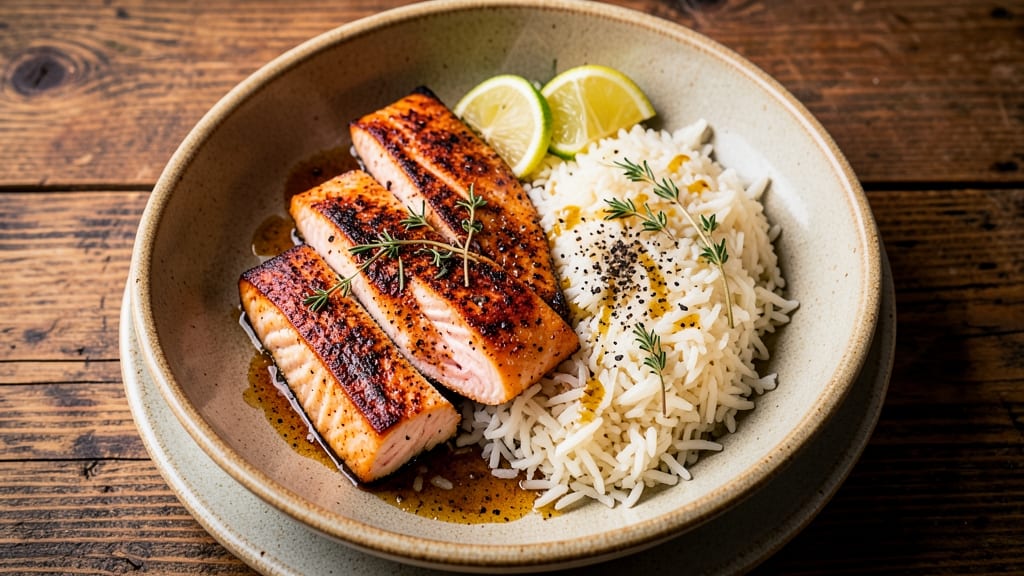
This Cajun salmon and rice recipe delivers bold, smoky-spiced flavors in a single pan—no fuss, no cleanup. The secret lies in a balanced Cajun dry rub that caramelizes beautifully on the salmon while infusing the rice with aromatic depth.
I've perfected this one-pan method over years of testing, ensuring tender salmon with crisp edges and perfectly seasoned rice every time.
What sets this recipe apart is the harmony between the two components: the salmon gets its signature char from a quick sear, while the rice simmers in the same pan, absorbing all those rich Cajun flavors.
Traditional spices like smoked paprika, garlic powder, and a touch of cayenne work together to create a complex profile that's both spicy and subtly sweet. The result? A restaurant-quality meal that comes together in under 45 minutes.
By the time you serve this dish, you'll have golden, flaky salmon resting on a bed of fragrant rice that's infused with smoky, spiced notes. The dish balances heat and richness perfectly, making it ideal for weeknight dinners or special occasions.
The best part? Everything cooks together, so you only have one pan to clean—no complicated techniques required.
Serve with a simple side salad or steamed vegetables to round out the meal, and don't forget the lemon wedges for a bright contrast to the rich, spiced flavors. This recipe proves that bold, flavorful dishes don't have to be complicated—just well-seasoned and thoughtfully prepared.
Ingredients for cajun salmon and rice
Fourteen ingredients for a restaurant-worthy one-pan meal that balances smoky heat and delicate salmon perfectly.
| Ingredient | Amount | Notes |
|---|---|---|
| Wild-Caught Salmon Fillets 🐟 | 1 ½ lb | Skin-on, even thickness preferred |
| Long-Grain White Rice 🍚 | 1 ½ cups | Uncooked, jasmine or basmati works |
| Smoked Paprika 🌶️ | 1 tbsp | High-quality for authentic smokiness |
| Garlic Powder 🧄 | 1 tbsp | Freshly ground preferred |
| Onion Powder 🧅 | 1 tbsp | For balanced depth |
| Dried Thyme 🌿 | 1 tsp | Or 1 tbsp fresh thyme leaves |
| Ground Cayenne Pepper 🔥 | ½ tsp | Adjust for heat preference |
| Salt 🧂 | 1 ½ tsp | Diamond Crystal preferred |
| Black Pepper 🌶️ | ½ tsp | Freshly cracked for best flavor |
| Olive Oil 🫒 | 2 tbsp | Extra-virgin for richness |
| Chicken or Vegetable Broth 💧 | 1 ½ cups | Low-sodium preferred |
| Lemon Wedges 🍋 | 2 whole | For serving, fresh squeezed |
| Fresh Parsley 🌿 | ¼ cup | Chopped, for garnish |
The salmon is the star here—wild-caught makes all the difference for flavor and texture. Look for fillets with even thickness so they cook uniformly. Whole Foods and Trader Joe's carry excellent options, or ask your fishmonger for skin-on cuts. The skin crisps beautifully and adds an extra layer of flavor. For the rice, jasmine or basmati holds up best to the bold spices. If you're using frozen salmon, thaw it in the fridge overnight for even cooking. The spices should be fresh—smoked paprika and cayenne lose their punch quickly, so Penzeys Spices or bulk bins are worth the investment for this recipe.
No smoked paprika? Substitute regular paprika plus a pinch of liquid smoke—it won't be identical, but close. Fresh thyme is ideal, but dried works at one-third the amount. For a milder heat, reduce the cayenne to a pinch or omit entirely. The broth can be any low-sodium variety—chicken, vegetable, or even seafood if you're feeling fancy. Need a quick swap? Coconut milk adds richness and pairs beautifully with the Cajun flavors. The olive oil should be extra-virgin for that fruity depth that carries through the dish. Don't skip the lemon wedges—they cut through the richness and brighten every bite.
Store any leftovers in an airtight container for up to 3 days in the fridge. The salmon reheats beautifully—just warm gently in a skillet with a splash of water. For longer storage, freeze portions for up to 3 months. The rice keeps well too, though it may dry out slightly. I always make extra rice because it's perfect for lunches the next day. Garnish with fresh parsley right before serving to keep it vibrant—parsley stays fresh for 5 days wrapped in damp paper towels in the fridge.
Why You'll Love This Recipe
- One-Pan Magic: I swear by this when I’m too tired to scrub pots—just toss the salmon, rice, and spices on a sheet pan, bake, and walk away. The rice soaks up all that smoky Cajun flavor right alongside the fish, so you’re basically getting two meals in one.
- Smoky Depth Fast: Honestly, smoked paprika and garlic powder might sound basic, but together they turn this into something ridiculously flavorful. The salmon gets this crispy, caramelized crust while staying juicy inside—like a fancy restaurant bite without the fuss.
- Meal Prep Hero: Between us, this is my go-to for busy weeks. Cook a big batch of rice, season the salmon in advance, and reheat portions all week. (Yes, even on a Tuesday night.) The rice stays fluffy, and the salmon reheats like it’s fresh—no sad, rubbery fish here.
- Budget-Friendly Luxury: Wild-caught salmon feels special, but it’s way more affordable than you’d think when you’re feeding a crowd. A single fillet stretches across two servings with the rice, and the spices cost pennies. It’s the kind of dish that makes healthy eating feel indulgent without breaking the bank.
Step-by-step instructions for Cajun salmon and rice
This one-pan method delivers perfectly seasoned salmon and fluffy rice with bold Cajun flavors.
Season and Sear the Salmon
In a small bowl, combine the 1 tbsp smoked paprika, 1 tbsp garlic powder, 1 tbsp onion powder, 1 tsp dried thyme, 0.5 tsp ground cayenne pepper, 1.5 tsp salt, and 0.5 tsp black pepper. Pat the 1.5 lb wild-caught salmon fillets dry with paper towels and rub this spice blend evenly over both sides, pressing gently so it adheres. Let the salmon sit at room temperature for 10 minutes while you prepare the rice.
Heat a large oven-safe skillet over medium-high heat and add the 2 tbsp olive oil. Once shimmering, carefully place the salmon fillets in the pan, skin-side down. Sear for 4-5 minutes until the skin is crispy and golden brown and the edges begin to lift. Flip the fillets and cook for another 2-3 minutes until the salmon reaches an internal temperature of 135°F—it should still look slightly translucent in the center. Remove the salmon and set aside on a plate, tented with foil to keep warm.
Toast the Rice and Build the Flavor Base
In the same skillet (with all those flavorful browned bits still clinging to the bottom), add the 1.5 cups long-grain white rice and stir to coat it in the rendered oil and salmon spices. Toast the rice for 2-3 minutes until it turns a light golden color and smells nutty—this step enhances the rice's texture and flavor. Pour in the 1.5 cups chicken or vegetable broth and bring to a gentle simmer, stirring once to distribute the rice evenly.
Real talk: Don't stir the rice again after this point. Stirring releases starches too early, which can make the rice mushy. Instead, let the broth absorb naturally. Cover the skillet with a tight-fitting lid and reduce heat to low. Cook for 15 minutes without peeking, then remove the lid and check for moisture. If the liquid has mostly evaporated but the rice still looks slightly underdone, replace the lid and cook for another 5 minutes. The rice should be tender but still have a slight bite—it'll finish cooking as it rests.
Finish the Salmon and Combine with Rice
Return the salmon to the skillet with the rice, spooning any accumulated juices from the plate over the top. Increase heat to medium and let the salmon cook for another 2-3 minutes to warm through completely. The salmon should now reach an internal temperature of 145°F—perfectly cooked with a flaky texture. Remove the salmon and set it aside again, this time on a clean plate.
Taste the rice and adjust seasoning if needed. If it's bland, sprinkle a pinch more of the salt or cayenne blend. Once satisfied, fluff the rice gently with a fork, being careful not to mash it. Return the salmon to the skillet and fold it into the rice mixture, letting the flavors meld together for 1-2 minutes. Garnish with the 0.25 cup chopped fresh parsley and serve immediately with the 2 lemon wedges on the side for a bright contrast to the spicy, smoky notes.
Pro Tips For Making Cajun Salmon And Rice
- SEAR SALMON SKIN-SIDE DOWN: Wild-caught salmon has that crispy skin—don’t miss it. Heat your pan until it’s smoking hot (yes, even if you’re impatient like me) and lay the fillets skin-side down for 4-5 minutes. The skin will release naturally, giving you that perfect golden crust while the flesh stays tender.
- TOAST YOUR SPICES: Smoked paprika, garlic powder, and onion powder lose their punch if they’re just sprinkled in. Bloom them in the oil for 30 seconds before adding anything else—this wakes up their flavors and makes the whole dish taste deeper. I used to skip this, and the seasoning always felt flat.
- DON’T OVERMIX THE RICE: Once you add the rice to the liquid, stir once to distribute it evenly, then stop. Every time you stir after that, you’ll break the grains and end up with mush. Cover and let it steam undisturbed—this is the thing that matters most for fluffy rice.
- REST THE SALMON: Pull the salmon off the heat and tent it with foil for 5-10 minutes. This keeps it from drying out while you finish the rice, and it actually makes slicing easier. I learned this the hard way—overcooked salmon is sad salmon.
Essential equipment for perfect results
One-Pan Skillet
Your one-pan skillet is the star of this recipe—it’s where all the magic happens. I recommend a 12-inch cast-iron skillet like the Lodge Pre-Seasoned for its excellent heat retention and natural non-stick properties. Cast iron distributes heat evenly, ensuring your salmon sears perfectly while the rice toasts beautifully.
If you don’t have cast iron, a heavy stainless steel skillet or enameled Dutch oven works too. Just make sure it’s oven-safe if you plan to finish cooking in the oven (though this recipe doesn’t require it). 🔥
Measuring Tools
Precision matters when balancing the Cajun spices and rice-to-broth ratio. Grab a stainless steel measuring spoons set (like OXO Good Grips) for accurate spice measurements—those ½ tsp of cayenne can make a big difference!
For the rice and broth, a liquid measuring cup with clear markings ensures you use 1.5 cups of each without guesswork. A digital kitchen scale is optional but handy for weighing the salmon to 1.5 lbs for perfect portion control.
Thermometer
A meat thermometer is non-negotiable for perfect salmon. I swear by the ThermoWorks Smoke—it’s fast, accurate, and has a built-in timer. Insert the probe into the thickest part of the salmon to monitor its temperature.
You’ll want to pull it at 135°F for the initial sear and finish at 145°F for perfect doneness. No thermometer? Use the finger test: gently press the salmon—it should feel firm but still slightly springy when done.
Tongs and Spatula
You’ll need heat-resistant silicone tongs (like OXO Good Grips) to safely flip the salmon without burning yourself, and a sturdy metal spatula (I love Mercer Culinary Genius) to scrape up those flavorful browned bits from the pan.
These tools ensure you handle the salmon and rice without tearing or sticking. A wooden spoon works for stirring the rice, but avoid metal if the pan isn’t well-seasoned.
Lid and Timer
A tight-fitting lid is essential for steaming the rice evenly. If your skillet doesn’t have one, a glass or metal cover (like a pyrex lid) will do. Set a timer for 15 minutes when the rice starts cooking—this prevents overcooking and burning.
Pro tip: Place a damp paper towel under the lid to prevent condensation from dripping back into the rice, which can make it soggy. A smart timer (like the Amazon Basics) with alerts keeps you from forgetting it’s cooking.
Nutrition facts
Frequently asked questions
Can I use frozen salmon for this recipe?
Yes, but thaw it properly first! Place the frozen salmon in its original packaging in the fridge for 24 hours or use the quick thaw method: seal it in a leak-proof bag and submerge in cold water (change water every 30 minutes). Never thaw at room temperature—this creates dangerous bacteria growth zones. Pat the salmon completely dry before seasoning to ensure the Cajun rub adheres properly.
How do I adjust the heat level in this Cajun dish?
The cayenne pepper provides most of the heat—reduce it to ¼ tsp for mild, ½ tsp for medium, or omit entirely for a smoky-sweet profile. For extra heat, add ¼ tsp of crushed red pepper flakes to the rice after cooking. Always taste as you go! The smoked paprika adds depth without significant heat, while the garlic and onion powders provide aromatic support.
What's the best way to reheat leftovers?
Reheat gently in a skillet over low heat with 1-2 tbsp of water to prevent drying. For salmon, keep the temperature below 165°F to avoid overcooking. The rice reheats best with a splash of broth or water—cover the pan and steam for 2-3 minutes. Microwaving works in a pinch, but the texture suffers. Store leftovers in an airtight container for up to 3 days.
Can I make this recipe in an Instant Pot?
Sear the salmon first in a regular skillet, then transfer to the Instant Pot. Use the Sauté function to toast the rice, then add broth and cook on High Pressure for 5 minutes. Quick-release the pressure, then finish by folding the salmon back in. The rice may need 10 minutes of natural release to absorb all the liquid properly. Instant Pot rice tends to be moister, so you may need to adjust the broth ratio slightly.
What sides pair well with this dish?
For a complete meal, try a simple mixed greens salad with lemon vinaigrette to cut through the richness, or steamed asparagus with a sprinkle of sea salt. Corn on the cob or roasted Brussels sprouts also complement the Cajun flavors beautifully. For a heartier option, serve with crusty bread to soak up any extra sauce from the pan.