
Main Courses
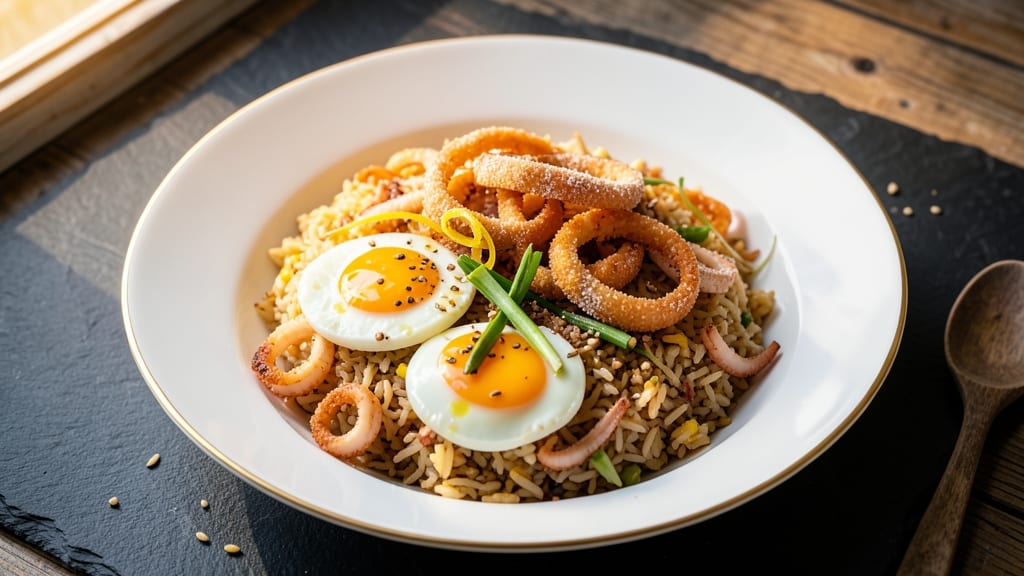
This calamari fried rice recipe transforms classic takeout into a restaurant-worthy dish with tender squid and perfectly seasoned rice. The secret lies in quick-searing the calamari until golden and crispy while keeping the rice fluffy—no soggy bites here.
I developed this fusion after craving something bold yet balanced, and the result is a plate that delivers both texture and flavor in every bite.
The dish starts with properly cooked rice (day-old works best) tossed with a savory base of garlic, ginger, and soy sauce, then finished with crispy calamari rings that add a satisfying crunch.
Garnish with green onions and sesame seeds for freshness, or drizzle with a spicy chili oil for heat lovers. It’s a complete meal that’s ready in under 30 minutes—ideal for weeknight dinners or weekend gatherings.
Ingredients for calamari fried rice
Crispy calamari meets perfectly seasoned rice—just 15 ingredients for a restaurant-worthy dish.
| Ingredient | Amount | Notes |
|---|---|---|
| Day-Old Cooked Jasmine Rice 🍚 | 4 cups | Cold rice preferred for texture |
| Fresh Calamari Rings 🦑 | 1 lb | Tender squid, cleaned and sliced |
| Large Eggs 🥚 | 2 whole | Beaten for coating calamari |
| All-Purpose Flour 🌾 | ½ cup | For light coating |
| Cornstarch 🌾 | ½ cup | For extra crispiness |
| Vegetable Oil 🫒 | ¾ cup | High smoke point preferred |
| Garlic Cloves 🧄 | 4 cloves | Minced for flavor base |
| Fresh Ginger 🌿 | 1 ½ tbsp | Finely grated, zesty kick |
| Soy Sauce 🥢 | ⅓ cup | High-quality, preferably Japanese |
| Sesame Oil 🫒 | 1 tbsp | Toasted for aroma |
| Green Onions 🧅 | ¼ cup | Sliced, for garnish |
| Toasted Sesame Seeds 🌾 | 1 tbsp | For garnish and crunch |
| Salt 🧂 | 1 tsp | Kosher or sea salt |
| Black Pepper 🌶️ | ½ tsp | Freshly ground |
| Vegetable Broth 💧 | ½ cup | Low-sodium preferred |
The calamari makes or breaks this dish. Fresh, tender squid is non-negotiable—look for pre-cleaned rings at Asian markets or seafood counters. Trader Joe's often carries high-quality frozen calamari that works well if fresh isn't available. For the rice, day-old jasmine rice is ideal—it's firmer and absorbs flavors better. If using freshly cooked rice, spread it on a tray to cool quickly. The garlic and ginger should be freshly minced or grated—pre-minced garlic lacks flavor and can make the dish taste bitter.
No fresh calamari? Frozen works perfectly—just thaw it in the fridge overnight. Running low on sesame seeds? Toasted peanuts or crushed nuts add crunch in a pinch. The soy sauce should be Japanese-style—like Kikkoman—for that authentic umami punch. Substitute with coconut aminos if you need gluten-free. The cornstarch is key for crispiness—don't skip it. For extra heat, add 1 tsp of chili crisp or sriracha to the final toss. The vegetable broth can be swapped for chicken or seafood stock if you prefer a richer flavor.
Store leftover fried rice in an airtight container for up to 3 days—it reheats beautifully. The calamari loses crispiness when reheated, so make it fresh if possible. For meal prep, portion the rice and calamari separately and assemble when ready to eat. The sesame oil and seeds keep for 6 months in a cool, dark place. If making ahead, store the sauce components separately and combine just before serving to maintain freshness.
Why You'll Love This Recipe
- No Leftover Waste: I always use day-old rice—it’s the secret to that perfect texture. No soggy bits, no extra cooking, just crispy edges and fluffy centers every time.
- Crispy Bite Magic: The flour and cornstarch coating on the calamari? Chef’s kiss. Lightly fried until golden, they shatter with the first bite—like eating a crunchy, salty hug.
- Lunchbox Hero: Between us, this is my go-to for packed lunches. Cold or reheated, the eggs stay tender, the rice stays firm, and the calamari? Still addictive. (Yes, even on a Tuesday.)
- Budget Seafood Win: Fresh calamari rings stretch farther than you’d think—especially when paired with rice and eggs. It’s fancy enough for a date night but cheap enough to make weekly. No guilt, all flavor.
Step-by-step instructions for crispy calamari fried rice
Here's how to fuse perfectly crispy calamari with aromatic fried rice in one pan.
Prepare the Calamari for Crispy Perfection
In a medium bowl, beat the 2 whole large eggs until frothy. In a separate shallow dish, combine the 0.5 cup all-purpose flour and 0.5 cup cornstarch for a light, crispy coating. Working in batches, dip each piece of 1 lb fresh calamari rings into the egg wash first, letting excess drip off, then coat thoroughly in the flour mixture.
Heat 0.5 cup vegetable oil in a deep skillet over medium-high heat until shimmering but not smoking. Fry the coated calamari in batches for 1-2 minutes per side until golden brown and crispy. The key is even cooking—don't overcrowd the pan or the temperature will drop. Transfer the fried calamari to a paper towel-lined plate to drain while you prepare the rice base.
Build the Aromatic Rice Base
In the same skillet (no need to clean it—the fond adds flavor), heat the remaining 0.25 cup vegetable oil over medium heat. Add the 4 cloves minced garlic and 1.5 tbsp finely grated fresh ginger, cooking for 30 seconds until fragrant but not browned. This quick sauté develops the foundation for your dish's complex flavor profile.
Add the 4 cups day-old cooked jasmine rice, breaking up any clumps with a spatula. Stir-fry for 2 minutes to toast the grains and incorporate the aromatics. Pour in the 0.33 cup soy sauce and 0.5 cup vegetable broth, scraping up any browned bits from the bottom. The rice should look moist but not soupy—this ensures each grain stays distinct.
Combine and Finish with Crispy Calamari
Return the crispy calamari to the skillet with the rice mixture. Toss gently to distribute everything evenly. Cook for an additional 2-3 minutes until the rice is heated through and the calamari is warmed but still maintains its crispy texture. The residual heat from the pan will help crisp any slightly softened pieces.
Drizzle with 1 tbsp sesame oil and toss once more. The sesame oil adds a nutty aroma that complements the savory soy sauce and crispy calamari beautifully. Taste and adjust seasoning with the 1 tsp salt and 0.5 tsp black pepper if needed. The dish should balance salty, umami, and slightly sweet notes.
Garnish and Serve Immediately
Transfer the calamari fried rice to serving plates while still hot. Garnish with 0.25 cup sliced green onions and 1 tbsp toasted sesame seeds. The green onions add a fresh contrast to the rich fried rice, while the sesame seeds provide texture and visual appeal. Serve immediately while the calamari remains crispy and the rice stays separate and flavorful.
Each bite should deliver perfect texture contrast—crispy calamari against tender, aromatic rice—with layers of savory, umami, and slightly sweet flavors. For best results, serve with a side of chili oil or extra soy sauce for dipping to enhance the experience.
Pro Tips For Making Calamari Fried Rice
- Prep Calamari First: Pat those rings thoroughly with paper towels before dredging—wet squid sticks to flour like glue and turns to mush in the pan. I learned this the hard way when my first batch dissolved into a sad, greasy paste.
- High Heat for Crisp: Use a wok or heavy skillet on maximum heat—no half-measures—until the oil shimmers like a desert mirage. The eggs and calamari need that initial shock to lock in texture; anything less and you’re stuck with rubbery rings and greasy rice.
- Skip the Overcrowding: Fry the calamari in two batches if needed—piling them on clogs the pan, steams the flour instead of crisping it, and guarantees soggy results. Trust me, your future self will curse you for rushing this.
- Cornstarch the Egg: Toss the beaten eggs with a teaspoon of cornstarch before scrambling—it creates a lighter, silkier curd that blends into the rice without turning it into a gluey mess. (Yes, even if you’re impatient like me.)
Common mistakes when making perfect results
Overcrowding the Pan
Frying calamari in batches is non-negotiable—I’ve made this mistake too many times and ended up with soggy, unevenly cooked squid. Only fry 2-3 pieces at a time in your skillet to maintain medium-high heat.
If you overload the pan, the oil temperature drops, and your calamari will absorb oil instead of crisping up. Trust me, the extra 1-2 minutes waiting for the next batch is worth it for that perfect golden crunch. 🔥
Using Freshly Cooked Rice
Day-old rice is your secret weapon for texture, but I’ve seen people ruin this dish by using freshly cooked rice straight from the pot. Fresh rice releases too much moisture when stir-fried, turning your fried rice into a mushy pile.
If you must use freshly cooked rice, spread it on a tray and let it cool completely for 30 minutes before using. Or better yet, cook a batch the night before and refrigerate it—it’ll taste even better the next day.
Skipping the Cornstarch
The cornstarch in the calamari coating is what creates that irresistible crunch, and I’ve seen people omit it to save time. Big mistake! The 0.5 cup cornstarch mixed with flour creates a double-layered coating that fries up crispier than flour alone.
If you’re in a pinch, substitute with 0.25 cup potato starch—it’s even lighter and crisps up beautifully. But don’t skip it entirely, or you’ll end up with chewy calamari instead of crispy.
Over-Stirring the Rice
Once the rice hits the pan, resist the urge to stir constantly. Over-stirring breaks the grains and releases excess starch, turning your fried rice into a gluey mess. Instead, let the rice sit undisturbed for 30 seconds after adding it to the pan, then give it a quick toss.
This toasting step builds flavor without turning your dish into rice paste. Think of it like making a perfect stir-fry—patience is key. ✨
Underseasoning the Calamari
Some recipes call for seasoning the calamari with salt and pepper before frying, but I’ve found that the egg wash and flour coating are enough to create flavor.
However, if you’re using frozen calamari, it often needs an extra pinch of salt (about ¼ tsp) mixed into the flour mixture. The frozen squid absorbs flavors differently, so don’t skip this step if you’re not using fresh.
Taste-test a small piece after frying—it should have just enough seasoning to complement the rice, not overpower it.
Letting the Dish Sit Too Long
This one’s a game-changer: serve your calamari fried rice immediately after tossing everything together. The crispiness of the calamari and the texture of the rice both degrade the longer it sits.
I’ve seen people let it rest for 10 minutes before serving, and by then, the calamari is sad and limp. Plate it directly from the pan, garnish, and get it to the table while the heat is still there.
The first bite should be a textural revelation, not a letdown. 💫
Nutrition facts
Frequently asked questions
Can I use frozen calamari instead of fresh?
Thaw frozen calamari overnight in the fridge before using. For extra crispiness, pat it dry thoroughly with paper towels before coating. Frozen calamari works just as well—just add a pinch of ¼ tsp salt to the flour mixture to compensate for any flavor differences.
How do I make this gluten-free?
Replace the all-purpose flour with ½ cup gluten-free flour blend and use tamari or coconut aminos instead of soy sauce. The cornstarch can stay as-is since it's naturally gluten-free. For extra crispiness, add ¼ tsp xanthan gum to the flour mixture to mimic flour's binding properties.
What's the best rice for this recipe?
Jasmine rice is ideal for its fragrant, slightly sticky texture, but medium-grain white rice works too. Avoid long-grain varieties like basmati—they stay too separate. For extra flavor, use day-old rice (cooked and chilled) as it absorbs seasonings better and prevents mushiness.
Can I add other seafood to this dish?
Yes! Shrimp or scallops work beautifully—just adjust cooking times (shrimp needs 1 minute per side). For a seafood medley, use ½ lb shrimp + ½ lb calamari. Cook shrimp first since they cook faster, then add the calamari back in at the end. The dish becomes a seafood lover's dream!
How do I store leftovers?
Store in an airtight container for up to 3 days in the fridge. Reheat gently in a skillet with a splash of water to restore moisture.