
Main Courses
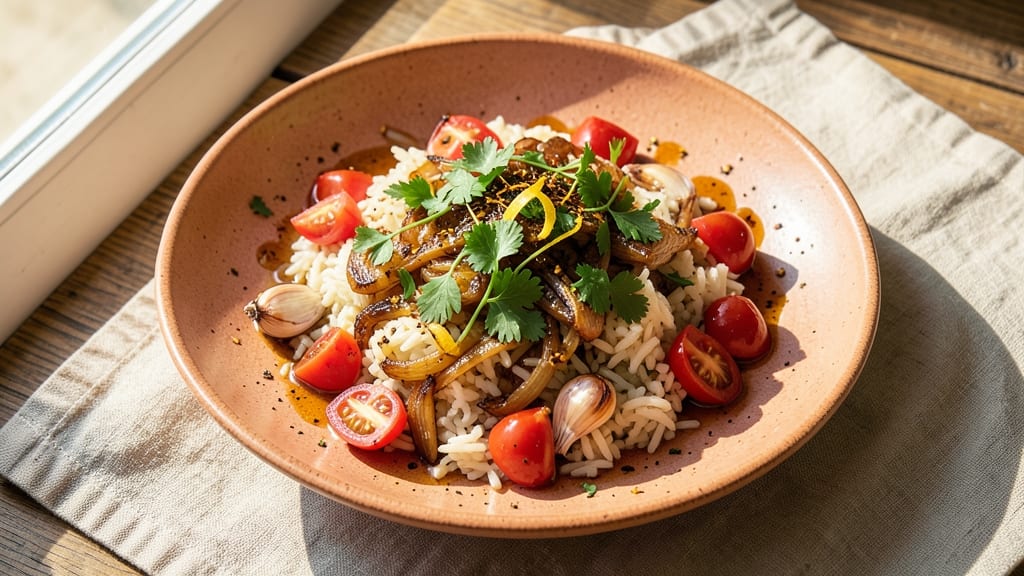
This Camargue red rice recipe brings the sun-drenched flavors of southern France to your kitchen with saffron-infused grains that are tender and perfectly crunchy. The secret lies in slow-cooking the rice with tomatoes and aromatic herbs until each grain achieves that signature texture—al dente with a satisfying bite.
What makes this dish special is its versatility: it shines as a standalone vegetarian meal or pairs beautifully with seafood, lamb, or even bull meat, a traditional Camargue specialty.
The traditional preparation begins with sautéing onions and garlic until golden, then adding rice and saffron for that signature color and delicate floral aroma. Tomatoes and broth create a rich base that simmers until the rice absorbs all the flavors, developing that characteristic crunchy exterior while staying tender inside.
The key is patience—allowing the rice to cook slowly ensures each grain reaches perfect texture without becoming mushy.
What you'll end up with is a dish that's as visually stunning as it is delicious—deep red grains speckled with golden saffron, ready to be served as a centerpiece or side. The aroma alone will transport you to the Camargue region, where this rice has been a staple for generations.
It's the kind of recipe that transforms a simple weeknight dinner into a memorable culinary experience.
Whether you're serving it with grilled fish, roasted lamb, or simply as a vegetarian main, this Camargue red rice delivers restaurant-quality results with minimal effort. The technique is straightforward, but the flavor payoff is extraordinary. Let's get started on creating this classic French dish in your own kitchen.
Ingredients for camargue red rice
Sun-kissed saffron, fragrant herbs, and tender rice create this iconic Camargue dish.
| Ingredient | Amount | Notes |
|---|---|---|
| Long-Grain White Rice 🍚 | 1 ½ cups | Uncooked, rinsed well |
| Yellow Onions 🧅 | 1 whole | Medium size, diced fine |
| Garlic Cloves 🧄 | 4 cloves | Peeled, minced fine |
| Saffron Threads 🌼 | ¼ tsp | High quality, crushed |
| Canned Diced Tomatoes 🍅 | 14 ½ oz | No salt added preferred |
| Chicken or Vegetable Broth 💧 | 2 cups | Low sodium preferred |
| Fresh Tomato Paste 🍅 | 2 tbsp | Smooth, no sugar added |
| Fresh Thyme Leaves 🌿 | ¼ cup | Or 1 tsp dried thyme |
| Fresh Parsley Leaves 🌿 | ¼ cup | Chopped, for garnish |
| Olive Oil 🫒 | ½ cup | Extra-virgin preferred |
| Salt 🧂 | 1 ½ tsp | Kosher or sea salt |
| Ground Black Pepper 🌶️ | ½ tsp | Freshly ground preferred |
| Bay Leaves 🍃 | 1 whole | Removed before serving |
Saffron is the star here—Spanish or Iranian threads are best for that signature floral aroma. Whole Foods or specialty markets carry the good stuff, but avoid the tiny little jars at regular grocery stores. Fresh thyme and parsley make all the difference too—farmers markets have the most vibrant leaves. The rice should be long-grain and uncooked; jasmine or basmati won't give that perfect crunch. For the tomatoes, no-salt-added canned tomatoes keep the seasoning balanced—just crush them by hand for that rustic texture.
No saffron? Turmeric at half the amount gives color, but no floral note. Short on thyme? Oregano or marjoram work too. The tomato paste can be swapped for 1 cup crushed fresh tomatoes if you're in season. Broth options? Vegetable broth keeps it vegetarian, while chicken broth adds depth for meat pairings. The olive oil matters—use something fruity and peppery, not that bland supermarket stuff. And if you're feeling fancy, toast the rice in the olive oil first for extra nutty flavor.
This rice tastes even better the next day—store leftovers covered in the fridge for 3-4 days. Freezes beautifully for up to 3 months, though texture gets softer after thawing. I always make extra to reheat with proteins later in the week. For serving, just fluff with a fork and garnish with fresh parsley—that bright green pop makes the dish look restaurant-worthy.
Why You'll Love This Recipe
- No Fuss, One Pot: I swear by this recipe because it’s literally just rice, onions, garlic, and tomatoes simmering together. No fancy techniques—just a pot, some heat, and a pinch of saffron to make it feel special. The onions caramelize right in the pan, so you don’t even need to chop them finely.
- Saffron Magic: That little pinch of saffron? It’s the star. The rice turns this gorgeous golden hue, and the flavor is rich without being overpowering—like a warm hug in your mouth. Honestly, it’s the only time I splurge on saffron, and it’s always worth it.
- Weeknight to Dinner Party: This rice is my go-to for lazy nights and when I’m hosting. Serve it with grilled fish or a simple steak, and it feels like a restaurant dish. (Yes, even on a Tuesday night.) The canned tomatoes keep it simple, but the slow simmer makes it taste homemade.
- Leftovers That Don’t Suck: Between us, most rice turns into sad, dry mush after a day. Not this one. The tomatoes and saffron keep it moist, so it’s just as good the next day—perfect for meal prep or feeding a crowd. I’ve reheated portions for days without a single complaint.
Step-by-step instructions for Camargue red rice
Here's how to make this fragrant, saffron-kissed rice with a perfect crunchy crust.
Bloom the Saffron and Sauté the Aromatics
In a small bowl, crush the 0.25 teaspoon saffron threads with your fingers to release their vibrant color and aroma. This is where the magic begins—saffron needs to be activated before it hits the heat. Set it aside for now.
Heat 0.25 cup olive oil in a heavy-bottomed pot over medium heat. Add the 1 whole yellow onion and 4 cloves garlic cloves, diced and minced respectively. Cook for 5-6 minutes until the onions are translucent and the garlic begins to turn golden. You'll smell that sweet, caramelized aroma—this is your signal they're ready for the next step.
Toast the Tomato Paste and Add the Rice
Reduce the heat to medium-low and stir in the 2 tablespoons fresh tomato paste. Cook for 2-3 minutes until it deepens in color and releases its rich, concentrated flavor. This step builds the foundation for your sauce.
Add the 1.5 cups long-grain white rice, stirring to coat each grain in the tomato paste mixture. The rice should look glistening and well-coated—this ensures even flavor distribution. Cook for another 2 minutes while stirring constantly to prevent sticking.
Deglaze and Add Broth
Pour in the 14.5 ounces canned diced tomatoes, scraping up any browned bits from the bottom of the pot. This deglazing step captures all those flavorful fond particles. Add the 2 cups chicken or vegetable broth, the 0.25 teaspoon crushed saffron, 1.5 teaspoon salt, 0.5 teaspoon ground black pepper, and 1 whole bay leaf. Stir well to combine.
Bring the mixture to a gentle boil, then immediately reduce the heat to low. Cover the pot with a tight-fitting lid and let it simmer for 18-20 minutes without disturbing it. This undisturbed cooking time is crucial—it allows the rice to absorb the liquid evenly and develop that signature Camargue texture.
Develop the Crispy Crust and Finish
After 18-20 minutes, turn off the heat but leave the lid on. Let the rice sit for 5 minutes to steam and settle. This resting period is where the rice transforms from mushy to perfectly tender.
Now for the crispy crust—carefully remove the lid and use a wooden spoon to press down firmly on the rice in the center. This creates a slight indentation that will crisp up beautifully. Return the pot to low heat and cook uncovered for 3-4 minutes, stirring occasionally, until the top develops a golden-brown crust. This is the hallmark of Camargue red rice.
Garnish and Serve Immediately
Remove the 1 whole bay leaf before serving. Stir in the 0.25 cup fresh thyme leaves and 0.25 cup fresh parsley leaves, reserving a few leaves for garnish. The herbs should be distributed evenly throughout the rice.
Serve the rice immediately in shallow bowls, garnished with the reserved parsley. The contrast between the crispy crust and tender grains is what makes this dish special. Each bite should deliver that saffron-infused aroma along with the perfect texture combination—crunchy on top, tender underneath.
Pro Tips For Making Camargue Red Rice
- SOAK THE SAFFRON: Toss those saffron threads in a teaspoon of warm water for 10 minutes before adding them to the rice—this releases the color and aroma way better than just sprinkling them dry. I used to skip this, and the rice always tasted like it was missing something. Now it’s rich and golden every time.
- SWIM THE RICE: Use double the liquid called for on the rice package—this dish needs that extra moisture to develop its signature saucy texture. After the initial simmer, keep the heat low enough that the water barely bubbles, and let the rice absorb it slowly. No peeking or stirring after this point, or you’ll end up with mush.
- CHAR THE ONIONS: Cook those onions until they’re deep golden, not just soft—about 12-15 minutes over medium heat. The caramelization is what gives Camargue rice its depth. If you rush this, the dish will taste flat. (Yes, even if you’re impatient like me.)
- SALT THE TOMATOES: Drain the canned tomatoes but don’t rinse—instead, sprinkle them with a pinch of salt and let them sit for 5 minutes while you prep the rest. This pulls out excess water and concentrates their flavor, making the rice taste fresher. I learned this the hard way after ending up with watery rice.
Common mistakes when making your camargue red rice
Overcooking the Rice
One of the biggest mistakes is letting the rice simmer too long, which turns it mushy instead of al dente. The key is that 18-20 minutes of covered simmering on low heat is perfect—any longer and you'll end up with a gluey mess.
I've ruined this dish more times than I'd admit by walking away and forgetting about it. Set a timer and resist the urge to peek under the lid! 🕐
Skipping the Crispy Crust
The golden crust is what makes Camargue red rice special, but many home cooks skip this step entirely. After the initial simmer, remove the lid and press down firmly on the rice with a wooden spoon to create an indentation.
Return to low heat for 3-4 minutes to develop that perfect crispy top. Without this step, you're missing the dish's signature texture.
Not Blooming the Saffron
Many people just toss saffron threads directly into the pot, but this releases only a fraction of their flavor. Instead, crush the 0.25 teaspoon saffron between your fingers and let it steep in a little warm water for 5 minutes before adding to the pot.
This activates the threads fully, giving you that authentic floral aroma. I learned this the hard way—my first attempt tasted bland until I tried this trick! 🌼
Using the Wrong Rice
Long-grain white rice is non-negotiable for this dish—anything else (like jasmine or basmati) won't give that signature crunchy texture. Also,
Adding Too Much Liquid
The broth-to-rice ratio is crucial—2 cups broth for 1.5 cups rice is perfect. Adding too much liquid will steam the rice instead of simmering it, resulting in a watery, underflavored dish. If your rice isn't absorbing all the liquid after 18-20 minutes, reduce the heat slightly and let it cook longer uncovered. The rice should be tender but still slightly firm in the center.
Ignoring the Resting Time
After cooking, many people rush to serve the rice immediately, but letting it rest for 5 minutes covered is essential. This allows the steam to redistribute, ensuring each grain absorbs all the flavors evenly.
Skipping this step can leave your rice unevenly cooked or dry. I promise, those extra 5 minutes make all the difference in the final texture. 💫
Nutrition facts
Frequently asked questions
Why does Camargue red rice have that signature crunchy texture?
The secret lies in the slow cooking method and the final crusting step. After simmering covered for 18-20 minutes, you press down on the rice to create an indentation, then cook uncovered for 3-4 minutes to develop that golden crust. This technique creates the perfect contrast between tender grains and crispy top that makes this dish special.
Can I make this recipe vegetarian?
Simply use vegetable broth instead of chicken broth and skip any meat additions. This saffron-infused rice shines as a vegetarian main course when served with roasted vegetables, grilled halloumi, or even as a side with lentil stew. The saffron and tomato flavors carry beautifully without meat.
How do I know when the rice is perfectly cooked?
Your rice is done when it's tender but still has a slight bite in the center after 18-20 minutes of simmering. The grains should be separate and not mushy. If there's still liquid, cook uncovered for 2-3 more minutes on low heat. The key is patience—don't overcook!
What's the best way to store leftovers?
Store in an airtight container in the fridge for 3-4 days or freeze for up to 3 months. When reheating, add 1-2 tablespoons of water or broth and cover with a damp paper towel to restore moisture. The flavors actually improve overnight, making it perfect for meal prep!
Can I substitute saffron with something else?
While nothing replaces saffron's floral aroma, you can use ½ teaspoon turmeric for color (though it lacks the delicate flavor). For a more authentic experience, invest in quality saffron—just 0.25 teaspoon makes all the difference. The vibrant red color and complex flavor are worth the splurge for this traditional dish.