
Main Courses
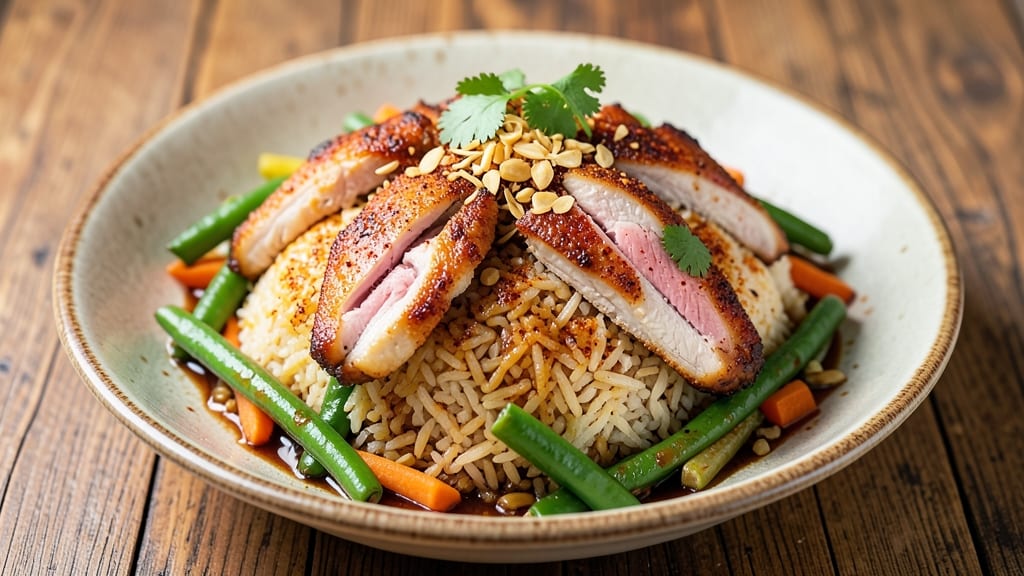
This Cambodian fried rice recipe transforms simple jasmine rice into a fragrant, aromatic masterpiece with lemongrass and kaffir lime at its heart. 🌟 The secret lies in balancing sweet, sour, and umami flavors through traditional seasonings like fish sauce and garlic, creating a dish that's both comforting and vibrantly complex.
Unlike standard fried rice, this version incorporates fresh herbs and citrus notes that elevate it to restaurant-quality status.
The process begins with perfectly cooked jasmine rice, chilled overnight for ideal texture, then stir-fried in a hot wok or skillet to achieve that coveted "wok hei" smokiness.
Protein options like chicken, shrimp, or pork get marinated in a tangy fish sauce mixture before being seared to maintain juiciness, while vegetables like green beans and carrots add satisfying crunch.
What sets this dish apart is the aromatic base of lemongrass and kaffir lime leaves, which infuse the rice with bright, citrusy depth.
What you'll end up with is a fragrant, flavor-packed fried rice where every bite delivers layers of taste—savory from the protein, sweet from the caramelized shallots, tangy from the fish sauce, and refreshing from the citrus. The dish maintains its texture beautifully, with separate grains that stay tender yet distinct.
This is the kind of meal that transports you to Cambodia's bustling streets with its perfect balance of bold flavors and aromatic complexity.
The finishing touches make all the difference: crispy fried shallots sprinkled on top add texture contrast, while fresh cilantro and Thai basil provide freshness. Serve immediately while the rice is still steaming hot, and watch as everyone at the table reaches for seconds.
This recipe delivers authentic Cambodian comfort food that's surprisingly simple to recreate at home.
Ingredients for cambodian fried rice
Jasmine rice, lemongrass, and kaffir lime leaves create this Cambodian masterpiece's aromatic soul.
| Ingredient | Amount | Notes |
|---|---|---|
| Jasmine Rice 🍚 | 2 cups | Uncooked, long-grain preferred |
| Boneless Chicken Thighs 🍗 | 1 ½ lb | Cut into 1-inch pieces |
| Green Beans 🥦 | 2 cups | Trimmed, cut into 1-inch pieces |
| Carrots 🥕 | 2 medium | Julienned into thin strips |
| Shallots 🧅 | 4 whole | Minced for aromatic base |
| Lemongrass 🌿 | 3 stems | White parts only, finely chopped |
| Kaffir Lime Leaves 🍋 | 4 whole | Torn into thin strips |
| Garlic Cloves 🧄 | 8 cloves | Minced for depth of flavor |
| Fish Sauce 🍶 | 3 tbsp | Red Boat preferred for authenticity |
| Soy Sauce 🥢 | 2 tbsp | Light or all-purpose |
| Palm Sugar 🍯 | 2 tbsp | Or substitute brown sugar |
| Vegetable Oil 🫒 | ½ cup | High smoke point preferred |
| Fresh Cilantro 🌿 | ¼ cup | Chopped for garnish |
| Thai Basil 🌿 | 0.15 cup | Chopped for aromatic finish |
| Fried Shallots 🧅 | ¼ cup | Store-bought or homemade |
The Red Boat fish sauce is non-negotiable for authentic flavor—look for it at Asian markets or well-stocked grocery stores like Whole Foods. Palm sugar, while specialty, can be swapped for brown sugar if unavailable, though it loses that delicate caramel note. Kaffir lime leaves? Trader Joe's often carries them frozen, which works perfectly. For the lemongrass, Costco sells bundles that stay fresh longer than single stalks at regular markets. The chicken thighs should have visible fat marbling—this keeps them juicy during the quick sear.
No fish sauce? Soy sauce with a splash of lime juice mimics the umami punch, though it won't be identical. Substituting palm sugar for white sugar cuts the caramel depth, but the dish still shines. If Thai basil is unavailable, regular basil with a pinch of cinnamon offers a similar freshness. The fried shallots can be homemade—simmer shallots in oil until crispy, then drain on paper towels. For the rice, day-old jasmine rice works best, but freshly cooked rice can be chilled overnight if needed. The key is ensuring the grains stay separate and don't turn mushy.
Store cooked rice in an airtight container for up to 3 days in the fridge, though it reheats best when fresh. The lemongrass and kaffir lime leaves can be prepped ahead and stored in the freezer for up to 2 months—just thaw before using. Fried shallots keep for 1 week in the pantry, making them perfect for quick garnishes. This dish tastes even better the next day as flavors meld, so double the batch if you're feeding a crowd—it disappears fast.
Why You'll Love This Recipe
- One-Pan Magic: I swear by this recipe—just one pan, minimal chopping, and no fancy skills needed. The chicken thighs stay juicy while the jasmine rice absorbs that smoky, garlicky shallot base like a dream.
- Umami Bomb: Between the crispy chicken skin (if you leave it on!) and the sweet-tangy fish sauce glaze, every bite is ridiculously good. The green beans add that fresh crunch, but honestly? The shallots caramelizing first? That’s where the flavor party starts.
- Lunchbox Hero: Here’s what sold me—this reheats like a champ. Pack it for work, toss it in a bento box, or freeze half for when you’re too tired to cook. (Yes, even on a Tuesday night.)
- Pocketbook Pleaser: Jasmine rice and chicken thighs stretch this dish far—I feed four for under $10. Bonus: carrots and green beans bulk it up without breaking the bank, and leftovers taste just as good cold the next day.
Step-by-step instructions for Cambodian fried rice
Master this fragrant dish with bold flavors and perfect texture—every bite delivers authentic Cambodian comfort.
🍳 Step 1: Prepare the Chicken and Vegetables
Pat the 1.5 lb boneless chicken thighs dry with paper towels and cut them into 1-inch pieces. Season generously with salt and pepper, then set aside. Trim the 2 cups green beans and cut into 1-inch pieces. Peel and julienne the 2 medium carrots into thin strips using a sharp mandoline or knife.
Mince the 4 whole shallots finely for the aromatic base. Extract the white parts from the 3 stems lemongrass and chop them finely—this is where the dish gets its signature fragrance. Tear the 4 whole kaffir lime leaves into thin strips and mince the 8 cloves garlic for depth. Keep all prepped ingredients in separate bowls until ready to use.
🔥 Step 2: Build the Fragrant Base
Heat 0.25 cup vegetable oil in a wok or large skillet over medium-high heat until shimmering. Add the seasoned chicken pieces and cook for 4-5 minutes until lightly golden and cooked through. Remove the chicken and set aside.
In the same pan, add another 0.25 cup vegetable oil (you'll use 0.5 cup total) and stir in the minced shallots. Cook for 2 minutes until soft and translucent. Add the minced lemongrass, kaffir lime leaves, and garlic, stirring constantly for 30 seconds until fragrant—this is your flavor foundation. The aroma should be bright and citrusy.
👨🍳 Step 3: Cook the Vegetables and Rice
Push the aromatics to one side of the pan and add the green beans and julienned carrots. Stir-fry for 3-4 minutes until the vegetables begin to soften but still retain a slight crunch. Add the 2 cups jasmine rice and stir to coat the grains with the fragrant oil and aromatics.
Cook for 2 minutes, stirring constantly, until the rice begins to turn opaque at the edges. This step ensures the rice absorbs the flavors before adding liquid. If the pan gets too dry, add 1 tablespoon water to prevent burning.
🥘 Step 4: Season and Finish
Pour in 1 cup water (or enough to just cover the rice) and stir once to distribute evenly. Cover the pan with a tight lid and reduce heat to medium-low. Let the rice steam for 10 minutes, shaking the pan gently every 2 minutes to prevent sticking.
After 10 minutes, remove the lid and stir in the cooked chicken pieces. Add the 3 tbsp fish sauce, 2 tbsp soy sauce, and 2 tbsp palm sugar, tossing well to coat the rice evenly. The sauce should be glossy but not soupy—adjust with 1-2 tablespoons water if needed. Taste and balance the flavors: the fish sauce should be savory, the sugar slightly sweet, and the lime leaves bright.
🍽️ Step 5: Garnish and Serve
Transfer the fried rice to a serving platter and let it rest for 2 minutes to allow the flavors to meld. Garnish with the 0.25 cup fried shallots, 0.25 cup chopped fresh cilantro, and 0.15 cup chopped Thai basil. The fried shallots add a crispy texture contrast, while the herbs bring freshness to cut through the richness.
Serve immediately while hot, with extra kaffir lime leaves on the side for those who want an extra citrusy kick. The rice should be fragrant with lemongrass, slightly sticky but not mushy, and packed with tender chicken and crisp-tender vegetables. Each bite should deliver a perfect balance of savory, sweet, and umami flavors.
Pro Tips For Making Cambodian Fried Rice
- STIR-FRY IN BATCHES: Don’t overload the wok—split the chicken and veggies into two rounds if needed. I learned this the hard way when my first batch of green beans turned soggy because I tried to crowd everything in. High heat works only when there’s space for the oil to sizzle properly.
- USE DAY-OLD RICE: Cold, dry jasmine rice fries up crispier and absorbs flavors better than fresh. If you’re making this the same day, spread the cooked rice on a tray and let it sit uncovered for 20 minutes. (Yes, even if you’re impatient like me—it’s worth it.)
- SALT THE CHICKEN FIRST: Season the chicken thighs with salt and a pinch of sugar before cooking, then let them sit for 10 minutes. This keeps them juicy and gives them a deeper flavor when they hit the wok. Skip this, and you’ll end up with dry, flavorless meat.
- CHAR THE SHALLOTS: Cook the minced shallots in oil until they’re golden brown—almost caramelized—before adding anything else. This adds a sweet, nutty depth that cuts through the richness of the chicken fat. (I was skeptical until I tried it—now I never skip it.)
Regional styles of these flavors
Phnom Penh Street Style
In Cambodia's capital, this dish gets a smoky, charred edge from street vendors using cast-iron woks over charcoal. Look for Phnom Penh-style markets where vendors toss the rice with extra lemongrass and a pinch of white pepper for depth.
The key difference? They often add diced preserved radish (about 2 tbsp) for a sweet-tangy crunch that balances the heat. I've found that using avocado oil (high smoke point) mimics this authentic charring effect at home. 🔥
Northern Kampot Region
The coastal Kampot province version incorporates freshwater prawns instead of chicken, marinated in a paste of grated kaffir lime zest and chili flakes. The rice gets a touch of coconut milk (about ¼ cup) during cooking for a creamier texture.
Locals add sliced green mango (about ½ cup) for acidity that cuts through the richness. I've adapted this by using shrimp and adding the coconut milk during the final 5 minutes of steaming.
Southern Sihanoukville Twist
This coastal variation swaps chicken for grilled pork belly (about 1 lb, cut into ½-inch cubes) and incorporates sliced red chilies (about 3 tbsp) for heat.
The rice gets a splash of fish sauce (about 1 tbsp) mixed with lime juice (about 1 tbsp) before serving. I've found that crispy fried pork rinds (about ¼ cup) make a fantastic garnish for texture.
This version is popular in beachside restaurants where fresh seafood is abundant.
Khmer Buddhist Temple Version
For a vegetarian adaptation, temples use tofu (about 1 lb firm tofu, pressed and cubed) and mushrooms (about 1 cup shiitake, sliced) as protein. The rice gets a boost of soy sauce (about 1 extra tbsp) and sesame oil (about 1 tsp) for nuttiness.
Garnish with crushed peanuts (about 2 tbsp) instead of fried shallots. This version maintains the dish's aromatic profile while being completely plant-based. 🌱
Modern Phnom Penh Fusion
Upscale restaurants in Phnom Penh blend traditional techniques with modern twists. Try adding seared scallops (about 8 large scallops) cooked in the last 2 minutes for luxury. Garnish with edible flowers (like pansies) and a drizzle of chili oil (about 1 tsp) for a restaurant-worthy finish.
I've seen versions with crispy shallot confit (about 3 tbsp) that adds a gourmet touch while keeping the dish's soul intact.
Rural Kampuchea-Krom Style
In the Vietnamese-influenced Kampuchea-Krom region, this dish often includes sliced lotus root (about ½ cup) for earthy texture and dried shrimp (about 2 tbsp) for umami depth. The rice gets a touch of rice vinegar (about 1 tsp) during cooking for brightness.
I've adapted this by adding the lotus root with the carrots and reserving the dried shrimp to sprinkle on top at the end. This version has a more rustic, earthy character that reflects the region's agricultural roots. 🌿
Nutrition facts
Frequently asked questions
Why does Cambodian fried rice need day-old rice?
Day-old rice is essential because its slightly drier texture prevents mushiness when stir-fried. Freshly cooked rice releases too much moisture, turning the dish soggy. If you only have freshly cooked rice, spread it on a tray and refrigerate for 4-6 hours to dry it out before using.
Can I substitute fish sauce if I don't have any?
Yes! For a similar umami depth, mix 2 tbsp soy sauce with 1 tsp lime juice and ½ tsp sugar. This combo won't be identical but works in a pinch. For best results, use Red Boat fish sauce—its clean flavor is key to authentic taste.
How do I get that smoky "wok hei" flavor at home?
Use a carbon steel or cast-iron wok heated until nearly smoking. Add a splash of vegetable oil and let it shimmer before cooking. For extra smokiness, place a lit charcoal briquette next to the stove while cooking. If you don't have a wok, a heavy skillet works too—just crank the heat high!
What's the best protein substitute for chicken?
Try shrimp (peeled and deveined) or pork shoulder (cut into small cubes). For vegetarian versions, use extra-firm tofu (pressed and cubed) or mushrooms (shiitake or oyster). The key is to marinate proteins in fish sauce for 15-30 minutes before cooking.
Why does my fried rice turn out dry or bland?
Dry rice often means too much stirring or not enough liquid. Add 1-2 tbsp water during cooking if needed. For bland flavors, ensure your fish sauce is high-quality and balance it with palm sugar (or brown sugar) and kaffir lime leaves. The aromatics should sizzle for 30 seconds to release their full flavor!