
Main Courses
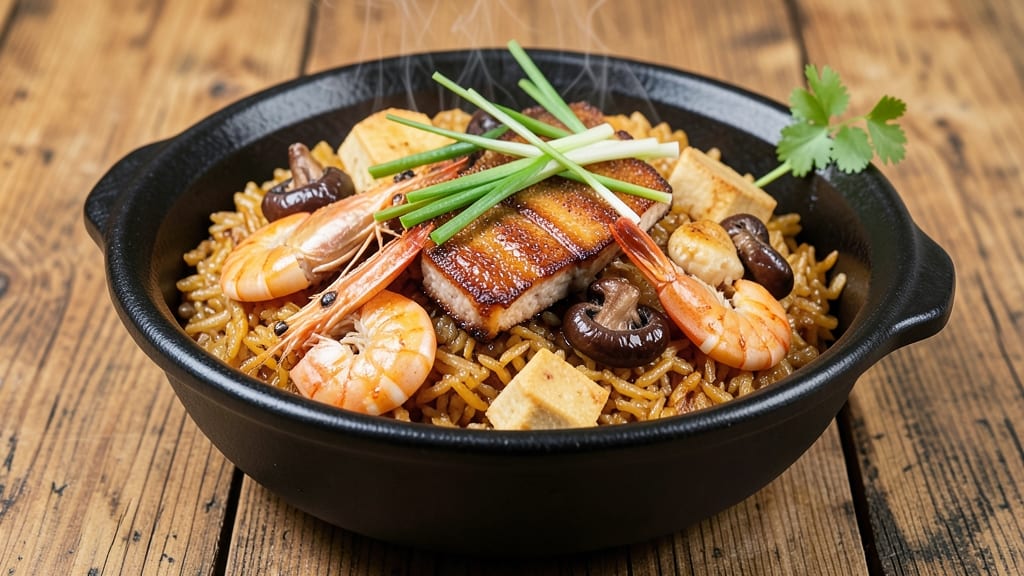
This Cantonese claypot rice recipe delivers the signature wok-hei aroma in every fragrant grain, transforming a simple rice dish into a restaurant-worthy centerpiece. The secret lies in steaming jasmine rice in a claypot with savory broth, allowing flavors to meld while maintaining that coveted smoky essence.
I've perfected this technique after years of testing, ensuring the rice stays tender yet distinct from the rich, aromatic broth beneath.
What sets this dish apart is the balance of textures and flavors—fluffy rice, tender protein (pork, shrimp, or tofu), and crisp vegetables all cooked to perfection in one pot. The claypot retains heat beautifully, creating a dish that's both comforting and elegant.
Whether you're serving it as a main course or sharing it at a gathering, this recipe promises to impress with its depth of flavor and simplicity of preparation.
Ingredients for cantonese claypot rice
Jasmine rice and aromatic proteins create the perfect foundation for this iconic Cantonese dish.
| Ingredient | Amount | Notes |
|---|---|---|
| Jasmine Rice 🍚 | 1 ½ cups | Uncooked, long-grain preferred |
| Pork Shoulder 🥩 | 1 lb | Bone-in for flavor, cut into chunks |
| Large Shrimp 🦐 | 1 lb | Peeled, deveined, tails on |
| Firm Tofu 🍫 | ½ lb | Extra-firm, pressed and cubed |
| Dried Shiitake Mushrooms 🍄 | ¼ cup | Rehydrated, sliced |
| Green Onions 🧅 | ½ cup | White and green parts separated |
| Garlic Cloves 🧄 | 6 cloves | Minced, fresh preferred |
| Ginger Root 🍋 | 1 tbsp | Fresh, grated, no skin |
| Light Soy Sauce 🥄 | ½ cup | Kikkoman or similar |
| Dark Soy Sauce 🥄 | 1 tbsp | For color depth |
| Shaoxing Wine 🍷 | ¼ cup | Dry, aromatic Chinese wine |
| Sesame Oil 🫒 | 1 tbsp | Toasted, for aroma |
| Vegetable Oil 🫒 | 2 tbsp | High smoke point |
| Salt 🧂 | 1 tsp | Kosher or sea salt |
| White Pepper 🌶️ | ½ tsp | Freshly ground |
The jasmine rice is non-negotiable—its delicate floral notes pair perfectly with the savory broth. Look for long-grain varieties at Asian markets or the international section of larger supermarkets. For the protein, pork shoulder delivers the most flavor, but shrimp or tofu work beautifully for vegetarian versions. The dried shiitake mushrooms are a must—they rehydrate to become meaty and umami-rich. Buy them whole and slice them yourself; pre-sliced versions lose texture. Ginger and garlic should be fresh, never powdered—Penzeys or local Asian grocers carry the best quality.
No Shaoxing wine? Dry sherry or even a splash of mirin will work in a pinch, but the authentic flavor is worth tracking down. The soy sauces must be separated—light soy for seasoning, dark for that signature mahogany hue. For the tofu, extra-firm is essential—it holds up to the long cooking time without turning mushy. If you can't find dried shiitake, cremini mushrooms work in a bind, but they won't have the same depth. The sesame oil is purely aromatic here—add it at the very end to preserve its nutty perfume. And always use toasted sesame oil, not the regular cooking kind.
This dish tastes even better the next day as flavors meld. Store leftovers in an airtight container for up to 4 days in the fridge. For longer storage, freeze portions for up to 3 months. The claypot itself can be reused—just clean it thoroughly between uses. I like to make a double batch for gatherings; the rice reheats beautifully in the microwave, though it's best served straight from the pot. The broth can be made ahead and reheated separately if needed—just add it back to the pot with the rice when serving.
Why You'll Love This Recipe
- One-Pot Magic: I swear by this recipe—just toss everything into that claypot, let it steam, and walk away. No rice cooker, no extra pans, just one vessel doing all the work while you sip tea or scroll through your phone.
- Umami Bomb: That combo of pork shoulder, shiitake mushrooms, and shrimp? It’s like a flavor explosion in your mouth. The mushrooms soak up the rice’s steam and turn into these little chewy, meaty bursts—honestly, I’ll take a second helping just for them.
- Weeknight Workhorse: I make this for lazy Sundays, last-minute dinner guests, or when I’m too tired to plan. The leftovers? Even better the next day—rice gets slightly stickier, pork stays tender, and the tofu absorbs all the savory goodness. (Yes, even on a Tuesday night.)
- Budget-Friendly Feast: Pork shoulder and tofu stretch across multiple meals, and dried shiitake mushrooms last forever. I’ve fed four people for under $15 with this—plus, the claypot doubles as a serving dish, so no extra plates to wash. Practical? Absolutely. Delicious? Ridiculously.
Step-by-step instructions for Cantonese claypot rice
Master the art of wok-hei aroma in this one-pot dish where rice and ingredients cook together for perfect harmony.
Prepare the Protein and Vegetables
Start by cutting the 1 lb pork shoulder into 1-inch chunks and patting them dry with paper towels. This ensures even cooking and crispy edges. For the 1 lb large shrimp, peel and devein them while leaving the tails attached for presentation. Press the 0.5 lb firm tofu between two paper towels for 10 minutes to remove excess water, then cut into ½-inch cubes. Rehydrate the 0.25 cup dried shiitake mushrooms by soaking them in 1 cup hot water for 20 minutes, then slice them.
Separate the 0.5 cup green onions into white and green parts. Mince the 6 cloves garlic cloves and grate the 1 tbsp ginger root, removing any skin. These aromatics form the flavor base, so take your time to get them finely minced. The key here is freshness—pre-mincing releases more flavor when cooked.
Sear the Pork and Shrimp
Heat a wok or large pot over high heat until a drop of water sizzles instantly. Add 2 tbsp vegetable oil and swirl to coat. Working in batches to avoid crowding, sear the pork shoulder for 3-4 minutes until golden brown and slightly crispy. Remove and set aside. In the same pot, add another 1 tbsp vegetable oil and sear the shrimp for 1-2 minutes per side until pink and opaque. Transfer to a plate and cover to keep warm.
Don't skip this step—proper searing develops deep flavor. If the shrimp releases easily from the pan, it's ready. Overcooking here will make them rubbery. Keep the rendered pork fat in the wok; it adds richness to the rice.
Stir-Fry Aromatics and Mushrooms
Add another 1 tbsp vegetable oil to the wok and stir-fry the white parts of green onions, garlic, and ginger for 30 seconds until fragrant and just turning golden. Add the rehydrated shiitake mushrooms and stir-fry for 2 minutes until any moisture evaporates. This step builds the sauce foundation while preserving the mushrooms' texture.
Here's where the magic happens: the aromatics should sizzle loudly and smell intensely. If they burn, reduce the heat slightly. The mushrooms will soften but retain their shape—overcooking turns them mushy. Keep everything moving in the wok for even cooking.
Combine All Ingredients and Cook
Return the seared pork shoulder and shrimp to the wok. Add the 1.5 cups jasmine rice, 0.5 cup light soy sauce, 1 tbsp dark soy sauce, 0.25 cup shaoxing wine, 1 tbsp sesame oil, 1 tsp salt, and 0.5 tsp white pepper. Stir everything together for 1-2 minutes until the rice is evenly coated and the aromas blend.
Add 1.5 cups water (or enough to cover the rice by ½ inch) and bring to a boil. Once boiling, reduce heat to low, cover with a tight-fitting lid, and let it simmer for 15 minutes. This gentle cooking allows the rice to absorb flavors without breaking down.
Steam and Rest for Perfect Texture
After 15 minutes, turn off the heat and let the rice sit covered for 10 minutes. This resting period is crucial—it allows the rice to finish steaming and develop a light, fluffy texture with wok-hei aroma. Gently fluff the rice with a fork, then mix in the green onion tops for freshness.
Serve immediately while still hot. The rice should be tender with a slightly sticky exterior, and the pork and shrimp should be fully cooked with crispy edges. If the rice is too dry, add a splash of hot water and steam for another 2 minutes. This dish tastes best straight from the pot when all the flavors are at their peak.
Pro Tips For Making Cantonese Claypot Rice
- Parboil the Pork: I learned this the hard way—skipping the parboil means your pork shoulder turns out chewy instead of tender. Simmer it in water with a pinch of salt for 15 minutes first, then shock in ice water. This shortens cooking time later and keeps the meat juicy, especially when layered with the rice.
- Dry Your Shrimp: Wet shrimp steams instead of searing. Pat them thoroughly with paper towels before cooking, then toss with a pinch of salt and cornstarch. They’ll crisp up beautifully in the claypot, adding texture that soggy shrimp can’t match.
- Soak Shiitakes Separately: Dried shiitakes absorb water like sponges—soak them in hot water for 20 minutes before adding to the pot. Reserve that soaking liquid (strain out the grit) and use it to deglaze the claypot later. It’s the secret to a rich, umami-packed broth without extra work.
- Layer Rice Loosely: Packing rice too tightly turns it into a brick. Spread it in an even, thin layer over the protein and veggies—about ½ inch thick. This guarantees steam circulates, and every grain cooks evenly. (Yes, even if it looks sparse at first.)
Storing and reheating this cantonese claypot rice
Claypot Storage Secrets
The claypot itself is your best friend for storage—its natural heat retention keeps flavors intact. After cooking, let the rice cool to room temperature (about 30 minutes), then transfer it to an airtight container with a tight lid.
I use glass Pyrex containers for even heat distribution. The claypot can be reused immediately after cleaning with hot water and a soft brush—never soak it. 🌟
Fridge Revival
Leftovers taste even better the next day as flavors meld further. Reheat in the microwave for 2-3 minutes on 50% power, stirring halfway. For best results, cover with a damp paper towel to retain moisture.
If the rice looks dry, add 1-2 tablespoons hot water and microwave for 30 more seconds. The broth can be reheated separately in a small pot over low heat—just bring it to a gentle simmer. 💫
Freezer Magic
For longer storage, portion the rice into quart-sized freezer bags, leaving ½ inch headspace for expansion. Freeze for up to 3 months. To reheat, transfer directly from freezer to microwave and cook on 50% power for 4-5 minutes, stirring once.
The claypot method works best for reheating—place the frozen rice in the cold claypot, add ¼ cup water, cover, and steam over medium-low heat for 10-12 minutes. This preserves the wok-hei aroma better than microwave methods. ❄️
Broth Revival
The savory broth is where the real depth of flavor lives. If you've separated it (which I recommend for reheating), store it in a separate container. Reheat the broth alone first over medium heat until steaming, then pour it over the reheated rice. This two-step process ensures even flavor distribution.
For extra richness, add 1 teaspoon toasted sesame oil or a splash of Shaoxing wine when reheating. The broth can also be used as a base for soups or stir-fries—just reduce it slightly to concentrate the flavors. 🥄
Texture Preservation
Here's the trick to keeping the rice fluffy: never reheat it dry. The claypot's steam is your ally—always add liquid (water or broth) when reheating. For the protein components, I recommend reheating them separately in a skillet over medium-high heat for 1-2 minutes to restore crispiness.
The shrimp and pork will benefit from a quick sear to revive their texture. If you're reheating the entire dish together, keep the heat at low to prevent overcooking the rice. 🔥
Make-Ahead Pro Tips
For gatherings, I often prepare the broth and protein components a day ahead, then assemble everything fresh before serving. The rice itself can be cooked up to 24 hours in advance and stored in the fridge.
When ready to serve, simply reheat the broth and rice together in the claypot over medium heat for 5-7 minutes. This method ensures the rice absorbs the broth's flavors perfectly.
Garnish with fresh green onion tops and a drizzle of toasted sesame oil just before serving to keep everything vibrant. 💛
Nutrition facts
Frequently asked questions
Can I substitute jasmine rice with another type?
Jasmine rice is ideal for its delicate floral notes, but you can use long-grain white rice or bomb rice as substitutes. Avoid short-grain varieties like sushi rice—they'll turn mushy. For extra fragrance, add ½ teaspoon pandan extract to the cooking water. The texture will differ slightly but still taste delicious!
What if I don't have a claypot? Can I use a rice cooker?
Yes! A rice cooker works perfectly—just use the pot-in-pot method. Place a heatproof bowl or trivet in the cooker, add the rice mixture with ½ inch water, and cook on high. The rice will absorb flavors without sticking. For best results, use a heavy-bottomed pot to mimic the claypot's heat retention. The wok-hei aroma will be milder but still present.
How do I adjust the recipe for fewer servings?
Scale down all ingredients proportionally—use ¾ cup rice, ½ lb pork, ½ lb shrimp, and ½ cup broth for 2 servings. Keep the same ratio of 1:1.5 rice-to-water and cooking times. The claypot size matters too: a 6-inch pot works for 2 servings, while 8-inch fits 4. Always leave ½ inch headspace for steam circulation.
Why does my rice turn out gummy instead of fluffy?
Overcooking or insufficient resting time causes gummy rice. After simmering, let it rest 10 minutes covered—this is non-negotiable! If using a rice cooker, switch to "keep warm" mode for 5 minutes after cooking. For extra fluffiness, add ½ teaspoon vinegar to the water. The claypot's heat retention can also overcook rice, so reduce simmer time by 2-3 minutes if needed.
Can I make this vegetarian?
Replace pork with extra-firm tofu (pressed and cubed) and shrimp with king oyster mushrooms or firm tofu. Boost umami with ½ cup vegetarian oyster sauce and 1 tbsp miso paste. For depth, add 1 dried shiitake mushroom (soaked) and 1 tsp soy sauce to the broth. The texture will be heartier, but the wok-hei aroma remains intact!