
Main Courses
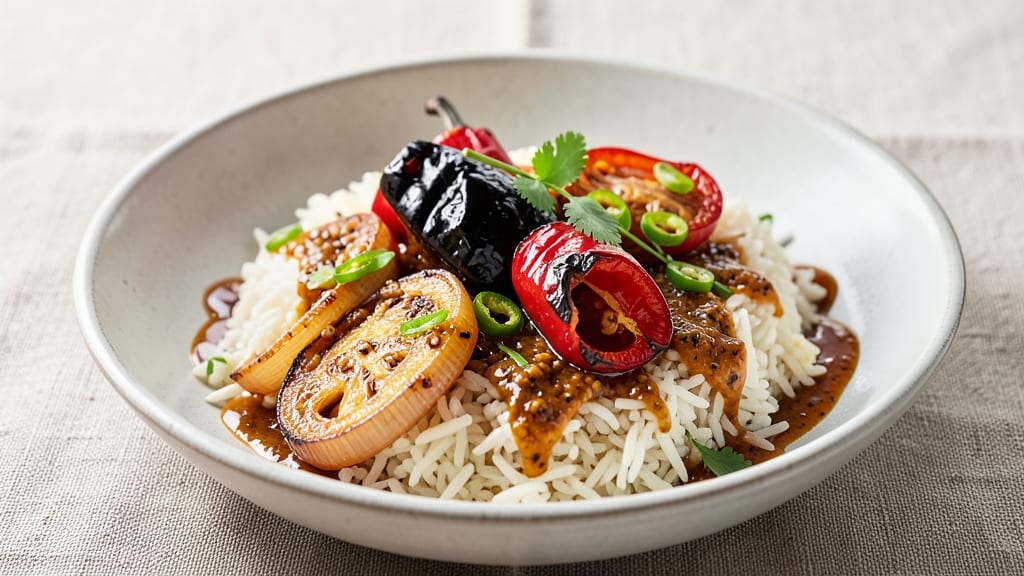
This capsicum masala rice recipe transforms humble ingredients into a vibrant, spice-packed dish that balances smoky char, fresh capsicum crunch, and aromatic basmati rice. The secret lies in charring the capsicum and onions for deep, caramelized flavor—no fancy equipment needed, just a stovetop and patience.
I developed this recipe after craving the bold, layered taste of South Asian street food but wanted a version that works in a modern kitchen.
The result is a one-pot wonder with perfectly cooked rice infused with spices, tender capsicum that stays crisp, and a sauce that clings to every grain. It’s quick enough for weeknights but flavorful enough to impress guests.
Whether you serve it as a main or pair it with yogurt and raita, this dish delivers restaurant-quality taste with minimal effort.
Ingredients for capsicum masala rice
Aromatic basmati rice meets charred capsicum and bold spices for a vibrant, one-pot masterpiece.
| Ingredient | Amount | Notes |
|---|---|---|
| Long-Grain Basmati Rice 🍚 | 1 ½ cups | Uncooked, rinsed thoroughly |
| Red Bell Peppers (Capsicum) 🍅 | 3 whole | Mixed colors preferred, seeds removed |
| Yellow Onions 🧅 | 2 whole | Medium size, peeled |
| Fresh Ginger 🌿 | 1 ½ tbsp | Grated, freshly preferred |
| Garlic Cloves 🧄 | 6 cloves | Peeled, minced finely |
| Tomato Paste 🍅 | ½ cup | Squeeze tube or canned |
| Coconut Milk 🥥 | ¾ cup | Full-fat for creaminess |
| Ghee or Vegetable Oil 🫒 | ½ cup | For charring, high smoke point |
| Ground Cumin 🌿 | 1 ½ tsp | Toasted for depth |
| Ground Coriander 🌶️ | 1 ½ tsp | Freshly ground preferred |
| Turmeric Powder 🌿 | ½ tsp | Bright yellow hue |
| Garam Masala 🌶️ | 1 tsp | Store-bought or homemade blend |
| Red Chili Powder 🔥 | ½ tsp | Adjust for heat preference |
| Salt 🧂 | 1 ½ tsp | Kosher or sea salt |
| Fresh Cilantro 🌿 | ¼ cup | Chopped, for garnish |
| Lemon Juice 🍋 | 1 tbsp | Freshly squeezed |
The capsicum and onions are the flavor anchors here. Look for firm, vibrant bell peppers—avoid any with soft spots or wrinkled skin. Yellow onions add natural sweetness when charred. For the best results, grab organic or locally grown produce from stores like Whole Foods or your local farmers' market. The ginger and garlic should be freshly grated and minced—pre-minced garlic lacks the same depth of flavor. If you're short on time, frozen bell peppers work in a pinch, but they won't give you that perfect charred texture.
No fresh ginger? Powdered ginger at half the amount gets you close, though it's not the same. Running low on garam masala? Mix equal parts cumin, coriander, and cardamom for a quick substitute. The tomato paste can be swapped for diced tomatoes at double the amount, but paste gives that concentrated umami punch. For a creamier texture, coconut cream instead of milk works beautifully. The rice? Jasmine rice is a decent substitute, though basmati stays fluffier and holds up better to the spices.
Prep the capsicum and onions first—they need time to cool after charring. Store any leftover rice in an airtight container for up to 4 days in the fridge. The spices lose potency over time, so replace your garam masala every 3 months. For a quick meal, double the recipe and freeze half—it reheats beautifully. Garnish with fresh cilantro right before serving to keep it vibrant.
Why You'll Love This Recipe
- One-Pot Magic: I swear by this recipe when I’m too tired to scrub pots—just toss everything in one pan, stir, and walk away. The rice cooks right in the capsicum-ginger sauce, so no separate boiling, no sticky rice mess.
- Sweet-Savory Balance: That charred capsicum with the slow-cooked onions? It’s like a hug for your taste buds—sweet from the peppers, deep from the garlic, and bright from the ginger. Honestly, I’ve never met a rice dish that hits this perfectly.
- Lunchbox Hero: Between us, this is my go-to for meal prep. The flavors only get better the next day, and it reheats like a dream. Pack it cold for work or microwave it for a lazy evening—no one will guess it’s not fresh.
- Pantry Staple: I use the same spices for curries, stir-fries, and even wraps, so it never feels like a waste. A single batch stretches for four lunches, and the ingredients? All stuff I already have. Budget-friendly doesn’t even begin to cover it.
Step-by-step instructions for capsicum masala rice
This method delivers perfectly charred vegetables and fragrant basmati rice infused with bold spices.
Char and Prepare the Vegetables
Heat a large skillet over medium-high heat with 0.5 cup ghee or vegetable oil. Add the 3 whole red bell peppers (capsicum) and 2 whole yellow onions, cut into even 1-inch thick slices. Cook undisturbed for 8-10 minutes until deeply charred on all sides, turning occasionally. You want visible blackened patches—they'll add smoky depth to the dish.
Remove the vegetables from the pan and set aside. In the same pan, add the 1.5 tbsp fresh ginger and 6 cloves garlic, cooking for 30 seconds until fragrant. Be careful not to burn them—just enough to release their aromatic oils. Transfer these to a cutting board and finely chop them together.
Build the Spiced Tomato Base
Return the charred vegetables to the pan and reduce heat to medium. Add the 0.5 cup tomato paste, spreading it evenly to coat the vegetables. Sprinkle with 1.5 tsp ground cumin, 1.5 tsp ground coriander, 0.5 tsp turmeric powder, 0.5 tsp red chili powder, and 1.5 tsp salt. Stir well to combine, letting the spices toast in the tomato mixture for 2-3 minutes until fragrant and slightly darkened.
Add 1 cup water to the pan and bring to a gentle simmer. Let it cook for 5 minutes until the vegetables soften slightly but still retain their shape. The mixture should reduce slightly, creating a thick, flavorful base. This step develops the masala's complexity—don't rush it.
Cook the Basmati Rice
In a separate pot, rinse the 1.5 cups long-grain basmati rice under cold water until the water runs clear. Drain well and add to a pot with 3 cups water. Bring to a boil, then reduce heat to low and simmer for 12 minutes until the rice is 80% cooked (it should still have a slight bite). Drain any remaining water and set aside.
To the vegetable mixture, add the 0.75 cup coconut milk and stir well. Transfer half of this masala mixture to the pot with the partially cooked rice. Gently fold together, then return the remaining masala to the skillet. The rice will finish cooking in the residual heat from the masala.
Finish and Garnish
Cover both pots and let them sit off the heat for 5 minutes to steam. Then, stir the rice gently to distribute any remaining masala. The rice should be tender with a slight bite, and the vegetables should be perfectly softened but still vibrant. If the rice feels dry, add 1-2 tablespoons water and cover for another 2 minutes.
Stir in the 1 tsp garam masala and 1 tbsp lemon juice, then transfer to serving plates. Garnish with the 0.25 cup chopped fresh cilantro. The dish should have a vibrant mix of colors—deep charred vegetables, golden rice, and fresh green cilantro. Serve immediately while the spices are still aromatic and the vegetables retain their texture.
Pro Tips For Making Capsicum Masala Rice
- CHAR THE ONIONS LOW: I used to blast the onions on high heat and ended up with bitter, burnt edges—no matter how much water I added. For this dish, keep the heat medium-low until they’re deep golden, almost caramelized. That’s when their sweetness shines through the masala, and the capsicum gets its flavor foundation.
- SLICE CAPSICUM THIN: Thick strips of red bell pepper stay crunchy and undercooked. Cut them into paper-thin strips (about 1/8-inch) so they soften evenly in the masala. Pro tip: Hold the knife at a sharp angle and make quick, confident cuts—no sawing.
- RICE WATER RATIO MATTERS: I learned this the hard way—using too much water turns your rice mushy, and too little leaves it dry. For basmati, aim for 1.5 cups water per 1 cup rice, then let it sit covered for 10 minutes after boiling. The rice will absorb perfectly, and you won’t end up with a sad, gluey pile.
- SAUTÉ GINGER-GARLIC LONG: Skip the quick toss with garlic and ginger, and you’ll miss out on their aromatic magic. Cook them in oil until the garlic turns golden (about 3-4 minutes) and the ginger is fragrant but not browned. This step builds the masala’s depth—don’t rush it.
Flavor customization for this recipe
Spice Level Control
Adjust the heat to your preference by tweaking the red chili powder—start with ½ tsp for mild, 1 tsp for medium, or 1.5 tsp for bold. For extra kick, add ½ tsp cayenne pepper or 1 tsp fresh green chili paste at the end.
I love balancing heat with a squeeze of lemon juice—it brightens the dish and cools the palate. 🌶️
Sweet and Smoky Twist
Add 1 tbsp honey or agave syrup to the tomato paste before cooking for a caramelized sweetness that pairs beautifully with the smoky capsicum. For deeper flavor, swap ½ cup of the coconut milk with ½ cup tomato sauce and simmer for 5 extra minutes to intensify the umami.
A pinch of smoked paprika (about ½ tsp) enhances the charred notes without overpowering. 🔥
Creamy Coconut Variations
For a richer texture, replace ½ cup coconut milk with ¼ cup Greek yogurt or cashew cream (blend ½ cup soaked cashews with ½ cup water). This adds a tangy contrast that cuts through the richness of the ghee.
If you prefer a lighter dish, use ½ cup vegetable broth instead of coconut milk—it keeps the dish flavorful but less heavy. 🥥
Protein Pairings
Boost this dish with grilled chicken thighs (marinated in 1 tbsp yogurt + ½ tsp garam masala) or paneer cubes (pan-fried in 1 tsp turmeric). For vegetarians, chickpeas (tossed with ½ tsp cumin + ½ tsp paprika) add hearty texture.
Cook proteins separately and serve alongside the rice for a complete meal. 🍗
Herb and Citrus Garnishes
Elevate the dish with fresh garnishes: mint leaves add brightness, toasted cumin seeds (sprinkled last) give extra crunch, or lime zest (about 1 tsp) enhances the citrusy finish.
For a smoky touch, drizzle with 1 tsp chili oil before serving. These garnishes not only add color but also layer flavors that complement the masala. 🌿
Regional Flavor Infusions
For a Thai-inspired twist, add 1 tbsp fish sauce and 1 tsp lemongrass paste to the masala. For Mexican flair, swap garam masala for 1 tsp cumin + ½ tsp oregano and top with avocado slices.
A Middle Eastern touch comes from adding 1 tsp za’atar and serving with warm pita bread. Each variation keeps the capsicum center stage while introducing new cultural layers. 🗺️
Nutrition facts
Frequently asked questions
Can I use frozen bell peppers instead of fresh?
Frozen bell peppers work in a pinch, but they won't give you that perfect charred texture and smoky depth. If you must use frozen, thaw them first and pat dry thoroughly. For best results, stick with fresh capsicum—they char beautifully and hold their shape better in the dish.
How do I prevent the rice from getting mushy?
Rinse the basmati rice thoroughly before cooking to remove excess starch. Cook it only until 80% done (about 12 minutes), then finish cooking in the masala mixture off the heat. Avoid stirring the rice too much while it absorbs the masala—gentle folding is key. This method keeps the grains separate and fluffy.
What can I substitute if I don't have ghee?
Use vegetable oil or butter for charring, but ghee's high smoke point makes it ideal. For a dairy-free option, try avocado oil or coconut oil. Just be sure to heat it properly to avoid burning. The flavor will be slightly different, but the dish will still turn out delicious.
Can I make this recipe without coconut milk?
Swap the coconut milk for ½ cup Greek yogurt (for tanginess) or ½ cup vegetable broth (for lighter flavor). For richness, use ½ cup cashew cream (blend soaked cashews with water). Each option changes the texture slightly, but the dish remains flavorful and balanced.
How long can I store leftovers?
Store leftovers in an airtight container in the fridge for up to 4 days. Reheat gently in a skillet with a splash of water to restore moisture. For longer storage, freeze portions for up to 3 months. The spices and capsicum flavors actually deepen slightly over time, making it great for meal prep!