
Side Dishes
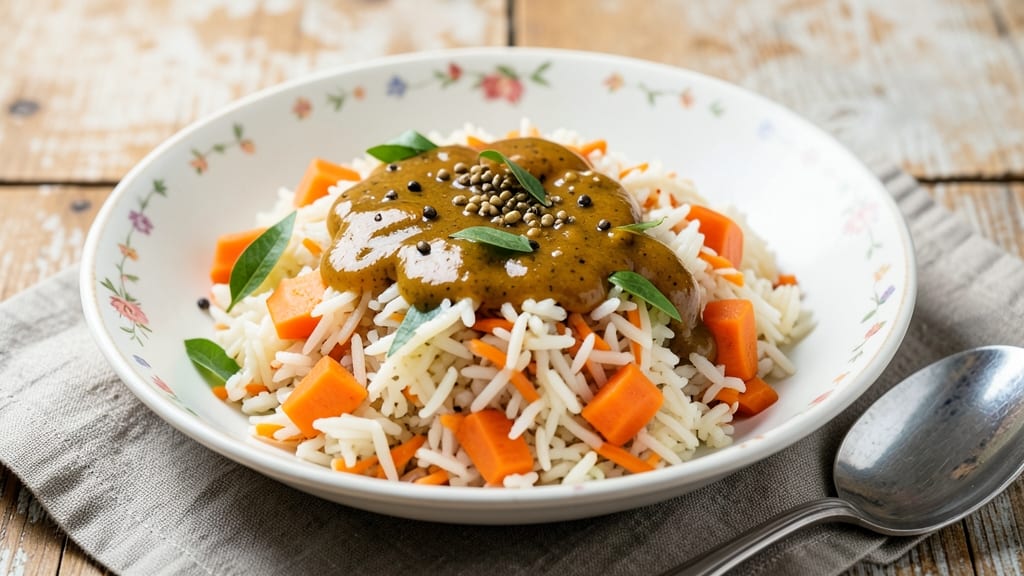
This South Indian carrot rice recipe transforms humble ingredients into a fragrant, one-pot masterpiece that balances sweet carrots with tangy tamarind and coconut's rich depth. 🌟 The secret lies in tempering whole spices—a technique that infuses every grain with aromatic layers of mustard seeds, curry leaves, and ginger.
My grandmother's method taught me that patience in cooking yields flavors that transport you straight to Tamil Nadu's bustling streets.
What makes this dish special is its simplicity paired with authenticity. No meat or dairy required—just long-grain rice, grated carrots, and a tempering of spices that creates a symphony of flavors.
The tamarind adds a bright tang that cuts through the coconut's richness, while curry leaves lend their signature floral note. This recipe delivers restaurant-quality results in a single pot, making it perfect for weeknight dinners or festive occasions.
The final result is golden, fragrant rice with tender carrots woven throughout, each bite offering a perfect balance of sweet, tangy, and savory. The aroma alone will have everyone gathering at the table, and the dish pairs beautifully with sambar or a simple yogurt raita.
Let's create this fragrant South Indian classic that's as nourishing as it is delicious.
Whether you're serving this as a side or a light main, the key is letting the flavors develop fully. The rice should be tender yet slightly firm, with carrots that hold their shape while absorbing all those beautiful spices.
This is comfort food at its finest—simple, wholesome, and packed with authentic South Indian soul.
Ingredients for carrot rice recipe south indian
Simple ingredients that create an aromatic symphony of South Indian flavors in one pot.
| Ingredient | Amount | Notes |
|---|---|---|
| Long-Grain White Rice 🍚 | 1 cup | Uncooked, basmati preferred |
| Carrots 🥕 | 2 cups | Grated, medium-fine texture |
| Coconut Milk 🥥 | 1 can | Full-fat, 13.5 oz can |
| Tamarind Paste 🍈 | 2 tbsp | Adjust for tang preference |
| Mustard Seeds 🌿 | 1 tbsp | Whole, yellow variety |
| Curry Leaves 🌿 | ¼ cup | Fresh, dried substitute |
| Fresh Ginger 🧄 | 1 tbsp | Grated, peeled |
| Green Chilies 🌶️ | 2 whole | Slit lengthwise, adjust heat |
| Asafoetida (Hing) 🌿 | ⅛ tsp | Pinch for aroma |
| Turmeric Powder 🌶️ | ¼ tsp | Freshly ground preferred |
| Cumin Seeds 🌿 | ½ tsp | Toasted for depth |
| Salt 🧂 | 1 tsp | Adjust to taste |
| Ghee or Coconut Oil 🫒 | 2 tbsp | For tempering |
| Fresh Coriander Leaves 🌿 | ¼ cup | Chopped, for garnish |
The coconut milk is non-negotiable here—full-fat canned gives the richest texture. Thai Kitchen or Goya brands work perfectly, but avoid the light versions. Tamarind paste can be tricky; Indian grocery stores carry the best quality, or use tamarind pulp if you're feeling adventurous. The carrots should be freshly grated (not pre-shredded) for that perfect texture—a box grater works best. Curry leaves are the soul of this dish—dried leaves lose their magic, so hunt them down at an Indian market or use a pinch of curry powder as a last resort.
No tamarind? Lemon juice plus a pinch of sugar mimics the tang, though it won't be identical. Running short on coconut milk? Substitute with equal parts milk and cream, but the flavor will be lighter. The asafoetida (hing) might be hard to find—skip it if needed, but the dish will lose some depth. For a quicker prep, use pre-grated ginger (though fresh is always better), and if you can't find curry leaves, dried thyme at half the amount gives a similar floral note. The green chilies can be adjusted—remove seeds for less heat or add more for extra kick.
This dish tastes even better the next day as flavors meld. Store leftovers in an airtight container in the fridge for up to 4 days, or freeze portions for 3 months. The rice keeps best if you let it cool completely before refrigerating. For serving, garnish with fresh coriander right before eating—it brightens up the dish beautifully. Leftovers reheat perfectly in a steamer basket or with a splash of water in the microwave.
Why You'll Love This Recipe
- One-Pot Magic: I swear by this—just rice, carrots, and a splash of coconut milk simmering together. No separate pans, no constant stirring. The tamarind paste ties everything together while you prep the rest of the meal.
- Tamarind Tang Twist: That little jar of tamarind paste? It’s the secret weapon. A spoonful brightens the coconut milk, cuts through the carrot sweetness, and gives it this just-right balance—savory, tangy, and addictive in the best way.
- Lunchbox Hero: Between us, this is my go-to for packed lunches. The rice stays fluffy, the carrots hold their bite, and the coconut milk keeps it from drying out. Toss in some curry leaves and it’s a full meal that travels beautifully.
- Pantry Staple Power: Honestly, you’re already set. Rice, carrots, coconut milk—stuff you’ve got lying around. The mustard seeds add zero cost but pack a punch, and leftovers? They reheat like a dream, tasting just as good the next day.
Step-by-step instructions for South Indian carrot rice
Here's how to make this fragrant one-pot dish with perfect texture and balanced flavors.
🍳 Step 1: Prepare the Carrot-Tamarind Base
Heat the 2 tablespoons ghee or coconut oil in a heavy-bottomed pot over medium heat until it shimmers. Add the ½ teaspoon cumin seeds and let them sizzle for 30 seconds until they release their aroma. Add the 1 tablespoon mustard seeds and cook until they pop.
Next, add the 2 whole slit green chilies, 1 tablespoon grated ginger, ¼ teaspoon turmeric powder, and ¼ cup grated carrots. Stir for 2 minutes until the carrots soften slightly and the spices bloom. This step develops the foundational flavors that will carry through the entire dish.
🍳 Step 2: Add Rice and Tempering Ingredients
Rinse the 1 cup long-grain white rice thoroughly until the water runs clear, then drain well. Add the rice to the pot and stir to coat it evenly with the spice mixture. Pour in 1 cup water and bring to a gentle boil.
Once boiling, reduce heat to low-medium and let it simmer uncovered for 5 minutes. Then add the 2 tablespoons tamarind paste and 1 teaspoon salt. Stir gently to combine—this is where the tangy-sweet balance begins to develop. The rice should be partially cooked but still slightly firm to the touch.
🥘 Step 3: Layer with Coconut Milk and Curry Leaves
Pour in the 1 can full-fat coconut milk and stir well to combine. Add the ¼ cup curry leaves and pinch of asafoetida (hing). The curry leaves will infuse their aromatic essence into the dish while the hing adds a subtle depth that's characteristic of South Indian cooking.
Bring the mixture to a gentle simmer again, then cover with a tight-fitting lid. Reduce heat to low and cook for 15-18 minutes until the rice is tender and the liquid is mostly absorbed. You'll know it's ready when the rice grains are distinct but still slightly moist, with no hard grains remaining.
⏰ Step 4: Rest and Garnish for Perfect Texture
Once the rice is perfectly cooked, remove from heat and let it sit covered for 5 minutes. This resting period allows the flavors to meld and the rice to absorb any remaining liquid, resulting in a dish with perfect texture—neither mushy nor dry.
Garnish with the ¼ cup chopped fresh coriander leaves just before serving. The fresh herbs add a bright, citrusy note that cuts through the richness of the coconut milk and balances the tamarind's tanginess. Serve warm with a side of yogurt or raita for the complete South Indian dining experience.
Pro Tips For Making Carrot Rice Recipe South Indian
- SOAK CARROTS 15 MINUTES: I learned this the hard way—raw, hard carrots turn to mush in coconut milk. Toss diced carrots in warm water for 15 minutes before cooking. They’ll soften evenly without falling apart, and the tamarind flavor soaks in better.
- USE LESS TAMARIND PASTE: Tamarind paste is potent. Start with 1 teaspoon, dilute it in 2 tablespoons water, then adjust. Too much makes the rice taste bitter. Taste as you go—you can always add more, but you can’t fix over-sour.
- COOK RICE SEPARATELY: Mixing rice with the carrot-coconut sauce after cooking keeps the grains distinct and fluffy. If you combine them early, the rice turns sticky. Cook rice al dente, then fold in the carrot mixture at the end.
- TOAST MUSTARD SEEDS LOW: Crank the heat to medium-low for mustard seeds—they burn faster than you think. Let them sizzle gently for 30 seconds until they pop, then add curry leaves. High heat turns them bitter, and nobody wants that.
Make-ahead tips for carrot rice recipe south indian
Prep Ahead Strategy
Grating the 2 cups carrots in advance saves time—store them in an airtight container in the fridge for up to 2 days. I like to grate them first thing in the morning so they're ready when I start cooking later.
The tamarind paste can also be pre-mixed with 1 cup water to create a smooth paste, stored in the fridge for 3 days. This step simplifies the cooking process significantly. 🥕
Rice Soaking Shortcut
For even faster prep, soak the 1 cup rice in water for 20 minutes before cooking. Drain well and add it directly to the pot with the spices. This reduces cooking time by about 5 minutes and ensures perfectly fluffy grains.
I often do this while I prep the carrots and tempering spices—multitasking at its finest! 🍚
Flavor Development
The real magic happens when you let the flavors meld overnight. Cook the carrot rice completely, then refrigerate in an airtight container. The next day, reheat gently with 2 tablespoons water over low heat—this restores moisture without making the rice mushy.
The tamarind and coconut flavors deepen, creating a more complex dish. Trust me, it's worth the wait! ⏳
Freezer-Friendly
This dish freezes beautifully for up to 3 months. Portion it into quart-sized freezer bags with 1 inch headspace to prevent ice crystals. When ready to eat, thaw overnight in the fridge, then reheat with 1 tablespoon water per portion.
The texture stays perfect, and the flavors remain vibrant. I make double batches to always have a quick side ready. ❄️
Spice Prep
Toast the ½ tsp cumin seeds and 1 tbsp mustard seeds together in a dry pan for 1 minute—this enhances their aroma. Store the toasted seeds in a small jar for up to 2 weeks.
When cooking, just add them directly to the pot with the oil. This prepped spice blend cuts your active cooking time by 3-4 minutes and adds professional depth. 🌿
Serving Flexibility
Cook the full batch, then store in the fridge. Reheat portions as needed for 4 days. I love serving this with pre-made sambar or yogurt raita—both pair perfectly. For a quick lunch, assemble a bento box with carrot rice, cucumber slices, and a dollop of yogurt.
The flavors stay vibrant even when reheated, making this a meal-prep superstar. 🍽️
Nutrition facts
Frequently asked questions
Can I make this carrot rice with basmati rice instead of regular white rice?
Basmati rice is actually preferred for this South Indian dish as it stays separate and fluffy. Use the same 1 cup uncooked measurement, but rinse it thoroughly to remove excess starch. The grains will elongate beautifully, creating that perfect texture we want.
What if I can't find tamarind paste? Can I substitute it?
Yes, you can substitute 2 tablespoons lemon juice plus 1 teaspoon sugar for the tamarind. This mimics the tangy-sweet balance, though it won't be identical. For a closer approximation, try 1 tablespoon lime juice plus 1 teaspoon honey. The dish will still taste delicious!
How do I adjust the spice level for kids or sensitive eaters?
Remove the seeds from the 2 green chilies before slitting them to reduce heat. For very mild versions, skip the green chilies entirely and add 1 teaspoon extra grated ginger for sweetness. You can also omit the mustard seeds if their strong flavor is off-putting.
Can I make this carrot rice in a rice cooker?
Yes! Follow the same steps until adding the coconut milk. After the initial 5-minute simmer, transfer everything to your rice cooker, add the coconut milk and curry leaves, then cook on the normal setting. The rice cooker will handle the final cooking perfectly, maintaining all the flavors.
Why does my carrot rice turn out mushy?
Mushy rice usually happens from overcooking or too much liquid.