
Main Courses
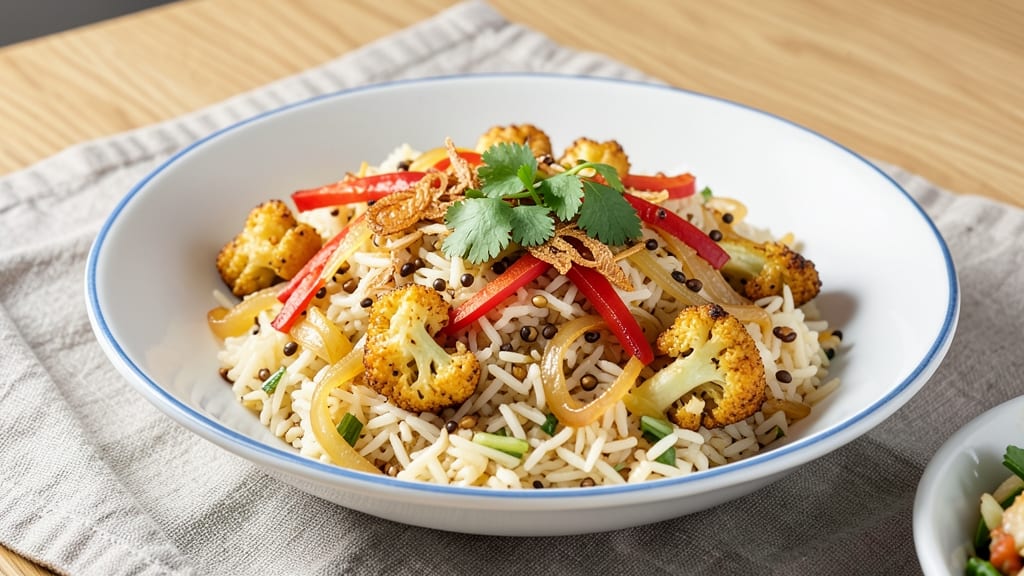
This Indian-style cauliflower fried rice transforms humble rice and cauliflower into a vibrant, spice-kissed dish that delivers restaurant-quality flavor at home. The secret lies in charring the cauliflower for nutty depth and balancing bold spices like cumin, mustard seeds, and garam masala with bright turmeric.
What starts as simple ingredients becomes a symphony of textures—crisp florets, fluffy rice, and aromatic spices that linger long after the last bite.
Perfect for weeknight dinners or meal prep, this recipe adapts effortlessly with optional protein like paneer or peas. The technique is straightforward but yields impressive results: golden rice speckled with charred cauliflower, infused with warm spices, and finished with a touch of fresh cilantro.
It’s the kind of dish that feels both comforting and exciting, proving that healthy eating can be deeply satisfying. Let’s get cooking!
Ingredients for cauliflower fried rice recipe indian
Simple ingredients transformed by charring and aromatic spices into a vibrant Indian-inspired dish.
| Ingredient | Amount | Notes |
|---|---|---|
| Cauliflower Florets 🥬 | 4 cups | Fresh, cut into bite-sized pieces |
| Cooked Basmati Rice 🍚 | 2 cups | Day-old rice preferred, cold |
| Yellow Onion 🧅 | 1 medium | Finely chopped, about 1 cup |
| Garlic Cloves 🧄 | 4 cloves | Minced, for aromatic depth |
| Ginger Root 🌿 | 1 tbsp | Freshly grated, finely chopped |
| Mustard Seeds 🌶️ | 1 tsp | Whole, for tempering |
| Cumin Seeds 🌶️ | 1 tsp | Toasted for aroma |
| Turmeric Powder 🌿 | ½ tsp | Bright, vibrant color |
| Garam Masala Powder 🌶️ | 1 tsp | Warm, complex spice blend |
| Red Chili Powder 🌶️ | ½ tsp | Adjust for heat preference |
| Salt 🧂 | 1 tsp | Diamond Crystal preferred |
| Peas 🌱 | ½ cup | Frozen or fresh, optional |
| Paneer Cubes 🧀 | ½ cup | Firm, optional protein |
| Fresh Cilantro 🌿 | ¼ cup | Chopped, for garnish |
| Vegetable Oil 🫒 | 2 tbsp | High smoke point preferred |
The cauliflower is the star here—char it in a dry skillet before cooking to develop that nutty, almost caramelized depth. Look for dense florets with minimal stem, as they hold up better during charring. For the spices, Whole Foods bulk section often carries high-quality garam masala and mustard seeds; otherwise, MDH or Everest brands are reliable. Fresh ginger and garlic are non-negotiable—they're the foundation of the aromatic base. If you're short on time, pre-minced garlic works, but fresh is always better. The paneer should be firm, not crumbly, and Amul or Gowardhan brands are excellent choices if you can find them.
No garam masala? Mix 1/2 tsp each of cinnamon, cardamom, cloves, and coriander for a close approximation. Mustard seeds too strong? Skip them entirely—the dish will still shine. The peas can be swapped for green beans or bell peppers if you prefer. For a smokier flavor, add 1/4 tsp smoked paprika along with the red chili powder. The rice should be day-old and cold—this prevents mushiness. If you're using freshly cooked rice, spread it on a tray to cool quickly. The cilantro is purely for garnish, so dried oregano at 1/4 tsp works in a pinch if you're out.
Store leftovers in an airtight container for up to 4 days in the fridge, though it reheats best when slightly underdone. For meal prep, portion into containers with a thin layer of oil on top to preserve texture. Freezes beautifully for 3 months—just thaw overnight in the fridge before reheating. The charred cauliflower loses crispness when reheated, so it's best enjoyed fresh. If making ahead, store the charred cauliflower separately and add it fresh when reheating for maximum crunch.
Why You'll Love This Recipe
- No Chopping Chaos: I swear by this—just dice the onion and toss the cauliflower florets in whole (no need to break them down). The wok does all the work while you stir-fry the garlic and ginger in seconds. Honestly, my lazy Sundays love this.
- Crispy-Creamy Magic: That first bite? The cauliflower gets this perfect caramelized crunch while staying tender inside, and the basmati rice soaks up the garlicky, ginger-spiced oil like a dream. It’s the kind of dish that makes you go back for seconds without even thinking.
- Leftover Hero: This keeps better than takeout—no soggy rice here. Reheat it in the microwave or pan-fry for extra crisp, and it’s still delicious the next day. My kids actually ask for it, which is basically a parenting win.
- Budget-Friendly Powerhouse: Cauliflower stretches the rice further, and onions/garlic/ginger are cheap staples. I make this when I’m pinching pennies, and no one ever notices it’s not the full rice version. (Between us, they prefer it this way.)
Step-by-step instructions for Indian-style cauliflower fried rice
Here's the method that delivers restaurant-quality texture and flavor every time.
Prepare the Base Ingredients and Temper the Spices
Heat the 2 tablespoons vegetable oil in a large, heavy-bottomed skillet or wok over medium-high heat until shimmering but not smoking. Add the 1 teaspoon mustard seeds and 1 teaspoon cumin seeds—they should sizzle and pop within 20-30 seconds. Immediately add the 1 medium yellow onion and 1 tablespoon ginger root, stirring constantly for 3-4 minutes until the onions soften and turn translucent.
Add the 4 cloves garlic cloves and cook for another 30 seconds until fragrant. Here's where the magic happens: sprinkle in the 0.5 teaspoon turmeric powder and 0.5 teaspoon red chili powder, stirring vigorously for 10 seconds to toast the spices and deepen their flavor. This step prevents the turmeric from turning bitter and ensures vibrant color in your finished dish.
Cook the Cauliflower and Build the Foundation
Add the 4 cups cauliflower florets to the skillet and stir to coat them evenly in the spiced oil mixture. Cook for 5-6 minutes over medium-high heat, stirring occasionally, until the cauliflower becomes tender with slightly crisp edges. The florets should release their moisture but still retain some bite—this texture contrast is essential for the perfect fried rice.
Push the cauliflower to one side of the pan and add the 2 cups cooked basmati rice to the empty space. Stir the rice for 2-3 minutes until it absorbs the spice oils and begins to toast slightly. This step prevents the rice from becoming mushy and creates that coveted nutty aroma. If the rice begins to stick, add 1-2 tablespoons water and stir until incorporated.
Incorporate Remaining Ingredients and Season
Return the cauliflower to the center of the pan and add the 0.5 cup peas, 0.5 cup paneer cubes, and 1 teaspoon salt. Stir everything together for 3-4 minutes over medium heat, allowing the peas to thaw (if frozen) and the paneer to warm through. The peas should be heated through but still retain their bright green color, indicating they're cooked just enough to soften without losing their crunch.
Now it's time to finish with the 1 teaspoon garam masala powder. Sprinkle it over the mixture and stir for 1 minute to distribute evenly. Taste and adjust the seasoning if needed—this is your final opportunity to balance the flavors before serving. The garam masala should add warmth and complexity without overpowering the dish.
Garnish and Serve Immediately
Remove the skillet from heat and stir in the 0.25 cup fresh cilantro, reserving a few sprigs for garnish. The cilantro adds freshness that cuts through the richness of the spices and paneer. Transfer the fried rice to serving plates immediately—this dish doesn't wait. Garnish each serving with the reserved cilantro sprigs and serve hot with additional garam masala on the side for those who prefer extra warmth.
Each bite should deliver a perfect balance: tender cauliflower with crisp edges, nutty basmati rice, creamy paneer, sweet peas, and layers of aromatic spices. The texture should be vibrant—no mushy rice or soggy vegetables. This method ensures every element works together to create an Indian-inspired fried rice that's both comforting and exciting.
Pro Tips For Making Cauliflower Fried Rice Recipe Indian
- STIR-FRY CAULIFLOWER FIRST: I learned this the hard way—cauliflower releases water like a faucet when raw. Sear the florets in small batches on medium-high heat for 3-4 minutes before adding anything else. This drives out moisture so your rice doesn’t turn soggy later (yes, even if you’re impatient like me).
- GRATE GINGER FINE: My grandmother swore by this, and she was right: use a microplane or the smallest holes of a box grater for ginger. The finer the texture, the faster it dissolves into the oil without burning. Skip the chopping—you’ll taste the difference in every bite.
- DON’T OVERMIX THE RICE: After burning three batches, I finally figured out: once the rice is mostly cooked, stop stirring. Let it sit untouched for 30 seconds so the edges crisp up. Then gently fold—this gives you that perfect chewy texture instead of mushy grains.
- USE DAY-OLD RICE: Sounds weird, but it works: cold, dry basmati rice absorbs spices like a sponge. If you’re using fresh rice, spread it on a tray and refrigerate for 1 hour first. Your future self will thank you when the fried rice holds its shape instead of clumping.
Troubleshooting this recipe
Mushy Rice Fix
If your rice turns out mushy, it’s usually from overcooking or using fresh rice. Always use day-old basmati rice—it absorbs flavors better and holds its shape. If you’re short on time, spread freshly cooked rice on a tray and let it cool completely before adding it to the pan.
For extra insurance, add 1 tablespoon cold water to the rice while cooking it in the pan to help it crisp up slightly. 💡
Undercooked Cauliflower
Cauliflower should be tender with slight crispness—if it’s still crunchy after 5-6 minutes, cut it into smaller pieces first. For deeper flavor, char the florets in a dry skillet before adding them to the pan.
This step develops that nutty, almost caramelized taste that elevates the dish. If you’re worried about uneven cooking, stir the cauliflower more frequently during the first 3 minutes of cooking. 🌶️
Spice Balance Issues
If your dish tastes too bland, the spices likely weren’t toasted enough. Always bloom the mustard seeds and cumin seeds in hot oil for 20-30 seconds before adding onions—they should sizzle and pop audibly.
For extra depth, add a pinch of asafetida (hing) when tempering the spices. If it’s too spicy, balance it with a splash of yogurt or coconut milk at the end. 💛
Oily or Greasy Texture
Too much oil makes fried rice heavy. Use only 2 tablespoons vegetable oil and avoid adding extra. If the dish seems greasy, stir in 1 tablespoon lemon juice or vinegar at the end to cut through the richness.
For a lighter version, use a nonstick skillet and reduce oil to 1 tablespoon, but monitor heat closely to prevent sticking. ✨
Peas Turning Mushy
Frozen peas release excess moisture, which can make the rice soggy. Pat them dry with a paper towel before adding to the pan. For a firmer texture, add peas only in the last 2 minutes of cooking.
If using fresh peas, blanch them for 1 minute in boiling water before adding to the fried rice. 🌱
Paneer Not Melting
Paneer should warm through but not melt completely—it adds texture. For a creamier finish, pan-fry the paneer cubes in ½ teaspoon oil until golden before adding to the rice. If your paneer is too firm, slice it thinner or cube it smaller for even cooking.
For extra richness, sprinkle ½ teaspoon chaat masala over the paneer before adding it to the pan. 🧀
Nutrition facts
Frequently asked questions
Can I use regular white rice instead of basmati?
Technically yes, but basmati is ideal because its long grains stay separate and absorb flavors beautifully. For a quick substitute, use jasmine rice—just make sure it's day-old and cold to prevent mushiness. Regular white rice will work in a pinch, but expect slightly softer texture and less aroma.
How do I make this dish extra crispy?
Char your cauliflower in a dry skillet first—this creates that perfect nutty crunch. For extra crispiness, spread the fried rice on a baking sheet and broil for 2-3 minutes after cooking, watching closely to avoid burning. Using a wok with high heat also helps achieve that restaurant-style texture.
What if I don't have paneer?
No problem! Swap paneer for tofu cubes (pressed and pan-fried) or chickpeas for plant-based options. For a non-vegetarian version, use diced chicken or shrimp. The key is maintaining texture contrast—just make sure your protein is cooked through before adding it to the rice.
Can I make this in a slow cooker?
While possible, fried rice works best with quick, high-heat cooking to maintain texture. For a slow cooker version, sauté all ingredients separately (especially the cauliflower) and combine in the slow cooker on low for 1-2 hours, stirring occasionally. The result will be softer but still flavorful—best served with a side of fresh herbs.
How do I adjust the spice level?
Start with the base 0.5 teaspoon red chili powder and adjust to taste. For more heat, add extra chili powder or cayenne (¼ tsp at a time). To mellow the heat, stir in 1 tablespoon yogurt or coconut milk at the end. For smoky depth, add a pinch of smoked paprika along with the garam masala.