
Side Dishes
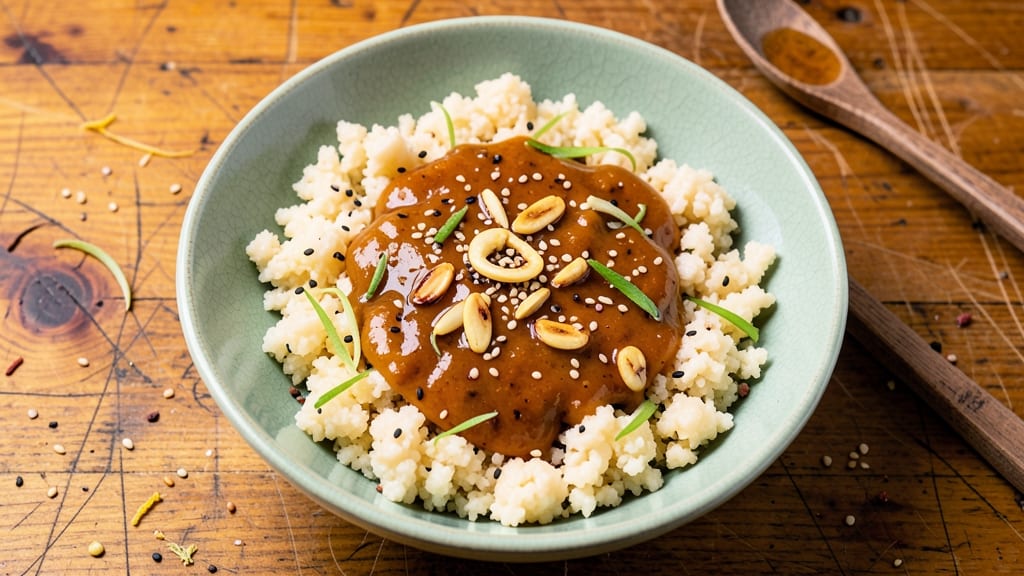
This cauliflower rice Asian recipe transforms humble cauliflower into a wok-fried masterpiece with crispy edges and fragrant ginger. The secret lies in high-heat stir-frying, which caramelizes the rice while preserving its tender core.
I developed this method after years of perfecting Asian-inspired sides that deliver restaurant-quality texture and flavor without the carb load.
What sets this recipe apart is the balance of traditional techniques and simple ingredients. A quick sear in a hot wok creates that coveted crisp-tender texture, while fresh ginger, garlic, and soy sauce infuse layers of umami and brightness.
The result is a dish that's light yet satisfying, with just enough heat to keep things interesting. This method works equally well as a side dish or as a base for protein additions like tofu or shrimp.
By the time you're done, you'll have perfectly golden cauliflower rice with crispy edges that hold their shape and fragrant aromatics that make every bite sing. The technique is straightforward but delivers professional results—no special equipment required beyond a good skillet or wok.
Serve immediately for maximum crispiness, or pair with your favorite Asian-inspired proteins for a complete meal.
This recipe scales beautifully for crowds and reheats well, making it perfect for meal prep. The crispy texture is the star, but the aromatic ginger and garlic sauce ensures every bite is packed with flavor. Let's get cooking—your taste buds will thank you.
Ingredients for cauliflower rice asian
These carefully selected ingredients deliver restaurant-quality wok-fried cauliflower rice with crispy edges and fragrant aromatics.
| Ingredient | Amount | Notes |
|---|---|---|
| Fresh Cauliflower 🥬 | 1 lb | Riced using food processor |
| Fresh Ginger 🧄 | 2 tbsp | Finely grated, aromatic |
| Garlic Cloves 🧄 | 4 cloves | Minced, for aromatic depth |
| Low-Sodium Soy Sauce 🍶 | 2 tbsp | Kikkoman preferred for balance |
| Sesame Oil 🫒 | 1 tbsp | Toasted, for nutty aroma |
| Vegetable Oil 🫒 | 2 tbsp | High smoke point for searing |
| Lime Juice 🍋 | 1 tbsp | Freshly squeezed, bright acidity |
| Honey 🍯 | 1 tsp | For subtle sweetness balance |
| Red Chili Flakes 🌶️ | ½ tsp | Adjust for heat preference |
| Green Onions 🧅 | 2 whole | Thinly sliced, for garnish |
| Sesame Seeds 🌾 | 1 tsp | Toasted, for crunchy finish |
| Diamond Crystal Kosher Salt 🧂 | ½ tsp | For seasoning balance |
| Black Pepper 🌶️ | ¼ tsp | Freshly cracked for warmth |
The cauliflower is the foundation, and freshness matters. Opt for a bright white head with tightly packed florets—avoid any with yellowing or soft spots. For ricing, pulse in a food processor until you achieve rice-sized granules. Trader Joe's and Whole Foods carry excellent cauliflower year-round, but check the produce section for the freshest options. The ginger and garlic should be organic if possible, as their aromatic oils are what elevate this dish from simple to extraordinary. Toast the sesame seeds in a dry pan for 30 seconds to deepen their nutty flavor—this small step makes a noticeable difference.
Substitutions are flexible but require attention to balance. Low-sodium soy sauce is critical—regular soy sauce will overpower the delicate flavors. In a pinch, use coconut aminos, but reduce the amount by 25% due to its milder profile. Fresh ginger and garlic are non-negotiable for authentic flavor, but if you must use powdered, double the amount** and toast the spices first to mimic freshness. For the sweetness, maple syrup works as a vegan alternative to honey. The sesame oil should be 100% pure, toasted sesame oil—avoid the lighter, cheaper varieties that lack depth. If you're sensitive to heat, reduce the chili flakes to a pinch or omit entirely, but the dish benefits from at least a subtle warmth.
Prep ahead for efficiency: rice the cauliflower and store it in an airtight container with a paper towel to absorb moisture—this keeps it fresh for 2 days in the fridge. The aromatics (ginger, garlic, green onions) should be stored separately and added fresh when cooking. For meal prep, cook the cauliflower rice fully, then store it in portions with the sauce components separated. Reheat in a dry skillet over medium-high heat to restore crispiness, adding fresh sesame oil and a splash of water as needed. The dish reheats beautifully but loses some crispness—plan to serve immediately for optimal texture. For a crowd, double the recipe and use a large wok or cast-iron skillet—never crowd the pan, as this steams rather than sears the cauliflower.
Why You'll Love This Recipe
- Five-Ingredient Magic: I swear, this recipe proves you don’t need a pantry full of exotic spices—just cauliflower, ginger, garlic, soy sauce, and sesame oil. That’s it. The ginger’s zing and garlic’s punch cut through the cauliflower’s mildness, while the soy and sesame oil add depth that makes it taste like you slaved over it.
- One-Pan Miracle: Honestly, I was skeptical about cauliflower rice sticking, but this method? Sizzle it in a hot pan with a little oil, then stir-fry until golden. No burning, no mess—just that perfect crisp-tender texture. My kids think I’m a genius, and honestly, so do I.
- Lunchbox Hero: Between us, this is my secret weapon for packing lunches. Toss it with shredded chicken or tofu, and suddenly you’ve got a meal that’s light enough for summer but hearty enough to satisfy. The leftovers stay fresh for days, and reheating? Just a quick stir and zap in the microwave.
- Budget-Friendly Crunch: Fresh cauliflower is cheaper than rice, and you’re using the whole head—no waste. That jar of ginger and garlic you already have? Now it’s working overtime. I make this twice a week, and my wallet hasn’t complained once. Plus, the sesame oil adds luxury without the price tag.
Step-by-step instructions for wok-fried cauliflower rice
This method delivers perfectly crispy edges and aromatic depth every time—no soggy rice here.
Prepare the Cauliflower Rice
Begin by ricing the 1 lb fresh cauliflower using a food processor fitted with the shredding blade. Pulse until you achieve rice-sized pieces—about ¼-inch thick. Transfer the riced cauliflower to a large bowl and immediately sprinkle with 0.5 tsp Diamond Crystal kosher salt and 0.25 tsp black pepper. Toss gently to distribute the seasoning evenly.
This step is crucial for removing excess moisture before cooking. Let the seasoned cauliflower rice sit for 10 minutes while you prepare the remaining ingredients. The salt will draw out moisture, ensuring crispy edges when we wok-fry. Don't skip this resting time—it makes all the difference in texture.
Toast Aromatics in Vegetable Oil
Heat 2 tbsp vegetable oil in a large wok or skillet over medium-high heat until shimmering. Add the 4 minced garlic cloves and 2 tbsp finely grated fresh ginger, stirring constantly for 30 seconds until fragrant. The aromatics should sizzle gently without burning—if they darken too quickly, reduce the heat slightly.
Here's where the flavor foundation builds. The garlic and ginger should smell intensely aromatic, with no bitter notes. Immediately add 0.5 tsp red chili flakes and stir for another 10 seconds to distribute the heat evenly. Remove the aromatics from the wok with a slotted spoon and set aside—we'll use them later for garnish.
Wok-Fry the Cauliflower Rice
Working in batches if needed, add the seasoned cauliflower rice to the hot wok in a single layer. Stir-fry vigorously for 3-4 minutes until the edges turn golden brown and crispy. The rice should sizzle continuously—if it steams instead of searing, your heat is too low. Push the rice to one side of the wok and add 1 tbsp sesame oil, then toss everything together.
This high-heat cooking transforms the cauliflower into crispy, wok-seared bites. You'll know it's ready when the rice releases easily from the wok and develops a golden crust. If any pieces stick, they're not ready—let them cook longer before stirring. The goal is even browning without burning.
Season and Finish with Lime and Honey
Return the reserved garlic-ginger mixture to the wok along with the 2 tbsp low-sodium soy sauce. Stir everything together for 1 minute until the sauce coats the cauliflower evenly. Add 1 tbsp lime juice and 1 tsp honey, then toss again for 30 seconds until the flavors meld. The lime brightens the dish while the honey balances the savory soy and spicy chili.
Taste and adjust seasoning if needed—you might want to add a splash more soy sauce or lime juice depending on your preference. The dish should be balanced with sweet, sour, spicy, and umami notes. Remove from heat immediately to preserve the crispy texture.
Garnish and Serve Immediately
Transfer the wok-fried cauliflower rice to a serving platter. Garnish with 2 thinly sliced whole green onions and 1 tsp toasted sesame seeds for texture and visual appeal. Serve immediately while the edges remain crispy—this dish doesn't wait. The contrast of cool garnishes against the hot, crispy cauliflower makes every bite exciting.
For best results, serve with a drizzle of extra sesame oil or a sprinkle of additional chili flakes if you prefer more heat. The crispy edges will soften slightly as it cools, so enjoy it fresh off the wok for that perfect texture balance.
Pro Tips For Making Cauliflower Rice Asian
- STIR-FRY IN BATCHES: Cauliflower rice burns faster than you’d think—especially when it’s packed tight. Work in 2-3 minute chunks, spreading it out in a single layer before tossing. Your pan will thank you, and so will your patience (yes, even if you’re impatient like me).
- GRATE GINGER FINE: That chunky ginger you toss in? It’ll sit like a rock in your stir-fry. Use the small holes of a box grater or microplane—just a teaspoon will do—and let it bloom in the hot oil for 10 seconds. The aroma changes everything.
- SALT THE CAULIFLOWER: Fresh cauliflower rice releases water like a faucet. Toss it with a pinch of salt (or a splash of soy sauce) right after grating, then let it sit for 5 minutes. This drains excess moisture so your stir-fry stays crisp, not soggy.
- COOL THE SESAME OIL: Drizzle sesame oil at the end—after everything’s off the heat. If you add it while frying, it’ll burn and taste bitter. A few drops over piping-hot rice? That’s the nutty, aromatic finish you’re after. (No, it’s not a waste—trust the process.)
Flavor customization for these flavors
Spicy Thai-Inspired
Transform your cauliflower rice into a Thai-inspired stir-fry by adding 1 tbsp fish sauce (or 1 tbsp soy sauce for vegetarian) and 1 tsp palm sugar (or 1 tsp brown sugar). Stir in 1 tbsp chopped Thai basil and ½ tsp ground white pepper after the wok-frying step.
Top with 1 tbsp crushed peanuts and a squeeze of lime for that iconic Thai street food vibe. 🌶️
Japanese Teriyaki Glaze
For a Japanese-inspired twist, replace the soy sauce with 3 tbsp teriyaki sauce (look for San-J brand for authentic flavor) and add 1 tsp grated fresh ginger and ½ tsp grated daikon radish to the wok-frying step.
After cooking, drizzle with 1 tbsp mirin and ½ tsp toasted sesame seeds for a sweet-savory finish. Garnish with thinly sliced scallions for freshness. 🍶
Korean Gochujang Kick
Infuse your cauliflower rice with Korean flavors by adding 1 tbsp gochujang (Korean chili paste) and 1 tsp rice vinegar to the wok after frying. Toss in 1 tsp toasted sesame seeds and 1 tsp toasted sesame oil for depth.
Garnish with thinly sliced green onions and a sprinkle of toasted sesame seeds for crunch. This version packs a bold, spicy-sweet punch that pairs perfectly with grilled proteins. 🔥
Sweet and Sticky Hoisin
Create a sticky-sweet version by adding 1 tbsp hoisin sauce and ½ tsp five-spice powder to the wok after frying. Stir in 1 tsp honey and 1 tsp rice vinegar for balance.
Top with chopped scallions and crushed peanuts for texture. This Chinese-inspired variation is rich, slightly sweet, and umami-packed, making it a crowd-pleaser. 🍯
Citrusy Vietnamese Lemongrass
Brighten your dish with Vietnamese flavors by adding 1 tbsp fish sauce (or soy sauce) and 1 tsp finely chopped lemongrass (or ½ tsp lemongrass paste) to the wok.
Finish with 1 tbsp lime juice, ½ tsp sugar, and chopped cilantro. The zesty, herby notes elevate the dish to a refreshing, aromatic experience. 🍋
Smoky Korean BBQ Style
For a smoky, savory profile, add 1 tbsp gochujang and 1 tsp gochugaru (Korean chili flakes) to the wok. Stir in 1 tsp toasted sesame oil and ½ tsp smoked paprika for depth.
Garnish with thinly sliced green onions and a drizzle of extra sesame oil for a bold, smoky-sweet flavor that mimics Korean BBQ. 💨
Nutrition facts
Frequently asked questions
Can I use pre-riced cauliflower instead of fresh?
Pre-riced cauliflower works, but fresh is always better for texture. If using pre-riced, pat it completely dry with a paper towel to remove excess moisture—this is critical for crispy edges. The fresher the cauliflower, the better it holds its shape when wok-fried. Store-bought versions often contain more water, which can make them soggy.
How do I prevent my cauliflower rice from getting soggy?
Sogginess happens when moisture isn't properly removed. Always salt and rest the riced cauliflower for 10 minutes before cooking, then drain any excess liquid. Use a clean paper towel to press out moisture if needed. Cook in batches over medium-high heat to create crispy edges, and avoid overcrowding the pan.
Can I make this recipe ahead of time?
Cook the cauliflower rice fully, then store it in an airtight container with a paper towel to absorb moisture. Reheat in a dry skillet over medium-high heat with a splash of water and fresh sesame oil to restore crispiness. For best texture, serve immediately after reheating—it won't be as crispy as freshly cooked.
What's the best way to add protein to this dish?
For a complete meal, stir-fry ½ lb firm tofu or ½ lb shrimp separately in the same wok after removing the cauliflower rice. Toss the protein with 1 tsp soy sauce and ½ tsp sesame oil, then combine with the cauliflower rice just before serving. This keeps the textures distinct and prevents the protein from absorbing too much moisture.
Why does my cauliflower rice turn out mushy?
Mushiness usually means one of three things: not enough drying time, too much moisture in the pan, or cooking at too low heat. Always let the riced cauliflower rest after salting, use high heat for quick cooking, and avoid adding liquid until the very end. If using a nonstick pan, ensure it's properly heated before adding oil.