
Side Dishes
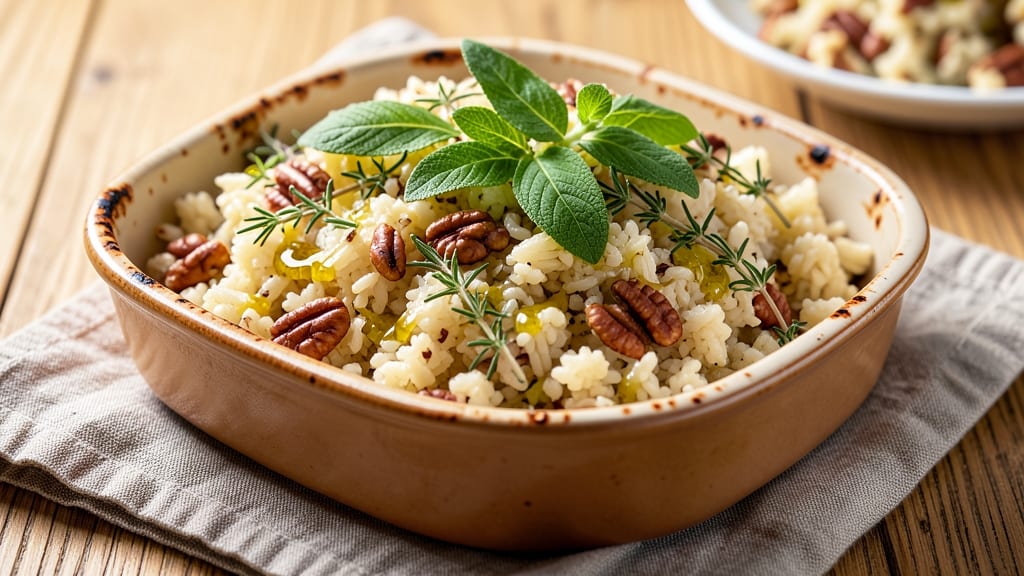
This cauliflower rice stuffing recipe delivers the perfect balance of crispy edges and fluffy centers without sacrificing flavor or texture. The secret lies in proper sautéing and baking techniques that transform cauliflower rice into a hearty, herb-infused side dish that rivals traditional bread stuffing. With just the right amount of moisture and seasoning, this vegetarian version is packed with savory depth and satisfying crunch.
What makes this recipe truly special is the combination of toasted nuts for added texture and a blend of fresh herbs that infuse the stuffing with bright, aromatic flavors.
The key to achieving those crispy edges while maintaining a tender interior is a precise baking method that ensures even cooking throughout.
Whether served alongside roasted turkey, as a standalone vegetarian dish, or paired with your favorite proteins, this stuffing is sure to become a staple in your holiday and weeknight meals.
Ingredients for cauliflower rice stuffing
Sixteen ingredients transform cauliflower rice into a crispy, herb-infused vegetarian stuffing rivaling traditional bread versions.
| Ingredient | Amount | Notes |
|---|---|---|
| Fresh Cauliflower Rice 🥬 | 6 cups | Freshly grated or store-bought |
| Extra-Virgin Olive Oil 🫒 | ½ cup | High quality, fruity variety |
| Pecans 🥜 | 1 cup | Toasted, roughly chopped |
| Fresh Sage Leaves 🌿 | ½ cup | Chopped, stems removed |
| Fresh Thyme Leaves 🌿 | ¼ cup | Chopped, stems removed |
| Fresh Rosemary 🌿 | ¼ cup | Finely chopped, stems removed |
| Shallots 🧅 | 2 whole | Minced, finely chopped |
| Garlic Cloves 🧄 | 4 cloves | Minced, finely chopped |
| Vegetable Broth 💧 | 1 ½ cups | Low-sodium preferred |
| Fresh Parsley Leaves 🌿 | ¼ cup | Chopped, for garnish |
| Diamond Crystal Kosher Salt 🧂 | 1 ½ tsp | Adjust to taste |
| Ground Black Pepper 🌶️ | ½ tsp | Freshly ground preferred |
| Nutritional Yeast 🍞 | 2 tbsp | For umami depth |
| Freshly Ground Nutmeg 🌿 | ¼ tsp | Freshly grated |
The cauliflower rice is the foundation, so freshly grated is ideal—store-bought works in a pinch but lacks texture. Whole Foods or Trader Joe's carry pre-riced cauliflower that's convenient for busy cooks. For herbs, prioritize freshness: bright green sage and thyme indicate peak quality. The pecans should be toasted until golden—Costco bulk bins offer the best price per pound. Nutritional yeast adds that savory depth without dairy, making it a must for vegetarian dishes.
No pecans? Walnuts or almonds work equally well, though texture differs slightly. Fresh herbs wilt fast, so dried can substitute at one-third the amount—though fresh delivers superior aroma. Short on vegetable broth? Low-sodium chicken broth is acceptable, but avoid high-sodium versions. The shallots and garlic should be minced finely for even distribution. For extra crispiness, panko breadcrumbs can be added, but the pecans provide sufficient crunch. Always taste as you go—adjust salt and pepper to preference.
Store fresh herbs in damp paper towels within sealed containers for 5-7 days in the fridge. Toasted pecans keep for 2 weeks in an airtight container. The finished stuffing reheats beautifully—350°F for 15-20 minutes restores crispy edges. Portion into ramekins or loaf pans for easy reheating. For holiday prep, assemble ahead and refrigerate unbaked for up to 24 hours before baking.
Why You'll Love This Recipe
- No Chopping Struggle: I’ll be real—this stuffing begs for a food processor, and those few minutes save me from the dreaded cauliflower shredding battle. Fresh rice straight from the bag? Just pulse, toast, and you’re golden.
- Toasty Crunch Magic: That pecan-toasted edge? Chef’s kiss. The olive oil caramelizes the nuts while the sage and thyme bloom into this earthy, herby aroma—like a Thanksgiving hug in bite-sized form.
- Stuffing for Everything: Roast it in chicken, pile it over greens, or serve it alongside steak—this holds its shape like a champ. (Yes, even on a Tuesday night when you’re craving something fancy but don’t want to fuss.)
- Budget-Friendly Flex: Cauliflower rice stretches farther than traditional stuffing, and pecans add richness without breaking the bank. Plus, leftovers reheat like a dream—no soggy disasters here.
Step-by-step instructions for herb-infused cauliflower rice stuffing
Transform simple cauliflower rice into a sophisticated, golden-brown stuffing with these precise techniques.
Toast the Pecans and Aromatics
Preheat your oven to 350°F and spread the 1 cup pecans on a baking sheet. Toast for 8-10 minutes until fragrant and lightly golden, stirring halfway. Remove from oven and let cool slightly—this enhances their nutty flavor without burning.
In a large skillet over medium heat, add 0.5 cup extra-virgin olive oil and sauté the 2 minced shallots and 4 minced garlic cloves for 3-4 minutes until soft and translucent. Add the 0.5 cup chopped fresh sage, 0.25 cup chopped fresh thyme, and 0.25 cup chopped fresh rosemary, cooking for another 1-2 minutes until the herbs release their aromatic oils. Remove from heat and let cool completely—this prevents the stuffing from becoming soggy later.
Sauté the Cauliflower Rice
In the same skillet (no need to clean it—the fond adds flavor), add the 6 cups fresh cauliflower rice and cook over medium-high heat for 5-6 minutes, stirring frequently. The cauliflower should soften slightly and develop a faint golden color—this is your signal it's ready for the next step. Avoid overcrowding the pan to ensure even cooking.
Transfer the sautéed cauliflower to a large mixing bowl. Add the toasted pecans, herb mixture, 2 tbsp nutritional yeast, 1.5 tsp kosher salt, 0.5 tsp ground black pepper, and 0.25 tsp freshly ground nutmeg. Gently fold everything together until evenly distributed. The texture should be moist but not wet—if it feels dry, add 1-2 tablespoons vegetable broth to help bind the mixture.
Bake for Crispy Edges and Fluffy Centers
Transfer the stuffing to a greased 9x13-inch baking dish and spread it evenly. Pour the 1.5 cups vegetable broth evenly over the top, ensuring it penetrates the mixture. Cover tightly with aluminum foil and bake at 375°F for 25 minutes—this steams the cauliflower without overcooking it.
Remove the foil and increase the oven temperature to 400°F. Return to the oven for an additional 15-20 minutes until the top is deeply golden brown and crispy. The edges should pull away slightly from the baking dish when gently tugged—a visual cue the exterior has developed that perfect texture. If the top browns too quickly, tent loosely with foil to prevent burning.
Rest and Garnish
Remove the stuffing from the oven and let it rest for 5-10 minutes before serving. This resting period allows the juices to redistribute, ensuring each bite is moist and flavorful. The internal temperature should reach 165°F—use an instant-read thermometer to verify if needed.
Garnish with 0.25 cup chopped fresh parsley and serve immediately. The contrast of crispy, golden-brown edges with tender, herb-infused centers creates a satisfying texture profile. For extra richness, drizzle with additional extra-virgin olive oil before serving.
Pro Tips For Making Cauliflower Rice Stuffing
- Sauté the Cauliflower Rice First: Fresh cauliflower rice releases more moisture than pre-riced store-bought versions, so hit it with a quick 3-4 minute sauté in olive oil before adding anything else. This drives off excess water and gives the pecans and herbs something to cling to instead of turning to mush.
- Toast Pecans Low and Slow: Skip the high-heat blitz that burns them before they brown. Spread pecans on a dry pan over medium-low and stir every 30 seconds until they’re fragrant and just starting to color—about 5 minutes. Over-toasting makes them bitter, and under-toasting means they’ll taste raw in the final dish.
- Chop Herbs Coarse: Tiny sage and thyme leaves disappear into cauliflower rice, so snip them into ¼-inch pieces. You’ll taste them better, and they’ll hold their shape longer during baking or roasting. (Yes, even if it looks less "fancy.")
- Add a Splash of Broth: After sautéing the cauliflower rice and pecans, stir in 2 tablespoons of low-sodium chicken or vegetable broth. It keeps the stuffing from drying out during baking or reheating—no one wants a sad, crumbly pile. (Trust me, I’ve made it.)
Serving suggestions for leftovers
Holiday Centerpiece
This cauliflower rice stuffing makes a stunning centerpiece for Thanksgiving or Christmas meals. Arrange it in a rustic ceramic dish or copper loaf pan and garnish with edible flowers like thyme blossoms or crispy sage leaves for an elegant touch.
The golden-brown edges contrast beautifully with white linen napkins and dark wood table settings, creating a warm, inviting presentation. 🌟
Protein Pairings
For a vegetarian feast, serve alongside roasted eggplant and mushroom Wellington to create a hearty plant-based spread. If you're including meat, pair with herb-crusted turkey breast or smoked salmon—the nutty pecans and fresh herbs complement both perfectly.
For a lighter option, try grilled lemon-herb chicken or pan-seared scallops to balance the richness of the stuffing.
Garnish Upgrades
Elevate your presentation with toasted pumpkin seeds sprinkled on top for extra crunch. A drizzle of truffle-infused olive oil adds luxurious depth, while crispy fried shallots bring a delightful contrast.
For a pop of color, add microgreens or thinly sliced radishes just before serving. These finishing touches make your stuffing look as impressive as it tastes. ✨
Make-Ahead Serving
Assemble the stuffing in individual ramekins up to 24 hours ahead and refrigerate. When ready to bake, cover with foil and bake as directed—this ensures even cooking and crispy edges.
For a buffet-style presentation, arrange ramekins on a slate board with fresh herbs scattered around. Label each ramekin with a small flag for easy identification at gatherings.
Seasonal Variations
In fall, add diced apples and cranberries for a festive twist. For spring, swap pecans for toasted pine nuts and incorporate asparagus tips into the mix.
In summer, use grilled zucchini instead of cauliflower rice for a lighter version. Each seasonal adaptation keeps the dish fresh and exciting year-round. 🍂
Dipping Sauces
Serve with a side of warm marinara sauce for dipping—its acidity cuts through the richness beautifully. A creamy garlic aioli made with vegan mayo and lemon zest adds another layer of flavor.
For a tangy option, offer a balsamic reduction drizzled over the stuffing or on the side. These sauces enhance the dish while adding variety to your meal. 💛
Nutrition facts
Frequently asked questions
Can I use frozen cauliflower rice for this recipe?
Yes, but thaw and drain it thoroughly first! Frozen cauliflower rice tends to release excess moisture, which can make your stuffing soggy. Spread it on a paper towel-lined tray and let it air-dry for 10-15 minutes before using. For best texture, use freshly grated cauliflower rice whenever possible.
How do I prevent my cauliflower rice stuffing from getting mushy?
The key is proper cooking technique! First, sauté the cauliflower rice until just tender (about 5-6 minutes over medium-high heat). Then, bake it in stages: steam it covered at 375°F first, then crisp it uncovered at 400°F. Avoid overmixing after adding broth—just gently fold.
What's the best way to reheat leftover cauliflower rice stuffing?
For crispy edges, cover with foil and reheat at 350°F for 15-20 minutes. To restore crispiness, broil for 2-3 minutes at the end. If microwaving, use 30-second intervals on medium power, stirring between each interval. Add a splash of broth if it seems dry.
Can I make this stuffing gluten-free?
This recipe is naturally gluten-free as long as you use gluten-free vegetable broth and check your spices for hidden gluten. For extra texture, you can add gluten-free breadcrumbs or crushed gluten-free crackers instead of pecans if needed. Always verify product labels to be safe.
What herbs can I substitute if I don't have fresh sage or thyme?
Use dried herbs at one-third the amount—so 1/8 tsp dried sage replaces 1/4 cup fresh. For sage, try rosemary or marjoram (1:1 ratio). For thyme, oregano or basil work well. If you're missing rosemary, tarragon or basil provide similar brightness. Always taste and adjust seasoning after substituting.