
Side Dishes
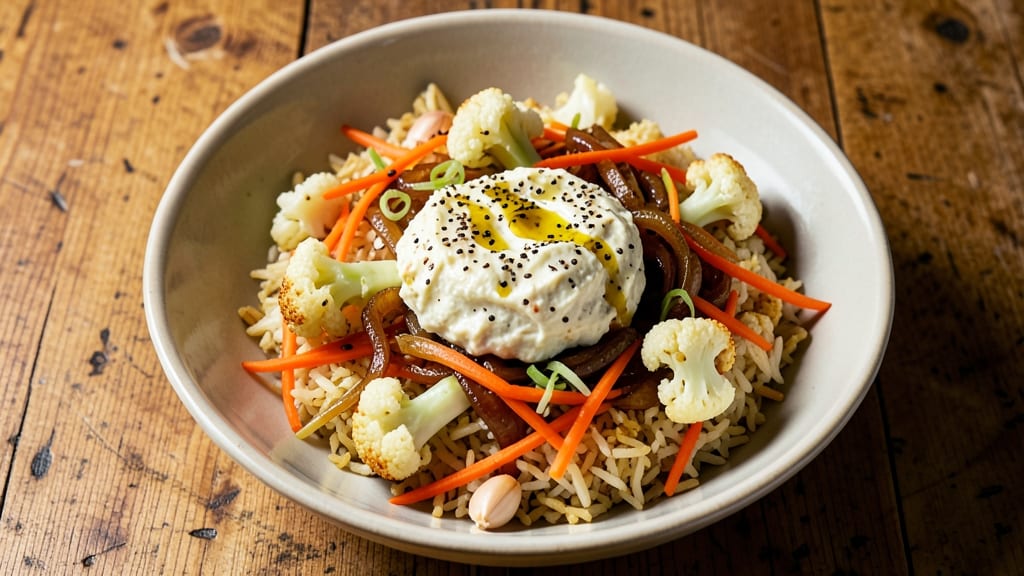
This cauliflower vegetable fried rice recipe transforms humble rice into a crispy, flavor-packed dish that sneaks in hidden veggies without sacrificing texture. The secret lies in perfectly toasted rice—golden edges that stay firm while absorbing bold seasonings—paired with cauliflower's natural crunch and savory depth.
Traditional fried rice techniques meet modern nutrition here, delivering a satisfying meal that feels indulgent yet balanced.
What sets this recipe apart is the wok hei—that signature smoky aroma from high-heat stir-frying—that elevates simple ingredients into something restaurant-worthy.
We'll use day-old rice (critical for texture) and a blend of fresh vegetables that caramelize beautifully, creating a dish where every bite delivers crispy rice, tender cauliflower, and layers of umami from garlic, ginger, and soy. The result? A complete dish that's as nourishing as it is delicious.
Ingredients for cauliflower vegetable fried rice
Perfectly toasted rice, crispy cauliflower florets, and wok-heated aromatics transform simple ingredients into restaurant-quality vegetarian fried rice.
| Ingredient | Amount | Notes |
|---|---|---|
| Day-Old Jasmine Rice 🍚 | 4 cups | Uncooked weight equivalent to 2 cups cooked |
| Fresh Cauliflower 🥬 | 3 cups | Florets cut into rice-sized pieces |
| Yellow Onion 🧅 | 1 whole | Thinly sliced, about 1.5 cups |
| Garlic Cloves 🧄 | 6 cloves | Minced for maximum aromatic release |
| Fresh Ginger 🌿 | 1 ½ tbsp | Finely grated, peeled |
| Carrots 🥕 | 1 cup | Julienned into thin matchsticks |
| Green Onion 🧅 | 4 whole | White and green parts separated |
| Low-Sodium Soy Sauce 🍶 | 3 tbsp | Kikkoman preferred for balance |
| Sesame Oil 🫒 | 1 tbsp | Toasted for authentic aroma |
| Vegetable Oil 🫒 | 2 tbsp | High smoke point for wok hei |
| Vegetable Broth 💧 | ½ cup | Low-sodium for flavor control |
| Egg Substitute 🥚 | 2 whole | Flax eggs (2 tbsp ground flax + 6 tbsp water) |
| Salt 🧂 | 1 tsp | Diamond Crystal preferred |
| Black Pepper 🌶️ | ½ tsp | Freshly cracked for intensity |
| White Pepper 🌶️ | ¼ tsp | For subtle heat contrast |
The rice is non-negotiable—day-old works best for texture, but if you're short on time, cook fresh rice and spread it on a tray to dry for 30 minutes. For cauliflower, fresh is ideal, but frozen works in a pinch (thaw and pat dry thoroughly). Trader Joe's carries pre-riced cauliflower that saves prep time, though fresh florets caramelize better. Look for vibrant yellow onions with crisp edges—they'll add sweetness as they cook. The garlic and ginger should be freshly grated or minced for maximum flavor; pre-minced jars often contain fillers that dull the aroma.
No flax eggs? Chia eggs (2 tbsp chia seeds + 6 tbsp water) work equally well, or use silken tofu blended with turmeric for color. Running low on sesame oil? Toasted sesame seeds at half the amount add texture without the same aroma. For extra umami, add 1 tbsp vegetarian Worcestershire sauce or a splash of coconut aminos. The carrots can be swapped for shredded cabbage or snap peas—just adjust cooking time as needed. If your soy sauce is high-sodium, reduce to 2 tbsp and add 1 tsp honey substitute for balance.
Store cooked fried rice in an airtight container for 4-5 days—it reheats beautifully with a splash of water or broth. For longer storage, freeze portions for up to 3 months. To revive texture, microwave with a damp paper towel over the top. The wok hei aroma fades slightly when refrigerated, so reheat in a hot wok or skillet for that signature smoky punch. For meal prep, divide into single servings and freeze—just thaw overnight in the fridge before reheating.
Why You'll Love This Recipe
- One-Pan Wonder: I swear by this recipe when I’m too tired to scrub pots—just toss everything into one skillet with a splash of oil, and let the rice crisp up while the cauliflower softens. The onions caramelize right alongside, so you don’t even need to pre-cook them.
- Ginger-Garlic Punch: That fresh ginger and minced garlic? They’re the secret weapon here. The ginger adds a zesty kick, while the garlic deepens into a nutty richness as it fries—like a little flavor explosion in every bite. (Yes, even on a Tuesday night.)
- Meal Prep MVP: Between us, this is my go-to for lunchboxes or quick dinners. The day-old rice absorbs all the flavors perfectly, and the cauliflower holds up for days in the fridge. Pack it cold or reheat it—it’s just as good either way.
- Budget-Friendly Crunch: Honestly, this recipe uses pantry staples you already have, plus cauliflower stretches like crazy. I make a huge batch for my family, and it’s still a solid meal when I’m down to the last scoop. Plus, the texture? That crispy cauliflower edge makes it feel fancy without the price tag.
Step-by-step instructions for crispy cauliflower vegetable fried rice
Transform day-old rice and fresh vegetables into restaurant-quality fried rice with perfect texture and flavor.
Prepare the Egg Substitute Mixture
In a small bowl, whisk together the 2 whole egg substitute (prepared from 2 tbsp ground flax + 6 tbsp water) with 0.5 tsp black pepper and 0.25 tsp white pepper. Let this mixture sit for 5 minutes to thicken slightly—this ensures proper binding when scrambled. The texture should resemble a thick custard rather than a runny egg mixture.
While waiting, heat 1 tbsp vegetable oil in a nonstick skillet over medium-high heat until shimmering. Pour in the egg substitute and let it cook undisturbed for 2-3 minutes until the edges begin to set and the center remains slightly runny. This creates the classic fried rice egg texture—soft but with slightly firm edges. Remove from the pan and set aside on a plate.
Stir-Fry Aromatics and Vegetables
Increase the heat to high and add the remaining 1 tbsp vegetable oil. Add the 1 whole yellow onion (thinly sliced) and stir-fry for 2 minutes until softened but not browned. Add the 6 cloves garlic cloves (minced) and 1.5 tbsp fresh ginger (finely grated), cooking for 30 seconds until fragrant—this releases their full aromatic potential.
Push the aromatics to one side of the pan and add the 3 cups fresh cauliflower (rice-sized florets) and 1 cup carrots (julienned). Stir-fry for 4-5 minutes until the cauliflower begins to soften and develop a slight golden color. The vegetables should retain some bite—overcooking will turn them mushy. Season lightly with 0.5 tsp salt to enhance their natural flavors.
Combine Rice and Seasonings
Add the 4 cups day-old jasmine rice to the pan and break up any clumps with a spatula. Drizzle in the 3 tbsp low-sodium soy sauce and 0.5 cup vegetable broth, tossing everything together for 2-3 minutes until the rice is evenly coated and begins to sizzle. The rice should look glossy but not wet—this indicates proper moisture distribution.
Add the 4 whole green onion (white parts only, chopped) and the scrambled egg substitute back to the pan. Stir-fry for an additional 3 minutes, allowing the flavors to meld. The rice should be hot throughout and beginning to develop crispy edges—this is where the magic happens for that perfect fried rice texture.
Finish with Sesame Oil for Authentic Flavor
Remove the pan from heat and stir in the 1 tbsp sesame oil. This final step adds depth of flavor and that signature nutty aroma that elevates fried rice from good to exceptional. Taste and adjust seasoning if needed—you might need an additional 0.25 tsp salt or 0.125 tsp soy sauce to balance the flavors.
Transfer the fried rice to serving plates immediately, garnishing with the remaining green onion (green parts only, chopped). Serve while hot, with crispy edges and perfectly tender vegetables throughout. The contrast between the crispy rice and tender cauliflower creates an irresistible texture that keeps every bite exciting.
Pro Tips For Making Cauliflower Vegetable Fried Rice
- CRISPY CAULIFLOWER FIRST: Toss the cauliflower florets in a pinch of salt and let them sit for 10 minutes before cooking—this draws out moisture so they brown properly instead of steaming. I used to skip this and ended up with sad, limp florets that just blended into the rice.
- CHOP GINGER LIKE YOU MEAN IT: Use a microplane or knife to slice ginger into matchsticks, not coins—thin slices infuse faster and don’t turn to mush. My grandmother swore by this, and she was right: you’ll taste the ginger in every bite, not just a vague background spice.
- DON’T OVERSTIR THE RICE: Let the rice sit undisturbed for 30 seconds after the first stir—this lets the edges crisp while keeping the center tender. I learned this the hard way after turning my fried rice into a gluey mess by overworking it.
- UPGRADE WITH FROZEN PEAS: Toss in ½ cup frozen peas at the end—they thaw instantly, add texture, and cut through the richness of the cauliflower. Sounds weird, but it works: the peas stay bright and the dish feels more balanced, even if you’re using fresh veggies.
Essential equipment for perfect results
Wok or Skillet
You don’t need a fancy wok to make this fried rice—any 12-inch cast-iron skillet or heavy-bottomed stainless steel pan works perfectly. The key is high heat retention to achieve that wok hei aroma.
I love my Lodge cast-iron skillet for its even heat distribution and durability. If you’re using a nonstick pan, avoid overheating to prevent sticking—keep the heat at medium-high instead of high. 🔥
High-Heat Oil
Use a high-smoke-point oil like avocado oil or vegetable oil (I prefer Mazola for its neutral flavor and affordability). These oils handle the high heat needed for stir-frying without breaking down.
Avoid delicate oils like olive oil—they’ll burn and create bitter flavors. For extra flavor, toast 1 tbsp sesame seeds in the pan before adding aromatics, then strain them out. 🫒
Tongs and Spatula
A long-handled pair of tongs (like OXO Good Grips) is essential for tossing the rice and veggies without crushing them. Pair it with a wide, heat-resistant spatula (I use Mercer Culinary Genius) to scrape up any stuck bits.
These tools give you better control over the high-heat stir-frying process, ensuring even cooking and crispy edges. 🍳
Measuring Tools
Precision matters in fried rice—use a stainless steel measuring cup for rice and broth, and a small kitchen scale for spices like salt and pepper. A microplane for garlic and ginger ensures fine, even mincing, which releases more flavor.
For sesame oil, a medicine dropper helps measure the exact 1 tbsp without overdoing it. 📏
Optional: Rice Steamer
If you’re short on day-old rice, a bamboo steamer (like Norpro’s) lets you cook fresh rice and dry it quickly for the perfect texture. Steam the rice, then spread it on a tray and let it sit uncovered for 30 minutes to dry out.
This mimics the texture of day-old rice without the wait. 🌱
Nutrition facts
Frequently asked questions
Why does this recipe use day-old rice instead of fresh?
Day-old rice is essential for achieving that perfect crispy-yet-tender texture in fried rice. Freshly cooked rice contains too much moisture, which turns fried rice mushy. The starches in day-old rice have dried out slightly, allowing them to develop those coveted golden edges while staying firm. If you only have fresh rice, cook it, spread it on a tray, and let it dry uncovered for 30 minutes before using.
Can I make this with frozen cauliflower instead of fresh?
Frozen cauliflower works well, but you must thaw and pat it completely dry first to prevent soggy fried rice. For best results, break the florets into rice-sized pieces and stir-fry them for 1-2 minutes longer than fresh cauliflower to ensure they're tender but still hold their shape. Avoid microwaving frozen cauliflower—air-drying or baking at 200°F for 10 minutes works better.
How do I prevent my fried rice from turning out mushy?
Mushy fried rice usually happens from one of three things: overcooking, too much liquid, or not enough heat. Use high heat and stir-fry in 2-3 minute batches until the rice develops crispy edges. Measure your broth carefully—0.5 cup is perfect for 4 cups rice. And always use day-old rice (or properly dried fresh rice) to avoid excess moisture.
What other vegetables can I add to this recipe?
This recipe is flexible! Try adding bell peppers, broccoli florets, or mushrooms for extra texture. For more umami, stir in shredded carrots or snap peas—just adjust cooking time as needed. If using watery veggies like zucchini, salt them first and let them sit for 10 minutes to draw out excess moisture before adding to the pan.
Can I make this recipe gluten-free?
Yes! Simply replace the soy sauce with tamari (gluten-free soy sauce) or coconut aminos. For extra depth, add 1 tsp gluten-free fish sauce (or vegetarian fish sauce made from mushrooms). The rest of the ingredients are naturally gluten-free, so this version maintains all the crispy texture and flavor while being safe for gluten-sensitive diets.