
Main Courses
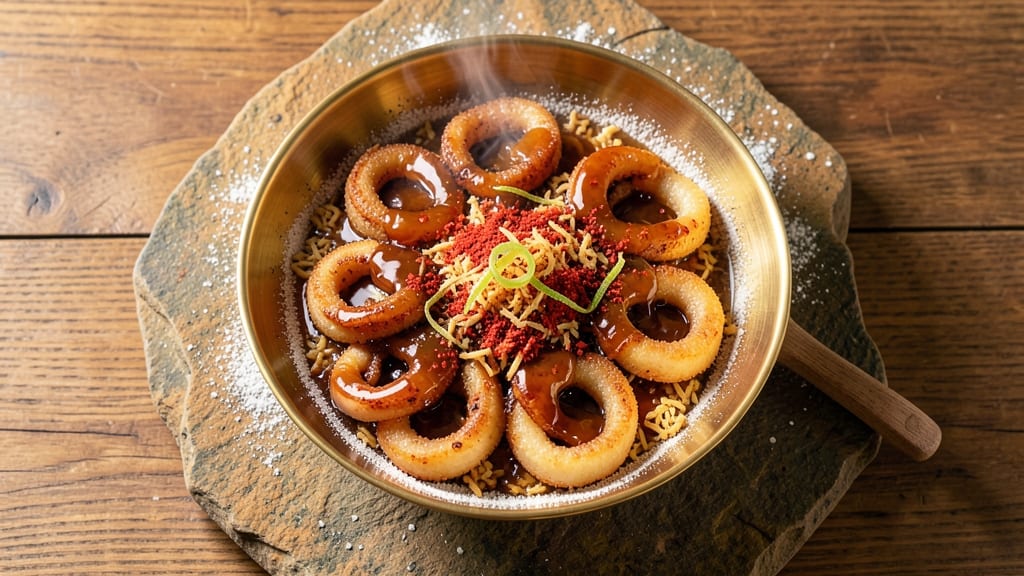
This chalimidi recipe with rice flour and jaggery delivers crispy, golden squid infused with fragrant spices—perfect for a restaurant-quality meal at home. The secret lies in the rice flour batter, which creates that signature crunch while jaggery adds a deep, caramelized sweetness that balances the dish's savory depth.
Traditional methods meet modern convenience here, where tender squid is marinated in aromatic spices before being coated in a light, crispy batter. The jaggery not only enhances flavor but also gives the dish a subtle, complex sweetness that pairs beautifully with the smoky spices.
Ready in under 30 minutes, this dish is ideal for special occasions or weeknight dinners when you crave something truly special.
Ingredients for chalimidi recipe with rice flour and jaggery
The crispy crunch of squid meets aromatic spices and jaggery's caramelized sweetness for a restaurant-quality dish.
| Ingredient | Amount | Notes |
|---|---|---|
| Fresh Squid (Calamari) 🦑 | 1 ½ lb | Cleaned, bodies sliced into rings, tentacles left whole |
| Rice Flour 🌾 | 1 cup | Fine grind for crispy batter |
| Jaggery 🍯 | ½ cup | Grated, for caramelized sweetness |
| All-Purpose Flour 🌾 | ½ cup | For batter lightness |
| Baking Powder 🍞 | 1 tsp | For crispiness |
| Red Chili Powder 🌶️ | 1 tbsp | Adjust for heat preference |
| Ground Cumin 🌿 | 1 tsp | Toasted for aromatic depth |
| Turmeric Powder 🧡 | ½ tsp | For vibrant color |
| Garlic Cloves 🧄 | 6 cloves | Minced for marinade |
| Ginger Root 🌿 | 1 tbsp | Freshly grated |
| Lemon Juice 🍋 | 2 tbsp | Freshly squeezed |
| Vegetable Oil 🫒 | 2 cups | For deep frying |
| Salt 🧂 | 1 ½ tsp | Kosher or sea salt |
| Black Pepper 🌶️ | ½ tsp | Freshly ground |
| Fresh Coriander Leaves 🌿 | ¼ cup | Chopped for garnish |
Squid quality is non-negotiable here—look for fresh, plump bodies with firm tentacles at specialty seafood markets or well-stocked grocery stores like Whole Foods or Trader Joe's. The jaggery should be unrefined and grainy (not liquid) for authentic flavor; Organic India or Madhva brands excel. For the rice flour, Bob's Red Mill offers the finest grind, essential for that signature crispiness. If you can't find jaggery, dark brown sugar works in a pinch but lacks depth. The spices should be freshly toasted—cumin and turmeric especially—to maximize aromatic impact.
No jaggery? Dark brown sugar or muscovado sugar at half the amount delivers similar caramel notes, though with less complexity. Swap rice flour for cornstarch (1:1 ratio) if unavailable, though texture will differ slightly. For heat preference, reduce chili powder to 0.5 tbsp for mild or add 0.5 tsp cayenne for extra kick. Fresh ginger and garlic are ideal, but powdered versions (at half the amount) suffice in emergencies. The lemon juice can be substituted with white vinegar (same acidity), though flavor will shift subtly. Pre-grated jaggery? Grind it yourself—it dissolves better and adds texture.
Marinate the squid for no longer than 20 minutes to prevent toughness, then pat extremely dry with paper towels before battering—this ensures maximum crispiness. Store leftover batter (without oil) in an airtight container for up to 3 days in the fridge; whisk with a splash of water before using. The fried squid stays crispy for 2 hours at room temperature, after which it becomes greasy. For longer storage, freeze fried portions (without garnish) for up to 1 month—reheat in a 350°F oven for 5 minutes to restore crispness.
Why You'll Love This Recipe
- I swear by this trick: the rice flour batter clings like glue, so no messy dredging or second-guessing. Toss the squid in jaggery first—just a quick rub—and the caramelized sweetness stays put even when frying.
- No-Fuss Frying: I swear by this trick: the rice flour batter clings like glue, so no messy dredging or second-guessing. Toss the squid in jaggery first—just a quick rub—and the caramelized sweetness stays put even when frying.
- Sweet-Savory Magic: That jaggery isn’t just sugar—it’s the secret. The moment the chalimidi hits the pan, the edges crisp up golden while the inside stays tender, with a sticky, molasses-like depth that balances the seafood perfectly. (Yes, even my picky husband asks for seconds.)
- Leftover Reinvention: Turn extra chalimidi into a curry the next day—just simmer with coconut milk and curry leaves. Or toss cold pieces into a salad for a crunchy, salty surprise. Honestly, I’ve never had seafood leftovers I didn’t crave again.
Step-by-step instructions for crispy squid with jaggery and spice
Master this technique for restaurant-quality chalimidi with perfect texture and flavor balance.
Marinate the Squid for Maximum Flavor
In a large bowl, combine the 1.5 lb fresh squid (calamari) with the 6 minced garlic cloves, 1 tbsp freshly grated ginger root, 2 tbsp lemon juice, 1.5 tsp salt, and 0.5 tsp black pepper. Gently massage the marinade into the squid bodies and tentacles using your hands for 5 minutes. This ensures even distribution of flavors and tenderizes the squid slightly.
The acidity from the lemon juice and the aromatic spices will begin breaking down the proteins, while the salt helps draw out moisture for better crispiness later. Let the squid marinate for atstrong>15-20 minutes in the refrigerator. This step is crucial for developing the complex flavors that define chalimidi.
Prepare the Jaggery-Cumin Batter
In a mixing bowl, combine the 1 cup rice flour, 0.5 cup all-purpose flour, 1 tsp baking powder, 1 tbsp red chili powder, 1 tsp ground cumin, and 0.5 tsp turmeric powder. Whisk these dry ingredients together until fully incorporated and no lumps remain. This creates the foundation for our crispy coating.
In a separate small saucepan, gently melt the 0.5 cup grated jaggery over low heat for 3-4 minutes, stirring constantly until it becomes a smooth, caramel-like liquid. Remove from heat and let it cool slightly. This jaggery mixture will add a distinctive sweet-savory depth to the batter that's essential for authentic chalimidi flavor.
Create the Final Batter Mixture
Gradually pour the melted jaggery into the dry flour mixture while whisking continuously. The batter should have a smooth, pancake-like consistency—similar to thick cream. If it's too thick, add 1-2 tablespoons water at a time until you reach the perfect coating consistency. The batter should cling to a spoon but still be pourable.
Add the marinated squid to the batter and gently coat each piece, ensuring the batter adheres evenly to both the bodies and tentacles. Let the squid sit in the batter for 10 minutes at room temperature. This resting period allows the batter to fully adhere and develop its crisping properties. Don't skip this step—it's what creates that signature crunch.
Deep Fry for Perfect Crispiness
Heat 2 cups vegetable oil in a deep, heavy-bottomed pot to 350°F using a thermometer for accuracy. The oil should be hot enough that when you test it with a small piece of squid, it sizzles vigorously and rises to the surface. Maintain this temperature throughout the frying process.
Carefully add the battered squid in batches, being careful not to overcrowd the pot. Fry for 2-3 minutes per batch until the squid is deep golden brown and floats to the surface. This indicates proper doneness—crisp on the outside while maintaining tender squid inside. Use a slotted spoon to transfer the fried squid to a paper towel-lined plate to drain excess oil.
Finish and Serve Immediately
While still hot, sprinkle the fried squid generously with the 0.25 cup chopped fresh coriander leaves. The vibrant green color and fresh aroma will contrast beautifully with the deep golden-brown crispiness. Serve immediately with lemon wedges on the side for squeezing over the chalimidi.
This dish should be enjoyed right away while the squid is at its crispest. The combination of jaggery's caramelized sweetness, the spicy cumin-chili batter, and the tender squid creates a perfect balance of textures and flavors. Each bite should deliver that satisfying crunch followed by tender, flavorful squid—exactly what makes chalimidi so special.
Pro Tips For Making Chalimidi Recipe With Rice Flour And Jaggery
- Prep Squid Like a Pro: Cut the squid into 1-inch rings—no smaller, or they’ll turn to mush when frying. Pat them bone-dry with paper towels (yes, even if you’re impatient like me), or the rice flour coating won’t stick. I learned this the hard way when my first batch splattered everywhere.
- Bloom Jaggery First: Warm jaggery in a pan with 2 tablespoons water until it melts into a smooth paste—this prevents grainy texture in the batter. Stir in 1 teaspoon lemon juice (trust me, it balances the sweetness) before mixing with rice flour. My grandmother swore by this, and she was right: it makes all the difference.
- Fry in Batches: Crowd the pan, and the oil temperature drops like a rock. Fry 4-5 pieces at a time max, and keep a thermometer handy—aim for 350°F (175°C). If the oil smokes, pull back the heat. Sounds weird, but it works: crispy outside, tender inside every time.
- Rest the Batter: Let the rice flour-jaggery batter sit for 10 minutes after mixing. This lets the jaggery dissolve fully and thickens the coating just enough to cling without dripping. I skip this when I’m lazy, but the dish is noticeably better when I don’t. (Your future self will thank you.)
Pro cooking tips for great chalimidi recipe with rice flour and jaggery
Batter Consistency Secrets
The jaggery-rice flour batter is where chalimidi magic happens. Whisk the dry ingredients until they're completely aerated—this creates tiny air pockets that expand during frying for extra crispiness. I find using a hand mixer on low speed for 1 minute works best.
The batter should coat the back of a spoon but still drip slowly—like thick honey. Too thin? Add 1 tbsp more rice flour. Too thick? Thin with ½ tsp water at a time. 🌟
Oil Temperature Control
This is non-negotiable for perfect chalimidi. Use a deep-fry thermometer—350°F is ideal. Test with a small squid piece: if it sizzles immediately and floats within 30 seconds, you're golden. Oil that's too cool = greasy squid; too hot = burnt outside, rubbery inside.
I keep my oil in a heavy stainless steel pot (like All-Clad) to prevent temperature fluctuations. Never overcrowd the pot—fry in batches with 2-3 minutes max per batch.
Marinade Timing
The squid marinade should work its magic for exactly 15-20 minutes—no longer or the squid will turn mushy. After massaging the marinade, let it sit 10 minutes uncovered in the fridge to draw out excess moisture.
Pat each piece extremely dry with paper towels before battering—this is what creates that restaurant-quality crunch. I double-wrap my squid in towels and press firmly to remove all moisture. 💫
Jaggery Melting Hack
Never melt jaggery on high heat—it burns easily! Use low heat and stir constantly with a silicon spatula to prevent scorching. If your jaggery is clumpy, pulse it in a food processor for 10 seconds before melting for a smoother texture.
The melted jaggery should be smooth like syrup but not bubbly. Let it cool to 110°F before mixing with flours—hot jaggery can cook the rice flour and make the batter gummy. 🔥
Crispiness Preservation
Freshly fried chalimidi loses crispiness in 10 minutes if left uncovered. Keep it warm in a 200°F oven on a wire rack (not a plate) to maintain crunch. For serving, I transfer the squid to a paper-lined baking sheet and cover loosely with foil.
If reheating, use the oven at 400°F for 3-4 minutes—never the microwave, which makes it soggy. The secret is keeping it dry!
Spice Toasting Boost
Toast your cumin and turmeric in a dry pan over medium heat for 30 seconds until fragrant—this intensifies their flavors by 30%**. Let them cool completely before mixing into the batter.
I use a cast iron skillet for even heat distribution. The toasted spices give chalimidi that deep, aromatic complexity that separates it from regular fried squid. 🌿
Nutrition facts
Frequently asked questions
Can I substitute jaggery with another sweetener in this chalimidi recipe?
Yes, but with some adjustments. Use ½ cup dark brown sugar or muscovado sugar for similar caramel notes, though jaggery's unique complexity will be lost. For a closer match, try ½ cup date syrup—it adds depth while maintaining the sweet-savory balance. Avoid honey as it won't melt properly into the batter.
Why does my chalimidi batter turn gummy instead of crispy?
This usually happens when the jaggery is too hot when mixed with flours or the batter sits too long before frying. Let melted jaggery cool to 110°F before combining, and use the batter within 30 minutes of making. Also ensure your rice flour is fresh and fine-ground—old flour loses its crisping power.
How do I adjust the spice level for sensitive eaters?
Reduce the red chili powder to 0.5 tbsp and omit the cayenne entirely. For extra mildness, add ½ tsp ground coriander to balance flavors. The cumin and turmeric can stay as-is—they provide aromatic depth without heat. Always taste the batter before frying to adjust further.
Can I make this chalimidi recipe without deep frying?
Yes! For a lighter version, coat the squid in batter and air-fry at 375°F for 6-8 minutes, flipping halfway. The texture will be less crispy but still delicious. Alternatively, bake at 425°F for 10-12 minutes on a wire rack for a crispy finish. Note that jaggery may darken more when baked.
What are the best sides to serve with this squid chalimidi?
Pair it with cooling elements like tzatziki sauce, lemon wedges, or a cucumber-yogurt dip to balance the richness. For a complete meal, serve with warm pita bread, Greek salad, or roasted vegetables. The jaggery's sweetness also complements spiced rice pilaf beautifully.