
Main Courses
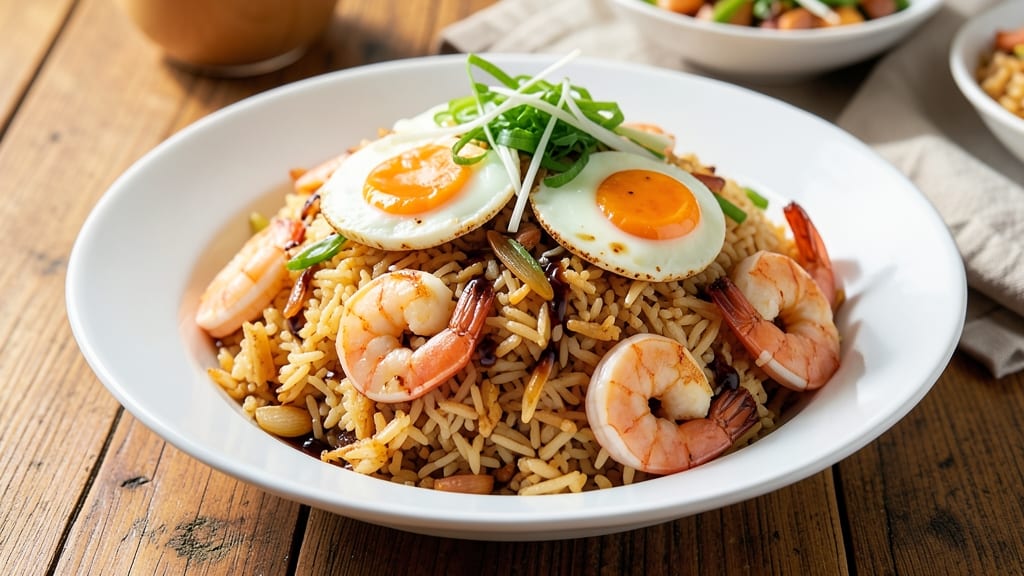
The chao fan fried rice recipe delivers wok-heated perfection with its signature crispy edges and tender, eggy texture. This classic Chinese dish transforms day-old rice into a flavorful, aromatic meal using simple yet precise techniques.
The key lies in high heat and quick stir-frying to achieve that coveted "wok hei" or breath of the wok, which infuses the dish with smoky depth.
With the right balance of protein, vegetables, and seasonings, every bite offers a harmonious blend of textures and flavors. The eggs provide richness, while soy sauce, garlic, and scallions add layers of umami and freshness.
Whether you prefer a classic version with shrimp or a vegetarian twist, this recipe delivers restaurant-quality results at home.
Ingredients for chao fan fried rice
Transform ordinary rice into wok-heated perfection with these carefully balanced ingredients.
| Ingredient | Amount | Notes |
|---|---|---|
| Day-Old Jasmine Rice 🍚 | 4 cups | Cold, broken into pieces |
| Large Eggs 🥚 | 3 whole | Freshly beaten, room temperature |
| Large Shrimp 🦐 | ½ lb | Peeled, deveined, tail off |
| Green Onions 🧅 | ½ cup | White and green parts, sliced |
| Garlic Cloves 🧄 | 6 cloves | Minced finely, aromatic |
| Light Soy Sauce 🥄 | 3 tbsp | Kikkoman preferred |
| Dark Soy Sauce 🥄 | 1 tbsp | For color depth |
| Sesame Oil 🫒 | 1 tsp | Toasted, aromatic |
| Vegetable Oil 🫒 | ½ cup | High smoke point |
| Salt 🧂 | ½ tsp | Diamond Crystal kosher |
| Black Pepper 🌶️ | ¼ tsp | Freshly ground |
| White Pepper 🌶️ | ¼ tsp | For subtle heat |
| Oyster Sauce 🥄 | 1 tbsp | High-quality, umami-rich |
| Shaoxing Wine 🍷 | 1 tbsp | Substitute dry sherry |
The rice must be day-old and cold—fresh rice turns mushy under high heat. Jasmine rice is ideal for its fragrant aroma, but any long-grain rice works. Break it into small pieces before cooking for even crispy edges. For the eggs, room temperature ensures silky scrambling. Shrimp should be peeled and deveined—tail-on looks pretty but burns easily. Garlic and green onions are non-negotiable; their freshness elevates the dish. Kikkoman soy sauce delivers the authentic umami profile, though any good light soy works in a pinch.
No shrimp? Chicken breast or tofu substitutes beautifully—cut into small, even pieces. Running out of Shaoxing wine? Dry sherry or mirin works equally well. The oyster sauce adds depth; if unavailable, mushroom sauce or extra soy sauce bridges the gap. For a vegetarian version, swap shrimp for extra firm tofu pressed and pan-fried. Sesame oil should be toasted—lightly heat it in a small pan before adding to preserve its aroma. The dark soy sauce isn't just for color; it contributes a malty richness that balances the dish.
Store cooked fried rice in an airtight container for up to 3 days in the fridge. Reheat gently in a skillet with a splash of water to restore crispiness. For best results, make a double batch—it reheats even better the second time. Freeze portions in single-serving containers for up to 3 months. To revive from frozen, thaw overnight in the fridge and reheat with a splash of water. The high heat technique means this dish tastes freshest immediately after cooking, but proper storage preserves its integrity.
Why You'll Love This Recipe
- Fridge Rescue Hero: I swear by day-old rice—it’s the secret to that perfect texture. No soggy mess, just golden grains that hold up to every crispy shrimp and egg. (Between us, this is the only time I want leftovers.)
- Garlic-Shrimp Magic: That first sear of shrimp in garlic and oil? Unreal. The shrimp stays juicy while the garlic mellows into something rich, and the eggs? Silky-yolk perfection. Honestly, I’ve made fried rice before, but this combo changes the game.
- Lunchbox Champion: Pack this for work—it reheats like a dream. Cold or warm, it’s still solid. My kids even beg for it in their lunches (yes, even on a Tuesday night), and it’s way cheaper than takeout.
- One-Pan, Zero Guilt: One wok, one spatula, and you’re done. No fancy gadgets, no stress. Plus, shrimp and eggs stretch a budget further than you’d think. I’ll be real: it’s my go-to when I’m broke but still want to eat well.
Step-by-step instructions for chao fan fried rice
Master the wok hei technique for restaurant-quality fried rice with perfectly crispy edges and tender shrimp.
Prepare the Base Ingredients
Break the 4 cups day-old jasmine rice into small, uneven pieces using your hands. This texture creates maximum surface area for crispy edges later. Spread the rice on a clean kitchen towel and let it sit for 10 minutes—this removes excess moisture while keeping it slightly tacky for better seasoning.
While the rice dries, beat the 3 whole large eggs in a bowl until just combined. Add 0.5 teaspoon salt, 0.25 teaspoon black pepper, and 0.25 teaspoon white pepper, mixing gently to distribute evenly. The eggs should be fully incorporated but still slightly lumpy—overmixing develops gluten, which makes the fried rice tough.
Cook the Shrimp and Aromatics
Heat 0.25 cup vegetable oil in a wok or large skillet over medium-high heat until shimmering. Add the 0.5 lb peeled shrimp and cook for 1-2 minutes per side until just opaque and slightly curled. Remove shrimp and set aside, reserving 1 tablespoon of the rendered oil in the wok.
In the same wok, add the remaining 0.25 cup vegetable oil and swirl to coat. Add the 6 minced garlic cloves and 0.5 cup sliced green onions, stirring constantly for 30 seconds until fragrant. The garlic should turn golden without burning—this releases its full flavor. Immediately add 1 tablespoon Shaoxing wine and 1 tablespoon oyster sauce, stirring for 20 seconds to deglaze the pan.
Scramble the Eggs for Crispy Edges
Return the wok to medium-high heat and add the beaten eggs. Let them sit undisturbed for 5 seconds until the edges begin to set, then push them into a rough scramble with a spatula, creating large, uneven curds. Cook for 30-45 seconds until just set but still slightly moist—this ensures the eggs remain tender while developing crispy edges.
Add 1 tablespoon dark soy sauce and 3 tablespoons light soy sauce to the eggs, stirring vigorously for 15 seconds to distribute evenly. The dark soy sauce adds color depth, while the light soy sauce provides the salty umami foundation. Remove the egg mixture from the wok and set aside temporarily.
Fry the Rice to Perfection
Add the prepared rice to the wok in a single layer, spreading it evenly. Stir-fry over high heat for 1-2 minutes, using a spatula to break up any clumps while keeping the rice moving constantly. The goal is to create a thin, even layer that develops crispy edges while remaining tender inside.
Return the shrimp and egg mixture to the wok, tossing everything together for 1-2 minutes until the rice is uniformly heated through. The rice should be hot throughout, with crispy edges that contrast the tender interior. Drizzle with 1 teaspoon sesame oil and toss one final time to coat evenly.
Finish and Serve Immediately
Taste the fried rice and adjust seasoning if needed—add a splash of water or more light soy sauce if too dry, or a pinch of salt if too bland. Transfer to serving plates immediately, garnishing with extra green onions for freshness and color contrast.
Serve while piping hot, with crispy edges that give way to tender rice and perfectly cooked shrimp. The wok hei technique ensures each bite delivers smoky aroma and complex flavors, balancing umami from the oyster sauce, saltiness from the soy sauces, and subtle heat from the white pepper.
Pro Tips For Making Chao Fan Fried Rice
- STIR-FRY DRY RICE: Break up the day-old rice into individual grains with a fork first—no clumps means even cooking. If it’s stubborn, microwave it for 20 seconds with a splash of water to loosen it up. I learned this the hard way after serving a plate where half the rice was still stuck together.
- SALT THE SHRIMP: Toss your shrimp in 1 teaspoon of salt and a pinch of sugar right after peeling—wait 10 minutes before cooking. This keeps them juicy and prevents that rubbery texture when stir-frying. (Yes, even if you’re impatient like me.)
- SCRAMBLE FAST, LOW: Push the eggs to one side of the wok after they start setting, then tilt to let raw egg flow underneath. Keep the heat low here—high heat makes them rubbery. I used to rush this and wondered why my fried rice tasted like overcooked omelet.
- GARLIC FIRST, GREEN ONIONS LAST: Sauté minced garlic in oil until it’s just golden—about 30 seconds—then add shrimp. Toss in green onions only at the very end, so they stay bright and crisp. I was skeptical until I tried it; now I can’t go back.
Wine and beer pairings for these flavors
Light Beer Pairings
A crisp pilsner or lager cuts through the richness of fried rice beautifully. I recommend a Chinese lager like Tsingtao or Snow—their clean, slightly sweet profiles balance the soy and garlic notes without overpowering. The effervescence also cleanses your palate between bites, making each mouthful fresh. 🍺
Dry Riesling
For a white wine option, a dry Riesling from Germany or Austria works wonders. The wine’s acidity and subtle mineral notes complement the umami depth of the oyster sauce and shrimp, while its slight sweetness echoes the caramelized edges of the fried rice.
Look for a Mosel Riesling with 11-12% ABV—it’s light enough to avoid heaviness but complex enough to stand up to the dish.
Sake for Authenticity
If you want to stay true to Chinese culinary traditions, serve your fried rice with a dry junmai sake like Dassai or Gekkeikan. The rice-like fermentation notes create a harmonious connection with the dish, while its crisp finish mirrors the texture of the fried rice itself.
Chill it slightly before serving to enhance its refreshing quality.
Spiced Beer Options
For a bolder pairing, try a lightly spiced beer like Chinese hop beer or a German wheat beer (weissbier) with a touch of coriander. The subtle spice notes in these beers enhance the garlic and black pepper in the fried rice, while the beer’s effervescence keeps the palate lively.
A Blue Moon or Hoegaarden works well if you’re outside Asia.
Final Sip Suggestion
No matter which you choose, sip slowly and let the beverage’s acidity or effervescence refresh your palate between bites. The key is to avoid heavy, oaky wines or overly sweet drinks—they’ll clash with the dish’s savory, umami-driven profile.
A well-paired drink elevates fried rice from a simple meal to a memorable dining experience. ✨
Nutrition facts
Frequently asked questions
Why does the recipe call for day-old rice?
Day-old rice is essential because its slightly dried texture creates crispy edges when stir-fried. Fresh rice contains too much moisture and turns mushy under high heat. Spread leftover jasmine rice on a towel for 10 minutes before using to remove excess moisture while keeping it tacky for better seasoning.
Can I substitute shrimp with another protein?
For a vegetarian version, use extra firm tofu (pressed and pan-fried) or mushrooms (shiitake or oyster work best). Chicken breast or pork shoulder also work well—cut into small, even pieces for even cooking. The key is to cook the protein separately and add it back at the end for maximum flavor.
What's the secret to getting crispy edges?
The crispy edges come from high heat and proper rice preparation. Use a wok or large skillet over high heat and break the rice into uneven pieces before cooking. Stir-fry in a thin layer for 1-2 minutes without overcrowding. The dark soy sauce also enhances browning while adding depth of flavor.
How do I fix fried rice that's too dry or too wet?
If your fried rice is too dry, add 1-2 teaspoons of water and toss gently. For wet rice, increase heat and stir-fry for 30-60 seconds longer to evaporate excess moisture. The ideal texture should be tender inside with crispy edges—adjust heat and cooking time based on your stove's power.
What's the best way to reheat leftover fried rice?
Reheat in a skillet over medium heat with a splash of water to restore crispiness. Stir constantly for 2-3 minutes until hot throughout. For microwave reheating, cover with a damp paper towel and heat in 30-second intervals, stirring between each. Avoid reheating multiple times to maintain texture.