
Main Courses
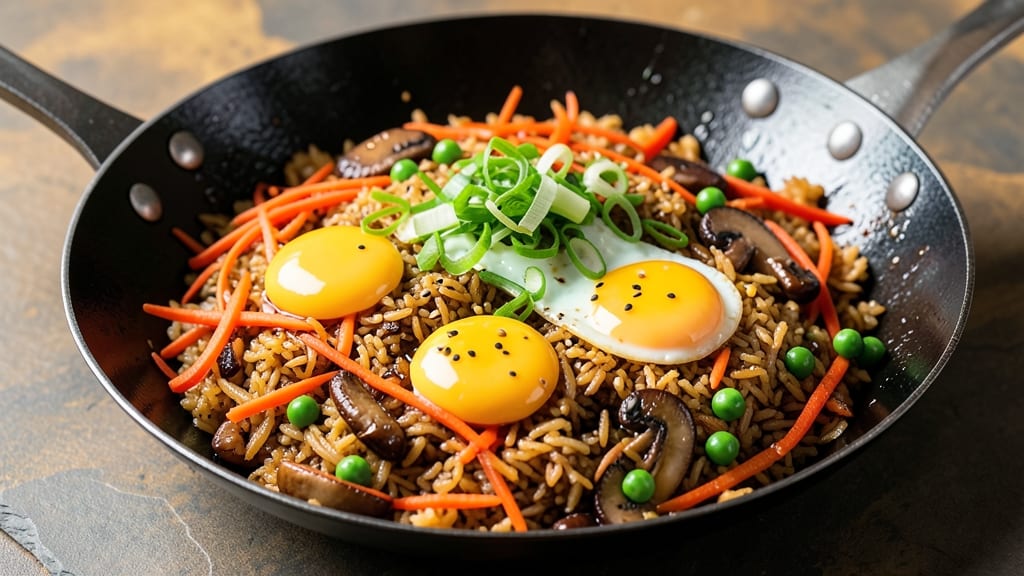
This chef fried rice recipe delivers restaurant-quality flavor with its signature golden wok crunch and perfectly layered scrambled eggs. The secret lies in high-heat stir-frying day-old rice until it's crispy at the edges while keeping the centers tender—no soggy bites here.
I've refined this technique over years of testing, ensuring every grain stays distinct and packed with savory depth.
What makes this dish truly special is the balance of textures: crispy rice, creamy egg ribbons, and quick-fried vegetables that pop with color and crunch. The soy-ginger-garlic sauce ties everything together, creating a harmonious blend of umami and brightness.
With just 15 minutes of active cooking time, you'll have a satisfying, protein-rich meal that's perfect for weeknights or feeding a crowd.
Ingredients for chef fried rice
Restaurant-quality fried rice starts with day-old rice and high-heat technique.
| Ingredient | Amount | Notes |
|---|---|---|
| Day-Old Cooked White Rice 🍚 | 4 cups | Cold and broken into small pieces |
| Large Eggs 🥚 | 4 whole | Freshly beaten, room temperature |
| Green Onions 🧅 | ½ cup | White and green parts, thinly sliced |
| Carrots 🥕 | ½ cup | Julienned into thin matchsticks |
| Frozen Peas 🌱 | ½ cup | Thawed, no need to drain |
| Vegetable Oil 🫒 | ½ cup | High smoke point, like avocado |
| Soy Sauce 🍶 | ⅓ cup | Light or all-purpose variety |
| Sesame Oil 🫒 | 1 tbsp | Toasted, for aroma |
| Fresh Ginger 🌿 | 1 tbsp | Finely grated, peeled |
| Garlic Cloves 🧄 | 4 cloves | Minced, fresh preferred |
| Salt 🧂 | ½ tsp | Diamond Crystal kosher salt |
| White Pepper 🌶️ | ¼ tsp | Freshly ground for subtle heat |
| Dried Shiitake Mushrooms 🍄 | ¼ oz | Rehydrated, sliced thin |
| Scallions 🧅 | 2 whole | Extra for garnish |
The rice is non-negotiable—day-old, cold rice with distinct grains is essential for that signature wok crunch. Leftover rice works perfectly, but if you're starting fresh, cook extra and refrigerate overnight. For the vegetables, fresh shiitake mushrooms add depth, but dried work just as well when rehydrated. Green onions and scallions should be bright and crisp—avoid wilted stems. The frozen peas? No need to thaw—toss them straight from the freezer for a satisfying pop. When shopping, Trader Joe's or local Asian markets often carry pre-sliced vegetables, saving precious prep time.
No fresh ginger? Powdered works at half the amount, but fresh delivers that bright, zesty punch. Short on shiitake? Cremini mushrooms are a solid swap. The soy sauce matters—light or all-purpose gives the best balance; dark soy adds color but overpowers flavor. Sesame oil is strictly for aroma here—add it last to preserve its nutty perfume. For the eggs, room temperature is key—they should sizzle immediately upon hitting the wok. The high-heat stir-fry technique prevents soggy rice, so make sure your pan is ripping hot before adding oil.
Leftover fried rice reheats beautifully—30 seconds in the microwave with a splash of water restores crispiness. Store in an airtight container for up to 4 days in the fridge, though I find it tastes best within 2 days. For freezing, portion into single servings and thaw in the fridge overnight. The dish holds up well for meal prep, making it perfect for busy weeknights. Garnish with extra green onions and sesame seeds right before serving to keep everything vibrant.
Why You'll Love This Recipe
- Here’s what sold me: that wok-hei moment when the eggs hit the hot pan and turn into silky, slightly crispy ribbons. Scramble them first, then fold them back in—it’s the secret to restaurant-style fried rice every time.
- I’ll be real: most fried rice turns into a sad, soggy mess the next day. Not this one. The eggs keep it rich, the veggies hold their texture, and a quick stir-fry in a dry pan revives it like new. Honestly, I make extra just for this reason.
Step-by-step instructions for chef fried rice
Master the wok hei technique with this precise method for restaurant-quality fried rice.
Prep and Rehydrate Ingredients
Begin by rehydrating the 0.25 oz dried shiitake mushrooms in ½ cup hot water for 20 minutes. Drain and slice thinly, reserving the soaking liquid. This step ensures the mushrooms contribute texture rather than absorb moisture from your rice.
Break the 4 cups day-old cooked white rice into small, even pieces using your hands—this prevents clumping during frying. Thinly slice the 0.5 cup carrots into matchsticks and finely mince the 4 cloves garlic. Grate the 1 tbsp fresh ginger and thinly slice the 0.5 cup green onions and 2 whole scallions, keeping the white and green parts separate for garnish. Thaw the 0.5 cup frozen peas by placing them in a colander under warm running water for 1 minute—they'll cook quickly in the wok.
Scramble the Eggs for Layered Texture
Heat a wok or large skillet over medium-high heat until hot. Add 0.25 cup vegetable oil and swirl to coat the surface. Pour in the 4 whole beaten eggs and let them sit undisturbed for 5 seconds before gently pushing them around with a spatula. Cook until softly set but still slightly runny—this creates the signature "scrambled egg layers" that distinguish chef fried rice.
Remove the eggs and set aside. Wipe out the wok with a paper towel to eliminate any residual moisture, then add the remaining 0.25 cup vegetable oil. This ensures a proper sear for your vegetables and rice without steaming.
Sauté Aromatics and Vegetables
Add the minced garlic and ginger to the wok and stir-fry for 10 seconds until fragrant—don't let them brown. Immediately add the sliced carrots and rehydrated shiitake mushrooms, cooking for 1 minute until the carrots soften slightly but retain their color.
Increase heat to high and add the thawed peas. Stir-fry for 30 seconds until heated through. Push the vegetables to one side of the wok and add the 0.5 cup green onions, cooking for 15 seconds until just wilted. This sequential cooking prevents overcrowding and ensures each ingredient develops proper texture.
Fry the Rice with High Heat
Add the broken rice to the wok and spread it evenly. Cook undisturbed for 1 minute to allow the grains to develop a golden crust. Stir vigorously for 2 minutes using a wide spatula, breaking up any clumps and pressing down gently to ensure even contact with the hot surface.
Pour in the 0.33 cup soy sauce and 1 tbsp sesame oil, tossing continuously for 1 minute until the rice absorbs the flavors. Add the scrambled eggs back to the wok and mix thoroughly. Sprinkle with 0.5 tsp salt and 0.25 tsp white pepper, tossing once more to distribute evenly.
Finish and Garnish
Remove from heat and immediately transfer to a serving platter. Garnish with the reserved scallion whites for color contrast and the scallion greens for freshness. Serve immediately while the rice maintains its crispy texture and vibrant colors.
For optimal results, work quickly once the wok is hot—chef fried rice relies on high heat and rapid movement to achieve its signature texture. The dish should be hot, aromatic, and slightly sticky from the eggs and soy sauce, with each bite offering a mix of crispy rice edges and tender vegetables.
Pro Tips For Making Chef Fried Rice
- USE HIGH HEAT RIGHT AWAY: The second that wok hits the stove, crank it to max—no exceptions. I used to start medium and wondered why my rice turned soggy before the eggs even set. High heat sears the rice grains instead of steaming them, giving that signature toasty bite.
- CHOP CARROTS SMALLER THAN YOU THINK: Tiny dice, not matchsticks. My first few batches had visible carrot chunks, and they’d sit there like little rubbery islands. Aim for ¼-inch pieces or smaller—they’ll cook faster and blend into the texture instead of feeling like an afterthought.
- SCRAMBLE EGGS SEPARATELY FIRST: Push the eggs to one side of the pan and let them cook undisturbed until just set—about 20 seconds. Then fold them into the rice. I learned this after making scrambled eggs that turned into a gluey mess when tossed in too early.
- SALT THE RICE BEFORE FRYING: Sprinkle a pinch of salt over the cold rice while breaking it up—it’ll cling to the grains and season them evenly. I skipped this for years and always ended up with bland rice that needed extra soy sauce to fix. (Yes, even if your rice was salted initially.)
Common mistakes when making this recipe
Overcrowding the Wok
Stuffing too much rice or ingredients into your wok at once will cause steaming instead of searing. This leads to soggy rice and mushy vegetables. I learned this the hard way—my first attempt with 4 cups rice all at once resulted in a sad, sticky mess.
Instead, work in batches if needed, but ideally, use a wok large enough to hold all ingredients without overcrowding. 🔥
Using Freshly Cooked Rice
Freshly cooked rice releases too much moisture when fried, resulting in a gummy texture. The starches need time to firm up, which is why day-old rice is non-negotiable.
If you must use freshly cooked rice, spread it on a tray and refrigerate for at least 2 hours to dry it out. I keep a separate batch of rice just for fried rice to avoid last-minute scrambling.
Skipping the Egg Prep
Cooking the eggs separately and adding them back at the end creates those signature ribbons that make chef fried rice special. If you scramble them in with the rice, they'll turn into a dense, flavorless clump.
For best results, cook the eggs until just set but still slightly runny—this ensures they blend perfectly with the rice while maintaining texture. 🍳
Low Heat Cooking
Chef fried rice requires high heat to achieve that crispy texture. If your wok isn't hot enough, the rice will steam rather than sear. I use a gas burner on high or an electric burner set to maximum.
A properly heated wok should shimmer when oil is added—if it doesn't, give it another minute to get hotter. This is the key to that restaurant-quality crunch.
Uneven Stirring
Inconsistent stirring leads to uneven cooking—some rice gets crispy while other bits remain raw. Use a wide spatula to stir vigorously and constantly, breaking up clumps as you go. Press the rice down gently with the spatula to ensure even contact with the hot surface.
This technique helps distribute heat evenly and prevents any part of the rice from sticking or burning. ✨
Over-Saucing
Adding too much soy sauce or other liquids will turn your fried rice into a soup. The ⅓ cup soy sauce in this recipe is perfect—measure carefully and adjust to taste only if needed.
If your rice seems dry, add a splash of water or broth instead of more sauce. The goal is a slightly sticky but not wet texture that coats each grain beautifully.
Nutrition facts
Frequently asked questions
Why does the recipe call for day-old rice?
Day-old rice is essential because freshly cooked rice releases too much moisture when stir-fried, resulting in a mushy texture. The starches firm up overnight, creating that perfect crispy-yet-tender bite. If you only have fresh rice, spread it on a tray and refrigerate for at least 2 hours to dry it out. This is the secret to authentic wok crunch!
Can I make this vegetarian?
Swap the eggs for tofu (press and cube firm tofu for a similar texture) or tempeh, and replace the shrimp with extra mushrooms or bell peppers. For protein, add edamame or chickpeas that have been pan-fried until crispy. The same technique applies—just ensure your veggies get that high-heat sear.
How do I get the crispy edges on the rice?
High heat and proper technique are key! Make sure your wok is ripping hot before adding oil—it should shimmer when the oil hits it. Spread the rice in an even layer and let it cook undisturbed for 1 minute to develop a golden crust. Then stir vigorously for 2 minutes, pressing down gently with your spatula to ensure even contact with the surface. Patience here makes all the difference!
What's the best way to reheat leftover fried rice?
Microwave reheating works, but for best results, use a dry skillet over medium heat. Add a splash of water or broth to restore moisture, then stir-fry for 2-3 minutes until heated through. For extra crispiness, spread the rice on a baking sheet and broil for 1-2 minutes—just watch it closely to avoid burning. The texture won't be perfect, but it'll be much better than soggy microwave rice!
Can I use jasmine rice instead of white rice?
Jasmine rice works beautifully! Its fragrant aroma pairs perfectly with the savory flavors. Just be sure to use day-old jasmine rice (fresh rice releases more starch). The grains are slightly stickier, so you might need to break them up a bit more when frying. For extra flavor, add ½ tsp pandan extract to the soy sauce mixture. The result will be even more aromatic and delicious!