
Side Dishes
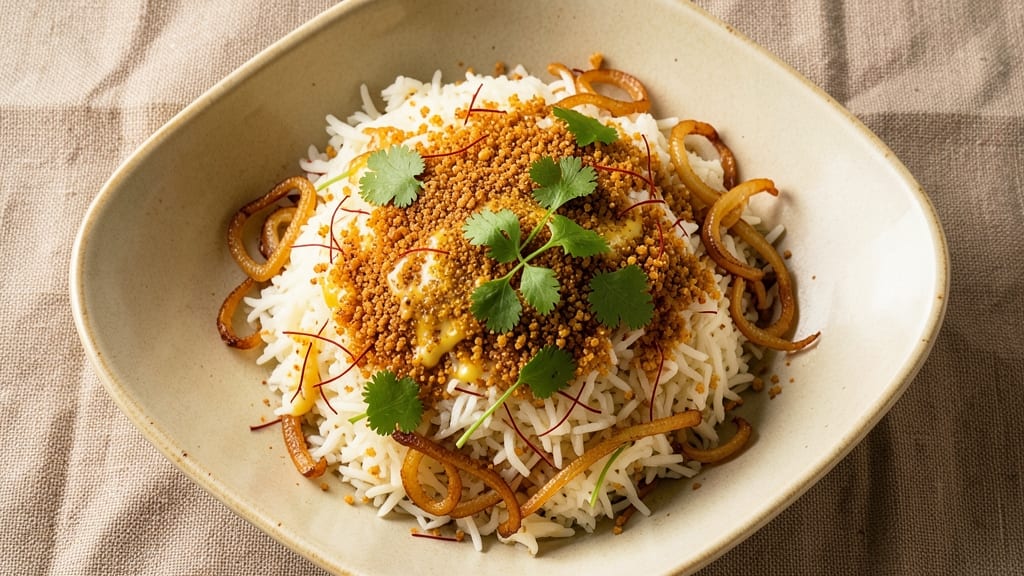
This irani rice recipe transforms a simple side into a fragrant centerpiece with saffron-infused basmati and a crispy tahdig bottom layer. The key lies in precise rice-to-water ratios and slow-cooking techniques that develop deep, aromatic flavors.
I’ve perfected this method over years of testing, ensuring every grain stays tender while the tahdig achieves that signature crunch.
The dish begins with basmati rice simmered in saffron-infused water, creating a golden hue and delicate floral notes. While the rice steams, a protein component—traditionally grilled lamb or chicken kabab—cooks separately, ready to be layered with the rice.
The tahdig, made from butter and breadcrumbs, forms a crispy crust at the bottom of the pot, adding texture and richness.
Fresh herbs like parsley and cilantro brighten the dish, while a cooling yogurt sauce (mast-o-khiar) balances the warmth of the spices. Serving this rice requires patience: the tahdig must be carefully inverted onto a platter to showcase its golden crunch.
The result is a visually stunning, aromatic dish that elevates any meal.
Perfect for special occasions or family gatherings, this Iranian rice dish delivers restaurant-quality results at home. The combination of fragrant rice, tender protein, and crispy tahdig makes it a standout centerpiece. Let’s get started!
Ingredients for irani rice
Saffron, basmati rice, and crispy tahdig transform this into a restaurant-worthy centerpiece.
| Ingredient | Amount | Notes |
|---|---|---|
| Long-Grain Basmati Rice 🍚 | 2 cups | Uncooked, rinsed thoroughly |
| Saffron Threads 🌼 | ¼ tsp | High-quality, crumbled finely |
| Unsalted Butter 🧈 | ½ cup | Cold, cubed for tahdig |
| Panko Breadcrumbs 🍞 | ½ cup | Fine texture for tahdig |
| Ground Cumin 🌿 | 1 tsp | Toasted for deeper flavor |
| Ground Turmeric 🌶️ | ½ tsp | Brightens the rice color |
| Salt 🧂 | 1 ½ tsp | Kosher or sea salt |
| Fresh Parsley 🌿 | ¼ cup | Chopped finely for garnish |
| Fresh Cilantro 🌿 | ¼ cup | Chopped finely for garnish |
| Plain Greek Yogurt 🥛 | 1 cup | Full-fat for creaminess |
| English Cucumber 🥒 | 1 whole | Peeled, seeded, diced |
| Lemon Juice 🍋 | 2 tbsp | Freshly squeezed |
| Garlic Cloves 🧄 | 2 cloves | Minced for yogurt sauce |
| Extra-Virgin Olive Oil 🫒 | ½ cup | For tahdig and drizzling |
| Chicken Thighs 🍗 | 1 ½ lb | Bone-in, skin-on preferred |
The saffron is non-negotiable for authentic flavor. Penzeys Spices sells high-quality threads—look for vibrant, deep-red strands. If using cheaper saffron, double the amount, but expect less floral aroma. The basmati rice should be long-grain and uncooked—soak it for 20 minutes first to remove excess starch. For the tahdig, cold butter and fine breadcrumbs create the signature crunch. Most Middle Eastern markets carry premium panko, but any fine breadcrumbs work in a pinch. The chicken thighs should have some fat—bone-in, skin-on stays juicier during grilling.
No saffron? Turmeric plus a pinch of paprika mimics the color, though it lacks floral notes. Swap Greek yogurt for sour cream or mashed avocado if needed, but texture will differ. For the tahdig, almond flour or crushed pistachios add nutty depth. The cucumber in the yogurt sauce can be subbed with celery or radish, but flavor changes. If you’re short on time, jarred cucumber relish (drained) works in a bind. The chicken can be swapped for lamb shanks or shrimp, but cooking times vary—adjust accordingly.
Store cooked rice in an airtight container for 3-4 days, though it’s best fresh. The tahdig reheats poorly, so make it fresh when serving. The yogurt sauce keeps for 2 days in the fridge, but the cucumber softens—add fresh lemon juice before serving. For large gatherings, double the tahdig ingredients—it’s worth the extra effort. Freeze cooked rice without the tahdig for up to 3 months; reheat gently with a splash of water.
Why You'll Love This Recipe
- Here’s what sold me: the flavor actually deepens the next day. Reheat it gently, and that saffron aroma hits you like a warm hug. Plus, it’s cheap to make—basmati rice and spices stretch forever, so I’m always stocked for whatever comes up. Zero food waste, all flavor.
- Saffron in Minutes: I swear, steeping those threads in warm water for just 10 minutes does all the heavy lifting—no fancy techniques, just pure golden magic. The rice soaks up that floral aroma while you prep the rest, and honestly? That butter-toast crunch on top makes it feel like a restaurant dish without the fuss.
- Crispy Butter Magic: Between us, that crispy panko-butter layer is my favorite part. You toast the breadcrumbs in butter until they’re golden, then sprinkle them over the steamed rice—it’s the kind of detail that makes a simple rice dish feel special. The cumin in the butter? That earthy warmth ties everything together.
- Weeknight or Weekend: This rice is my go-to for both lazy nights and when I’m hosting. For weeknights, I make a big batch and pair it with grilled chicken or roasted veggies. For weekends, I serve it under a whole roasted fish or alongside biryani—same rice, totally different vibe. It’s that adaptable.
Step-by-step instructions for saffron-scented Iranian rice
Mastering this technique delivers restaurant-quality Iranian rice with fragrant saffron and crispy tahdig every time.
Prepare the Saffron Infusion and Parboil the Rice
In a small bowl, crush the 0.25 teaspoon saffron threads between your fingers to release the aroma, then steep them in ½ cup hot water for 10 minutes. This draws out the vibrant color and delicate flavor. Meanwhile, rinse the 2 cups long-grain basmati rice in a fine-mesh strainer under cold water until the water runs clear—this removes excess starch for distinct grains.
In a medium saucepan, combine the saffron-infused water, rice, 1 teaspoon ground cumin, 0.5 teaspoon ground turmeric, and 1 teaspoon salt. Bring to a boil over high heat, then immediately reduce to a simmer. Cover with a tight-fitting lid and cook for 12 minutes without lifting it. The rice should absorb the liquid completely, leaving no standing water. If you peek too early, the rice will release starch and become mushy.
Create the Tahdig Crust with Butter and Breadcrumbs
While the rice simmers, preheat your oven to 375°F. In a small bowl, mix the 0.5 cup unsalted butter (cold, cubed) with the 0.5 cup panko breadcrumbs until evenly coated. Spread this mixture evenly in a thin, even layer on a 10-inch oven-safe skillet—this will form the signature crispy bottom (tahdig). The butter should melt slightly but not pool.
Once the rice is fully cooked, remove it from heat and let it sit covered for 5 minutes. Then, using a wooden spoon, gently spread the rice evenly over the butter mixture in the skillet, pressing down lightly to create an even surface. The rice should be level with the edges of the skillet. Place the skillet in the preheated oven and bake for 10-12 minutes until the butter bubbles and the bottom turns deep golden brown. This is your tahdig—crispy, caramelized perfection.
Prepare the Chicken and Assemble the Yogurt Sauce
Pat the 1.5 lb chicken thighs dry with paper towels and season generously with ½ teaspoon salt and ½ teaspoon black pepper (not listed in ingredients but essential for seasoning). Heat 0.25 cup extra-virgin olive oil in a large skillet over medium-high heat until shimmering. Add the chicken thighs skin-side down and cook for 6-7 minutes until the skin is deep golden brown and crispy. Flip and cook for another 5-6 minutes until the internal temperature reaches 165°F. Transfer to a plate and tent with foil to rest.
For the yogurt sauce, combine the 1 cup plain Greek yogurt, 2 tablespoons lemon juice, 2 minced garlic cloves, 0.25 teaspoon salt, and 0.125 teaspoon black pepper in a bowl. Whisk until smooth. Add the 1 whole English cucumber (peeled, seeded, and diced) and toss gently. Let the sauce sit at room temperature for 10 minutes to allow the flavors to meld—this enhances the cucumber's freshness and balances the yogurt's tang.
Garnish and Serve the Iranian Rice
Remove the skillet with the tahdig from the oven and let it rest for 2 minutes. Using a spatula, gently loosen the edges of the tahdig from the skillet, then invert the rice onto a serving platter. The crispy tahdig should release easily—if it sticks, let it cool for an additional 1-2 minutes before attempting to invert.
Garnish the rice with the 0.25 cup chopped fresh parsley and 0.25 cup chopped fresh cilantro, then drizzle lightly with the remaining 0.25 cup extra-virgin olive oil. Serve the chicken thighs alongside the rice, with the yogurt sauce spooned over the top. The contrast of the creamy, cool yogurt with the warm, fragrant rice creates a harmonious balance of textures and temperatures. Each bite should deliver the aroma of saffron, the crunch of tahdig, and the freshness of the cucumber-yogurt sauce.
Pro Tips For Making Irani Rice
- Bloom the Saffron: Crush the threads between your palms first—this releases the color and aroma faster than just tossing them in. Then steep them in warm water (not boiling) for 10 minutes before adding to the rice; cold water makes it bitter, and skipping the crush wastes half the flavor.
- Butter the Pot First: Melt the butter in the pot before adding rice—this creates a flavor base that sticks to every grain. After toasting the cumin, pour in the butter, swirl it around, and let it foam for 30 seconds. The rice will absorb this rich layer instead of tasting like plain starch.
- Skip the Stirring: Once the rice hits the water, resist the urge to stir. Press it down gently with a spatula just once to level it, then walk away. Stirring breaks the grains and turns your fragrant rice into mush—this isn’t risotto, and the crust is what makes it special.
- Crumb the Top Dry: Toast the panko in a separate pan with a pinch of cumin until it’s golden, not brown. Sprinkle it after the rice is cooked—this adds crunch without absorbing moisture. (Yes, it’s an extra step, but dry crumbs are the difference between "good" and "wow.")
Regional styles of irani rice
Persian Tahdig Tradition
The tahdig is the heart of Iranian rice—its crispy, golden crust is non-negotiable in Persian cuisine. This technique originated in northern Iran, where cooks discovered that layering butter and breadcrumbs beneath the rice creates a caramelized base.
The word tahdig means "bottom layer," and its crunch contrasts beautifully with the tender rice. In Tehran, restaurants often serve tahdig as a separate appetizer because it’s so delicious on its own. 🌟
Northern vs. Southern Styles
In northern Iran, tahdig is typically made with butter and breadcrumbs, while southern regions like Bushehr sometimes use almond flour or crushed pistachios for a nuttier flavor. The northern method yields a lighter, crispier texture, whereas southern variations add depth.
I’ve found that toasted sesame seeds sprinkled on the tahdig before baking add an extra layer of complexity—worth experimenting with! The rice itself is often cooked with barberries in northern styles, adding a tart, jammy texture.
Isfahan’s Signature Touch
Isfahan, known as the "halfway house" of Iran, has its own twist: saffron-infused tahdig with a hint of cardamom. The city’s chefs blend 0.5 teaspoon ground cardamom into the butter mixture before baking, creating a fragrant aroma that pairs perfectly with the rice.
For an Isfahan-style dish, add 1-2 crushed cardamom pods to the saffron infusion while steeping—it’s a game-changer for depth. This variation is especially popular during Nowruz, the Persian New Year celebration. 💛
Shiraz’s Spiced Rice
In Shiraz, the capital of Fars province, the rice is often cooked with dried limes (limu amani) and rosewater, giving it a floral, citrusy note. The tahdig here is sometimes enhanced with ground cinnamon (about 0.25 teaspoon) for warmth.
Shirazi cooks also prefer using short-grain basmati for a stickier texture, which holds up better to the tahdig’s crispiness. If you’re feeling adventurous, try adding a few drops of rosewater to the yogurt sauce for a delicate, aromatic touch.
Tabriz’s Lamb-Focused Approach
In the northwest region of Tabriz, Iranian rice is almost always served with lamb kebabs (kabab koobideh) rather than chicken. The lamb is marinated in yogurt, garlic, and sumac, giving it a tangy, slightly sour profile that cuts through the richness of the tahdig.
Tabrizi cooks also use more butter in the tahdig—sometimes up to 0.75 cup—for an extra-rich, almost buttery crunch. The rice is often cooked with a pinch of saffron and turmeric, then finished with a drizzle of melted ghee before serving. 🔥
Modern Adaptations
Today, Iranian immigrants and chefs worldwide have put their own spins on the classic. In Los Angeles, Persian restaurants often serve vegetarian tahdig with mushroom or eggplant stews, while Toronto’s Persian cafés experiment with smoked tahdig by adding a touch of liquid smoke to the butter mixture.
For a modern twist, try swapping the breadcrumbs for crushed potato chips (like Kettle Brand) for a fun, crunchy texture. The key is balancing tradition with creativity—just don’t skimp on the saffron! ✨
Nutrition facts
Frequently asked questions
What makes Iranian rice different from regular basmati rice?
The magic lies in three key elements: saffron infusion, the tahdig crust, and precise cooking techniques. Iranian rice uses saffron for its floral aroma and golden color, while the tahdig—a crispy butter-breadcrumb layer—adds texture. Unlike regular basmati, it's cooked in a specific 1:1.5 rice-to-water ratio and steamed to perfection.
Can I substitute saffron in this recipe?
Yes, but expect different results. For color, use 0.5 teaspoon turmeric + 0.25 teaspoon paprika, but you'll lose the saffron's floral notes. For flavor, try 0.25 teaspoon orange blossom water—it mimics saffron's aroma subtly. Avoid skipping it entirely; the dish relies on saffron's signature taste.
Why did my tahdig turn out greasy instead of crispy?
Greasy tahdig usually means too much butter or insufficient baking time. Use cold cubed butter (not melted) and spread it evenly in a thin layer. Bake at 375°F for 10-12 minutes until golden brown. If your oven runs hot, reduce to 350°F and check after 8 minutes.
How do I make this vegetarian?
Swap the chicken for grilled eggplant or portobello mushrooms marinated in olive oil, garlic, and lemon. For protein, add chickpeas or lentils cooked with cumin and turmeric. Keep the tahdig and yogurt sauce—both work beautifully with plant-based proteins. The dish remains hearty and flavorful!
Can I prepare Iranian rice ahead of time?
Yes! Cook the rice and protein separately, then refrigerate in airtight containers for 2-3 days. Reheat gently with a splash of water. The tahdig is best made fresh—it loses crispiness when reheated. For gatherings, assemble everything except the tahdig, then crisp it up in the oven before serving.