
Main Courses
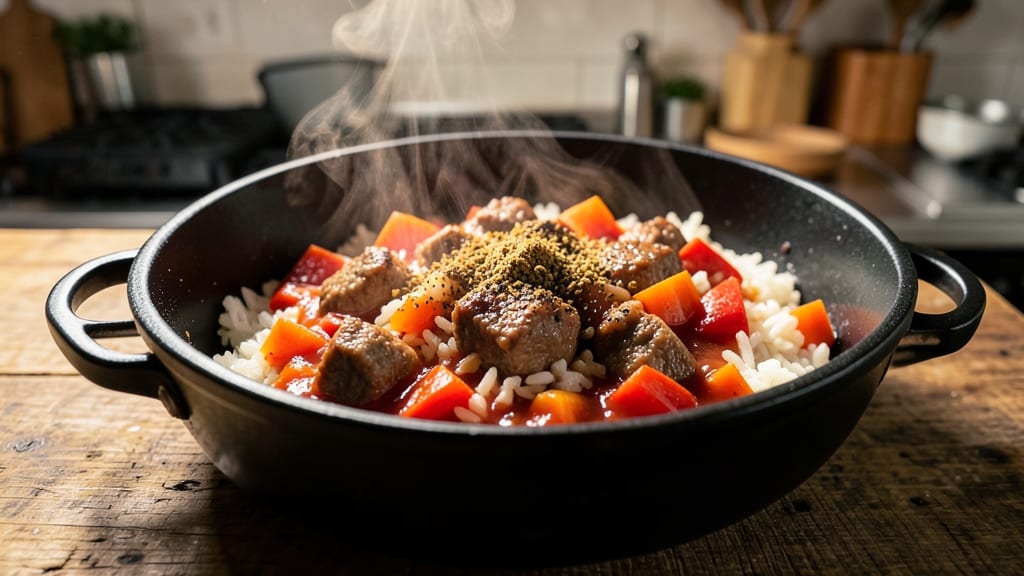
This omu rice recipe brings the heart of West African comfort food to your kitchen with its rich tomato-pepper stew and perfectly cooked rice—all in one pot.
The dish combines tender meat, aromatic spices, and a velvety gravy that clings to every grain, creating a meal that’s both satisfying and deeply flavorful. What makes this recipe special is its simplicity: just one pot, minimal prep, and a method that delivers restaurant-quality results at home.
The magic happens in the slow simmer of the stew, where onions, garlic, and peppers develop deep, caramelized flavors that blend seamlessly with the meat. The rice cooks directly in the broth, absorbing all the savory goodness without needing separate pots or pans.
This one-pot approach not only saves time but also ensures every bite is packed with flavor, making it ideal for weeknights or gatherings when you want a dish that feels special without the fuss.
By the time you serve this omu rice, you’ll have a steaming pot of tender meat, fragrant rice, and a gravy so rich it’ll have everyone asking for seconds. The dish is hearty enough to stand alone or pair beautifully with a simple salad or coleslaw.
Whether you’re cooking for family or hosting a dinner, this recipe delivers a comforting, flavorful meal that’s sure to become a favorite.
For those looking to adapt the recipe, swapping the meat for mushrooms or beans creates a vegetarian version that’s just as satisfying. The key is balancing the spices and adjusting the cooking time to ensure the rice absorbs the flavors perfectly. Let’s get cooking!
Ingredients for omu rice
Simple pantry staples meet West African boldness in this one-pot wonder.
| Ingredient | Amount | Notes |
|---|---|---|
| Long-Grain White Rice 🍚 | 2 cups | Uncooked, jasmine or basmati preferred |
| Beef Chuck Roast 🥩 | 1 ½ lb | Pre-cut into 1-inch cubes |
| Canned Tomato Paste 🍅 | ½ cup | San Marzano preferred for sweetness |
| Yellow Onions 🧅 | 2 whole | Medium, thinly sliced |
| Red Bell Peppers 🍆 | 2 whole | Seeded and diced |
| Garlic Cloves 🧄 | 6 cloves | Minced, fresh preferred |
| Fresh Ginger 🌿 | 1 tbsp | Grated, peeled |
| Scotch Bonnet Peppers 🌶️ | 2 whole | Seeded, finely chopped |
| Ground Cumin 🌿 | 1 tbsp | Toasted for depth |
| Ground Coriander 🌿 | 1 tbsp | Freshly ground preferred |
| Smoked Paprika 🌶️ | 1 tbsp | For smoky richness |
| Salt 🧂 | 1 ½ tsp | Diamond Crystal preferred |
| Black Pepper 🌶️ | ½ tsp | Freshly ground |
| Vegetable Oil 🫒 | ¼ cup | High smoke point preferred |
| Chicken or Beef Stock 💧 | 2 cups | Homemade or high-quality bouillon |
The beef is the heart of this dish—chuck roast delivers the best texture and flavor when slow-cooked. Costco or Whole Foods carry excellent pre-cubed options, but if buying a whole roast, ask the butcher to cut it into 1-inch pieces for even cooking. Fresh ginger and garlic are non-negotiable here; Trader Joe's often has pre-peeled ginger, which saves time. For the Scotch bonnet peppers, handle with care—they're hotter than they look, so wear gloves if you're sensitive to spice. The tomato paste should be San Marzano if possible, as its natural sweetness balances the heat perfectly. If you can't find it, any high-quality brand will do, but avoid the watery, low-quality versions.
No chuck roast? Beef stew meat or even chicken thighs work well—just adjust the cooking time. Running short on Scotch bonnet? Habanero or jalapeño at half the amount will add heat without overpowering. The ground spices can be swapped for whole seeds if you prefer: toast cumin and coriander seeds, then grind them fresh for a deeper flavor. For the stock, homemade is ideal, but a good bouillon cube in hot water is a solid backup. The bell peppers can be swapped for zucchini or carrots if you're out, but they add a nice sweet contrast to the heat. If you're vegetarian, mushrooms or chickpeas make excellent meat substitutes—just increase the cooking time by 10-15 minutes.
This dish tastes even better the next day, so double the batch if you're feeding a crowd. Store leftovers in an airtight container in the fridge for up to 5 days, or freeze for 3 months—the flavors deepen over time. To reheat, add a splash of water or stock and simmer gently. The rice absorbs the broth beautifully, so if it seems dry, stir in a little extra stock. For meal prep, portion into individual containers with the rice and stew separate, then mix when ready to eat to keep the grains fluffy.
Why You'll Love This Recipe
- One-Pot Magic: I swear by this recipe when I’m too tired to dirty more than one pan. The beef chucks slow-cook right in the rice—no separate braising pot, no extra cleanup. Just toss everything in, let it simmer, and boom: dinner’s done.
- Rich, Umami Bomb: That canned tomato paste? It’s the secret weapon. Sweet, smoky, and deep—it clings to the beef like glue, turning tough cuts into melt-in-your-mouth bites. Add the bell peppers at the end for a bright, tangy kick that cuts through the richness.
- Meal Prep MVP: Between us, this is my go-to for lazy Sundays or busy weeks. The rice stays fluffy for days, and the beef gets even more tender as it sits. Pack it for lunches or reheat for a no-fuss family dinner—it’s always a hit, even when I forget to make it pretty.
- Budget-Friendly Feast: Beef chuck roast on sale? Snap it up. This recipe stretches one cut to feed four (or three very hungry people). The onions and bell peppers add color and crunch without breaking the bank, and the tomato paste keeps the flavor bold even when money’s tight.
Step-by-step instructions for West African tomato-pepper one-pot magic
This method delivers tender beef and perfectly fluffy rice in a single pot with bold West African flavors.
Sear the Beef Chuck Roast in Batches
Heat the 0.25 cup vegetable oil in a large, heavy-bottomed pot over medium-high heat. Add half of the 1.5 lb beef chuck roast in a single layer, ensuring the pieces don't overcrowd the pan. Sear for 4-5 minutes per side until the meat develops a deep golden-brown crust. The beef should release easily from the pot when ready.
Transfer the seared beef to a plate and repeat with the remaining beef. You want each piece to develop that rich, caramelized exterior that will infuse the entire dish with flavor. If the oil starts smoking excessively, reduce the heat slightly and allow it to settle before continuing. This step builds the foundation for the dish's deep, savory taste.
Build the Flavor Base with Aromatics
In the same pot, reduce the heat to medium and add the 2 whole yellow onions and 2 whole red bell peppers. Sauté for 5-6 minutes until the onions soften and the peppers begin to release their juices. You'll notice the vegetables soften and the pot starts to smell sweet and earthy.
Add the 6 cloves garlic cloves, 1 tbsp fresh ginger, and 2 whole scotch bonnet peppers (remove seeds if you prefer less heat). Cook for 1-2 minutes until the garlic becomes fragrant and the ginger releases its sharp aroma. Be careful not to let the garlic burn—it should smell sweet and inviting, not bitter.
Develop the Tomato-Pepper Sauce
Stir in the 0.5 cup canned tomato paste and cook for 2-3 minutes, allowing it to darken slightly and blend with the aromatics. This creates a rich, concentrated base for the dish. Add the 1 tbsp ground cumin, 1 tbsp ground coriander, and 1 tbsp smoked paprika, stirring constantly for 30 seconds to toast the spices and release their full flavor.
Pour in the 2 cups chicken or beef stock and bring the mixture to a gentle simmer. Let it cook for 5 minutes until the flavors meld and the sauce thickens slightly. The pot should smell complex—smoky, sweet, and slightly spicy. This is where the magic happens, as the spices and aromatics infuse into the stock, creating a flavorful broth that will cook the rice perfectly.
Cook the Rice and Beef Together
Add the 2 cups long-grain white rice, stirring gently to coat each grain with the flavorful sauce. Increase the heat to medium-high and bring the mixture to a boil. Once boiling, reduce the heat to low, cover the pot tightly with a lid, and let it simmer for 20 minutes without disturbing it. This allows the rice to absorb the liquid evenly and steam properly.
After 20 minutes, carefully fluff the rice with a fork, then add the seared beef back into the pot. Stir gently to distribute the beef evenly throughout the rice. Return the lid and let it cook for another 10-15 minutes until the rice is tender and the beef is fork-tender. The rice should be fluffy, and the beef should pull apart easily with minimal resistance.
Rest and Serve with Confidence
Remove the pot from heat and let it rest, covered, for 5 minutes. This resting period allows the rice to finish absorbing any remaining liquid and the flavors to settle. The dish should be aromatic, with a rich tomato-pepper sauce coating each grain of rice and every piece of beef.
Serve the omu rice immediately, garnished with additional freshly ground black pepper if desired. The rice should be tender yet slightly firm, with a light crust on the bottom of the pot. Each bite should deliver a harmonious blend of smoky, spicy, and savory flavors, making this one-pot wonder a true showstopper.
Pro Tips For Making Omu Rice
- Sear the Chuck Roast: Don’t just brown it—get that meat screaming hot in a dry pan first. I used to skip this step, and the beef ended up dry and flavorless. A 3-4 minute sear on high heat builds a crust that locks in moisture when it slow-cooks later.
- Dice Onions Like Dice: Uniform ½-inch cubes melt evenly and disappear without leaving raw chunks. I learned this the hard way when my lazy chopping left big onion bits that stayed tough. No one wants to bite into a surprise crunch in omu rice.
- Simmer Tomato Paste Low: After adding the paste, reduce heat to a bare simmer—no boiling. I used to rush it, and the sauce turned bitter. Let it thicken slowly (10-15 minutes) so the flavors meld instead of burning.
- Cook Rice Separately: This isn’t a one-pot meal—rice and beef need different care. Cook the rice to perfect fluffiness first, then mix it in at the end. Combining them early turns the beef into a soggy brick. (Yes, I’ve done it.)
Wine and beer pairings for this dish
West African Red Wine
For omu rice, I reach for a bold red wine from West Africa’s neighboring regions—specifically a South African Pinotage or Shiraz. These wines have enough body to stand up to the dish’s rich tomato-pepper sauce while complementing the smoky paprika and Scotch bonnet heat.
A 2018 D’Aria Vineyards Pinotage from Stellenbosch offers dark fruit notes and a touch of spice that mirror the dish’s complexity. Serve slightly chilled to let its earthy undertones shine alongside the beef’s savory depth. 🍷
Crisp White Contrast
If you prefer white wine, a dry, citrusy Sauvignon Blanc from South Africa or New Zealand cuts through the dish’s richness beautifully. I love Oyster Bay Sauvignon Blanc from South Africa—its bright acidity and hints of lime and passionfruit refresh your palate between bites of smoky rice.
The wine’s herbal notes also echo the coriander and ginger in the stew, creating a harmonious balance. Avoid oaky Chardonnays, which would overpower the dish’s delicate flavors.
Local Beer Pairings
For beer lovers, a West African lager like Guinness Draught or Nigerian Star Lager bridges the cultural gap while enhancing the meal. Guinness’s roasted maltiness complements the beef’s caramelized crust, while Star Lager’s crisp, light body cleanses the palate between spicy bites.
If you’re in the U.S., Allagash White—a Belgian-style witbier with citrus and coriander notes—mirrors the dish’s aromatic spices. 🍺
Non-Alcoholic Options
For a refreshing non-alcoholic match, try hibiscus iced tea—common in West Africa—sweetened with a touch of honey. Its tart, cranberry-like flavor contrasts the dish’s smoky-sweet profile.
Alternatively, a ginger-lime soda (like Jarritos Tamarindo) amplifies the ginger and Scotch bonnet heat without overpowering. Serve chilled to balance the warm, hearty omu rice.
Regional Adaptations
In Nigeria, omu rice is often paired with palm wine—a lightly fermented, slightly sweet drink that enhances the dish’s earthy flavors. For a modern twist, substitute with sparkling apple cider (like Martinelli’s) to mimic the effervescence.
The cider’s tartness brightens the meal, while its subtle sweetness rounds out the spice. This pairing works especially well for holiday gatherings where alcohol isn’t an option.
Serving Temperature
Wine and beer should be served at room temperature (around 60-65°F) to let their flavors fully develop alongside the dish’s warmth. For white wines, I chill them for 10-15 minutes before serving to preserve their crispness.
Red wines benefit from a 30-minute decant if they’re particularly bold, allowing their tannins to soften and integrate with the meal’s richness. 💫
Nutrition facts
Frequently asked questions
What makes this West African one-pot rice different from regular rice dishes?
The magic lies in the slow-cooked tomato-pepper stew base that infuses every grain of rice with deep, smoky flavors from spices like smoked paprika and Scotch bonnet peppers. Unlike traditional rice dishes, this version cooks the rice directly in the flavorful broth, creating a dish where each bite is packed with both meaty texture and aromatic sauce. The one-pot method also saves time and cleanup!
Can I make this recipe vegetarian?
Swap the beef for mushrooms or chickpeas—both work beautifully. For mushrooms, use 8 oz cremini or portobello mushrooms sliced thickly, and increase cooking time by 10-15 minutes to let them absorb the flavors. Chickpeas add a hearty texture and pair well with the spices. Just ensure the rice is fully tender before serving.
Why does the recipe call for resting the rice after cooking?
Resting the rice for 5 minutes after cooking allows the grains to fully absorb any remaining liquid and prevents them from becoming mushy when served. This step also lets the flavors settle, ensuring each bite is perfectly balanced with the rich tomato-pepper sauce. Skipping this step can result in dry or unevenly cooked rice.
What’s the best way to store leftovers?
Store leftovers in an airtight container in the fridge for up to 5 days or freeze for 3 months. To reheat, add a splash of water or stock and simmer gently until heated through. The rice will be slightly firmer after refrigeration, but the flavors deepen over time, making it even more delicious the next day!
Can I use instant rice for this recipe?
While you can use instant rice, it won’t deliver the same texture or flavor depth. The long-grain white rice in this recipe absorbs the broth perfectly, creating fluffy, separate grains that hold up to the rich stew. For best results, stick with jasmine or basmati rice—it’s worth the extra 30 minutes of cooking time!