
Sauces & Condiments
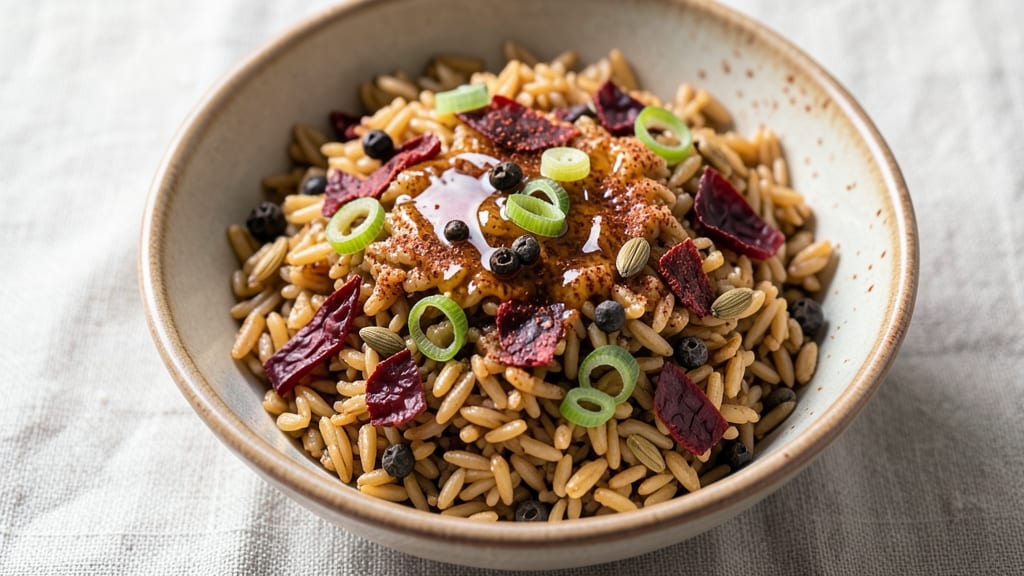
Creating your own Rice-A-Roni wild rice seasoning transforms simple rice into a restaurant-worthy West African-inspired dish. This bold blend of spices delivers deep peanut and tomato flavors without the processed shortcuts—just pure, customizable seasoning that elevates every grain.
I developed this mix after craving that signature tangy, nutty profile but wanting full control over ingredients and heat levels.
The magic lies in the precise ratios of smoked paprika, ground coriander, and a touch of cayenne—each playing a role in building complexity. This dry blend stays shelf-stable for months, making it perfect for stocking your pantry or gifting to fellow rice lovers.
Unlike store-bought versions, you can adjust the spice levels to suit your taste, from mild to fiery.
What makes this seasoning truly special is its versatility beyond rice—it works equally well on roasted vegetables, grilled chicken, or even popcorn. The earthy undertones from cumin and garlic powder complement the peanut notes beautifully, while the tomato powder adds that signature tang.
One tablespoon per cup of rice delivers bold, balanced flavor with every bite.
For best results, toast your rice in the seasoning blend before adding liquid—this ensures maximum flavor infusion. Store the dry mix in an airtight container away from light, and keep it on hand for quick, flavorful meals anytime.
The possibilities for this simple yet transformative blend are endless, making it a professional chef's secret weapon for home cooks.
Ingredients for rice a roni wild rice seasoning
Ten spices blend into a bold West African-inspired seasoning that transforms rice into a restaurant-worthy dish.
| Ingredient | Amount | Notes |
|---|---|---|
| Smoked Paprika 🌶️ | 3 tbsp | High-quality smoked variety for depth |
| Ground Coriander 🌿 | 2 tbsp | Freshly ground preferred for brightness |
| Ground Cumin 🌿 | 1 ½ tbsp | Toasted for enhanced earthiness |
| Garlic Powder 🧄 | 1 ½ tbsp | Not garlic salt, for pure flavor |
| Dried Tomato Powder 🍅 | 1 tbsp | Or 1 tbsp tomato paste dried |
| Cayenne Pepper 🔥 | ½ tbsp | Adjust for heat preference |
| Ground Peanut Powder 🥜 | 1 tbsp | Or 1 tbsp finely ground peanuts |
| Onion Powder 🧅 | 1 tbsp | Freshly ground preferred |
| Sea Salt 🧂 | 1 ½ tsp | Diamond Crystal preferred |
| Black Pepper 🌶️ | ½ tsp | Freshly ground for best flavor |
The smoked paprika is the flavor anchor here—Penzeys or McCormick smoked varieties work best, but any high-quality smoked paprika will do. Ground coriander should be freshly ground if possible, as pre-ground loses potency quickly. Bulk spice merchants are your friend for this ingredient. The ground peanut powder is key for that signature nutty profile—you can make your own by grinding roasted peanuts in a food processor, or grab it pre-made from specialty stores. For the tomato powder, if you can't find it, simply dry tomato paste in a low oven (200°F for 1-2 hours) and grind it into a powder. Toasting your cumin seeds before grinding them (in a dry pan for 30 seconds) adds an extra layer of complexity worth the effort.
No smoked paprika? Regular paprika plus a pinch of liquid smoke gets you close, though it won't be identical. Short on peanut powder? Peanut butter powder (available at health food stores) works well, or just use extra ground peanuts. The cayenne is fully adjustable—start with half the amount if you're sensitive to heat. For a deeper tomato flavor, add a pinch of MSG or nutritional yeast (trust me on this). The garlic powder is non-negotiable for that West African depth, but if you're feeling fancy, asafetida powder at one-fourth the amount adds an incredible umami kick. All spices should be sifted together for even distribution in your mix.
This blend keeps for up to 6 months in an airtight container away from light and moisture. I store mine in a amber glass jar with a tight-sealing lid—it's worth the investment for long-term flavor preservation. For best results, make a small batch (about 1/4 cup) to test your spice ratios before committing to a full batch. The seasoning works on anything from rice to roasted vegetables, so portion it out into small containers for convenience. Freeze extras in ice cube trays if you're planning to use it sparingly over time—just thaw at room temperature before using.
Why You'll Love This Recipe
- Five-Minute Mix: I swear by this blend—just toss the spices together, and boom, you’ve got restaurant-worthy flavor without the fuss. That smoked paprika? It gives the rice this deep, smoky warmth that turns simple grains into something special.
- Earthy & Bright: Honestly, the coriander and cumin combo is my secret weapon—it’s got that bright, citrusy kick that cuts through the richness of the smoked paprika. Add the garlic powder and dried tomato, and you’ve got a flavor profile that’s complex but still approachable.
- Weeknight & Potlucks: This seasoning works just as well for a quick weeknight dinner as it does for a crowd. Toss it with rice for a simple bowl, or mix it into roasted veggies for a side that’s always a hit. My daughter even sneaks it into her mac and cheese—no judgment here.
- Budget Magic: Between us, this blend stretches a dollar so far. A little goes a long way, and the spices last forever, so you’re not scrambling for last-minute grocery runs. Plus, it turns basic rice into something that feels like a splurge without the cost.
Step-by-step instructions for creating West African peanut-tomato seasoning
This spice blend delivers restaurant-quality depth with minimal effort—just combine and store.
Measure All Ingredients Precisely
Start by gathering all components in a clean, dry bowl. I always use a digital kitchen scale for accuracy, especially with spices like the 1.5 tablespoons ground cumin and 1 tablespoon dried tomato powder—these make the difference between good and extraordinary. The 3 tablespoons smoked paprika should be the first to go in; its deep, smoky character forms the foundation of the blend.
Next, add the 2 tablespoons ground coriander and 1.5 tablespoons garlic powder—these will brighten the earthy notes. Sprinkle in the 1 tablespoon ground peanut powder last; its nutty aroma develops fully when mixed with the other spices. This is where the magic begins—each ingredient plays a specific role in creating that signature West African profile.
Whisk Until Evenly Distributed
Using a whisk or fork, stir vigorously for 2-3 minutes until the blend achieves a uniform color and texture. You'll notice the smoked paprika and dried tomato powder create a rich, reddish-brown hue, while the ground peanut powder adds subtle speckling. This isn't just about mixing—it's about activating the spices' aromatic compounds through friction.
Pay special attention to the corners of your bowl. Any unmixed pockets will create flavor inconsistencies when used. If you're using freshly ground spices (especially the ground coriander and onion powder), you'll see more visible particles—this is ideal for maximum flavor impact. The blend should smell complex: smoky, slightly sweet from the tomato, with a warm peanut undertone.
Toast the Spices (Optional but Recommended)
For an even more developed flavor, transfer the mixture to a dry skillet set over medium-low heat. Stir constantly for 3-4 minutes until you can detect the spices' essential oils rising—this is when the aroma becomes intensely aromatic and slightly toasted. Watch closely: the cayenne pepper and ground cumin will darken first, signaling when to remove from heat.
This step transforms the blend from good to exceptional by deepening the nutty and earthy notes. If you skip toasting, the spices will still work beautifully—just with slightly less complexity. Immediately transfer the toasted blend to a bowl to cool completely before storing, as residual heat can cause condensation in your storage container.
Store Properly for Maximum Freshness
Let the seasoning cool completely at room temperature for 10-15 minutes before transferring to an airtight container. I prefer glass jars with tight-sealing lids for long-term storage, as they preserve the spices' potency better than plastic. The blend will keep its full flavor for up to 6 months when stored in a cool, dark place—far longer than most commercial seasoning packets.
Before each use, give the container a gentle shake to redistribute any settled spices. The ground peanut powder tends to separate slightly, so this ensures even flavor distribution. This blend works equally well on grains, proteins, or even in marinades—its versatility makes it a kitchen essential worth keeping on hand.
Pro Tips For Making Rice A Roni Wild Rice Seasoning
- Bloom the Spices First: Toss the smoked paprika, coriander, and cumin into your pot before adding liquid and let them sizzle for 30 seconds—just until you smell that earthy aroma. I used to skip this, and the flavor always felt flat; now it’s the thing that makes the seasoning sing.
- Toast the Garlic Powder: Add the garlic powder last and let it cook with the rice for the final 2 minutes—this deepens its flavor without bitterness. I learned this the hard way after burning garlic once (yes, even powdered garlic can scorch).
- Skip the Pre-Measuring: If you’re using this mix for rice, eyeball the ratio: 1 tablespoon of seasoning per 2 cups of cooked rice. Pre-measuring leads to dry rice or wasted mix—I’ve done both, and neither is fun.
- Store the Mix Dry: Keep the seasoning blend in an airtight container away from light, or it’ll lose its smoky kick in weeks. I used to toss it in a jar with the lid loose, and after a month, it tasted dull—now I double-check the seal.
Troubleshooting perfect results
Uneven Flavor Distribution
If your seasoning tastes inconsistent—some bites too spicy, others bland—it’s likely from improper mixing. Use a whisk or small fork to stir vigorously for at least 3 minutes in a glass bowl (plastic can trap moisture).
I’ve found that sifting the spices together through a fine-mesh strainer before mixing ensures even distribution. For extra insurance, pulse the blend in a food processor for 10-15 seconds—this breaks up any clumps and activates the spices’ aromatic oils. 🌶️
Clumping in Storage
Moisture is the enemy of dry spice blends. Store your seasoning in an amber glass jar with a tight-sealing lid (I use Le Parfait spice jars) and keep it in a cool, dark pantry.
If clumps form, place the jar in a 200°F oven for 5-10 minutes to dry them out—just shake gently after cooling. For long-term storage, add a small silica gel packet (the kind that comes with electronics) to absorb any lingering moisture. Never store in the fridge—temperature fluctuations cause condensation. ❄️
Too Mild or Bland
If your seasoning lacks depth, the issue is usually stale spices or under-toasting. Check your smoked paprika first—it should smell rich and smoky. If it’s past its prime (over 6 months old), replace it.
For extra punch, lightly toast the blend in a dry skillet over medium-low heat for 3-4 minutes, stirring constantly until fragrant. A pinch of MSG (¼ tsp) or nutritional yeast can also amplify umami without overpowering. 💡
Excessive Heat
Too much cayenne pepper or ground cumin can make your seasoning overwhelmingly spicy. Start with half the cayenne (¼ tsp) if you’re sensitive to heat, or omit it entirely for a milder version. For balance, add 1 extra tsp of ground peanut powder—its natural sweetness mellows the heat.
If the blend is already mixed, reduce future batches by ⅓ and store the extra in a separate container labeled “mild.” 🔥
Separation Issues
The ground peanut powder and dried tomato powder often settle at the bottom. Before using, shake the container vigorously for 20 seconds or give it a quick pulse in a food processor.
For a permanent fix, store the blend in a small mason jar (like Ball 4-ounce jars) and roll it between your palms for 30 seconds before each use. This ensures every spoonful has the same flavor profile. ✨
Weak Tomato Flavor
If your seasoning tastes more smoky than tangy, the dried tomato powder is likely the culprit. Make your own by drying 1 tbsp tomato paste in a 200°F oven for 1-2 hours, then grinding it into a fine powder.
For an instant boost, add ½ tsp of powdered bouillon (chicken or vegetable) to the mix—it enhances the savory depth without altering the color. If you’re using canned tomato powder, it may contain additives that mute the flavor. 🍅
Nutrition facts
Frequently asked questions
Can I use this seasoning blend on foods other than rice?
This West African-inspired blend works beautifully on roasted vegetables, grilled chicken, or even as a dry rub for tofu. The peanut and tomato notes complement proteins and veggies just as well as grains. Try sprinkling it on popcorn for a savory-sweet twist!
How do I adjust the heat level in this seasoning?
Start with half the cayenne (¼ tsp) if you prefer mild heat, or reduce it to ¼ tsp for a very mild version. For balance, add ½ tsp extra ground peanut powder—its natural sweetness counteracts the spice. Always taste as you mix!
Where can I find ground peanut powder if my store doesn't carry it?
Make your own by grinding roasted peanuts in a food processor until completely powdered, or use peanut butter powder (available at health food stores). For a quick substitute, blend 2 tbsp powdered peanut butter (like PB2) with 1 tbsp cornstarch to mimic the texture.
How long will this seasoning last, and how should I store it?
Store in an amber glass jar with a tight-sealing lid in a cool, dark pantry for up to 6 months. For longer storage, add a silica gel packet to absorb moisture. Never refrigerate—humidity is the enemy of dry spice blends.
What's the best way to use this seasoning with different types of rice?
For white rice, use 1 tbsp per cup of seasoning mixed directly with the dry rice before cooking. For brown or wild rice, reduce to ½ tbsp per cup—these grains absorb flavors more intensely. Toast the rice in the seasoning blend for 2 minutes in a dry pan before adding liquid for maximum flavor infusion.