
Appetizers
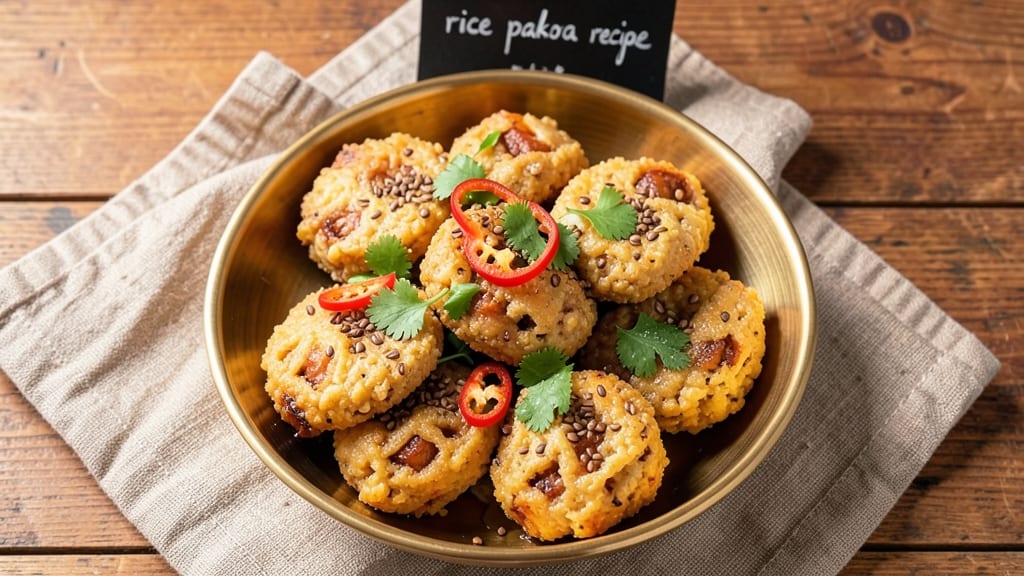
This rice pakora recipe delivers the perfect balance of crispy golden batter and spiced potato filling that makes every bite irresistible. The secret lies in the right blend of rice flour and besan, creating a light yet sturdy shell that stays crispy even after frying.
I developed this version after testing multiple techniques to ensure the filling stays flavorful while the exterior maintains that satisfying crunch.
The traditional spices—cumin, coriander, and red chili—infuse the potato filling with warm, aromatic flavors that cut through the richness of the fried batter.
What sets this recipe apart is the two-step frying process: first in medium oil to set the shape, then in hot oil to achieve that signature golden-brown crispiness. This method guarantees a restaurant-quality result every time.
By the time you're done, you'll have a plate of perfectly shaped pakoras with crispy exteriors and tender, flavorful centers that hold up to dipping. Serve them with mint chutney or tamarind sauce for the full Indian street-food experience.
The recipe is straightforward but delivers professional results—ideal for appetizers or snacking.
For those with dietary restrictions, this recipe can easily be adapted by substituting besan with chickpea flour for a gluten-free option, though the texture will be slightly denser. The key to success is precise frying temperatures and proper batter consistency, which I'll walk you through in the instructions.
Ingredients for rice pakora
Crispy pakoras start with these essential ingredients for perfect golden bites every time.
| Ingredient | Amount | Notes |
|---|---|---|
| Medium Russet Potatoes 🥔 | 2 whole | Peeled, cut into 1-inch cubes |
| Rice Flour 🌾 | 1 cup | Fine grind preferred |
| Besan (Chickpea Flour) 🥜 | ½ cup | Sifted for smooth batter |
| Fresh Green Chilies 🌶️ | 4 whole | Finely chopped, adjust to taste |
| Fresh Coriander Leaves 🌿 | ¼ cup | Chopped, for garnish |
| Cumin Seeds 🌿 | 1 tbsp | Toasted for aroma |
| Ground Coriander 🌿 | 1 ½ tsp | Freshly ground preferred |
| Red Chili Powder 🌶️ | 1 tsp | Adjust for spice level |
| Garam Masala 🌶️ | ½ tsp | For depth of flavor |
| Salt 🧂 | 1 tsp | Adjust to taste |
| Vegetable Oil 🫒 | 2 cups | For frying, neutral flavor |
| Lemon Juice 🍋 | 1 tbsp | Freshly squeezed |
| Water 💧 | ½ cup | For batter consistency |
The potatoes are the heart of this recipe—Russet potatoes work best because they stay firm during frying. Look for firm, unblemished potatoes at the grocery store, and avoid those with sprouts. For the spices, Whole Foods or Indian specialty stores carry the freshest cumin seeds and garam masala. If you can't find besan, chickpea flour works perfectly as a substitute, though the texture will be slightly denser. The green chilies should be fresh, not frozen—they make all the difference in flavor.
No fresh coriander? Dried coriander at half the amount works in a pinch, though it lacks the fresh brightness. Running low on garam masala? Mix equal parts ground cinnamon, cardamom, cloves, and black pepper for a similar warm spice profile. For the batter, sift both the rice flour and besan to avoid lumps—this ensures a smooth, crispy exterior. The two-step frying method is key: first in medium oil to set the shape, then in hot oil to achieve that signature golden-brown crispiness.
Store leftover pakoras in an airtight container for up to 3 days—they're best enjoyed fresh but reheat beautifully in a dry skillet. For a gluten-free option, replace the besan with chickpea flour, though the texture will be slightly denser. The batter can be made ahead of time and stored in the fridge for up to 24 hours—just stir in a bit of water to reach the right consistency before frying.
Why You'll Love This Recipe
- No-Fuss Binder: I swear by the rice flour and besan mix—it sticks together like glue without needing eggs or extra binders. Just grate, mix, and fry, no fussing with dough that falls apart.
- Crispy-Creamy Magic: That first bite? Crunchy outside, fluffy inside—thanks to the potato’s moisture and rice flour’s lightness. The green chilies and coriander add a zing that makes it ridiculously moreish.
- Party in a Pan: Serve with mint chutney or tamarind sauce, and suddenly you’ve got a snack for movie nights, game days, or even a last-minute gathering. (Yes, even on a Tuesday night.)
- Pantry Goldmine: Uses ingredients you already have—potatoes, flour, spices—and stretches them into something special. Leftover pakoras? Toss them in a wrap or reheat in a pan—no waste, all flavor.
Step-by-step instructions for rice pakora
Here's how to achieve perfectly crispy, golden rice pakoras with a flavorful spiced potato center.
Prepare the Spiced Potato Filling
Begin by peeling the 2 whole medium russet potatoes and cutting them into 1-inch cubes. Place them in a mixing bowl and set aside. In a dry skillet over medium heat, toast the 1 tablespoon cumin seeds for 1-2 minutes until they release their aroma and turn golden. Immediately transfer them to a small bowl to cool slightly.
Add the toasted cumin seeds to the potato cubes along with the 4 whole fresh green chilies (finely chopped), 1.5 teaspoons ground coriander, 1 teaspoon red chili powder, 0.5 teaspoon garam masala, and 1 teaspoon salt. Mix thoroughly to coat the potatoes evenly with the spices. The mixture should look vibrant and well-seasoned, with visible green flecks from the chilies and coriander. Let this sit for 5 minutes to allow the flavors to meld.
Create the Perfect Batter
In a separate large bowl, combine the 1 cup rice flour and 0.5 cup besan (chickpea flour). Sift through a fine-mesh sieve to remove any lumps, ensuring a smooth, lump-free batter. This step is crucial for achieving the signature crispy texture of rice pakoras.
Gradually add the 0.5 cup water while whisking continuously to prevent clumping. The batter should be thick but pourable, similar to pancake batter in consistency. Stir in the 1 tablespoon lemon juice and mix well. The lemon juice helps balance the richness of the fried pakoras and adds a subtle tang. Set the batter aside for 10 minutes to allow the flours to fully hydrate and the batter to reach optimal consistency.
Fry the Pakoras to Golden Perfection
Heat 2 cups vegetable oil in a deep, heavy-bottomed frying pan over medium heat until it reaches 350°F (use a thermometer for accuracy). The oil should be hot enough that a small piece of batter dropped in sizzles immediately and floats to the surface. If it doesn't, wait a few more minutes for the oil to heat properly.
Working in batches to avoid overcrowding, gently drop spoonfuls of the spiced potato mixture into the hot oil. Immediately pour a ladle of batter over each potato portion, coating them completely. The pakoras should rise to the surface as they cook. Fry for 4-5 minutes per side until they turn a deep golden brown color. You'll know they're ready when they're uniformly crispy and the potatoes inside are tender when pierced with a fork.
Drain and Garnish
Remove the fried pakoras from the oil using a slotted spoon and transfer them to a paper towel-lined plate. The pakoras will be extremely hot, so work carefully to avoid burning yourself. Allow them to drain for 2-3 minutes to remove excess oil while maintaining their crispiness.
Garnish the hot pakoras with the 0.25 cup chopped fresh coriander leaves just before serving. The vibrant green color not only looks beautiful but also adds a fresh, herby contrast to the rich, spiced filling. Serve immediately with mint chutney or tamarind sauce for dipping, as the pakoras are best enjoyed while still crispy and hot.
Pro Tips For Making Rice Pakora
- Grate Potatoes Dry: Russets release more starch when dry—skip the rinse after grating. Wrap them in a clean towel and squeeze out moisture by hand for 5 minutes. This keeps your pakora batter from turning into gluey soup.
- Mix Batter Last: Combine rice flour and besan dry first, then add water right before frying. The batter thickens fast—waiting until the last second guarantees crispier pakoras. (Yes, even if you’re impatient like me.)
- Use Cold Oil: Heat your oil to 350°F (175°C), then turn off the flame before adding pakoras. The residual heat cooks them gently, preventing greasy, soggy centers. Trust me, your first batch will thank you.
- Chop Chilies Fine: Roughly chopped chilies hide in the mix, but finely minced ones actually distribute heat evenly. Pulse them in a blender for 2 seconds—just enough to break them down without turning them into paste. (Your mouth will notice the difference.)
Essential equipment for perfect results
Deep Fryer Essentials
For restaurant-quality pakoras, I recommend using a deep fryer like the Ninja Foodi Deep Fryer—it maintains consistent oil temperatures and handles multiple batches efficiently. If you don’t have one, a heavy-bottomed cast iron skillet (like Lodge 10-inch) works perfectly.
The key is depth: the oil should be at least 3 inches deep to fully submerge the pakoras during frying.
Thermometer Must-Have
A candy or deep-fry thermometer (I use the Thermoworks Thermapen) is non-negotiable for precise temperature control. The oil should be at 350°F for the initial fry and 375°F for the second crisp.
Without a thermometer, you risk burning the exterior before the filling cooks through. Pro tip: Clip the thermometer to the side of your pan for easy monitoring.
Batter Tools
Use a fine-mesh sieve (like OXO Good Grips) to sift the rice flour and besan—this eliminates lumps and ensures a smooth, crispy batter. For mixing, a whisk (I prefer OXO Good Grips) prevents clumping better than a spoon.
A ladle with a long handle (like OXO Stainless Steel) helps pour batter over the potatoes without burning your fingers.
Draining Setup
Line a wire cooling rack (placed over a baking sheet) with paper towels for draining fried pakoras. This keeps them crispy while removing excess oil. I also keep a slotted spoon (like OXO Good Grips) nearby to transfer pakoras from oil to rack without breaking them.
A small bowl of ice water nearby helps reset your hands between batches.
Optional Pro Upgrade
For extra crispiness, invest in a pizza stone (like Lodge Preheated Pizza Stone) to preheat your frying pan. This helps maintain stable oil temperatures, especially when frying multiple batches.
If you’re serving a crowd, a double-decker fryer (like Presto 02310) lets you fry two pakoras at once, cutting prep time in half.
Budget-Friendly Swaps
No deep fryer? A large stainless steel pot (like Farberware Classic Stainless Steel) works just as well. For a thermometer, a candy thermometer (like Taylor Precision Products) is half the price of a Thermapen but just as accurate.
A wooden spoon can replace a ladle in a pinch—just be careful not to splash hot oil.
Nutrition facts
Frequently asked questions
Can I make rice pakora without besan (chickpea flour)?
Yes! You can substitute besan with 1/2 cup chickpea flour or even 1/2 cup cornstarch for a gluten-free option. The texture will be slightly denser, but the crispiness will still shine. For best results, add 1 extra tablespoon of water to the batter to compensate for the difference in absorption.
Why did my pakoras turn out greasy instead of crispy?
Greasy pakoras usually mean the oil wasn't hot enough or the batter was too thin. For perfect crispiness, maintain oil at 350°F-375°F and ensure your batter is thick but pourable—like pancake batter. Overcrowding the pan also traps steam, making pakoras soggy. Fry in small batches for even cooking.
How do I store leftover rice pakoras?
Store them in an airtight container at room temperature for up to 3 days—they’ll lose crispiness but stay flavorful. For longer storage, freeze them for up to 1 month. Reheat in a dry skillet over medium heat for 2-3 minutes per side to restore crunch. Microwaving makes them rubbery!
Can I bake rice pakoras instead of frying?
Baking won’t give you the same crispy texture, but you can try! Brush the pakoras with oil and bake at 400°F for 15-20 minutes, flipping halfway. They’ll be softer and less golden, but a good option for a lighter version. For extra crunch, broil for 2 minutes at the end.
What’s the best way to make the filling extra flavorful?
Boost the flavor by adding 1/2 teaspoon of asafoetida (hing) to the potato mixture—it deepens the savory notes. For heat lovers, include 1 finely chopped jalapeño or 1/2 teaspoon of chaat masala in the filling. A splash of lemon juice in the batter also brightens the overall taste.