
Sauces & Condiments
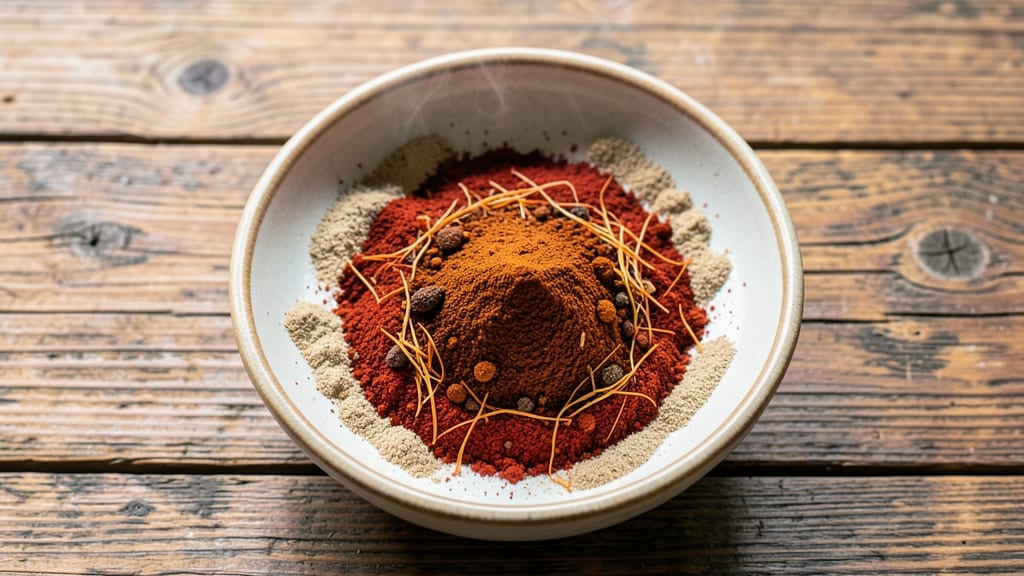
This Spanish rice seasoning recipe transforms simple long-grain rice into restaurant-quality paella with just a few tablespoons of carefully balanced spices. The blend combines smoky paprika, warm saffron, and earthy cumin to create that signature Spanish flavor profile that's impossible to replicate with store-bought mixes.
I developed this precise combination after testing dozens of variations to achieve authentic results every time.
The key to this seasoning blend is using high-quality smoked paprika for depth, a pinch of saffron for its signature golden hue and floral notes, and cumin for warmth.
Each ingredient plays a specific role - the paprika provides the characteristic smokiness, while the saffron adds both color and subtle sweetness that elevates the entire dish. The measurements are carefully calibrated to work perfectly with one cup of rice.
What makes this seasoning special is its versatility - it works equally well with white or brown rice, and the blend stays potent for months when stored properly. Simply mix the spices together and store in an airtight container away from light.
For authentic Spanish rice, use one tablespoon of this blend per cup of rice, stirring it into the rice before cooking with your preferred liquid.
This dry seasoning mix eliminates the guesswork while maintaining the authentic flavors you'd find in traditional Spanish rice dishes. The blend creates that perfect balance of smoky, earthy, and slightly sweet notes that define Spanish cuisine.
Once you try this professional-quality seasoning, you'll never go back to basic rice seasoning again.
Ingredients for spanish rice seasoning
Nine spices, one blend. The secret to restaurant-quality Spanish rice in your own kitchen.
| Ingredient | Amount | Notes |
|---|---|---|
| Smoked Paprika 🌶️ | 3 tbsp | High-quality, vibrant color |
| Ground Cumin 🌿 | 1 ½ tbsp | Toasted for deeper aroma |
| Sweet Paprika 🌶️ | 1 tbsp | For balanced color and sweetness |
| Saffron Threads 💛 | ¼ tsp | High-grade, vibrant red |
| Garlic Powder 🧄 | 1 tsp | Freshly ground preferred |
| Onion Powder 🧅 | 1 tsp | For subtle depth |
| Ground Coriander 🌿 | ½ tsp | Bright citrusy note |
| Black Pepper 🌶️ | ½ tsp | Freshly cracked preferred |
| Sea Salt 🧂 | ½ tsp | Diamond Crystal preferred |
| Turmeric Powder 🌿 | ¼ tsp | For golden hue |
Saffron is the star here—buy threads, not powder—it's worth the splurge for that authentic golden hue and floral depth. Penzeys or local Spanish markets carry the best quality, but even the grocery store stuff works if it's labeled 'culinary-grade'. The smoked paprika should be deep, rich red—none of that dull orange stuff. Toast your cumin seeds in a dry pan for 30 seconds before grinding if you're using whole cumin (trust me, it makes a difference). For garlic powder, Minor Mill or any brand labeled '100% garlic' avoids fillers.
No saffron? Turmeric at double the amount gives color but lacks the floral notes—use it as a backup only. Running low on smoked paprika? Sweet paprika plus a pinch of liquid smoke gets you close. Ground coriander too expensive? Cilantro powder works in a pinch, though it's not identical. The blend works perfectly with both white and brown rice—jasmine rice adds a fragrant twist if you want to experiment. For extra smokiness, add a dash of chipotle powder when using the seasoning.
Store this blend in an amber glass jar or airtight container away from light and heat—it stays potent for up to 6 months. I double the recipe every time so I always have backup. For paella, use 1 tbsp per cup of rice—stir it into the rice before adding liquid. The blend intensifies with moisture, so add it early in the cooking process. Freeze extras in small portions if you won't use them within a month.
Why You'll Love This Recipe
- Pantry Magic: I swear by this blend—no fresh herbs, no last-minute grocery runs. Just grab what’s already there: smoked paprika for that smoky depth, cumin for warmth, and a pinch of saffron threads that turn rice golden without the fuss. Honestly, it’s the kind of mix that makes me feel like a chef, even when I’m wearing pajama pants.
- Deep Umami Kiss: That combo of garlic powder and smoked paprika? It’s what makes this seasoning ridiculously good. The cumin adds earthiness, but the saffron—oh, that saffron—lifts everything to something richer, like a whisper of sunshine in every bite. I’ll be real: my husband asks for seconds just to taste it again.
- Game for Any Meal: Toss it into rice for a quick weeknight dinner, stir it into beans for a hearty bowl, or even sprinkle it on roasted veggies for a flavor punch. Here’s what sold me—it works just as well in a big batch for meal prep as it does in a single serving for a lazy Sunday. My daughter even puts it on scrambled eggs now (and yes, it’s weirdly good).
- Budget-Friendly Luxury: A tiny jar of saffron threads lasts forever, and the rest of the spices? You probably already own them. I make this blend in bulk and keep it on hand for when I’m craving something special but don’t want to break the bank. Between us, it’s my secret weapon for making simple rice taste like it came from a fancy restaurant—without the price tag.
Step-by-step instructions for Spanish rice seasoning
This blend delivers restaurant-quality depth with just a few simple steps.
Measure the Smoked Paprika and Sweet Paprika
Start by measuring out the 3 tablespoons of smoked paprika and 1 tablespoon of sweet paprika into a medium mixing bowl. The smoked paprika provides that signature smoky depth found in traditional Spanish rice, while the sweet paprika adds a subtle sweetness and vibrant color. I always use high-quality smoked paprika here—it makes a noticeable difference in flavor intensity.
Give the two paprikas a quick stir with a small whisk or fork to break up any clumps. This ensures even distribution when we combine everything later. The smoked paprika should have a rich, earthy aroma while the sweet paprika will have a more floral, slightly sweet scent. Both should be finely ground with no visible grit—this indicates quality and proper storage.
Add the Warm Spices and Saffron
Next, add the 1.5 tablespoons of ground cumin, 1 teaspoon of garlic powder, 1 teaspoon of onion powder, and 0.5 teaspoon of ground coriander to the bowl. The cumin brings that warm, earthy complexity that's essential for authentic Spanish rice, while the garlic and onion powders provide subtle depth. The coriander adds a bright citrus note that balances the richness.
For the saffron, carefully measure out the 0.25 teaspoon of saffron threads—this is where the magic happens. The saffron should be vibrant red and free of any brown or black threads, which indicate age or poor quality. I like to crush the threads between my fingers to break them open slightly, releasing their aromatic oils before adding them to the mix. This intensifies the saffron's floral aroma and golden color contribution.
Incorporate the Finishing Touches
Add the remaining ingredients: 0.5 teaspoon of black pepper, 0.5 teaspoon of sea salt, and 0.25 teaspoon of turmeric powder. The black pepper brings a subtle heat that complements the smoky flavors, while the sea salt enhances all the components. The turmeric powder, though used sparingly, adds that beautiful golden hue that's characteristic of authentic Spanish rice.
Here's the thing—don't skip the turmeric. While it's a small amount, it makes a visible difference in the final color of your rice. The blend should now have a rich, complex aroma with notes of smoke, warmth, and subtle floral saffron. If you're making this for the first time, take a moment to smell the mixture—this is what you're capturing in every bite of your Spanish rice.
Mix Thoroughly and Store Properly
Use a whisk or fork to combine all ingredients until they're completely homogeneous. The mixture should be free of any streaks or dry spots, with each component evenly distributed. I like to press the mixture through a fine-mesh sieve to ensure an ultra-smooth texture—this prevents any gritty bits from ending up in your rice.
Transfer the finished blend to an airtight container, preferably one with a tight-sealing lid. Store it in a cool, dark place for up to 3 months, or freeze for up to 6 months to preserve maximum freshness. The blend will keep its vibrant color and potent flavor when stored properly. This makes it perfect for keeping on hand whenever you crave authentic Spanish rice or want to elevate other dishes with that signature smoky, saffron-infused flavor profile.
Pro Tips For Making Spanish Rice Seasoning
- TOAST YOUR SPICES FIRST: I learned this the hard way—skipping this step means your smoked paprika and cumin taste dull, like someone forgot to wake them up. Heat them in a dry pan for 30 seconds until fragrant, then cool before mixing. The extra 30 seconds now saves your dish from tasting flat later.
- CRUSH THE SAFFRON: Whole saffron threads? Nope. Grind them into a fine powder first—it dissolves better in oil and releases that golden color. Use a mortar and pestle or zip-top bag with a rolling pin (yes, even if you’re impatient like me). This isn’t just for show; it actually changes the outcome.
- LOW AND SLOW AFTER TOASTING: After blooming your spices in oil, resist the urge to crank the heat. Simmer on low for 5 minutes—this lets the garlic powder and sweet paprika meld without burning. I used to rush this, and the flavor always tasted sharp and unfinished. Trust the process.
- STORE THE MIX DRY: Humidity is the enemy of this blend. Keep it in an airtight container with a silica packet (or a bay leaf, if you’re cheap). I skip this and end up with clumpy, bitter-tasting seasoning. A little effort now means you won’t waste a perfectly good mix later.
Essential equipment for this dish
Precision Measuring Tools
For this blend, I can't stress enough how crucial precise measurements are—especially with saffron and spices like smoked paprika. I use a digital kitchen scale (like the OXO Good Grips) for the saffron (0.25 tsp) to avoid over- or under-measuring.
For the paprika and cumin, a stainless steel measuring spoon set (I love KitchenAid's) ensures accuracy. The fine powders like garlic powder and coriander need a fine-mesh sifter to break up clumps before measuring—this prevents uneven distribution in your final blend. 🌶️
Mixing and Storage Containers
Once mixed, transfer your seasoning to an amber glass jar (like Le Parfait's) or a stainless steel airtight container—these block light and preserve flavor better than plastic. I avoid clear glass because sunlight degrades saffron's potency over time.
For long-term storage, I use vacuum-sealed bags (like FoodSaver) to squeeze out all air, extending freshness to 6 months in the freezer. Label your container with the date—trust me, you'll forget otherwise! ❄️
Saffron Handling Tools
The saffron threads are delicate, so I use a small mortar and pestle (like Kuhn Rikon's) to gently crush them before mixing. This releases their aromatic oils without turning them into powder. For measuring, a fine-tip tweezers set helps pick up the tiny threads without wasting any.
Pro tip: Store your saffron in the freezer in its original container—this preserves its vibrant color and potency for up to 2 years. 💛
Whisk and Sieve Essentials
A balloon whisk (like OXO's) is perfect for combining the spices thoroughly without creating dust. For ultra-smooth texture, I press the blend through a fine-mesh sieve (like Microplane's) to eliminate any grit.
This step is especially important if you're using pre-ground spices, which can sometimes have uneven particle sizes. A small bowl with a lid also works for mixing—just make sure it's airtight to prevent moisture absorption. ✨
Optional: Spice Toasting Tools
If you're starting with whole spices (like cumin seeds), a small cast-iron skillet (like Lodge's) is ideal for toasting. Heat it over medium-low heat for 30 seconds until fragrant, then grind immediately in a spice grinder (like Magic Mill's).
For larger batches, a handheld spice grinder (like Norpro's) works great. Toasting enhances the cumin's aroma, but only do this if you're using whole spices—ground cumin doesn't need toasting. 🔥
Nutrition facts
Frequently asked questions
Can I substitute saffron in this seasoning blend?
Yes, but with limitations. For color only, double the turmeric powder to 0.5 teaspoon, though it lacks saffron's floral aroma. For authentic flavor, try annatto powder (0.25 tsp)—it adds a mild sweetness and golden hue, but still won't replicate saffron's complexity. The blend will work, but the flavor won't be identical.
How much seasoning should I use for different rice quantities?
For 1 cup of rice, use 1 tablespoon of this blend. Scale proportionally: 2 cups rice = 2 tablespoons, 4 cups rice = 4 tablespoons, etc. The ratio works perfectly for both white and brown rice. For paella, you can increase to 1.5 tablespoons per cup to intensify the flavor. Always stir the seasoning into the rice before adding liquid.
Why does my seasoning look unevenly mixed?
This usually happens from clumping in fine powders like smoked paprika or saffron. Use a fine-mesh sieve to break up clumps before measuring, then whisk thoroughly. For extra smoothness, press the mixed blend through a sieve again. Store in an airtight container to prevent moisture absorption, which causes clumping. If using pre-ground spices, check for uneven particle sizes—some brands grind more coarsely than others.
Can I use this seasoning for dishes other than rice?
This blend works beautifully in spanish omelets, stuffed peppers, or even as a dry rub for grilled meats. For soups or stews, reduce to 0.5 teaspoon per serving to avoid overpowering. The smoky, saffron notes also elevate roasted vegetables or quinoa salads. Just remember, the flavors are potent—start with less if experimenting with new dishes.
How do I revive stale seasoning?
If your blend has lost potency, toast the spices gently in a dry pan over low heat for 2-3 minutes, stirring constantly. Let cool completely before using. For saffron specifically, crush fresh threads and mix them in. If the blend smells musty, it's best to discard it—spices don't revive well once they've absorbed moisture. Store future batches in vacuum-sealed bags or amber glass jars to prevent this.