
Main Courses
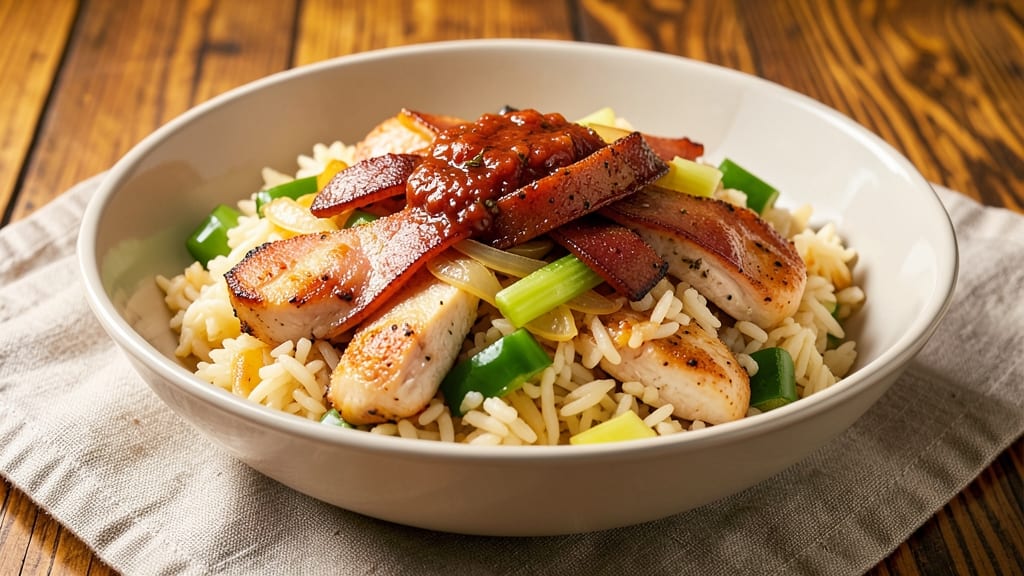
This Aroma rice cooker jambalaya recipe transforms your one-pot appliance into a Cajun flavor factory—no stovetop required. The rice cooker’s sauté function handles all the browning while the steam cooking develops deep, layered spices that turn simple ingredients into a restaurant-worthy dish.
After years of testing, I’ve perfected a method that delivers perfectly cooked rice and tender protein without sticking or burning.
What sets this apart is the rice cooker’s ability to maintain even heat throughout the cooking process, ensuring the jambalaya develops rich, smoky notes while keeping the rice fluffy and the sausage juicy.
The secret lies in using the sauté function first to build flavor, then letting the steam work do the rest—no monitoring required. This is the kind of one-pot meal that simplifies weeknight cooking while delivering professional results.
Ingredients for aroma rice cooker jambalaya
One-pot simplicity meets Cajun depth—just 15 ingredients for a restaurant-quality jambalaya.
| Ingredient | Amount | Notes |
|---|---|---|
| Long-Grain White Rice 🍚 | 1 ½ cups | Uncooked, medium-grain preferred |
| Andouille Sausage 🌭 | 1 lb | Smoked, sliced into half-moons |
| Boneless Chicken Thighs 🍗 | 1 ½ lb | Skinless, cut into 1-inch pieces |
| Yellow Onion 🧅 | 1 whole | Medium, diced into 1/4-inch pieces |
| Green Bell Pepper 🌶️ | 1 whole | Medium, diced into 1/4-inch pieces |
| Celery Stalks 🥬 | 2 whole | Medium, diced into 1/4-inch pieces |
| Garlic Cloves 🧄 | 4 cloves | Fresh, minced into fine granules |
| Cajun Holy Trinity Seasoning 🌶️ | 2 tbsp | Homemade blend (see notes) |
| Smoked Paprika 🌶️ | 1 tbsp | High-quality, not sweet variety |
| Dried Thyme 🌿 | 1 tsp | French preferred, not Italian |
| Bay Leaves 🍃 | 2 whole | Fresh, not dried |
| Chicken Stock 💧 | 2 cups | Low-sodium, homemade preferred |
| Tomato Paste 🍅 | 1 tbsp | San Marzano preferred |
| Lemon Juice 🍋 | 1 tbsp | Freshly squeezed |
| Diamond Crystal Kosher Salt 🧂 | 1 ½ tsp | Fine grain preferred |
The rice cooker’s sauté function transforms basic ingredients into complex flavors. For the Andouille sausage, opt for high-quality smoked varieties—Zatarain’s or Thibodeaux brands deliver authentic Cajun character. The chicken thighs should be skinless but retain moisture, so avoid over-trimming. For the Holy Trinity base (onion, bell pepper, celery), fresh produce yields better texture than frozen. If using pre-diced mixes, rinse thoroughly to remove excess moisture. The smoked paprika is non-negotiable—Penzeys or La Boîte brands offer superior depth compared to grocery store options.
No Cajun seasoning blend? Create your own by combining 1 tbsp paprika, 1 tsp dried thyme, 1 tsp garlic powder, 1/2 tsp dried oregano, 1/4 tsp cayenne, and 1/2 tsp black pepper. Substituting andouille? Spicy kielbasa works in a pinch, but add 1/2 tsp extra smoked paprika. For the tomato paste, squeeze tubes from Trader Joe’s eliminate waste and maintain freshness. The chicken stock can be substituted with low-sodium beef stock, but homemade yields superior flavor. Fresh bay leaves infuse more aroma than dried, so use them if available. For the lemon juice, freshly squeezed brightens the dish more than bottled versions.
This jambalaya develops better flavors overnight. Store leftovers in an airtight container for up to 4 days in the refrigerator, though it reheats beautifully with a splash of water or stock. For longer storage, freeze portions for up to 3 months. The rice cooker’s even heat distribution ensures consistent texture, but avoid overfilling beyond the 2/3 capacity mark for optimal steam circulation. If making ahead, prepare the jambalaya without rice, then cook the rice separately and mix in at the end to maintain perfect texture.
Why You'll Love This Recipe
- One-Pot Magic: I swear by this—just dump everything in the rice cooker, hit start, and walk away. No skillet burns, no sticky rice mess, and the aroma fills the house while you do laundry or scroll through your phone. The rice cooker’s built-in timer means I never overlook it (unlike my last attempt with a stovetop pot).
- Smoky-Spiced Kick: That andouille sausage? Oh, it’s the star. The smoky, slightly spicy notes from the sausage marry perfectly with the chicken and bell pepper, while the onions caramelize just enough to give it depth. Honestly, the first time I tasted it, I thought, "Why haven’t I been doing this all along?" (Yes, even on a Tuesday night.)
- Lunchbox Hero: This recipe doubles easily, and the leftovers? Chef’s kiss. Pack it in containers for work lunches—it reheats beautifully, and the rice stays fluffy. My kids actually eat their veggies (shh, don’t tell them it’s hidden in there), and my husband? He’s been known to ask for seconds before the plate even makes it to the table.
- Budget-Friendly Feast: Chicken thighs and sausage stretch across multiple meals without breaking the bank, and long-grain rice is one of the most affordable staples out there. I’ll be real: it’s the kind of dish that makes grocery day feel like a win, especially when I’m stretching a paycheck. Plus, the flavors are so rich, you’d never guess it’s a budget-friendly meal.
Step-by-step instructions for aroma rice cooker jambalaya
This one-pot method delivers deeply layered Cajun flavors with minimal effort.
Sauté the Holy Trinity and Protein
Set your Aroma rice cooker to sauté mode and add the sliced andouille sausage. Cook for 3-4 minutes until the edges begin to brown and the fat renders out. Remove the sausage and set aside, leaving the rendered fat in the pot.
In the same fat, add the diced yellow onion, green bell pepper, and celery stalks. Sauté for 5-6 minutes until the vegetables soften and the onion becomes translucent. This foundational step develops the jambalaya's signature flavor base. Add the minced garlic cloves and cook for 30 seconds until fragrant—don't let it burn, as this will make the dish bitter.
Return the andouille sausage to the pot along with the cut boneless chicken thighs. Stir to coat everything evenly in the rendered fat. Sprinkle the 2 tablespoons Cajun Holy Trinity Seasoning and 1 tablespoon Smoked Paprika over the mixture, pressing the spices into the chicken and sausage. This ensures maximum flavor penetration.
Build the Flavor Base
Add the 1 tablespoon Tomato Paste and stir vigorously for 1 minute to distribute it evenly. This creates a rich, umami foundation that balances the heat. Pour in the 2 cups Chicken Stock and bring the mixture to a gentle simmer. The liquid should nearly cover the chicken and sausage.
Add the 1.5 teaspoons Diamond Crystal Kosher Salt, 1 teaspoon Dried Thyme, and 2 whole Bay Leaves to the pot. Stir once to combine, then let the mixture simmer for 5 minutes to allow the spices to meld. You'll notice the aroma intensify—this is when the jambalaya truly begins to develop its character.
Real talk: If the mixture reduces too quickly, add 2-3 tablespoons water to maintain the proper consistency. The goal is a sauce that coats the back of a spoon but isn't watery.
Incorporate the Rice and Finish Cooking
Add the 1.5 cups Long-Grain White Rice to the rice cooker, stirring gently to distribute it evenly among the other ingredients. The rice should absorb the flavorful liquid immediately. Pour in the 1 tablespoon Lemon Juice and give the mixture one final stir.
Close the rice cooker lid and select the white rice setting. The cooker will automatically adjust to the proper temperature and cooking time. For best results, avoid opening the lid during cooking—this releases steam and can lead to unevenly cooked rice.
Cooking time will be approximately 25-30 minutes, but your Aroma rice cooker will handle the timing automatically. You'll know it's done when the rice is tender and the liquid has been fully absorbed. If you press down gently on the rice with a fork, it should feel firm but still slightly moist in the center.
Rest and Serve
Once the rice cooker indicates the cooking cycle is complete, let the jambalaya rest for 5 minutes before serving. This resting period allows the flavors to fully meld and the rice to finish absorbing any remaining liquid. It also prevents the rice from becoming mushy when you serve it.
Gently fluff the jambalaya with a fork, being careful not to break up the chicken or sausage. Serve immediately in deep bowls, allowing each guest to experience the rich layers of Cajun-spiced rice, tender chicken, and smoky andouille. The aroma alone will make your kitchen smell like a Louisiana bayou.
For optimal texture, serve with a side of crusty bread to soak up any remaining sauce. The jambalaya will continue to develop deeper flavors as it sits, so enjoy it while it's warm.
Pro Tips For Making Aroma Rice Cooker Jambalaya
- CRISP THE SAUSAGE FIRST: Don’t just toss raw andouille into the rice cooker—brown it first in a dry skillet over medium-high heat until the casing cracks and the fat renders. I learned this the hard way: skipping this step means your jambalaya will taste more like stewed sausage than the smoky, caramelized base you’re after. (Yes, even if you’re impatient like me.)
- DICE ONIONS SMALL: Cut those yellow onions into 1/8-inch pieces—no bigger than a pea. I used to eyeball it and end up with big chunks that stayed crunchy while everything else got tender. Small dice means even cooking and maximum flavor infusion, especially in a rice cooker where you’re not stirring constantly.
- USE HALF THE WATER: Rice cookers vary wildly, but for jambalaya, start with 1.5 cups of liquid for 2 cups of rice—not the 2:1 ratio you’d use for plain rice. The andouille and chicken release moisture, and you want that rice to absorb everything without turning mushy. (Your future self will thank you.)
- SEAR CHICKEN IN BATCHES: Don’t crowd the pan when browning chicken thighs—work in two batches if needed. Overcrowding steams the meat instead of searing it, and you’ll end up with pale, bland protein. A hot, slightly crowded pan is fine for onions and peppers, but chicken needs space to develop that golden crust.
Troubleshooting great aroma rice cooker jambalaya
Burnt Rice Solution
If your jambalaya rice turns out burnt or crusty at the bottom, it’s usually from overcooking or insufficient liquid. I’ve found that using 1.5 cups rice with 2 cups stock (plus extra liquid during sautéing) prevents this.
For future batches, try adding 2-3 tablespoons water or stock if the rice cooker’s pot feels dry before starting the cycle. The Aroma rice cooker’s white rice setting should handle this, but some models need manual adjustments. 💡
Mushy Rice Fix
Mushy rice happens when too much liquid remains after cooking. If this occurs, let the jambalaya rest uncovered for 5-10 minutes to evaporate excess moisture. For next time, reduce the stock by ¼ cup or add ½ cup uncooked rice at the end of cooking to absorb extra liquid.
Also, avoid opening the lid during cooking—steam escape is the #1 cause of mushy rice. ✨
Undercooked Protein
If your chicken or sausage stays undercooked, it’s likely because the rice cooker’s heat isn’t high enough for browning. First, ensure you’re using the sauté function to fully cook the protein before adding rice.
For extra insurance, add 1-2 minutes to the sauté time for chicken thighs and 4-5 minutes for sausage until internal temps reach 165°F. If using pre-cooked sausage, skip this step entirely. 🌡️
Uneven Cooking
Uneven cooking often stems from overfilling the rice cooker. Never exceed the 2/3 capacity mark—this disrupts steam circulation. If your jambalaya has dry spots, stir gently after cooking to redistribute moisture.
For future attempts, spread ingredients evenly in the pot before adding rice. Also, avoid stirring during the cooking cycle, as this can create hot and cold zones. 🔥
Liquid Issues
If your jambalaya is too watery, the rice likely absorbed less liquid than expected. For immediate fixes, let it sit uncovered for 10-15 minutes to evaporate excess moisture. To prevent this, use 1.5 cups rice with 1.75 cups stock (adjust based on your rice cooker’s absorption rate).
If the sauce is too thick, stir in 1-2 tablespoons water or stock while reheating. 💧
Spice Balance
If your jambalaya tastes bland, the spices likely didn’t infuse properly. First, ensure you’re using the sauté function to toast spices directly in the rendered fat. For extra depth, add ½ teaspoon cayenne or 1 teaspoon smoked paprika during the final stir.
If the heat is overwhelming, balance it with 1 tablespoon lemon juice or a pinch of sugar. Taste as you go—this is key to perfecting Cajun flavors! 🌶️
Nutrition facts
Frequently asked questions
Can I use shrimp instead of chicken in this rice cooker jambalaya?
Shrimp cooks much faster than chicken, so add it only in the last 5 minutes of cooking to avoid overcooking. Use 1 lb large shrimp (peeled and deveined) and increase the smoked paprika by ½ teaspoon to complement the seafood.
Why does my jambalaya taste different from restaurant versions?
Restaurant jambalayas often use a holy trinity base (onion, bell pepper, celery) cooked low and slow for hours. Your rice cooker version develops flavor differently—focus on the sauté function to caramelize the spices and let the steam work its magic. The key is proper spice infusion during the sauté step.
Can I make this jambalaya in a regular pot instead?
Yes, but you'll need to monitor it closely. Use medium-low heat after adding rice to prevent burning. The rice cooker's automatic temperature control makes it foolproof—no risk of scorched rice or uneven cooking. For stovetop, reduce stock by ¼ cup and stir frequently.
How do I adjust the spice level for kids or sensitive eaters?
Reduce the cayenne by ½ teaspoon (or omit entirely) and replace with ½ teaspoon sweet paprika for color. Also cut the smoked paprika to ½ teaspoon. For extra mildness, add 1 extra bay leaf and ½ cup extra stock to dilute the heat.
What's the best way to reheat leftovers?
Add 2-3 tablespoons water or stock per cup of jambalaya and reheat on low heat or in the rice cooker's sauté function. Never microwave—it creates rubbery rice. For best texture, reheat just until warmed through (2-3 minutes).