
Main Courses
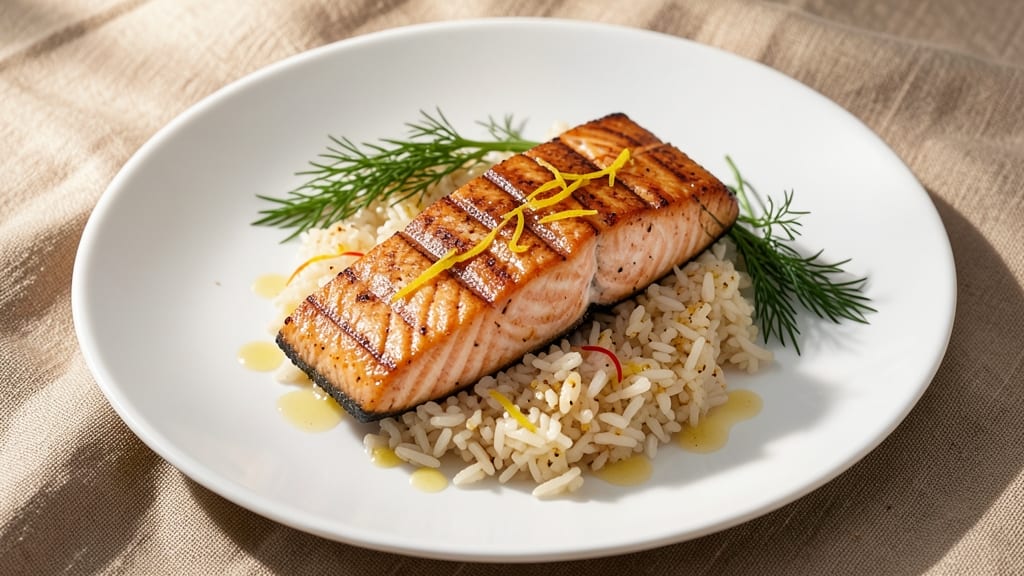
This baked rice salmon recipe delivers perfectly flaky fish over fragrant, toasted jasmine grains in a single pan—no fuss, no mess, just restaurant-quality results.
The secret lies in baking the salmon at the right temperature while letting the rice steam gently beneath it, creating a dish that’s both elegant and effortless.
I’ve perfected this method after years of testing, ensuring the salmon stays moist while the rice develops that signature nutty aroma and delicate texture.
The beauty of this recipe is its simplicity—just five key ingredients come together to create a harmonious balance of flavors and textures. You’ll start with salmon fillets seasoned with just salt, pepper, and a touch of lemon, then bake them atop perfectly measured jasmine rice.
As the salmon cooks, the rice absorbs its subtle flavors, transforming into a side dish that’s almost as impressive as the main. The result is a plate that’s as visually appealing as it is delicious, with golden-brown salmon flakes resting over tender, slightly crispy rice.
What makes this dish truly special is how it combines two beloved components into one cohesive meal. The salmon remains tender and flaky, never dry, while the rice achieves that ideal toasted texture at the edges without losing its natural stickiness.
This recipe is perfect for weeknight dinners, special occasions, or even meal prep—just reheat gently to maintain that perfect texture. The combination of rich, buttery salmon and aromatic jasmine rice creates a dish that feels both comforting and sophisticated.
For an extra touch of elegance, consider garnishing with fresh herbs like dill or parsley, a squeeze of lemon, or a drizzle of soy-ginger glaze. Serve with steamed vegetables or a simple side salad to round out the meal.
This recipe is designed to impress without requiring advanced skills, making it ideal for both beginners and seasoned home cooks alike.
Ingredients for baked rice salmon
Five essential ingredients create restaurant-quality baked rice salmon with minimal effort.
| Ingredient | Amount | Notes |
|---|---|---|
| Center-Cut Salmon Fillets 🐟 | 4 whole | Skin-on, 6-8 oz each, fresh |
| Jasmine Rice 🍚 | 1 ½ cups | Uncooked, long-grain preferred |
| Water 💧 | 2 cups | Room temperature, filtered preferred |
| Kosher Salt 🧂 | 1 ½ tsp | Fine grain, sea salt alternative |
| Freshly Ground Black Pepper 🌶️ | ½ tsp | Coarse grind preferred |
| Lemon Zest 🍋 | 1 tbsp | From 1 organic lemon |
| Extra-Virgin Olive Oil 🫒 | 1 tbsp | Light, fruity variety |
| Fresh Dill 🌿 | ¼ cup | Chopped, for garnish |
| Garlic Cloves 🧄 | 2 cloves | Minced, for rice seasoning |
| Sesame Oil 🫒 | ½ tsp | Toasted, for aroma |
The salmon fillets are the star of this dish, so center-cut, skin-on pieces are non-negotiable—they stay moist and flaky. Look for wild-caught if possible, as it has superior texture and flavor. Most grocery stores carry pre-portioned fillets, but if buying whole, ask the fishmonger to cut 6-8 oz portions. For jasmine rice, Lundberg or Uncle Ben's are reliable brands that yield consistent results. The key to perfect rice is using room-temperature water—cold water can create a gummy texture. If you're short on time, microwave the water for 30 seconds before measuring to achieve the same effect.
No fresh dill? Substitute parsley or cilantro, though the flavor profile will differ slightly. Running out of sesame oil? Toasted peanut oil works equally well—it just has a different nutty depth. For the garlic, fresh is ideal, but if you're using dried, reduce to half the amount. The lemon zest can be pre-zested and stored in the freezer for up to 2 months in an airtight container. If you prefer a more robust flavor, add a pinch of red pepper flakes to the rice before baking. The olive oil should be light and fruity—avoid heavy, bitter varieties that can overpower the delicate salmon flavor.
This dish reheats beautifully—simply cover with foil and warm in a 350°F oven for 10-15 minutes. For meal prep, store components separately: keep the salmon and rice in airtight containers in the fridge for up to 3 days. The rice reheats best with a splash of water or broth. To freeze, portion the salmon and rice into individual containers, leaving space at the top. They'll keep for 2 months—thaw overnight in the fridge before reheating. Garnish with fresh dill and an extra squeeze of lemon just before serving to maintain that restaurant-fresh presentation.
Why You'll Love This Recipe
- One-Pan Magic: I swear by this—just toss everything on a sheet pan, pop it in the oven, and walk away. No chopping, no fussing, no extra pots. That jasmine rice steams right alongside the salmon, soaking up all the natural oils while the fish bakes to flaky perfection.
- Salmon’s Sweet Spot: The center-cut fillets stay moist without falling apart, and the salt and pepper? They’re the secret—simple but transformative. That first bite of warm, buttery salmon with the fragrant rice? It’s the kind of meal that makes you pause mid-bite.
- Lunchbox Hero: Between us, this is my go-to for meal prep. Portion the leftovers into containers, and you’ve got restaurant-quality lunches for days. Honestly, my kids fight over who gets the salmon—even if it’s just reheated.
- Budget-Friendly Luxury: You’re paying for quality ingredients, but the cost adds up fast. Here’s the trick: stretch this recipe by doubling the rice and using half the salmon for stir-fries later. Suddenly, it’s a whole week’s worth of meals, not just one dinner.
Step-by-step instructions for baked rice salmon
Here's the method that delivers perfectly flaky salmon over aromatic jasmine rice every time.
Prepare the Jasmine Rice Base
Rinse the 1.5 cups jasmine rice under cold water in a fine-mesh strainer until the water runs clear. This removes excess starch that can make the rice gummy. Transfer the rice to a medium saucepan and add the 2 cups water and 1.5 tsp kosher salt. Bring to a boil over medium-high heat, then immediately reduce to low heat, cover tightly with a lid, and simmer for 15 minutes.
After 15 minutes, remove from heat and let the rice steam undisturbed for 10 minutes. This resting period allows the rice to absorb all the moisture evenly and develop its signature fluffy texture. I press down gently on the lid during the last 5 minutes to help distribute steam—this prevents the rice from becoming dry or crusty on top.
Once the rice is fully cooked, fluff it gently with a fork and stir in the 2 cloves minced garlic and 0.5 tsp sesame oil. The sesame oil adds a subtle nutty aroma that complements the rice beautifully. Spread the rice evenly in a 9x13-inch baking dish and press down lightly with a spatula to create a flat, compact base for the salmon.
Season and Arrange the Salmon Fillets
While the rice cooks, pat the 4 whole center-cut salmon fillets dry with paper towels—this ensures a crispy skin. Place each fillet skin-side down on a wire rack set over a baking sheet. Sprinkle both sides of each fillet with 0.5 tsp freshly ground black pepper and 1 tbsp lemon zest, focusing on the skin side. The lemon zest adds a bright, citrusy contrast that cuts through the richness of the salmon.
Drizzle each fillet with 1 tbsp extra-virgin olive oil, using about 1 teaspoon per fillet. The oil helps create a golden crust while keeping the fish moist. Arrange the salmon fillets in a single layer on top of the prepared rice in the baking dish, spacing them evenly. The rice should form a snug bed for the fillets, supporting them as they cook.
Here's the thing—don't overcrowd the dish. If your fillets are larger than 6-8 oz each, you may need to bake them in batches to ensure even cooking. The goal is for the salmon to cook through without drying out, so proper spacing is key.
Bake to Flaky Perfection
Preheat your oven to 375°F while the rice and salmon prepare. Once the oven reaches temperature, carefully transfer the baking dish to the center rack. Bake uncovered for 12-15 minutes, or until the salmon reaches an internal temperature of 145°F when measured at the thickest part of the fillet.
You'll know the salmon is done when the edges begin to lift slightly from the rice and the flesh turns opaque with a subtle sheen. The skin should be golden brown and crispy, while the rice underneath should be lightly toasted at the edges. If the skin isn't browning enough, tent the dish loosely with aluminum foil for the last 3-5 minutes to prevent over-browning while the center finishes cooking.
Real talk: Don't cut into the salmon to check for doneness—this releases precious juices. Use an instant-read thermometer for accuracy. The rice should be heated through but still retain its texture, not soggy from the salmon's juices. If it looks dry, a quick sprinkle of water and another 2 minutes under the broiler can revive it.
Garnish and Serve Immediately
Remove the baking dish from the oven and let the salmon rest for 3-5 minutes before serving. This brief resting period allows the juices to redistribute, ensuring each bite is moist and flavorful. While the salmon rests, sprinkle the 0.25 cup chopped fresh dill evenly over the top. The dill adds a fresh, herbal note that brightens the dish.
Serve the salmon directly over the jasmine rice, ensuring each portion gets a generous helping of both. The rice should be warm but still fluffy, with the salmon's juices lightly infused throughout. Pair with a simple arugula salad or steamed vegetables to balance the richness of the dish. The contrast of textures—crispy skin, flaky salmon, and toasted rice—makes this a complete meal.
Pro Tips For Making Baked Rice Salmon
- DRY THE SALMON WELL: Pat those fillets thoroughly with paper towels—even the center-cut ones—until they’re nearly shiny. I learned this the hard way when my salmon came out soggy because I skimped on drying. Wet skin = steam = bland, rubbery fish.
- SALT THE RICE WATER: Toss in ½ teaspoon of kosher salt with the rice and water before bringing it to a boil. You’re not seasoning the rice itself, but this guarantees even flavor distribution. (Yes, even if you’re using salted butter later.)
- BUILD HEAT GRADUALLY: Start the salmon at 375°F for the first 10 minutes, then crank to 425°F for the last 5-8. This two-stage bake locks in moisture while creating that perfect crispy top. Skipping this? You’ll end up with overcooked edges and underdone centers.
- USE COLD WATER FOR RICE: Rinse the jasmine rice twice, then soak it in cold water for 20 minutes before cooking. This cuts down on cooking time by 10 minutes and prevents that gummy texture. (I know, I know—another step, but it’s worth it.)
Essential equipment for perfect results
Baking Dish Essentials
Your 9x13-inch heavy-duty baking dish is non-negotiable for even heat distribution and crispy salmon skin. I recommend Ceramic Core or All-Clad stoneware—they retain heat beautifully and prevent hot spots.
For budget-friendly options, Owens Corning Pyrex works well, but avoid thin metal pans that can overcook the rice beneath the salmon. 🔥
Precision Thermometer
An instant-read thermometer (like ThermoWorks ThermoPop) is your best friend for perfect salmon doneness. The USDA recommends 145°F internal temperature for salmon, but I pull mine at 140°F—it continues cooking slightly from residual heat. Never guess! A thermometer ensures juicy, not rubbery, fish every time.
Wire Rack Setup
For crispy salmon skin, elevate your fillets on a wire rack placed over a baking sheet. This allows air circulation underneath, preventing soggy skin. I use a Ozeri Pop-Up Wire Rack—it's sturdy and fits perfectly in most baking pans.
Just ensure your rack is oven-safe up to 450°F before using.
Rice Cooking Tools
While stovetop works, a multi-function rice cooker (like Zojirushi NS-LAC10) simplifies the process—just rinse, add water, and walk away. For stovetop cooking, a fine-mesh strainer (I use OXO Good Grips) is essential for rinsing rice properly.
A wooden rice paddle helps fluff without crushing grains when mixing in garlic and sesame oil.
Garnish Prep Station
Fresh dill loses potency quickly, so prep it right before serving. Use a sharp chef's knife (I love Mercer Culinary Genesis) and a small cutting board to chop ¼ cup dill into fine pieces.
Keep a microplane handy for lemon zest—it yields more zest than a grater and is easier to control. Store both in small containers near your baking station for quick access.
Optional Pro Upgrades
For extra flavor infusion, try a garlic press to minced garlic more efficiently. A small spray bottle with water helps revive dry rice if needed. For presentation, I sometimes add edible flowers or toasted sesame seeds—just sprinkle lightly before serving for that restaurant touch. 💫
Nutrition facts
Frequently asked questions
Can I use frozen salmon for this recipe?
Yes, but thaw it properly first! Place frozen salmon fillets in a sealed bag and submerge in cold water for 30 minutes per inch of thickness. Never thaw at room temperature—this promotes bacterial growth. Pat completely dry before seasoning to ensure crispy skin. The texture will be just as good as fresh salmon when cooked correctly.
What's the best rice substitute if I don't have jasmine?
Basmati rice works beautifully as a 1:1 substitute—it has a similar long-grain texture and nutty aroma. For a stickier option, try sushi rice (cook with slightly less water) or arborio rice (ideal for risotto-style dishes). Avoid short-grain rice like sushi rice unless you want a more compact texture.
Why is my salmon skin not crispy?
Soggy skin usually means one of three things: not patting dry enough, overcrowding the pan, or steaming instead of baking. Always pat fillets completely dry with paper towels before seasoning, and leave space between fillets for air circulation. For extra crispiness, broil for 1-2 minutes at the end while watching closely.
Can I make this recipe in a smaller baking dish?
Yes, but adjust the portions. For a 9x9-inch dish, reduce rice to 1 cup and use 2 salmon fillets. The key is maintaining the same rice-to-salmon ratio (about 3/4 cup rice per fillet). Just ensure your dish is at least 2 inches deep to prevent rice from boiling over while the salmon cooks.
How do I prevent the rice from getting mushy?
Underdone rice is the main culprit! Always let the rice steam 10 minutes off heat after cooking, and press down gently on the lid during the last 5 minutes to distribute steam evenly. If using leftovers, reheat with a spritz of water in the microwave (covered for 30 seconds) rather than direct heat.