
Main Courses
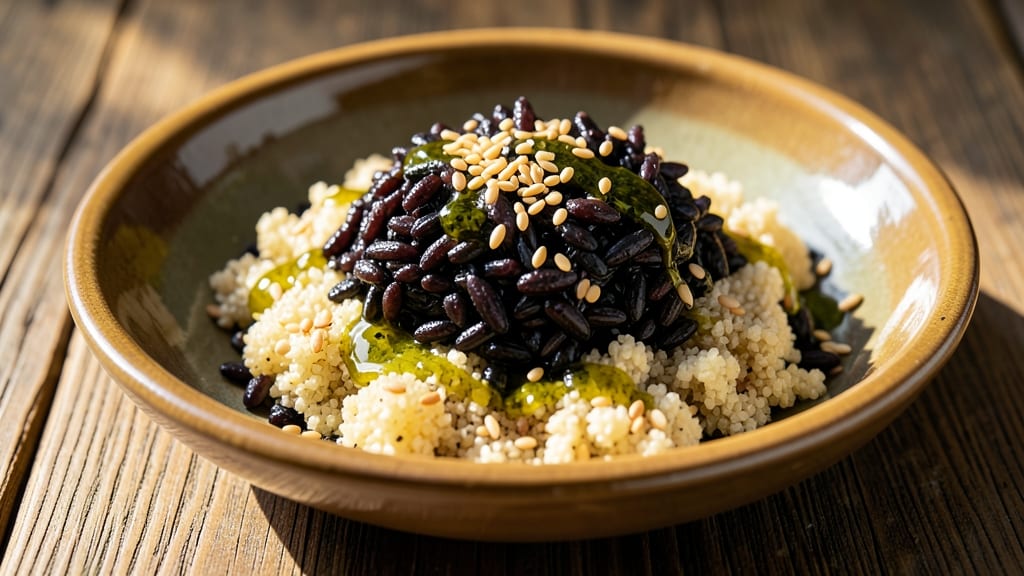
This black rice and quinoa recipe transforms two powerhouse grains into a deep purple velvet dish that’s as nutritious as it is visually stunning. The contrast of earthy black rice and fluffy quinoa creates a satisfying texture, while toasted sesame seeds add a satisfying crunch that elevates every bite.
Perfect for meal preppers, this recipe delivers balanced nutrition and restaurant-worthy presentation with minimal effort.
The secret lies in the cooking technique—rinsing the grains thoroughly removes bitterness, and toasting the sesame seeds unlocks their nutty depth. Pair this with a light citrus dressing or fresh herbs for brightness, and you’ll have a dish that’s vegan-friendly, protein-packed, and ready in under 45 minutes.
Whether served as a side or a hearty main, this recipe proves healthy eating can be both elegant and effortless.
Ingredients for black rice and quinoa
Two nutrient-dense grains meet toasted sesame crunch for a visually stunning, protein-rich vegan dish.
| Ingredient | Amount | Notes |
|---|---|---|
| Black Rice (Forbidden Rice) 🌾 | 1 cup | Uncooked, rinsed thoroughly |
| Quinoa 🌾 | 1 cup | Rinsed well to remove bitterness |
| Water 💧 | 2 ½ cups | Filtered preferred for clarity |
| Vegetable Broth 🍲 | 1 ½ cups | Low-sodium preferred |
| White Sesame Seeds 🌰 | ¼ cup | Toasted until golden |
| Extra-Virgin Olive Oil 🫒 | 1 tbsp | For toasting sesame seeds |
| Fresh Lemon Juice 🍋 | 2 tbsp | Freshly squeezed |
| Fresh Cilantro 🌿 | ¼ cup | Chopped, stems removed |
| Red Bell Pepper 🌶️ | ½ cup | Diced, fresh or frozen |
| Avocado 🥑 | 1 whole | Pitted, sliced for serving |
| Lime 🍈 | 1 whole | Zested and juiced |
| Himalayan Pink Salt 🧂 | ½ tsp | For seasoning |
| Black Pepper 🌶️ | ¼ tsp | Freshly ground |
| Coconut Aminos 🥄 | 1 tbsp | For umami depth |
The grains are the foundation—black rice delivers that deep purple hue and earthy flavor, while quinoa adds fluffy texture and complete protein. Whole Foods or Trader Joe's carry high-quality organic varieties, but any bulk bin at a natural grocery store works. Rinse both grains thoroughly before cooking to eliminate bitterness and excess starch. For the sesame seeds, toasting in olive oil unlocks their nutty depth—don't skip this step. The key to perfect grains lies in the ratio: 1 cup grain to 2.5 cups liquid ensures fluffy, separate textures rather than mushy clumps.
No black rice? Substitute purple sweet potato or beetroot powder for color, though the flavor will differ. Quinoa unavailable? Brown rice or farro works in a pinch, though texture will vary. Fresh herbs like cilantro and lime zest can be swapped for dried oregano and lemon zest at half the amount. The avocado adds healthy fats—if you prefer, toasted pumpkin seeds or tahini drizzle offer similar richness. For extra protein, stir in edamame or marinated tofu cubes at the end of cooking. Always toast sesame seeds in a dry pan until golden—microwaving kills their flavor.
Cooked grains keep 5 days in an airtight container in the fridge, though texture softens over time. For longer storage, freeze portions for up to 3 months. The toasted sesame seeds stay crisp for 1 week if stored in a sealed jar away from light. Reheat grains gently with a splash of water or broth to restore moisture. For meal prep, portion into containers with avocado slices on top—they'll oxidize but stay fresh for 3 days. Garnish with extra lime zest and cilantro just before serving to maintain vibrant color and freshness.
Why You'll Love This Recipe
- No-Fuss Cooking: I swear, this dish is one of those rare meals where you just measure, pour, and wait. Black rice and quinoa both cook in the same pot—no chopping, no stirring, no stress. Honestly, I’ve made it while scrolling through my phone because it’s that hands-off.
- Earthy Umami Magic: That deep, nutty flavor from the black rice? It’s like a cozy hug in a bowl. The vegetable broth adds this subtle richness, and when you sprinkle those toasted sesame seeds on top, it’s chef’s kiss—simple but undeniably satisfying.
- Meal Prep MVP: Between us, this is my go-to for busy weeks. Cook a big batch on Sunday, and you’ve got lunch or dinner sorted for days. It reheats like a dream, and the textures—chewy rice, fluffy quinoa—stay perfect even after three days. (Yes, even on a Tuesday night.)
- Budget-Friendly Powerhouse: Black rice might sound fancy, but it’s actually cheaper than you’d think, and quinoa stretches it further. A single batch feeds four, and the broth keeps it from tasting bland. I’ll be real: this is one of those dishes where you get restaurant-quality flavor without the price tag.
Step-by-step instructions for black rice and quinoa bowl
This method balances texture and flavor for a vibrant, nutrient-packed dish with perfect al dente grains.
Toast the Sesame Seeds and Prepare the Grains
Heat the 1 tablespoon extra-virgin olive oil in a dry skillet over medium heat. Add the ¼ cup white sesame seeds and toast for 2-3 minutes until they turn a rich golden brown and release their nutty aroma. Watch closely—they burn quickly once they start to darken. Remove from heat and set aside, reserving the oil in the pan for later.
In a separate medium saucepan, combine the 1 cup black rice (forbidden rice) and 1 cup quinoa with the 2.5 cups water. Bring to a boil over high heat, then immediately reduce to a simmer. Cover tightly with a lid and cook for 15 minutes without stirring. The grains should absorb the liquid and begin to soften—this initial cooking prevents them from becoming mushy later. After 15 minutes, stir once to distribute any settled grains, then add the 1.5 cups vegetable broth and 1 tablespoon coconut aminos. Return to a simmer, cover, and cook for an additional 15-18 minutes until the liquid is fully absorbed and the grains are tender but still have a slight bite. Remove from heat and let sit, covered, for 5 minutes to steam through.
Build the Flavor Base with Aromatics
Return the skillet with the reserved sesame oil to medium heat. Add the ½ cup diced red bell pepper and cook for 3-4 minutes until softened and just beginning to caramelize at the edges. Add the ¼ cup chopped fresh cilantro and stir for 30 seconds until fragrant. Pour in the 2 tablespoons fresh lemon juice and zest from 1 lime, scraping up any browned bits from the bottom of the pan. This deglazing captures all the flavor you’ve built so far. Season with the ½ teaspoon Himalayan pink salt and ¼ teaspoon black pepper, then remove from heat.
While the pan cools slightly, zest the remaining 1 lime and extract 2 tablespoons juice. The bright acidity will cut through the richness of the grains and avocado, balancing the dish perfectly. Keep this mixture handy—it’s the final touch that ties everything together.
Assemble and Serve with Fresh Components
Gently fluff the cooked grains with a fork, then transfer them to a large serving bowl. Drizzle with the warm pepper-cilantro mixture, tossing lightly to coat evenly. The grains should glisten slightly from the oil and lemon, indicating they’re properly seasoned. Taste and adjust the seasoning if needed—add a pinch more salt or a splash of lime juice if the dish feels flat.
To serve, slice the 1 whole avocado into thick rounds and arrange them on top of the grain mixture. The creamy avocado provides a beautiful contrast to the deep purple grains and adds healthy fats for balance. Garnish with the toasted sesame seeds you prepared earlier, sprinkling them generously over each serving. The crunch and nutty flavor will elevate the dish with every bite.
Pro Tips For Making Black Rice And Quinoa
- SOAK THE BLACK RICE: I learned this the hard way—black rice stays stubbornly chewy if you skip soaking. Toss it in water for at least 30 minutes (or overnight if you're patient), then rinse thoroughly before cooking. The extra step guarantees tender grains that don’t turn to mush.
- COOK QUINOA SEPARATELY: Mixing them in one pot leads to uneven texture—quinoa cooks faster and dries out while black rice needs longer. Toast the quinoa first in a dry pan for 2 minutes, then simmer in broth for 12-15 minutes. Save the black rice for later; it’ll thank you with perfect al dente grains.
- USE BROTH, NOT WATER: Water makes this dish bland. Swap half the liquid for vegetable broth—it adds depth without overpowering the earthy black rice. If you’re short on time, even a splash of soy sauce or a pinch of salt in the water works in a pinch.
- TOAST SESAME SEEDS LAST: Freshly toasted white sesame seeds add crunch, but they burn fast. Skip toasting them until the very end—just sprinkle them over the finished dish in a dry pan for 30 seconds. This keeps their nutty flavor intact and avoids bitter bits.
Regional styles of this dish
Asian-Inspired Fusion
The Japanese call black rice "forbidden rice" for its historical rarity, and this dish honors that heritage by blending it with quinoa—a South American staple.
In Kyoto, chefs often pair black rice with miso-glazed tofu and pickled ginger, while Taiwanese street food features similar bowls with crispy fried shallots instead of sesame seeds.
For an authentic twist, swap the lime zest for yuzu (a Japanese citrus) and add pickled daikon radish for tangy crunch. 🌏
Southwest Mexican Style
In Oaxaca, Mexico, black rice is a staple in hearty mole dishes, and this recipe translates beautifully to a Southwest-inspired bowl. Replace the coconut aminos with adobo sauce (½ cup) and add charred corn (½ cup) and diced jalapeño (2 tbsp) to the pepper mixture.
Top with crumbled queso fresco and cilantro-lime crema for a vibrant, spicy kick. The smoky depth of adobo complements the earthy grains perfectly.
Mediterranean Twist
For a Greek-inspired version, swap the sesame seeds for toasted pine nuts (¼ cup) and the lime for orange zest (1 tbsp).
Add sun-dried tomatoes (¼ cup, chopped) and kalamata olives (½ cup, pitted) to the pepper mixture, then finish with a drizzle of extra-virgin olive oil and a sprinkle of feta cheese (optional for non-vegan).
The Mediterranean flavors shine with bright herbs like oregano and thyme, creating a dish that feels both familiar and fresh.
Modern Vegan Bowl
This dish thrives in West Coast vegan restaurants, where chefs elevate simple grains with bold toppings. Add marinated artichoke hearts (½ cup) and roasted cherry tomatoes (½ cup) for extra depth.
Drizzle with a tahini-lemon dressing (2 tbsp tahini + 1 tbsp lemon juice + 1 tbsp water) and garnish with microgreens or edible flowers for a restaurant-worthy presentation. The contrast of creamy avocado and crunchy sesame seeds makes every bite feel luxurious. ✨
Latin American Arepas Fusion
In Colombia and Venezuela, arepas are beloved cornmeal patties, but this recipe adapts the concept with black rice and quinoa. Press the cooked grains into a thick patty (about 1 inch) and pan-fry in coconut oil until crispy on the outside.
Stuff with black beans (½ cup), avocado slices, and a spicy mayo (mix 2 tbsp vegan mayo with 1 tsp sriracha). Serve with a side of mango salsa for a fusion dish that’s both comforting and innovative.
Nutrition facts
Frequently asked questions
Why does my black rice turn gray instead of deep purple?
Gray-tinted black rice usually means it wasn't rinsed thoroughly before cooking. The bran layer contains natural oils that cause discoloration. Rinse 3 times in cold water until the water runs clear, then cook with extra vegetable broth (not water) to preserve the rich color. Overcooking also dulls the hue—aim for 15-18 minutes total with broth.
Can I make this gluten-free?
This recipe is naturally gluten-free as long as you use certified gluten-free quinoa and check your vegetable broth and coconut aminos labels. Most store-bought quinoa is gluten-free, but brands like Bob's Red Mill or 365 by Whole Foods guarantee it. For extra safety, cook the grains in fresh water instead of broth if needed.
How do I prevent quinoa from becoming mushy?
The key is the two-stage cooking method in the recipe: boil with water first, then add broth later. Never skip the initial 15-minute simmer—this firms up the grains. After adding broth, keep the heat at a gentle simmer (not boiling) and cook uncovered for the last 5 minutes to let excess moisture evaporate. For extra insurance, use a 1:2.5 grain-to-liquid ratio.
What's the best way to reheat leftovers?
Reheat in a steamer basket—this preserves texture better than microwaving. Add 1-2 tablespoons water or broth to the grains and cover with a damp paper towel. Steam for 3-4 minutes—just until warmed through. For the avocado topping, add it fresh after reheating since it oxidizes quickly. Store cooked grains in an airtight container for up to 5 days.
Can I use brown rice instead of quinoa?
Brown rice works but will change the texture—it's chewier and less fluffy than quinoa. For a 1:1 swap, increase cooking time by 10-15 minutes—brown rice needs more time to soften. Boost flavor by adding ½ tsp smoked paprika—it mimics quinoa's earthy notes. The dish will be heartier but less protein-packed since quinoa contains all 9 essential amino acids.