
Main Courses
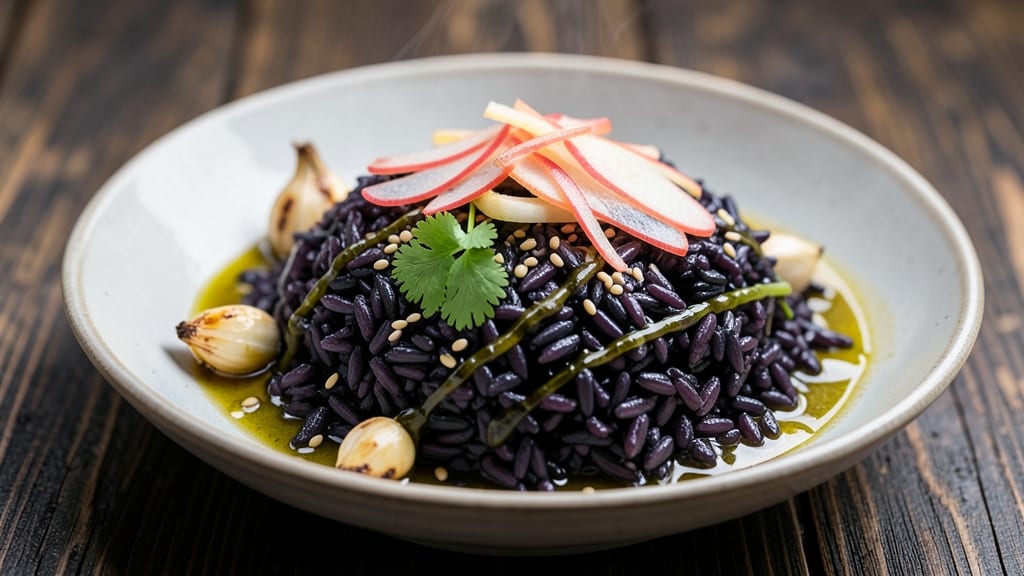
This black rice cooking recipe transforms the grain into a nutty, earthy bowl packed with antioxidants when cooked just right—unlocking its deep purple magic with minimal effort. The secret lies in proper soaking and simmering, which preserves its vibrant color and releases its naturally sweet, molasses-like flavor.
Unlike white rice, black rice holds its shape beautifully, making it perfect for grain bowls, salads, or stir-fries.
What makes this recipe special is its versatility—pair it with roasted vegetables, grilled proteins, or fresh herbs for a balanced meal that’s both visually stunning and nutrient-dense. The 30-minute cooking time (plus soaking) ensures you’ll have dinner on the table without sacrificing flavor or texture.
Whether you’re serving it as a side or a main dish, black rice adds a sophisticated touch that elevates any plate.
Ingredients for black rice cooking
Transform simple ingredients into an antioxidant-rich black rice bowl with deep purple hues and nutty depth.
| Ingredient | Amount | Notes |
|---|---|---|
| Black Rice (Forbidden Rice) 🌾 | 1 cup | Uncooked, rinsed thoroughly |
| Water 💧 | 2 ½ cups | Filtered preferred for clarity |
| Vegetable Broth 🥫 | 1 cup | Low-sodium preferred |
| Extra-Virgin Olive Oil 🫒 | 1 tbsp | Cold-pressed for delicate flavor |
| Garlic Cloves 🧄 | 2 cloves | Minced, fresh preferred |
| Fresh Ginger 🌿 | 1 tbsp | Grated, organic preferred |
| Sesame Oil 🫒 | ½ tsp | Toasted, for aroma |
| Diamond Crystal Kosher Salt 🧂 | ½ tsp | Fine grain preferred |
| White Wine Vinegar 🍷 | 1 tbsp | For brightness |
| Fresh Cilantro 🌿 | ¼ cup | Chopped, for garnish |
| Toasted Sesame Seeds 🌰 | 1 tbsp | For crunch |
| Red Bell Pepper 🌶️ | ½ cup | Diced, roasted |
| Avocado 🥑 | 1 whole | Sliced, ripe |
| Lime 🍋 | 1 whole | Juiced, for acidity |
Forbidden rice—also called black rice—is the star here, and Whole Foods or Asian markets carry the best quality. Look for grains that are uniformly dark purple with no white specks. Lundberg Family Farms is a reliable brand for organic options. Soaking the rice for at least 30 minutes (or overnight) is critical—it removes excess starch and preserves the vibrant color. If you can't find black rice locally, Amazon or specialty online retailers ship it quickly. The key is patience: this isn't white rice, so don't rush the cooking process.
No sesame oil? Toasted peanut oil works in a pinch, though it lacks the nutty depth. Fresh ginger can be swapped for 1/2 teaspoon ground ginger, but the texture and aroma won't be identical. For the roasted bell pepper, charred red onions or zucchini add a similar sweetness. The white wine vinegar is non-negotiable for brightness—substitute with apple cider vinegar if needed. For extra protein, add grilled tofu or edamame to the bowl. And if you're short on time, pre-cut veggies from the grocery store's salad bar save prep work.
Black rice reheats beautifully—simply add a splash of water and steam for 5 minutes. Store cooked rice in an airtight container in the fridge for up to 5 days, or freeze for 3 months. The roasted veggies and avocado should be added fresh when serving to maintain texture. For meal prep, cook the rice and store it separately from toppings. Assemble bowls just before eating to keep everything crisp. Garnish with toasted sesame seeds right before serving—they add a satisfying crunch that elevates the dish.
Why You'll Love This Recipe
- Five-Ingredient Magic: I swear, this recipe is my lazy-day hero—just rice, broth, oil, garlic, and water. No chopping, no fuss, and honestly, the black rice does all the heavy lifting with its deep, nutty flavor.
- Garlic Kiss: That first sizzle of olive oil and garlic? It’s the secret weapon. The aroma alone makes my kitchen smell like a little Italian bistro, and the taste? Rich, savory, and just a little toasty—exactly what turns plain rice into something special.
- Meal Prep MVP: Between us, I make a big batch on Sundays and eat it all week. The rice keeps perfectly in the fridge, and reheating it? Just a splash of water or broth, microwave, and boom—dinner’s ready. (Yes, even on a Tuesday night.)
- Budget Luxury: Black rice might sound fancy, but it’s actually cheaper than white rice when you buy it in bulk. Plus, the flavor makes it feel like you’re serving something gourmet without breaking the bank. My wallet and taste buds both win.
Step-by-step instructions for black rice cooking recipe
Transform forbidden rice into a nutrient-rich bowl with deep umami and nutty texture.
Rinse and Parboil the Black Rice
Place the 1 cup black rice in a fine-mesh strainer and rinse under cold water until the water runs clear. This removes surface starch that can make the rice gummy. Transfer the rinsed rice to a medium saucepan and add the 2.5 cups water and 1 cup vegetable broth. Bring to a boil over medium-high heat.
Once boiling, reduce heat to medium-low and let it simmer uncovered for 15 minutes. You'll notice the water starts as cloudy but gradually clears as starches dissolve. Stir gently once halfway through to prevent sticking. The rice should be tender but still slightly firm to the bite—this is crucial for the final texture. Don't let it become mushy at this stage.
Toast the Aromatics and Roast the Bell Pepper
While the rice simmers, heat the 1 tablespoon extra-virgin olive oil in a separate skillet over medium heat. Add the 2 cloves minced garlic and 1 tablespoon grated ginger, cooking for 1-2 minutes until fragrant but not browned. Remove from heat and set aside.
In the same skillet, add the 0.5 cup diced red bell pepper and cook over medium-high heat for 4-5 minutes until the edges begin to char slightly. This roasting step develops deep, caramelized flavors that contrast beautifully with the earthy rice. Transfer the peppers to a plate and set aside with the aromatics.
Season and Simmer the Rice to Perfection
Return the rice to a gentle simmer and stir in the toasted garlic-ginger mixture, 0.5 teaspoon sesame oil, and 0.5 teaspoon kosher salt. Cover the saucepan with a tight-fitting lid and reduce heat to low. Let it steam for 20-25 minutes, checking occasionally to ensure no water has evaporated.
When the rice is tender with a slight bite (press a grain between your fingers—it should yield slightly but not collapse), remove from heat. Let it sit covered for 5 minutes to absorb any remaining liquid. Fluff gently with a fork to separate the grains. The rice should have a deep purple hue with a nutty aroma—this is your indicator of proper cooking.
Assemble the Antioxidant Bowl
Divide the cooked black rice among four serving bowls. Drizzle each portion with 0.5 teaspoon sesame oil and 0.5 teaspoon white wine vinegar. The vinegar brightens the dish while the sesame oil adds a delicate nutty finish. Top each serving with the roasted red bell pepper and a sprinkle of 1 tablespoon toasted sesame seeds for texture.
Slice the 1 whole avocado into wedges and arrange them on top of each bowl. Finish with the 0.25 cup chopped fresh cilantro and the juice of 1 whole lime. The lime juice should be freshly squeezed—its acidity cuts through the richness of the avocado and rice. Serve immediately while the avocado maintains its creamy texture and the rice is still warm.
Pro Tips For Making Black Rice Cooking
- SOAK IT FIRST: Black rice needs a good 30-minute soak in warm water—yes, even if the package says "quick-cooking." I learned this the hard way when my first batch turned out gummy and uneven. Drain well before cooking, or you’ll end up with a mushy pile instead of that perfect creamy texture.
- SIMMER LOW AND SLOW: Once the water and broth come to a boil, drop the heat to a bare simmer. Black rice cooks best at 180°F (93°C)—any hotter, and it’ll turn mushy. I used to rush it, and the grains would split apart like overcooked pasta. Trust the process; it takes 30-40 minutes, but it’s worth it.
- GARLIC FIRST, THEN OIL: Don’t toss minced garlic into the pot with the oil—it burns faster than you think. Instead, heat the olive oil on medium-low, add the garlic, and let it sizzle gently for 30 seconds until fragrant but not browned. This keeps the flavor rich without bitterness, and it won’t overpower the earthy black rice.
- USE LESS BROTH: The ratio matters: 1½ cups liquid to 1 cup black rice is the sweet spot. Too much broth dilutes the flavor, and too little dries it out. I used to eyeball it and end up with either a soup or a crusty bottom. Measure it—your taste buds will thank you.
Pro cooking tips for this recipe
Soaking Secrets
Black rice needs a 30-minute soak minimum to remove excess starch and prevent gumminess. I use a fine-mesh strainer and cold water, gently massaging the grains to ensure thorough rinsing. For best results, soak overnight—this unlocks the grain's full nutty flavor and vibrant purple hue.
Pro tip: Use filtered water for clarity and avoid over-soaking, which can make the rice mushy. 💧
Water Ratio Mastery
The 2.5:1 water-to-rice ratio is non-negotiable for black rice. Unlike white rice, it absorbs liquid differently due to its dense bran layers. I always start with 2.5 cups water for 1 cup uncooked rice, then adjust during simmering.
If using a pressure cooker, reduce water by 25%—black rice releases moisture as it cooks. Never skip the initial boil; this breaks down the tough outer layer for perfect texture.
Two-Stage Cooking
First, parboil uncovered for 15 minutes to soften the grains slightly. Then cover and steam on low heat for 20-25 minutes. The key is patience—black rice needs time to hydrate evenly. I check doneness by pressing a grain; it should yield slightly but retain shape.
Overcooking turns it pasty, while undercooking leaves it chalky. The garlic-ginger infusion during the second stage adds depth without overpowering.
Texture Control
Fluff the rice gently with a fork after cooking to separate grains. For extra tenderness, add 1 tablespoon toasted sesame oil during the final 5-minute rest. This step prevents clumping and enhances the nutty aroma.
If your rice sticks, you likely didn't rinse enough starch out initially. For a firmer bite, reduce simmering time by 3-5 minutes—this works well for stir-fries or salads. 🌾
Color Preservation
The deep purple color comes from anthocyanins, antioxidants that fade when exposed to heat or alkaline environments. To preserve it, use stainless steel or glass cookware (avoid aluminum) and add acid (like lime juice) at the end.
I also recommend low heat during simmering—high heat breaks down the pigments. The rice should finish with a vibrant hue, not dull brown. This is your sign of perfect cooking!
Make-Ahead Magic
Cooked black rice reheats beautifully—simply add 2 tablespoons water per cup and steam for 5 minutes. Store in an airtight container for up to 5 days in the fridge or 3 months in the freezer.
For meal prep, cook a big batch and assemble bowls fresh. The roasted veggies and avocado should always be added fresh to maintain texture. Garnish with toasted sesame seeds right before serving for maximum crunch. ✨
Nutrition facts
Frequently asked questions
Why does black rice turn brown when cooked?
Black rice contains anthocyanins, the antioxidants that give it its deep purple color. When exposed to high heat or alkaline conditions (like baking soda), these pigments break down and turn brown. To preserve the vibrant hue, use stainless steel or glass cookware, avoid overcooking, and add acid (like lime juice) at the end. The rice should finish with a rich purple-black color, not dull brown.
Can I substitute black rice for white rice in other recipes?
Yes, but with adjustments! Black rice has a firmer texture and nutty flavor, so it works best in dishes where you want chewy bites, like grain bowls or salads. For stir-fries, reduce cooking time by 3-5 minutes to maintain texture. Avoid using it in recipes requiring mushy rice (like risotto) unless you adjust the liquid ratio significantly.
How do I know when black rice is fully cooked?
Press a grain between your fingers—it should yield slightly but not collapse. The rice should be tender with a slight bite, not mushy. If it sticks together, you likely didn't rinse enough starch out or used too much water. For perfect doneness, cook until the grains are translucent at the edges but still hold their shape.
Is black rice gluten-free?
Yes! Black rice is naturally gluten-free, making it a great option for those with gluten sensitivities or celiac disease. Always check the packaging to ensure no cross-contamination occurred during processing. It pairs beautifully with gluten-free sauces, proteins, and veggies for a safe, nutrient-dense meal.
Can I cook black rice in a rice cooker?
Use a 2.5:1 water-to-rice ratio (like the stovetop method) and select the "white rice" setting. For pressure cookers, reduce water by 25% since black rice releases moisture as it cooks. Stir once halfway through to prevent sticking, and let it rest covered for 5 minutes before fluffing.