
Main Courses
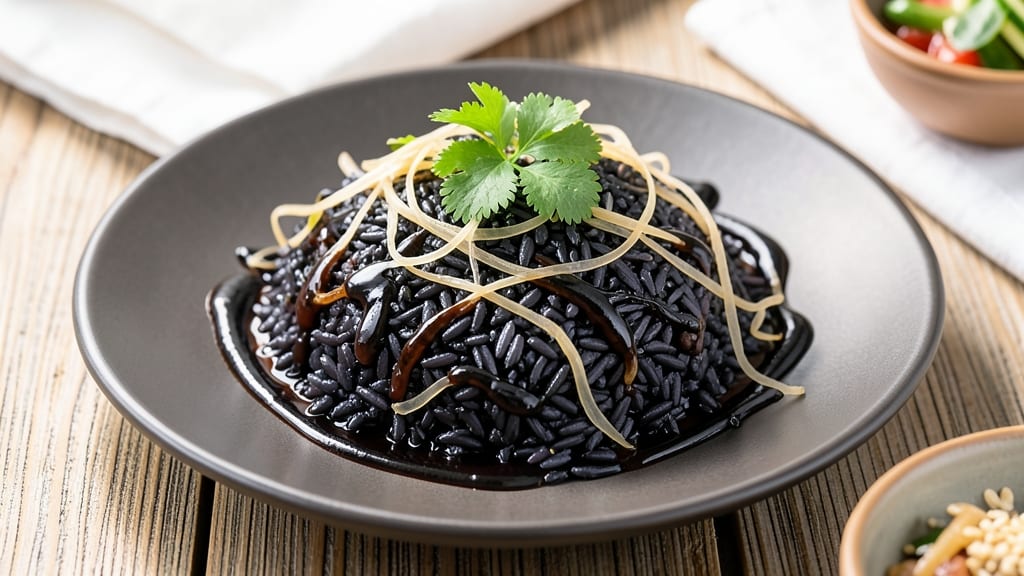
This black rice kanji recipe transforms deep purple forbidden rice into a luxurious, silky porridge with black sesame swirls and a subtle eggy richness. 💫 The dish blends Japanese kanji technique with Southeast Asian flavors, creating a dish that's both comforting and visually striking.
What makes it special is the contrast between the earthy black rice and the nutty, toasted sesame—each bite delivers a harmonious balance of textures and flavors.
Perfect for breakfast, brunch, or a light dinner, this recipe delivers restaurant-quality results with just 15 minutes of active prep and 45 minutes of simmering.
The secret lies in rinsing the rice thoroughly to remove excess starch, then cooking it gently with a touch of soy sauce and mirin for depth. Topped with a swirl of black sesame paste and a soft-boiled egg, it becomes a dish that's as impressive as it is delicious.
Ingredients for black rice kanji
Deep purple forbidden rice meets nutty sesame swirls for a luxurious porridge blending Japanese tradition with Southeast Asian warmth.
| Ingredient | Amount | Notes |
|---|---|---|
| Black Rice (Forbidden Rice) 🌾 | 1 cup | Uncooked, rinsed thoroughly |
| Water 💧 | 3 cups | Filtered preferred for clarity |
| Kombu (Dried Kelp) 🍃 | 1 piece | 4x6-inch sheet, cut in half |
| Mirin 🍶 | 2 tbsp | Sweet rice wine, non-alcoholic if preferred |
| Soy Sauce 🥢 | 1 tbsp | Japanese-style preferred |
| Black Sesame Paste 🥜 | ¼ cup | Smooth, no chunks |
| Toasted Black Sesame Seeds 🌱 | 1 tbsp | For garnish, lightly toasted |
| Large Eggs 🥚 | 2 whole | Soft-boiled, 6-minute cook |
| Fresh Ginger 🧄 | 1 tbsp | Finely grated, peeled |
| Sesame Oil 🫒 | 1 tsp | Toasted, for finishing |
| Diamond Crystal Kosher Salt 🧂 | ½ tsp | Adjust to taste |
| Sugar 🍚 | 1 tsp | White granulated |
The black rice is the star—look for well-rinsed, unbroken grains at specialty Asian markets or bulk bins. 365 by H Mart carries excellent quality, but any reputable brand works. The kombu adds umami depth, so use a fresh sheet—dried for 3 months or less for best flavor. Toast your sesame seeds in a dry pan for 2 minutes until fragrant; this enhances their nutty aroma. For the ginger, organic is ideal—peel and grate just before using to preserve freshness.
No mirin? Substitute 1 tbsp sugar plus 1 tbsp water—it won't be identical but works in a pinch. Soy sauce swaps: tamari for gluten-free or coconut aminos for depth. Black sesame paste unavailable? Toast regular sesame seeds and blend with oil (though texture differs). The eggs should be soft-boiled to 6 minutes—runny yolk is traditional. For extra richness, add a dash of white miso to the cooking water.
Store cooked kanji in an airtight container for 3-4 days in the fridge—flavors meld beautifully overnight. Reheat gently with a splash of water. The sesame paste keeps for 6 months in the pantry, while toasted sesame seeds stay fresh for 3 months if stored in a sealed jar. Prep the sesame swirls ahead: mix paste with a pinch of salt and chill until serving for cleaner presentation.
Why You'll Love This Recipe
- Four-Ingredient Magic: I swear, this recipe is one of those rare dishes where you don’t need a PhD in cooking—just black rice, kombu, mirin, and soy sauce. The kombu infuses the water with umami while you sleep (literally, just soak it overnight), and the rice does all the heavy lifting.
- Deep Umami Bomb: That first sip? Chef’s kiss. The kombu’s oceanic richness meets the sweet-salty punch of mirin and soy sauce, wrapping around the nutty black rice like a hug. It’s the kind of flavor that makes you pause mid-slurp and think, “Wait, why haven’t I done this sooner?”
- Lunchbox Hero: Between us, this is my go-to for meal prep—cool it, pack it, and boom, you’ve got a protein-packed, no-reheat-needed lunch. The texture stays perfect for days, and the kids (or my hungover self) will devour it without complaint. (Yes, even on a Tuesday.)
- Budget Power Move: Black rice might sound fancy, but a cup goes a long way, and kombu lasts forever in the pantry. You’re basically getting gourmet vibes for pennies—mirin adds depth without breaking the bank, and the leftovers? They’re just as good reheated or cold. Efficiency at its finest.
Step-by-step instructions for black rice kanji
Transform simple ingredients into a luxurious Japanese dessert with velvety texture and deep umami richness.
🍳 Step 1: Simmer the Black Rice with Kombu
In a medium saucepan, combine the 1 cup Black Rice (Forbidden Rice) with the 3 cups Water and the halved 1 piece Kombu (Dried Kelp). Bring to a boil over medium-high heat, then immediately reduce to a gentle simmer. The kombu adds subtle oceanic depth while preventing the rice from becoming overly sticky.
Cover and cook for 25-30 minutes until the rice absorbs all the liquid and becomes tender but still slightly firm to the bite. You'll notice the water reduces dramatically, and the rice develops a deep purple hue. If it looks dry before reaching 25 minutes, add 2 tablespoons hot water—just enough to maintain a gentle simmer without diluting the flavor.
👨🍳 Step 2: Prepare the Black Sesame Swirl Mixture
In a separate bowl, whisk together the 0.25 cup Black Sesame Paste, 2 tbsp Mirin, 1 tbsp Soy Sauce, 1 tbsp Fresh Ginger, 1 tsp Sugar, and 0.5 tsp Diamond Crystal Kosher Salt until completely smooth. The paste should dissolve evenly, creating a thick, glossy mixture with a deep, toasted aroma. If it's too stiff, add 1 teaspoon water to loosen it.
Gently fold in the 2 whole Large Eggs using a spatula, being careful not to overmix. The eggs should be fully incorporated but still visible as ribbons in the mixture. This preparation ensures the sesame swirls remain distinct yet perfectly integrated into the rice.
🥘 Step 3: Combine and Swirl the Ingredients
Remove the rice from heat and let it sit covered for 5 minutes to absorb any remaining steam. Then, using a rice paddle or large spoon, gently fold the black sesame mixture into the rice in a figure-eight motion, creating elegant swirls. Work quickly but deliberately—this technique prevents the eggs from scrambling while distributing the sesame paste evenly.
Transfer the mixture to a lightly greased 8-inch square baking dish or heatproof serving bowl. The swirls should be visible but not overly pronounced, allowing the colors to blend naturally as it cooks further.
⏰ Step 4: Steam to Perfection
Cover the dish tightly with aluminum foil and place it in a steamer basket over simmering water (about 1 inch below the bottom of the dish). Steam for 15-20 minutes until the center reaches 160°F—the rice should be tender but still hold its shape when pressed gently with a spoon.
During steaming, the eggs will gently set while the rice absorbs the remaining moisture, creating that signature silky yet slightly firm texture. The kombu's umami and the black sesame's nuttiness will meld beautifully, resulting in a dessert that's both rich and subtly sweet.
🍽️ Step 5: Finish and Serve
Remove from the steamer and let the kanji rest for 10 minutes before serving. Drizzle with 1 tsp Sesame Oil and sprinkle generously with 1 tbsp Toasted Black Sesame Seeds for color and crunch. The contrast of the toasted seeds against the smooth, purple rice creates a stunning visual and textural finish.
Serve warm or at room temperature, accompanied by a dusting of extra black sesame powder if desired. Each bite should deliver a harmonious blend of creamy eggs, nutty sesame, and the earthy depth of forbidden rice—a dessert that feels luxurious yet remains approachable.
Pro Tips For Making Black Rice Kanji
- Soak the Kombu First: Toss that dried kombu straight into cold water and you’ll end up with murky broth. Instead, soak it in warm water for 10 minutes before adding to your pot—this jumpstarts the flavor extraction and keeps your kanji crystal clear. (Yes, even if you’re impatient like me.)
- Rinse Black Rice Twice: Black rice holds onto starch like it’s hoarding gold. Give it two quick rinses under cold water before cooking to cut down on gummy texture later. Skip this, and you’ll end up with a gluey mess instead of that silky, separate grain you’re after.
- Simmer Low and Slow: Black rice kanji isn’t a race. Once the kombu and rice hit a boil, drop the heat to the lowest setting you can tolerate—think lazy Sunday morning, not a power lunch. Too much heat and you’ll overcook the rice or burn the kombu’s delicate flavor.
- Season at the End: Add mirin and soy sauce right before turning off the heat—this keeps the broth bright and balanced. Dump them in too early, and you’ll end up with a salty, bitter mess. (I learned this after ruining a batch and crying into my kombu stash.)
Common mistakes when making this recipe
Overcooking the Rice
Black rice kanji relies on the rice's delicate texture—overcooking turns it mushy and loses its signature bite. I’ve ruined this dish before by letting it simmer too long after the water evaporates.
The key is to remove the rice from heat the moment it’s tender but still slightly firm (25-30 minutes). If it looks dry before then, add just 2 tablespoons hot water—not cold—to maintain even cooking. 💫
Skipping the Kombu
The kombu isn’t just flavorful—it’s essential for balancing the dish. Without it, the rice can taste flat or overly sweet. I once made kanji without kombu and noticed the umami depth was missing.
Use a fresh kombu sheet (dried for 3 months or less) and remove it after 10 minutes of simmering to avoid bitterness. The oceanic notes elevate the black sesame’s nuttiness perfectly.
Overmixing the Sesame Swirls
When folding the egg and sesame mixture into the rice, resist the urge to overmix. I’ve seen beautiful swirls turn into scrambled eggs when stirred too vigorously. Use a figure-eight motion with a rice paddle, keeping the eggs visible as ribbons.
The goal is integration, not homogenization—this ensures each bite delivers that creamy surprise. Work quickly to prevent the eggs from cooking further.
Ignoring the Resting Time
Rushing to serve kanji immediately after steaming is a common mistake. The dish needs 10 minutes to set properly, allowing the rice to absorb residual moisture and the flavors to meld.
I’ve served it too soon, and the texture was uneven—some parts were still runny, while others were firm. Patience here makes all the difference for that luxurious, velvety finish.
Using Low-Quality Sesame
Not all black sesame paste is created equal. Cheap or poorly made paste can taste bitter or grainy, ruining the dish’s harmony. I recommend Kadoya black sesame paste for its smooth, toasted flavor.
If you’re making your own paste, toast the seeds in a dry pan for 2 minutes until fragrant—this enhances their nutty aroma. Skimping here is noticeable in every bite.
Steaming Too Aggressively
Steaming kanji over boiling water (too close to the pot) can make the rice soggy or even steam unevenly. The water level should be 1 inch below the dish, creating gentle, even heat.
I’ve seen dishes with dry tops and wet bottoms when steamed too aggressively. Use a steamer basket with a tight lid to trap moisture and ensure consistent cooking. 🌡️
Nutrition facts
Frequently asked questions
What makes this black rice kanji different from regular rice porridge?
This recipe uses forbidden black rice (kokumochi) which has a deep purple hue, higher antioxidant levels, and a nutty, earthy flavor. The key difference is the black sesame swirls and kombu-infused broth, which create a luxurious texture and umami depth that regular rice porridge lacks. The combination of silky eggs and toasted sesame transforms it into a visually stunning dessert-style dish.
Can I substitute regular rice for black rice in this recipe?
While you can technically use regular rice, the dish loses its signature color and nutritional benefits of black rice. For best results, stick with forbidden rice—its chewy texture and deep flavor are essential to the kanji's character. If you must substitute, try brown rice for a slightly nuttier taste, but the visual impact will differ significantly.
How do I make the black sesame swirls look professional?
Use a rice paddle or large spoon to create clean, deliberate swirls in a figure-eight motion when combining the sesame mixture with rice. Work quickly but carefully to maintain the egg ribbons' shape. For extra flair, chill the finished kanji for 30 minutes before serving—this helps the swirls hold their form better when sliced.
Is this dish suitable for a gluten-free diet?
Yes! This recipe is naturally gluten-free as long as you use tamari instead of soy sauce and verify your black sesame paste contains no wheat additives. Double-check all ingredients, especially the sesame paste label, as some brands may include gluten. The kombu and mirin are also typically gluten-free, making this dish safe for most gluten-sensitive diets.
Can I prepare this recipe ahead of time?
The kanji actually tastes better when reheated after resting overnight in the fridge. Reheat gently in a steamer or microwave with a splash of water for 1-2 minutes to restore its creamy texture. The flavors meld beautifully overnight, making it perfect for meal prep—just add fresh sesame seeds and sesame oil before serving.