
Main Courses
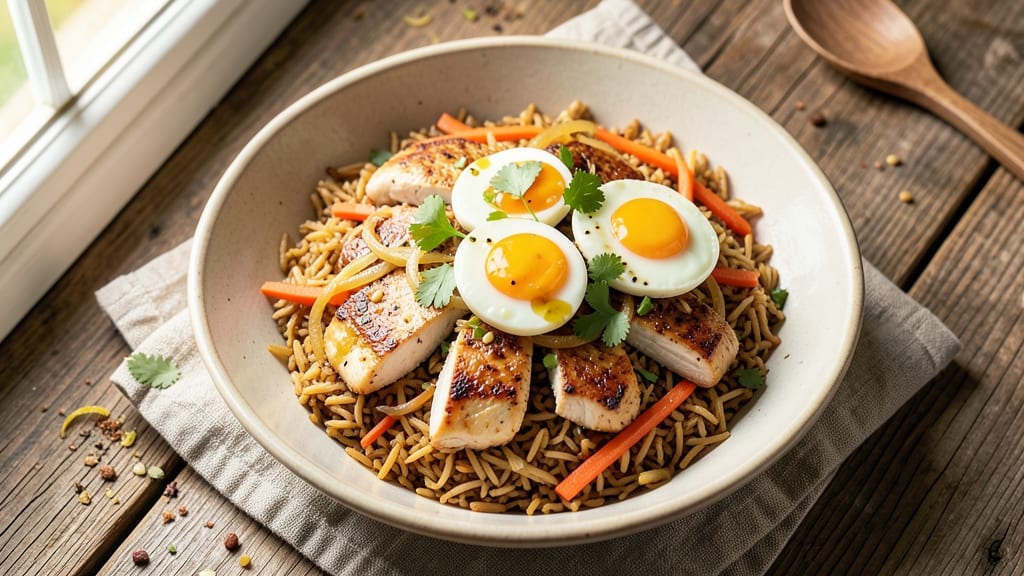
This brown basmati fried rice recipe transforms simple ingredients into a restaurant-worthy dish with nutty, chewy grains and smoky wok-tossed flavors. The key? Using day-old brown basmati rice that absorbs flavors while maintaining its signature texture—firm yet tender, with a subtle earthy nuttiness that elevates every bite.
Perfect for weeknight dinners or meal prep, this recipe balances protein, vegetables, and aromatic seasonings in a single pan. We'll guide you through the essential technique of high-heat stir-frying to achieve that signature "wok hei" smokiness, while keeping the rice separate from the sauce until the very end.
The result? A dish that's both comforting and sophisticated, with every grain coated in savory goodness.
Ingredients for brown basmati fried rice
These fourteen ingredients transform day-old brown basmati into restaurant-quality fried rice with smoky depth and nutty texture.
| Ingredient | Amount | Notes |
|---|---|---|
| Day-Old Brown Basmati Rice 🍚 | 4 cups | Cooked and cooled overnight |
| Boneless Chicken Breast 🍗 | 1 ½ lb | Diced into 0.5-inch pieces |
| Eggs 🥚 | 3 whole | Beaten for binding |
| Carrots 🥕 | 1 cup | Julienned into matchsticks |
| Yellow Onion 🧅 | 1 whole | Thinly sliced |
| Fresh Garlic Cloves 🧄 | 6 cloves | Minced finely |
| Fresh Ginger 🌿 | 2 tbsp | Grated finely |
| Low-Sodium Soy Sauce 🍶 | ½ cup | For umami depth |
| Sesame Oil 🫒 | 1 tbsp | Toasted for aroma |
| Vegetable Oil 🫒 | ½ cup | High smoke point |
| Scallions 🧅 | ¼ cup | Sliced thinly for garnish |
| Black Pepper 🌶️ | ½ tsp | Freshly cracked |
| Salt 🧂 | 1 tsp | Adjust to taste |
| Green Onions 🧅 | ¼ cup | Chopped for garnish |
The brown basmati rice is non-negotiable—its chewy texture and earthy nuttiness stand up to stir-frying. Lundberg Family Farms or Tilda brands deliver consistent quality, but any organic brown basmati works. Always use day-old rice; freshly cooked rice releases excess moisture, turning your dish mushy. For the chicken, free-range or organic cuts ensure better flavor retention during high-heat cooking. Thinly slice the carrots and onions—mandoline slicers at Williams Sonoma make quick work of this prep. Fresh ginger and garlic should be vibrant with no soft spots; Whole Foods bulk bins offer the freshest options.
No soy sauce? Coconut aminos provide a similar umami punch without the sodium overload. Substitute chicken with tofu or shrimp for variation—just marinate the protein first. The sesame oil is essential for aroma, but if you're avoiding it, toasted peanut oil works in a pinch. For the vegetables, frozen stir-fry mixes are a time-saver, though fresh julienned carrots and onions develop deeper flavor. If you're short on scallions, green onions or chives suffice. The black pepper should be freshly cracked—pre-ground loses potency quickly. For extra crunch, toasted sesame seeds add a satisfying texture.
Store cooked fried rice in airtight containers for 4-5 days in the fridge, though it reheats best within 2 days. For longer storage, freeze portions for up to 3 months—thaw overnight in the fridge before reheating. The high-heat stir-fry technique means this dish tastes even better the next day as flavors meld. To reheat, use a non-stick skillet over medium heat with a splash of water to restore moisture. Garnish with fresh scallions and sesame seeds just before serving to preserve their vibrant colors and aromas.
Why You'll Love This Recipe
- No Leftovers Wasted: I swear by using day-old brown basmati—it’s already dried out, so it soaks up the wok hei flavor like a sponge. No sad, mushy rice here, just perfect texture every time.
- One-Pan Magic: Honestly, this is my lazy night hero. Toss everything—chicken, eggs, veggies—into one pan with the rice, and let the residual heat do the work. Minimal chopping, zero cleanup.
- Nutty Depth: That brown basmati brings a toasty, almost caramelized richness you won’t find in white rice fried rice. The onions caramelize right alongside, adding layers of sweetness that make it taste like a restaurant dish.
- Budget Meal for Crowds: Between us, this feeds four for the price of two takeout orders. Chicken stretches far, carrots add crunch without cost, and eggs bulk it up—perfect when you’ve got hungry mouths to fill.
Step-by-step instructions for brown basmati fried rice
Master the wok technique and you'll transform day-old rice into a fragrant, textured dish with perfect balance.
Prepare the Protein and Vegetables
Begin by dicing the 1.5 lb boneless chicken breast into 0.5-inch pieces and season immediately with 1 tsp salt and 0.5 tsp black pepper. Set aside in a bowl. For the vegetables, julienne the 1 cup carrots into matchsticks, thinly slice the 1 whole yellow onion, and finely mince the 6 cloves fresh garlic and 2 tbsp fresh ginger. Keep each component separate until ready to use.
This preparation ensures even cooking and prevents soggy vegetables. The chicken should be fully coated in seasoning so it absorbs flavor during the cooking process. I like to use a sharp chef's knife for precise cuts—this makes all the difference in texture when the dish comes together.
Cook the Chicken and Scramble the Eggs
Heat 0.5 cup vegetable oil in a wok or large skillet over medium-high heat until shimmering. Add the seasoned chicken in a single layer and cook undisturbed for 3-4 minutes until the edges turn golden and the chicken is no longer pink in the center. Remove and set aside, leaving the rendered fat in the pan.
In the same pan, reduce heat to medium and add the beaten 3 whole eggs. Let them sit briefly before gently pushing them around with a spatula until softly set but still slightly runny in the center. Remove and combine with the chicken, then set both aside.
This two-stage cooking method prevents overcooking the chicken while ensuring the eggs provide that signature fried rice texture. The residual fat in the pan will later carry the aromatics beautifully.
Stir-Fry the Aromatics and Vegetables
Return the wok to medium-high heat and add 1 tbsp sesame oil. When the oil shimmers, add the thinly sliced yellow onion and cook for 1 minute until just softened. Add the minced garlic and grated ginger, stirring constantly for 30 seconds until fragrant—this is where the flavor foundation builds.
Toss in the julienned carrots and stir-fry for 2 minutes until they begin to soften but still retain a slight crunch. The vegetables should be tender-crisp, not mushy. This quick cooking preserves their texture while developing their natural sweetness.
Combine All Ingredients and Toss
Add the 4 cups day-old brown basmati rice, breaking up any clumps with your spatula. Pour in the 0.5 cup low-sodium soy sauce and toss everything vigorously for 2-3 minutes until the rice is evenly coated and heated through. The rice should be hot to the touch but not sticking together.
Return the chicken and eggs to the wok, adding 0.25 cup scallions and tossing for another 1 minute to distribute everything evenly. The rice should now have a glossy sheen from the soy sauce and sesame oil, indicating proper seasoning.
Here's the key: don't overcrowd the pan. If the rice seems too wet, cook it uncovered for an extra minute to evaporate excess moisture. This is where many fried rice dishes fail—proper texture control is everything.
Garnish and Serve Immediately
Transfer the fried rice to serving plates and immediately garnish with the 0.25 cup chopped green onions. Serve while hot, as the texture and flavors continue to develop even after cooking. The dish should have a balance of textures—crispy chicken, tender vegetables, and perfectly separate grains of rice.
For best results, serve with a side of steamed greens or a simple cucumber salad to complement the richness. The aromatic blend of garlic, ginger, and sesame oil should linger in each bite, while the day-old rice provides that signature chewy texture that defines great fried rice.
Pro Tips For Making Brown Basmati Fried Rice
- STIR-FRY IN BATCHES: Brown basmati rice sticks together when overcrowded—trust me, I’ve seen it turn into a sad, gloppy mess. Work in 1-2 cups at a time, spreading the rice in a thin layer so it sizzles and crisps instead of steaming. Use a wide pan; if yours is small, do two batches. The goal is golden grains, not soggy clumps.
- PREP ONIONS SMALL: I used to slice onions into big, uneven chunks, thinking it’d save time. Wrong. Dice them into ½-inch pieces—they cook faster, caramelize better, and blend into the rice without chewy surprises. Same goes for carrots: julienne or small dice, not thick slabs. Uniform size = even cooking.
- CHICKEN NEEDS REST: Marinate the chicken for at least 30 minutes (or overnight if you’re patient), then let it sit at room temp for 10 minutes before cooking. Cold protein steals heat from the pan, making it hard to get that sear. Room-temp chicken? It’ll brown faster and stay juicier—no one wants dry fried rice.
- EGGS FIRST, NOT LAST: Scramble your eggs separately in a small bowl with a splash of water, then push them into the pan before adding the rice. They’ll cook through in seconds and get coated in the wok hei flavor instead of turning rubbery from sitting too long. (Yes, it’s an extra step, but the texture difference is worth it.)
Essential equipment for brown basmati fried rice
Wok Essentials
A carbon steel wok (like those from Made In or Misen) is my go-to for fried rice because it heats up quickly and retains heat evenly—critical for achieving that signature wok hei smokiness.
A 14-inch diameter is ideal for this recipe, giving you enough surface area to toss ingredients without overcrowding. If you don’t have a wok, a heavy-bottomed cast iron skillet (such as a Lodge) works perfectly, though it may require slightly more oil to prevent sticking. 🔥
High-Heat Tools
For stir-frying, you’ll need a heat-resistant spatula (I use a siliconized metal one from OXO) to toss ingredients vigorously without damaging your pan. A tongs set (like JYF brand) is also essential for flipping chicken and eggs without breaking them apart.
These tools help distribute heat evenly and prevent ingredients from sticking to the pan, which is especially important when working with day-old brown basmati rice. 💪
Knife and Cutting Gear
A sharp chef’s knife (I recommend Wüsthof’s Ikon series) and a mandoline slicer (such as the Julienne attachment from Williams Sonoma) are game-changers for prepping vegetables efficiently.
The mandoline ensures even, thin slices for onions and carrots, which cook uniformly and add the right texture to your fried rice. For garlic and ginger, a microplane (like BergHOFF) lets you grate them finely without overpowering the dish.
Precision here makes all the difference in texture and flavor balance. ✨
Measuring and Seasoning
Accurate measurements are key, so invest in a stainless steel measuring cups set (I love OXO’s) for rice and soy sauce, and a spice grinder (like Penzeys’) for freshly cracked black pepper.
A small bowl for beating eggs and a fine-mesh strainer (for rinsing rice if needed) round out your essentials. These tools ensure consistency, especially when balancing the flavors of soy sauce, sesame oil, and fresh aromatics. 🌶️
Optional Upgrades
For extra convenience, a digital kitchen scale (such as Escali Primo) helps measure ingredients like rice and chicken with precision, especially if you’re scaling the recipe. A small ladle (like KitchenAid’s) is useful for adding soy sauce gradually, and a fine-mesh sieve helps drain excess moisture from vegetables.
These upgrades aren’t mandatory, but they streamline the process and elevate the final result. 💡
Nutrition facts
Frequently asked questions
Why does the recipe specify day-old brown basmati rice?
Freshly cooked rice releases too much moisture when stir-fried, making your fried rice soggy. Day-old brown basmati rice has firmer grains that absorb flavors beautifully while maintaining that signature chewy texture. The nutty notes also develop more fully after cooling, creating a richer final dish.
Can I substitute white rice for brown basmati?
Technically yes, but you'll lose the nutty depth and chewy texture that makes brown basmati special. For a similar texture, use jasmine rice or short-grain sushi rice, but cook it one day ahead. White rice tends to turn mushy when stir-fried, especially with the extra moisture from vegetables and protein.
How do I prevent my fried rice from being dry or pasty?
Use high heat and keep your pan uncrowded to evaporate excess moisture. If the rice seems too wet during cooking, spread it out and cook uncovered for 1-2 minutes. Also ensure your rice is day-old (not freshly cooked) and use less soy sauce if your ingredients are particularly juicy.
What's the best way to make this recipe vegetarian?
Replace the chicken with extra-firm tofu (pressed and cubed) or mushrooms (shiitake or oyster work best). For extra protein, add 1 cup edamame or 1 cup chickpeas. Boost umami with 1 tbsp vegetarian oyster sauce or 1 tsp miso paste in place of some soy sauce.
Can I make this ahead of time?
Yes! Fried rice actually tastes better the next day as flavors meld. Store in an airtight container in the fridge for 4-5 days. To reheat, use a non-stick pan over medium heat with a splash of water—this restores moisture without making it mushy. Garnish fresh with scallions and sesame seeds before serving.