
Main Courses
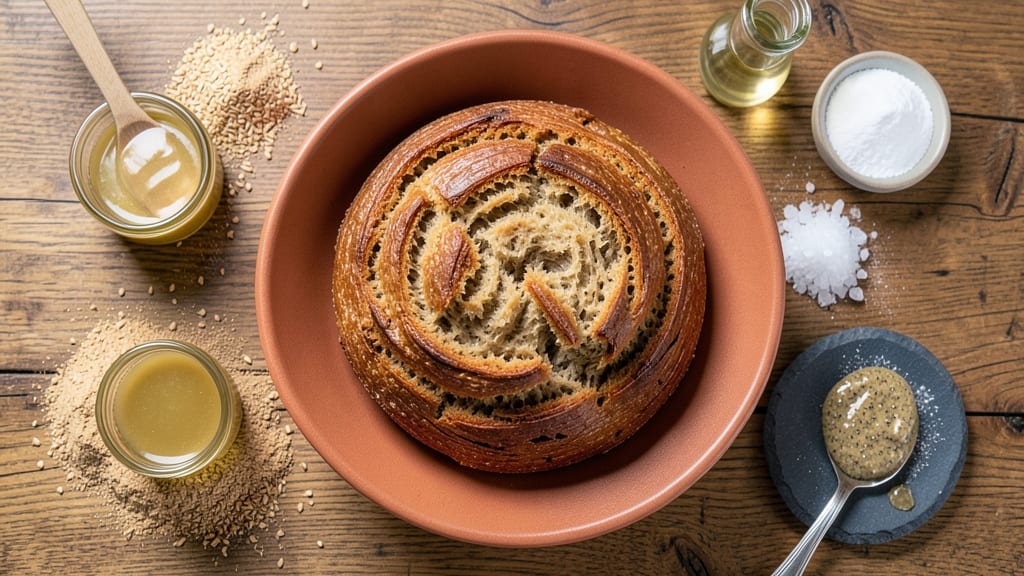
This brown rice bread recipe without yeast delivers fluffy, egg-infused loaves that rise beautifully—no yeast, no waiting hours, just one-hour results. The secret lies in a clever leavening combo of baking soda and vinegar, plus aquafaba (chickpea brine) for that signature eggy texture.
Perfect for vegans or anyone craving quick, wholesome bread without compromising taste or texture.
What sets this apart is its light, airy crumb—achieved through proper mixing techniques and a touch of oil for moisture. The bread stays fresh for days, making it ideal for sandwiches, toast, or simply enjoying with butter.
Whether you're baking for a crowd or meal prepping, this recipe delivers restaurant-quality results with minimal effort.
Ingredients for brown rice bread recipe without yeast
Brown rice flour, aquafaba, and baking soda create this vegan bread’s signature fluffiness—no yeast required.
| Ingredient | Amount | Notes |
|---|---|---|
| Brown Rice Flour 🌾 | 2 ½ cups | Finely milled for best texture |
| All-Purpose Flour 🌾 | ½ cup | For structure and lightness |
| Aquafaba 🥫 | ½ cup | Chickpea brine, unsalted |
| White Vinegar 💧 | 1 tbsp | White or apple cider |
| Baking Soda 🧂 | 1 ½ tsp | Pure, unflavored |
| Sugar 🍚 | 2 tbsp | Granulated, organic preferred |
| Salt 🧂 | ½ tsp | Fine sea salt |
| Olive Oil 🫒 | ¼ cup | Extra-virgin, cold-pressed |
| Water 💧 | ½ cup | Room temperature |
| Ground Flaxseed 🌾 | 1 tbsp | For egg replacement |
| Sesame Seeds 🌱 | 1 tbsp | Toasted for garnish |
The brown rice flour is the star here—look for finely milled versions at Whole Foods or Trader Joe's for that ultra-light texture. Bob’s Red Mill is my go-to brand for consistent quality. Aquafaba (chickpea brine) replaces eggs entirely, so use unsalted to avoid over-salting the bread. Vinegar and baking soda work together as a leavening agent, so measure them precisely. For the flaxseed, ground flaxseed meal (not whole seeds) ensures proper binding—Bob’s Red Mill sells it pre-ground in the baking aisle.
No aquafaba? Flax eggs (1 tbsp ground flaxseed + 3 tbsp water = 1 egg) work in a pinch, though texture may differ slightly. Substitute apple cider vinegar for white vinegar if preferred. For the flours, white rice flour can replace all-purpose at a 1:1 ratio, though brown rice flour’s nuttiness is key to the flavor. Toast the sesame seeds in a dry pan for 30 seconds before using—they’ll add a delightful crunch to the crust. If your bread turns out dense, try increasing the aquafaba by 1 tbsp next time.
Store the bread in an airtight container at room temperature for up to 3 days or freeze for 3 months. For best freshness, slice only what you need—this bread doesn’t reheat well. Wrap leftovers in parchment paper before storing to prevent drying. The crust stays crisp for about 2 hours after baking, so enjoy it fresh or toast slices to restore crispness. Portion into single-serving bags for easy grab-and-go sandwiches.
Why You'll Love This Recipe
- I’ll be real: I used to dread bread-making. This recipe skips yeast entirely—just mix, bake, and boom. The aquafaba (yes, chickpea water) and baking soda do all the work, so no waiting for dough to rise or kneading until my hands ache.
- No Yeast, No Stress: I’ll be real: I used to dread bread-making. This recipe skips yeast entirely—just mix, bake, and boom. The aquafaba (yes, chickpea water) and baking soda do all the work, so no waiting for dough to rise or kneading until my hands ache.
- Nutty Crispy Magic: That brown rice flour gives it a subtle earthiness, while the vinegar adds a faint tang that keeps it from being too heavy. The crust? Crisp enough to hold up to soup, but soft enough to soak up jam like a dream.
- Weeknight Superstar: I keep a batch in the freezer for lazy mornings—just toast straight from frozen. It’s also my go-to for sandwiches, toast, or even French toast (trust me, it’s better than you’d think). No fancy prep, just reliable flavor.
Step-by-step instructions for brown rice bread without yeast
The secret to this fluffy, egg-infused bread lies in precise technique and timing. Here's how to achieve perfect texture every time.
Prepare the Flaxseed Egg Replacement
In a small bowl, combine the 1 tablespoon ground flaxseed with the 0.5 cup water. Stir vigorously and let the mixture sit for 10 minutes until it thickens into a gelatinous consistency resembling an egg. This flaxseed mixture will provide the binding and moisture typically found in traditional egg-based recipes.
I always use room-temperature water for this step—it ensures even thickening. If you notice the mixture isn't fully gelled after 10 minutes, add another teaspoon of water and wait an additional 5 minutes. The mixture should hold its shape when spooned, but still be pourable. This preparation is the foundation for our bread's structure and tenderness.
Whisk Wet Ingredients for Perfect Texture
In a large mixing bowl, combine the 0.5 cup aquafaba, 0.25 cup olive oil, 2 tablespoons sugar, and the thickened flaxseed mixture. Whisk vigorously for 2-3 minutes until the mixture becomes noticeably lighter in color and forms soft peaks. This step incorporates air into the batter, which is crucial for achieving that fluffy, airy texture we want in our bread.
Next, add the 1 tablespoon white vinegar and 1.5 teaspoons baking soda. You'll see an immediate reaction as the mixture begins to bubble and expand. This chemical reaction between the acid and baking soda creates the leavening action that will give our bread its rise. Let this mixture sit for 5 minutes while you prepare your dry ingredients—this resting period allows the baking soda to fully activate.
Combine Dry Ingredients for Optimal Structure
In a separate bowl, sift together the 2.5 cups brown rice flour and 0.5 cup all-purpose flour. This combination gives us both the nutty flavor of brown rice with the light structure of all-purpose flour. Add the 0.5 teaspoon salt to the dry mixture and whisk to distribute evenly.
With your electric mixer on low speed, gradually add the dry ingredients to the wet mixture. Mix just until combined—you should still see some flour streaks in the batter. Overmixing develops gluten, which can make our bread dense rather than light and tender. The ideal consistency should be similar to thick pancake batter, with no dry spots remaining. If the batter appears too thick, add 1 tablespoon water at a time until it reaches the proper consistency.
Prepare the Loaf Pan for Perfect Rise
Preheat your oven to 350°F. Lightly grease a 9x5-inch loaf pan with olive oil or line it with parchment paper for easy removal. Pour the batter into the prepared pan and smooth the top with a spatula. The batter should fill the pan about ¾ full—don't overfill as the bread will rise significantly during baking.
Sprinkle the 1 tablespoon sesame seeds evenly over the top of the batter. This not only adds visual appeal but also provides a subtle nutty flavor that complements the bread's texture. Place the pan on the center rack of your preheated oven and bake for 50-55 minutes, or until the top is golden brown and a toothpick inserted into the center comes out clean.
Cool and Slice for Maximum Fluffiness
Remove the bread from the oven and transfer it to a wire rack. Let it cool in the pan for 10 minutes before carefully removing it to cool completely on the rack. This cooling period is crucial—it allows the bread to set properly and prevents it from becoming gummy in the center.
Once completely cooled, slice the bread with a serrated knife. The interior should be uniformly fluffy with a fine crumb structure. If you find the bread is slightly dense at the bottom, it's simply due to the nature of brown rice flour—this bread excels when served warm or lightly toasted. Store any leftovers in an airtight container for up to 3 days, or freeze for longer storage.
Pro Tips For Making Brown Rice Bread Recipe Without Yeast
- WHISK AQUAFABA FIRST: Don’t just dump the aquafaba into your batter—whisk it like egg whites until it forms stiff peaks. I learned this the hard way: skipping this step means your bread will be dense instead of light and airy. The vinegar and baking soda rely on properly whipped aquafaba to create lift, so take the 30 seconds to get those peaks.
- MEASURE BROWN RICE FLOUR RIGHT: Spoon it into your measuring cup and level it off—don’t scoop directly from the bag. Brown rice flour packs tightly, and overestimating means your bread turns out gummy. I used to eyeball it and wondered why my texture was always off. A kitchen scale solves this entirely if you’re feeling fancy.
- DON’T OVERMIX THE BATTER: Stir just until the dry ingredients disappear—maybe 10-12 strokes max. Overmixing activates the gluten in all-purpose flour, making your bread tough instead of tender. I was guilty of thinking more mixing = better bread until I saw how much lighter the texture became when I stopped early.
- BAKE AT 350°F—NO HIGHER: Your oven’s hot spot will burn the crust before the center sets if you crank it up. I was skeptical until I tried 375°F and ended up with a charred exterior and a gooey middle. Stick to 350°F and bake for 30-35 minutes, then check with a toothpick—it should come out clean but slightly moist.
Regional styles of this recipe
Japanese Mochiko Style
In Japan, brown rice bread often incorporates mochiko flour (sweet rice flour) for a lighter, more delicate crumb. Replace 1 cup of the brown rice flour with mochiko flour and add 1 tablespoon honey (or maple syrup) to the wet ingredients.
This variation creates a slightly sweeter, more tender loaf that’s perfect for matcha sandwiches or banana toast. I like to brush the baked loaf with a light egg wash (1 tbsp aquafaba + ½ tsp sugar) for a glossy finish. 🌸
Mexican Corn & Rice Fusion
For a Latin twist, blend ½ cup masa harina (corn flour) into the dry ingredients and add 1 teaspoon ground cumin to the wet mix. This creates a nutty, slightly sweet bread with a dense yet moist texture—ideal for quesadillas or avocado toast.
Top with crushed chili flakes before baking for a smoky kick. I often serve this with salsa verde or crema for dipping. 🌶️
Indian Masala Bread
Transform this into Indian-style brown rice bread by adding 1 teaspoon garam masala and ½ teaspoon turmeric to the dry ingredients. Replace ½ cup water with coconut milk for extra richness.
This version pairs beautifully with chana masala or dal. For extra flavor, brush the baked loaf with garlic-infused oil and sprinkle with toasted cumin seeds before serving. 🌿
Mediterranean Olive & Herb
Infuse the dough with Mediterranean flavors by adding 1 tablespoon dried oregano and 1 teaspoon dried rosemary to the dry ingredients. Replace ½ cup olive oil with extra-virgin olive oil and add 1 minced garlic clove to the wet mix.
After baking, drizzle with a balsamic glaze (1 tbsp balsamic vinegar + 1 tsp honey) for a tangy, herby twist. This bread is perfect with hummus or olive tapenade. 🫒
Sweet Cinnamon Swirl
For a dessert-style bread, fold in ½ cup chopped walnuts and 1 teaspoon cinnamon to the dry ingredients. Before baking, swirl 2 tablespoons brown sugar mixed with 1 tablespoon melted butter (or coconut oil) into the top of the batter.
This creates a caramelized crust with a warm, spiced interior—ideal for French toast or dessert sandwiches. 🍯
Savory Cheesy Twist
Add ½ cup nutritional yeast and ½ cup shredded vegan cheese (like Miyoko’s or Violife) to the dry ingredients for a cheesy, umami-rich loaf. For extra flavor, sprinkle 1 tablespoon smoked paprika on top before baking.
This version is perfect for grilled cheese sandwiches or vegan paninis. Store leftovers in the fridge for up to 4 days—the cheese flavor intensifies over time! 🧀
Nutrition facts
Frequently asked questions
Can I make this bread without aquafaba?
Yes! If you don’t have aquafaba, substitute it with ½ cup unsweetened applesauce or ½ cup mashed banana for moisture. For binding, use 1 flax egg (1 tbsp ground flaxseed + 3 tbsp water). The texture will be slightly denser but still delicious. Just reduce the water by 2 tbsp to balance the extra moisture from substitutes.
Why does my brown rice bread turn out dense?
Dense bread usually happens from overmixing (which develops gluten) or insufficient leavening. Mix just until combined—stop when flour streaks disappear. For extra fluffiness, ensure your baking soda is fresh (old baking soda loses potency) and whisk the wet ingredients vigorously for 2-3 minutes to incorporate air. Let the batter rest 5 minutes after adding vinegar to maximize rise.
How long can I store this bread, and how do I revive stale slices?
Store in an airtight container at room temperature for 3 days or freeze for 3 months. To revive stale slices, wrap them in a damp paper towel and microwave for 10-15 seconds. For crispiness, toast in a dry pan over medium heat for 1-2 minutes per side. The bread also reheats beautifully in a 350°F oven for 5 minutes wrapped in foil.
Can I use this bread for sandwiches or toast?
This bread holds up well for sandwiches—its slightly nutty flavor pairs perfectly with vegan cheeses, hummus, or avocado. For toast, lightly butter slices and toast until golden. The crust stays crisp for 2 hours after baking, making it ideal for open-faced sandwiches or French toast.
What’s the best flour substitute if I don’t have brown rice flour?
Replace brown rice flour with a 1:1 ratio of whole wheat flour or a mix of ½ cup white rice flour + ½ cup all-purpose flour. For a lighter texture, use ½ cup oat flour (blend rolled oats into a fine powder). Avoid almond flour—it lacks the binding properties needed for this recipe. Adjust liquid slightly if the batter seems too dry.