
Main Courses
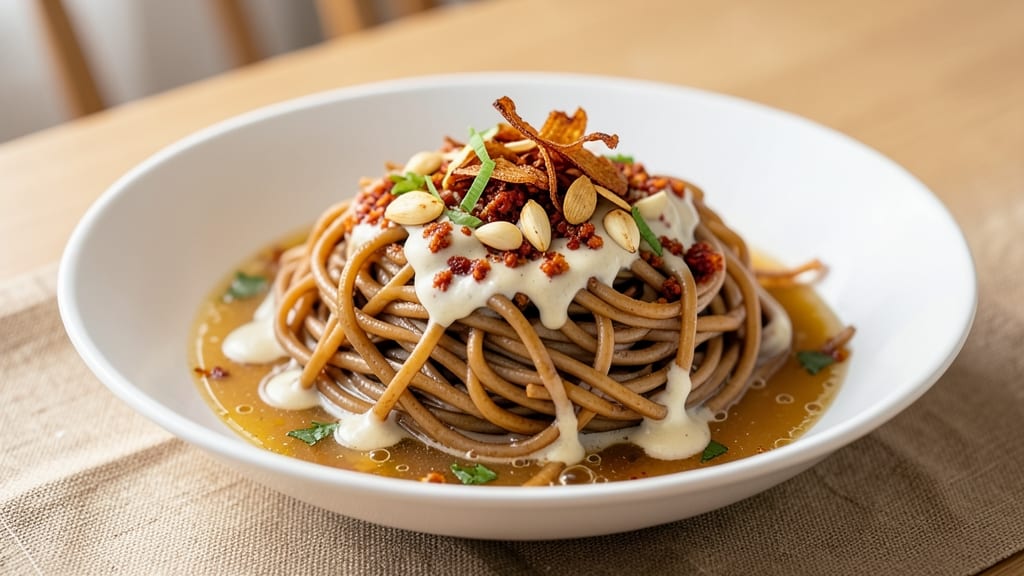
This brown rice spaghetti recipe transforms a simple vegetarian pasta into a rich, creamy coconut curry fusion that's surprisingly hearty and satisfying.
The secret lies in using brown rice spaghetti—naturally nutty and packed with fiber—to absorb the fragrant coconut milk and aromatic spices, creating a dish that's both comforting and nutritious. It's the kind of meal that proves plant-based cooking can be deeply flavorful without relying on heavy cream or cheese.
The result is a one-pot wonder with tender brown rice spaghetti swirling in a velvety coconut curry sauce, infused with ginger, garlic, and a touch of heat from red curry paste.
The dish is vegan-friendly by default but can easily accommodate dairy with a sprinkle of parmesan or a dollop of yogurt. Perfect for weeknight dinners or meal prep, this recipe delivers restaurant-quality depth with minimal effort—just 30 minutes of active time and one pot to clean.
Ingredients for brown rice spaghetti
Rich coconut milk, aromatic spices, and nutty brown rice spaghetti create a satisfying vegetarian curry fusion.
| Ingredient | Amount | Notes |
|---|---|---|
| Brown Rice Spaghetti 🍜 | 8 oz | Uncooked, whole grain variety |
| Full-Fat Coconut Milk 🥥 | 13 ½ oz | One 13.5 oz can preferred |
| Red Curry Paste 🌶️ | 2 tbsp | Mild to medium heat level |
| Fresh Ginger 🧄 | 1 tbsp | Finely grated, fresh preferred |
| Garlic Cloves 🧄 | 4 cloves | Minced, fresh preferred |
| Vegetable Broth 💧 | 1 ½ cups | Low-sodium preferred |
| Lemon Juice 🍋 | 1 tbsp | Freshly squeezed |
| Extra-Virgin Olive Oil 🫒 | 1 tbsp | For sautéing |
| Fresh Cilantro 🌿 | ¼ cup | Chopped, for garnish |
| Lime Wedges 🍈 | 2 whole | For serving |
| Parmesan Cheese 🧀 | ¼ cup | Freshly grated, optional |
| Plain Greek Yogurt 🥛 | ¼ cup | For serving, optional |
| Sea Salt 🧂 | 1 tsp | Kosher or fine grain |
| Ground Black Pepper 🌶️ | ½ tsp | Freshly ground preferred |
The brown rice spaghetti is the star here—look for whole grain varieties at Whole Foods or Trader Joe's for the best texture. The coconut milk should be full-fat for that velvety sauce, and Thai Kitchen brand is my go-to for the red curry paste. Fresh ginger and garlic are non-negotiable for authentic flavor, but if you're short on time, pasteurized ginger or pre-minced garlic works in a pinch. The vegetable broth should be low-sodium to balance the rich coconut flavor—Pacific Foods or Imagine brands are my favorites for clean ingredients.
No red curry paste? Mix 1 tbsp each of curry powder, turmeric, and a pinch of cayenne for a quick substitute. Swap full-fat coconut milk for light coconut milk plus 1 tbsp coconut cream if you're watching calories. The optional Parmesan and yogurt add richness for non-vegetarians, but the dish still shines without them. For extra depth, toast the red curry paste in the olive oil for a minute—this develops the spices' aroma. The brown rice spaghetti cooks faster than regular pasta, so check the package time and start it in the sauce during the last 5 minutes of cooking.
This curry reheats beautifully—store leftovers in airtight containers for up to 5 days. The flavors actually improve overnight as everything melds. For meal prep, double the batch and freeze half for up to 3 months. The sauce thickens when chilled, so stir in a splash of broth or water before reheating. Garnish with fresh cilantro and lime wedges right before serving—the acidity cuts through the richness and keeps the dish vibrant.
Why You'll Love This Recipe
- No-Chop Night: I swear by this when I’m too tired to dice anything. Just toast the brown rice spaghetti, stir in the red curry paste and minced garlic (I use a knife, but you could crush it raw if you’re lazy), then pour in the coconut milk and simmer. That’s it—no prep, no mess.
- Creamy Without Guilt: The full-fat coconut milk makes this dish rich and velvety, but the brown rice spaghetti keeps it balanced. Honestly, it’s the kind of comfort food that doesn’t leave me sluggish—just satisfied. The ginger adds a little zing that cuts through the richness perfectly.
- Leftover Goldmine: This recipe actually improves the next day. The flavors meld even more, and it reheats beautifully. I’ll make a big batch on Sunday, portion it out, and have a quick, flavorful lunch ready all week—no sad desk lunches here.
- Budget-Friendly Luxury: Brown rice spaghetti stretches further than regular pasta, and coconut milk is cheaper than you’d think when you buy it in cans. Red curry paste adds depth for pennies, and a little fresh ginger goes a long way. It’s the kind of meal that feels fancy but won’t break the bank.
Step-by-step instructions for creamy coconut curry brown rice spaghetti
This fusion dish transforms whole grain brown rice spaghetti into a rich, velvety curry with minimal effort.
Sauté Aromatics Until Fragrant
Heat the 1 tablespoon extra-virgin olive oil in a large, deep skillet over medium heat. Add the 4 cloves minced garlic cloves and 1 tablespoon freshly grated ginger—cook for 2-3 minutes until the garlic turns golden and the ginger loses its raw bite. You'll smell that aromatic punch developing right away.
Next, add the 2 tablespoons red curry paste and stir constantly for 1 minute until it darkens slightly. This step builds the flavor foundation—don't rush it. The curry paste should coat the garlic and ginger evenly, creating a fragrant paste that forms the base of your sauce.
Build the Creamy Curry Base
Pour in the 13.5 ounces full-fat coconut milk and stir vigorously to combine with the curry paste. Bring the mixture to a gentle simmer over medium heat—this should take about 3-4 minutes. The coconut milk will thicken slightly as it heats.
Add the 1.5 cups vegetable broth and 1 teaspoon sea salt, then stir in the 0.5 teaspoon freshly ground black pepper. Let the mixture simmer uncovered for 8-10 minutes until it reduces by about one-third and becomes noticeably thicker. You're looking for a sauce that coats the back of a spoon with a rich, velvety texture.
Cook the Brown Rice Spaghetti
Add the 8 ounces uncooked brown rice spaghetti to the simmering curry sauce. Stir gently to coat each strand with the coconut curry mixture. The pasta will absorb the flavors immediately—you'll notice the sauce darkening slightly as it incorporates the pasta's starch.
Bring the mixture back to a gentle simmer, then reduce heat to low. Cover the skillet and let it cook for 12-15 minutes, stirring occasionally, until the spaghetti is al dente—when you bite into a strand, it should offer a slight resistance before becoming tender. The pasta will continue cooking in the residual heat after you remove it from the stove.
Finish with Bright Flavors
Remove the skillet from heat and stir in the 1 tablespoon freshly squeezed lemon juice. This brightens the rich coconut curry and balances its natural sweetness. Let the pasta sit covered for 2 minutes to allow the lemon to fully integrate with the sauce.
Divide the spaghetti among serving bowls. Top each serving with 2 lime wedges, 0.25 cup chopped fresh cilantro, and a dollop of 0.25 cup plain Greek yogurt. The yogurt adds a cooling contrast to the warm curry, while the lime provides a zesty finish. For an extra touch, sprinkle with 0.25 cup freshly grated Parmesan cheese—this optional step adds a salty depth that complements the coconut flavors beautifully.
Serve Immediately
This dish tastes best served immediately while the pasta is still warm and the sauce maintains its creamy consistency. The brown rice spaghetti will have absorbed the rich coconut curry, creating a satisfying texture that's both hearty and light. The combination of earthy brown rice, velvety coconut, and bright citrus creates a perfect balance of flavors in every bite.
Pro Tips For Making Brown Rice Spaghetti
- TOAST THE PASTE FIRST: Skip straight to simmering and you’ll end up with raw, bitter curry paste floating in your sauce. Heat your red curry paste in the pot with a splash of coconut milk for 30 seconds—just until it fragrant and sizzling. That’s when the real flavors wake up, not when you add everything cold.
- GRATE GINGER FINE (NO PULSE): I used to hit the ginger with the food processor and end up with a paste that never dissolved. Use the smallest holes of a box grater and work in short bursts, shaking off the excess. You want tiny, sand-like pieces that melt into the sauce without turning it grainy.
- SIMMER LOW AND LONG: The coconut milk will split if you rush it. Once the curry paste is toasted, add the rest of the coconut milk and keep the heat at a bare simmer—think tiny bubbles, not rolling. Fifteen minutes of gentle cooking builds depth, not just flavor but a creamy texture that won’t curdle.
- COOK PASTA AL DENTE THEN REST: Brown rice spaghetti needs 2-3 minutes extra to soften after draining. Pull it when it’s still firm to the bite, then toss it straight into the curry sauce. Let it sit off the heat for 5 minutes—this is when the starch absorbs the sauce, not when you’re plating. Your future self will notice the difference.
Wine and beer pairings for this recipe
Creamy Coconut Wine
The rich, velvety texture of this coconut curry pairs beautifully with a dry Riesling from Germany or Austria. The wine's crisp acidity and subtle honeyed notes cut through the coconut's richness while complementing the ginger and garlic.
I love Dr. Loosen Blue Slate Riesling—its mineral finish balances the dish's tropical sweetness perfectly. 🍷
Spicy Thai Beer
For beer lovers, a Thai-style lager like Singha or Chang enhances the curry's flavors without overpowering them. The light malt sweetness mirrors the coconut, while the effervescence cleanses your palate between bites.
If you prefer hoppier options, try a pale ale with citrus notes, like Fat Tire Amber Ale, to echo the lemon finish.
Lighter White Wine
A Sauvignon Blanc from New Zealand offers vibrant acidity and herbal notes that refresh after each bite. Kim Crawford Sauvignon Blanc is my go-to—its zesty citrus and grassy undertones mirror the fresh cilantro and lime.
Serve it slightly chilled (45-50°F) to highlight its crispness against the warm curry. ✨
Non-Alcoholic Options
For a refreshing non-alcoholic pairing, try sparkling limeade with fresh mint. Mix 2 cups sparkling water, ½ cup lime juice, and 1 tbsp honey, then chill.
The bubbles and citrus elevate the dish's tropical flavors without alcohol. Alternatively, coconut water in a chilled glass keeps it simple and hydrating.
Serving Temperature Tips
Wine should be served 10-15°F cooler than room temperature for this dish. Chill whites for 30 minutes before serving, while beers should be ice-cold (35-40°F). The contrast between the warm curry and cool beverage enhances every flavor—trust me, it makes a difference! 💛
Nutrition facts
Frequently asked questions
Why does brown rice spaghetti work better than regular pasta in this curry?
Brown rice spaghetti absorbs flavors like a sponge while maintaining a satisfying chew—unlike refined white pasta. Its nutty taste complements the coconut curry perfectly, and the extra fiber makes this a heartier, more nutritious meal. The strands also hold up better in creamy sauces without turning mushy.
Can I make this recipe with white rice spaghetti instead?
Technically yes, but you'll lose the nutty depth and extra fiber that makes brown rice spaghetti special. White rice versions cook faster (8-10 minutes) and may become mushy in the sauce. For best results, stick with brown rice—it's worth the 12-15 minute cooking time!
How do I adjust the spice level if I don't like heat?
Simply reduce the red curry paste to 1 tablespoon and add ½ teaspoon ground turmeric for color. For extra mildness, remove the seeds from the curry paste before using. The coconut milk naturally balances any heat, so you won't lose the dish's creamy character.
What's the best way to store leftovers?
Let the curry cool completely, then transfer to an airtight container with a lid. It keeps in the fridge for 4-5 days—the flavors actually improve! For freezing, portion into single servings and store for up to 3 months. Reheat gently on low heat, adding a splash of broth if the sauce thickens too much.
Can I make this dish gluten-free?
Yes! Use certified gluten-free brown rice spaghetti (like Tinkyada or Annie's brands) and check your red curry paste for hidden gluten. All other ingredients are naturally gluten-free. The texture will be slightly different but equally delicious—just expect the pasta to cook in 10-12 minutes instead of 15.