
Main Courses
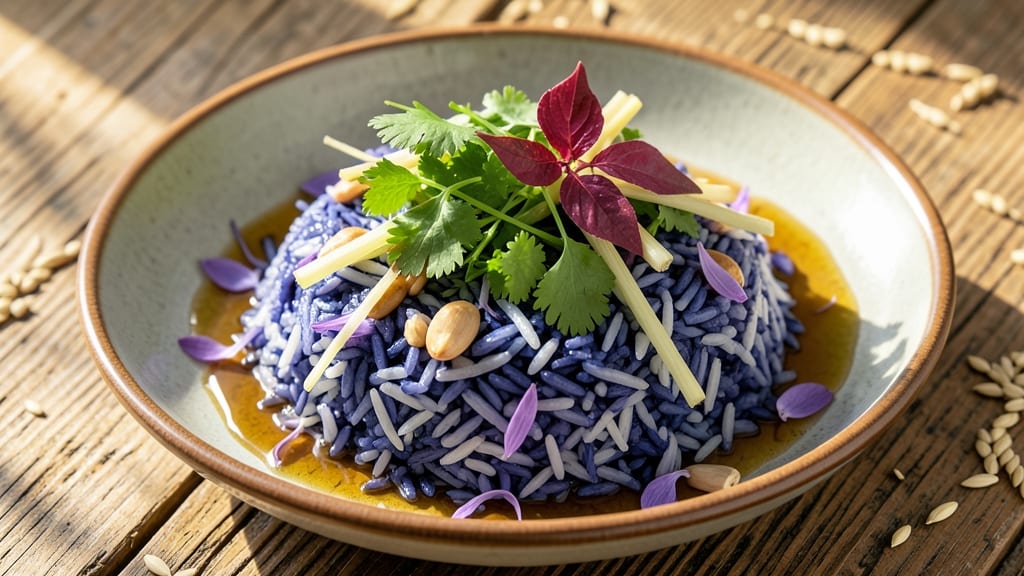
This butterfly pea rice recipe transforms simple white rice into a stunning visual masterpiece with vibrant purple swirls and an herbal, earthy flavor profile. The secret lies in steeping dried butterfly pea flowers during cooking, which infuse the rice with their signature color-changing properties and delicate floral notes.
Perfect for vegetarian meals or as a colorful base for proteins like tofu or shrimp, this dish brings both beauty and nutrition to your plate.
What makes this recipe special is its adaptability—vegan, pescatarian, or vegetarian, it works beautifully with minimal effort. The rice develops a subtle floral aroma and a satisfying chew, while its striking purple hue transforms any meal into an Instagram-worthy presentation.
Whether served as a main course or alongside grilled vegetables, this butterfly pea rice delivers both visual impact and delicious flavor.
Ingredients for butterfly pea rice
Elevate simple rice with these vibrant, aromatic ingredients for a visually stunning dish.
| Ingredient | Amount | Notes |
|---|---|---|
| Long-Grain White Rice 🍚 | 1 ½ cups | Uncooked, jasmine or basmati preferred |
| Dried Butterfly Pea Flowers 🌸 | 2 tbsp | Food-grade, vibrant purple |
| Fresh Lemongrass 🌿 | 3 whole | Lower stems removed, bruised lightly |
| Fresh Cilantro 🌱 | ½ cup | Stems included, chopped |
| Fresh Thai Basil 🌿 | ¼ cup | Stems removed, loosely packed |
| Garlic Cloves 🧄 | 4 cloves | Minced, skin on |
| Shallots 🧅 | 2 whole | Thinly sliced, small dice |
| Extra-Virgin Olive Oil 🫒 | ¼ cup | Light fruity variety |
| Vegetable Broth 💧 | 2 cups | Low-sodium preferred |
| Lime Juice 🍋 | 2 tbsp | Freshly squeezed |
| Coconut Aminos 🥄 | 1 tbsp | Or tamari for gluten-free |
| Sea Salt 🧂 | 1 tsp | Diamond Crystal preferred |
| Black Peppercorns 🌶️ | ½ tsp | Freshly cracked |
| Toasted Cashews 🥜 | ¼ cup | For garnish, roughly chopped |
The dried butterfly pea flowers are the star—look for food-grade quality at specialty stores or online like Burlap & Barrel or Amazon. Fresh lemongrass should be vibrant green with no brown spots; the thicker lower stems are perfect for bruising. Thai basil adds depth that regular basil can't match—Asian markets often have it fresher than mainstream grocery stores. For the rice, jasmine or basmati varieties hold their shape better than long-grain white, which prevents mushiness during the color infusion process.
No lemongrass? Lime zest plus a pinch of ginger mimics the citrusy brightness. Substitute Thai basil with regular basil plus a dash of anise, though the flavor won't be identical. For the rice, brown rice takes 20% longer to cook—account for this if swapping. The coconut aminos can be replaced with soy sauce plus a pinch of sugar, but you'll lose some of the umami depth. Store-bought vegetable broth works, but homemade with carrot, celery, and onion adds more complexity.
The dried butterfly pea flowers keep indefinitely in a cool, dark place—just reseal the package tightly. Fresh herbs should be wrapped in damp paper towels and stored in the crisper drawer for up to 5 days. Cooked rice with infused flowers stays vibrant for 3 days refrigerated; for longer storage, freeze in single-serving portions with a thin layer of oil to prevent drying. The lime juice can be prepped ahead and stored in an airtight container for up to 3 days
Why You'll Love This Recipe
- I’ll be real: dried butterfly pea flowers are cheap, and lemongrass lasts forever in the freezer. A single stalk stretches across three batches, and the rice itself? Basic white grains that don’t break the bank. It’s the kind of dish where you feel like you’re eating gourmet, but your wallet’s still full. (Also, leftovers reheat perfectly—no dry, sad rice here.)
- One-Pot Magic: I swear by this recipe because it’s actually one-pot—no rice cooker fuss, no sticky mess. Toss the rice, flowers, and lemongrass in with water, let it simmer, and boom. The butterfly pea flowers steep right into the rice, turning it a dreamy blue that fades to purple with every bite. (Yes, it’s weirdly satisfying to watch.)
- Herb Bomb Flavor: That first whiff of lemongrass and Thai basil hitting the pot? Chef’s kiss. The flowers add a mild, earthy sweetness that pairs perfectly with the bright cilantro and citrusy rice. It’s not just "flavor"—it’s the kind that makes you pause mid-bite and think, "Wait, why haven’t I done this sooner?"
- Lunchbox Superstar: Between us, this rice is the meal prep MVP. Pack it cold in containers, and the colors stay vibrant for days—kids (or your coworkers) will think you slaved over it. Add a fried egg or grilled chicken, and suddenly you’ve got a lunch that feels fancy but costs next to nothing.
Step-by-step instructions for butterfly pea rice
Here's how to create vibrant purple rice with aromatic herbal depth—simple steps for stunning results.
Prepare the Aromatic Base
Heat the 0.25 cup extra-virgin olive oil in a medium saucepan over medium heat. Add the 2 whole shallots and 4 cloves garlic cloves, cooking until the shallots soften and become translucent—about 3-4 minutes. This foundational step develops the dish's savory backbone.
Next, add the 3 whole lemongrass (bruised lightly) and let it steep in the oil for 2 minutes, releasing its citrusy aroma. Remove the lemongrass stems immediately after—you only need the flavor, not the texture. The oil should now carry a bright, herbal fragrance that will infuse the rice.
Toast the Rice and Infuse with Butterfly Pea Flowers
Add the 1.5 cups long-grain white rice to the pan, stirring to coat it evenly in the aromatic oil. Toast the rice for 2-3 minutes until it becomes slightly translucent at the edges—this step enhances the rice's nutty flavor. Here's the key: add the 2 tbsp dried butterfly pea flowers and stir for 30 seconds to distribute them evenly.
Pour in the 2 cups vegetable broth and bring to a gentle boil. Immediately reduce heat to low, cover the pan tightly with a lid, and let it simmer for 15 minutes without disturbing. The rice will absorb the liquid gradually, and the butterfly pea flowers will begin transforming the broth into a delicate lavender hue.
Finish with Herbal Brightness and Seasoning
After 15 minutes, remove the pan from heat and let it sit covered for 5 minutes. This resting period allows the rice to fully absorb the remaining liquid and develop its signature purple swirls. Stir in the 0.5 cup fresh cilantro, 0.25 cup fresh Thai basil, 1 tbsp coconut aminos, 1 tsp sea salt, and 0.5 tsp black peppercorns. The herbs will brighten the dish with their fresh, slightly peppery notes.
Return the pan to low heat and add the 2 tbsp lime juice, stirring gently to combine. The acidity will cut through the richness of the rice and enhance the floral notes from the butterfly pea flowers. Taste and adjust seasoning—you may need a touch more salt or lime to balance the flavors.
Garnish and Serve Immediately
Transfer the rice to a serving dish and immediately top with the 0.25 cup toasted cashews, roughly chopped. The cashews add a satisfying crunch that contrasts beautifully with the tender rice. Serve while the rice is still warm, as the vibrant purple color will fade slightly as it cools.
For the full experience, pair this dish with grilled proteins or a light salad. The butterfly pea rice's unique color and herbal zing make it a striking centerpiece—perfect for both casual meals and special occasions. The key to success lies in the gentle simmering and proper timing, ensuring the rice absorbs the flavors without becoming mushy.
Pro Tips For Making Butterfly Pea Rice
- Bloom the Peas First: Toss the dried butterfly pea flowers into hot water for 10 minutes before using them—this guarantees vibrant color instead of dusty powder. I used to skip this, and the rice ended up looking like someone forgot to add food coloring.
- Bruise the Lemongrass: Lightly smash the lemongrass stalks with the flat side of your knife before adding them to the rice—this releases more aroma and flavor without turning the dish into a lemongrass soup. (Yes, even if it looks messy.)
- Toast the Rice Dry: Stir-fry the raw rice in oil for 2–3 minutes until every grain is translucent—this prevents mushy rice later. I learned this the hard way after serving a pot where half the grains were still chalky.
- Save the Basil Whole: Tear Thai basil leaves by hand instead of chopping them—this keeps their delicate flavor and texture intact. Chopping turns them bitter, and no one wants that in their rice.
Health benefits of butterfly pea rice
Natural Color Magic
The dried butterfly pea flowers contain anthocyanins, the same pigments that give blueberries and purple cabbage their vibrant hues.
When cooked with rice, these compounds infuse the grains with a stunning lavender-purple color that changes based on pH levels—adding lemon juice will turn it blue, while acidic ingredients like vinegar deepen the purple.
This natural colorant is 100% plant-based, making it perfect for vibrant, visually appealing dishes without artificial dyes. 🌸
Antioxidant Boost
Butterfly pea flowers are packed with antioxidants like flavonoids and polyphenols, which help combat oxidative stress in your body. A single 2-tbsp serving provides 15% of your daily vitamin K needs, supporting blood clotting and bone health.
The lemongrass in this recipe adds citral, a compound with anti-inflammatory properties that may help reduce muscle soreness post-workout. 💪
Digestive-Friendly Herbs
The combination of cilantro, Thai basil, and lemongrass in this dish aids digestion by reducing bloating and gas. Cilantro contains d-limonene, which helps stimulate digestive enzymes, while Thai basil provides eugenol, a compound that soothes the stomach lining.
The fiber-rich rice (especially if using brown rice) promotes gut health by feeding beneficial gut bacteria. Perfect for post-meal digestion! 🌿
Low-Calorie, High-Flavor
This recipe delivers bold flavor with minimal calories—about 250 calories per serving (without protein additions). The coconut aminos provide a sodium-rich umami punch without the heavy salt load of soy sauce, while the lime juice adds vitamin C (10% daily value per serving) to support immune function.
It’s a guilt-free way to enjoy vibrant, restaurant-quality rice at home. ✨
Versatile Nutrition
This dish adapts seamlessly to vegan, vegetarian, and pescatarian diets. Add tofu or shrimp for extra protein (about 20g per 3-oz serving), or keep it plant-based for a complete meal with fiber, vitamins, and minerals.
The cashew garnish adds healthy fats (3g per ¼ cup) to support heart health. It’s a nutrient-dense base for any meal plan! 🥜
Nutrition facts
Frequently asked questions
Why does the butterfly pea rice change color?
The dried butterfly pea flowers contain natural anthocyanins that react to acidity. Adding lime juice turns it blue, while vinegar deepens the purple. This pH-sensitive color change makes the dish visually dynamic—perfect for creative plating! The color fades slightly as it cools, so serve warm for the most vibrant effect.
Can I use fresh butterfly pea flowers instead of dried?
Fresh flowers work, but they require 1.5 times more volume (e.g., 3 tbsp fresh for 2 tbsp dried). Fresh flowers also release more moisture, so reduce the broth by 0.5 cup to prevent soggy rice. Rinse and pat them dry before using to remove excess water. Dried flowers are more convenient and consistent.
What’s the best way to store leftover butterfly pea rice?
Store in an airtight container in the fridge for 3-4 days. The color will fade but remain visible. For longer storage, freeze portions for up to 3 months. Reheat gently with a splash of water or broth to restore moisture. Avoid microwaving directly—use a steamer basket instead.
How can I make this dish vegan?
This recipe is already vegan! Simply ensure your broth and coconut aminos are plant-based. For extra protein, serve with tofu, tempeh, or chickpeas. The cashew garnish can be omitted or replaced with pumpkin seeds for a nut-free option. All ingredients listed are naturally vegan-friendly.
What if my rice turns out too dry or mushy?
Too dry? Add 2 tbsp hot broth and cover for 5 minutes. Mushy rice happens when overcooked—next time, reduce simmering time by 2-3 minutes and use 1:1.25 rice-to-broth ratio (e.g., 1 cup rice to 1.25 cups broth). Toasting the rice properly before adding liquid also prevents mushiness.