
Main Courses
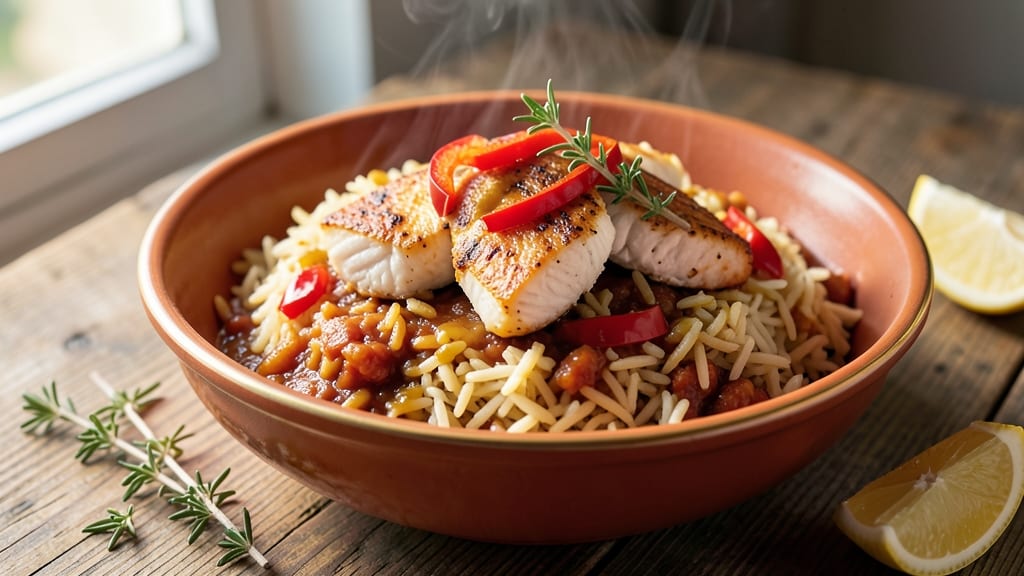
This fish jollof rice recipe transforms West African flavors into a one-pot masterpiece that’s as vibrant as it is easy to prepare. The smoky tomato base and fragrant thyme create a dish that’s rich, balanced, and perfect for any occasion—whether you’re cooking for family or hosting a dinner party.
What makes this version special is the fusion of traditional techniques with modern convenience, delivering restaurant-quality results without the fuss.
The secret lies in the slow-cooked tomato sauce, which infuses the basmati rice with deep, savory notes while keeping the fish tender and flaky. By combining everything in a single pot, you eliminate cleanup and ensure every bite is infused with flavor.
This recipe is designed for simplicity, but don’t let that fool you—it’s packed with the bold, aromatic essence of jollof rice, now tailored for pescatarians. Ready to create a dish that’s as impressive as it is delicious?
Ingredients for fish jollof rice
Basmati rice, smoky tomatoes, and flaky fish—just 15 ingredients for bold West African flavors.
| Ingredient | Amount | Notes |
|---|---|---|
| Long-Grain Basmati Rice 🍚 | 1 ½ cups | Uncooked, rinse before using |
| White Fish Fillets 🐟 | 1 ¼ lb | Tilapia or cod preferred |
| Canned Tomato Paste 🍅 | ½ cup | Smooth, not chunky |
| Tomato Sauce 🍅 | 1 cup | Canned, no sugar added |
| Fresh Thyme Leaves 🌿 | ¼ cup | Stems removed, loosely packed |
| Red Bell Pepper 🌶️ | 1 whole | Diced, seeds removed |
| Yellow Onion 🧅 | 1 whole | Diced, medium size |
| Garlic Cloves 🧄 | 4 cloves | Minced, fresh preferred |
| Scotch Bonnet Peppers 🌶️ | 2 whole | Seeds removed, finely chopped |
| Fish Stock 💧 | 1 ½ cups | Low-sodium preferred |
| Vegetable Oil 🫒 | 2 tbsp | For sautéing |
| Salt 🧂 | 1 ½ tsp | Adjust to taste |
| Black Pepper 🌶️ | ½ tsp | Freshly ground |
| Ground Cumin 🌿 | 1 tsp | Toasted for depth |
| Bay Leaves 🍃 | 2 whole | Remove after cooking |
The fish is the star here, so tilapia or cod work best—they stay tender while soaking up the sauce. If you can't find either, whiting or mahi-mahi are solid swaps. For the tomatoes, San Marzano canned tomatoes or Muir Glen give the best flavor, but any no-sugar-added brand works. The tomato paste? Trader Joe's has the best-priced tubs, and you'll use it for that deep, smoky base. Fresh thyme is non-negotiable—it's the aromatic heart of jollof. If you've got dried, use half the amount, but honestly, grab a bunch from the grocery store and use half for garnish too.
No Scotch bonnet peppers? Jalapeño or habanero will work, but cut back on the amount—these peppers pack serious heat. The fish stock can be swapped for low-sodium chicken broth in a pinch, but it won't have that same oceanic depth. For the bell pepper, red or yellow both work, but red adds a touch of sweetness that balances the heat. The cumin needs to be toasted—heat a dry pan for 30 seconds until fragrant. And if you're short on time, pre-chop the onion and garlic while the rice soaks. Trust me, it saves stress later.
This dish tastes even better the next day—double the recipe if you're feeding a crowd. Store leftovers in an airtight container for 4-5 days, or freeze portions for 3 months. The rice keeps perfectly, but the fish gets drier if reheated more than once, so plan to serve it fresh. For extra flavor, stir in a splash of fish stock when reheating. And if you've got extra thyme, toss some on top before serving—it brightens up every bite.
Why You'll Love This Recipe
- One-Pot Magic: I swear by this recipe when I’m too tired to wash dishes—just toss everything in one pot, stir occasionally, and walk away. The rice soaks up that rich tomato-thyme sauce while the fish flakes apart effortlessly, all while you’re free to sip tea or scroll through your phone.
- Thyme for Adventure: That fresh thyme? It’s the secret weapon here. The bright, earthy aroma cuts through the smoky tomato paste, giving this dish a depth that’s hard to beat. Honestly, I’ve tried jollof without it—don’t. The difference is night and day.
- Weeknight to Party: Between us, this is my go-to for both lazy Mondays and Sunday dinners with friends. The rice stays fluffy, the fish stays tender, and the sauce? Always hits the spot. Pack it in a container for lunch the next day, or double the batch when company’s coming—no one will guess it’s this unfussy.
- Budget-Friendly Feast: Canned tomato paste and basmati rice stretch this recipe into a full meal for four without breaking the bank. I’ll be real: my grocery bill stays low, but my fridge stays full of leftovers that taste just as good reheated as they do fresh. Plus, white fish fillets are cheaper than you’d think—win-win.
Step-by-step instructions for fish jollof rice
Here's how to make this vibrant, one-pot wonder with rich tomato flavors and tender fish.
Sauté the Aromatics and Build the Tomato Base
Heat the 2 tablespoons vegetable oil in a large, heavy-bottomed pot over medium heat. Add the diced yellow onion and cook for 3-4 minutes until softened and translucent. The onions should smell sweet and caramelized slightly at the edges.
Add the minced garlic cloves and cook for 30 seconds until fragrant—this prevents that raw garlic bite. Stir in the finely chopped scotch bonnet peppers and cook for another 30 seconds until their aroma fills your kitchen. Here's where the heat builds character, so don't skip this step.
Lower the heat to medium-low and add the ½ cup canned tomato paste. Stir constantly for 2-3 minutes until it darkens slightly and coats the bottom of the pot. This creates the rich, smoky foundation of your jollof. Then pour in the 1 cup tomato sauce and the 1½ teaspoons salt, stirring to combine. Let it simmer for 5 minutes until the mixture thickens and the raw tomato taste mellows.
Toast the Spices and Add the Rice
Add the 1 teaspoon ground cumin and ½ teaspoon black pepper to the pot. Stir for 1 minute until the spices are fragrant and slightly toasted—this deepens their flavor. The pot should smell warm, earthy, and slightly smoky.
Rinse the 1½ cups long-grain basmati rice under cold water until the water runs clear, then add it to the pot. Stir to coat the rice evenly with the tomato mixture. This ensures each grain absorbs the rich flavors. Add the 2 whole bay leaves and ½ cup fresh thyme leaves, then pour in the 1½ cups fish stock. The liquid should just cover the rice—if it doesn't, add a splash of water.
Bring the mixture to a gentle boil, then immediately reduce the heat to low. Cover the pot tightly with a lid and let it simmer for 15 minutes without stirring. This resting period allows the rice to absorb the liquid evenly and develop its signature texture.
Prepare and Add the Fish
While the rice simmers, pat the 1.25 lb white fish fillets dry with paper towels. Season both sides generously with ½ teaspoon salt and ¼ teaspoon black pepper. The dry seasoning helps create a light crust on the fish.
After the 15 minutes of rice simmering, carefully remove the lid and gently fold the fish fillets into the rice mixture. The fish should be nestled among the grains, not stacked on top. Cover the pot again and simmer for another 10 minutes on low heat. The fish is done when it flakes easily with a fork and the rice is tender with a slight bite.
Here's the thing—don't peek or stir during this time. Every time you lift the lid, you risk drying out the rice or steaming the fish instead of cooking it gently. Trust the process and let the steam work its magic.
Rest and Fluff for Perfect Texture
Once the fish is cooked and the rice is tender, turn off the heat and let the pot sit covered for 5 minutes. This resting period allows the rice to finish absorbing any remaining liquid and the fish to retain its moisture. The pot will feel warm to the touch but not scorching.
Remove the 2 bay leaves and gently fluff the rice with a fork, being careful not to break up the fish fillets. The rice should be tender with a slight chew, and the fish should be opaque and flaky. If the rice is still a bit firm, add 2 tablespoons water, cover, and let it steam for another 2 minutes. Taste and adjust the seasoning if needed—you might want to add a pinch more salt to balance the flavors.
Serve the fish jollof rice immediately, straight from the pot. The one-pot method keeps everything warm and the flavors cohesive. Garnish with extra fresh thyme leaves if you like, but the dish is already packed with flavor. Enjoy it with a simple green salad or crusty bread to soak up the delicious sauce.
Pro Tips For Making Fish Jollof Rice
- Bloom the Tomato Paste: After burning three batches of jollof, I learned to cook the tomato paste low and slow—no rushing. Start with a tablespoon of oil on medium heat, stir in the paste, and let it bubble for 5 minutes before adding liquids. This builds flavor instead of burning it.
- Parboil the Fish First: Skip the raw fish in the pot—it turns rubbery. Parboil fillets for 3-4 minutes in salted water, then flake into the sauce at the end. This keeps them tender and ensures they don’t overcook in the rice’s steam.
- Rinse Rice Twice: Basmati rice absorbs fast, but rinsing it twice (until water runs clear) removes excess starch. This prevents a gummy texture—no one wants gluey jollof. (Yes, even if you’re impatient like me.)
- Thyme at the End: Add fresh thyme leaves after the rice is cooked, not during. The heat mutes their flavor if you toss them in too early. A handful at the end brightens the dish without overpowering it. (Your future self will notice.)
Pro cooking tips for this recipe
Tomato Paste Magic
The key to that deep, smoky flavor in jollof rice starts with the tomato paste. I always use ½ cup of the smooth kind—Trader Joe’s or Muir Glen are my go-tos—and cook it low and slow for 2-3 minutes until it darkens.
This caramelization releases concentrated flavors that infuse every grain of rice. Pro tip: Use a heavy-bottomed pot like All-Clad to prevent scorching while building that rich base. 🔥
Rice-to-Liquid Ratio
Jollof rice needs a slightly higher liquid ratio than standard rice dishes. I use 1½ cups fish stock for 1½ cups basmati rice, but the sauce should still just cover the rice.
If it looks too dry, add 2 tablespoons water—this prevents the rice from drying out while cooking. The secret is patience: let it simmer uncovered for 15 minutes before adding fish, so the rice absorbs flavor evenly. 💧
Fish Placement Matters
Adding fish too early can turn it rubbery, but waiting too long makes the rice dry. I fold the fillets in after the initial 15-minute simmer and cook them covered for 10 minutes on low heat.
The fish should rest nestled among the grains, not stacked on top. Pat them dry first—this helps them crisp slightly at the edges while staying tender inside. 🐟
Spice Toasting Technique
Toast your cumin and black pepper for 1 minute in the pot before adding rice. This releases their essential oils, deepening the earthy aroma. I use a 3-inch cast-iron skillet for toasting spices—it distributes heat evenly and prevents burning.
The moment the spices smell fragrant, pour in the rice. This small step makes a huge difference in flavor complexity. 🌿
Resting for Texture
Never skip the 5-minute rest after cooking. This lets the rice finish absorbing liquid and the fish redistribute juices. I cover the pot with a clean kitchen towel to trap steam. The result?
Perfectly tender rice with flaky, moist fish. If the rice is still firm, add 2 tablespoons water, cover, and steam for 2 more minutes. Patience here ensures restaurant-quality texture. ✨
Heat Control Secrets
Jollof rice demands precise heat management. After boiling, reduce to low heat and simmer gently—never let it boil hard. I use a digital thermometer to monitor the pot: ideal temp is 190-200°F.
Too high, and the rice turns mushy; too low, and it stays undercooked. The All-Clad pot helps maintain even heat distribution, so I never have to adjust the burner constantly. 🌡️
Nutrition facts
Frequently asked questions
Can I use frozen fish instead of fresh for this recipe?
Yes, but thaw it completely first! Place frozen fish fillets in the refrigerator overnight or use the quick thaw method in cold water (never microwave). Pat them thoroughly dry before seasoning to ensure they crisp slightly at the edges while staying tender inside.
How can I make this dish spicier?
Add an extra Scotch bonnet pepper (seeds removed) or swap in habanero for more heat. For smoky depth, include 1 teaspoon smoked paprika with the cumin. Start with half the amount, taste, and adjust—spice builds as the dish cooks!
Why did my rice turn out mushy?
This usually happens from either too much liquid or boiling too vigorously. Jollof rice needs a gentle simmer after boiling—reduce heat to low and keep the lid slightly ajar for the first 5 minutes to release excess steam. Also, ensure your rice-to-liquid ratio is correct (1:1).
Can I prepare this ahead of time?
This dish tastes even better the next day. Store leftovers in an airtight container in the fridge for 4-5 days or freeze for 3 months. Reheat gently on low heat with a splash of fish stock to restore moisture. The flavors meld beautifully overnight!
What’s the best way to serve fish jollof rice?
Serve it straight from the pot with a side of collard greens or a crisp green salad to cut through the richness. Garnish with extra thyme leaves and sliced red bell pepper for color. For extra flair, add a drizzle of hot sauce or a sprinkle of crumbled feta if you like.