
Side Dishes
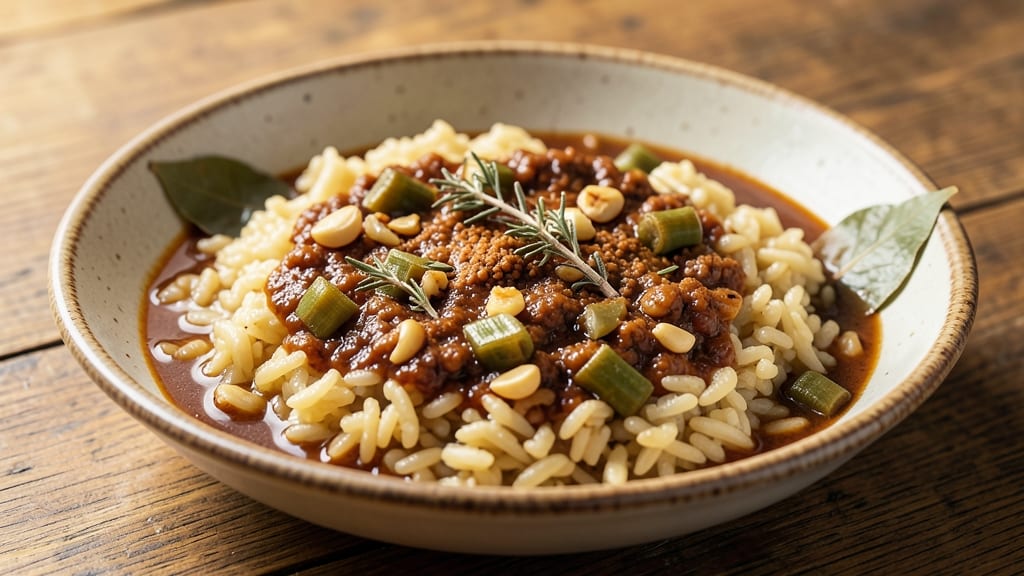
This gumbo rice recipe transforms simple long-grain rice into a fragrant, flavor-packed side that absorbs every layer of your gumbo's rich broth.
The secret lies in toasting the rice with aromatic spices—garlic, thyme, and bay leaves—before simmering it in the same broth used for the gumbo itself, creating a dish that's deeply connected to its Cajun roots.
I developed this method after years of perfecting the balance between texture and flavor, ensuring each grain remains distinct yet infused with the smoky, okra-rich essence of traditional gumbo.
The process begins with a dry toast of the rice and spices in a heavy pot, which builds a nutty foundation before adding the hot broth. This technique, rooted in Creole cooking traditions, ensures the rice doesn't turn mushy while absorbing the complex flavors of the gumbo.
With just 30 minutes of hands-off cooking time, you'll achieve perfectly separate grains that hold their shape yet remain tender enough to soak up every drop of that aromatic broth.
What you'll end up with is a golden, fragrant bed of rice that's far more than just a side—it's the heart of your gumbo meal.
The rice will be lightly caramelized at the edges, infused with the earthy notes of thyme and the subtle bitterness of okra, creating a dish that pairs perfectly with the main gumbo.
This is the kind of rice that makes your entire meal taste like a Sunday supper at a Louisiana roadside café.
For those short on time, a quick-cook version using instant rice still delivers impressive results, though with slightly less texture. The traditional method, however, is what truly captures the soul of gumbo rice—where every bite tells a story of slow-cooked spices and deep-rooted tradition.
Let's get started on creating this essential component of your gumbo feast.
Ingredients for gumbo rice
Simple rice, bold flavors—this is where gumbo magic happens.
| Ingredient | Amount | Notes |
|---|---|---|
| Long-Grain White Rice 🍚 | 2 cups | Uncooked, medium-grain preferred |
| Gumbo Broth 🍲 | 4 cups | Homemade or quality store-bought |
| Garlic Cloves 🧄 | 3 cloves | Fresh, minced for toasting |
| Dried Thyme 🌿 | 1 tsp | Or 1 tbsp fresh thyme leaves |
| Bay Leaves 🌿 | 2 whole | Dried, standard size |
| Onion Powder 🧅 | 1 tsp | Freshly ground preferred |
| Dried Okra 🥬 | ½ cup | Chopped into small pieces |
| Smoked Paprika 🌶️ | ½ tsp | For authentic smoky flavor |
| Salt 🧂 | 1 tsp | Kosher or sea salt |
| Black Pepper 🌶️ | ¼ tsp | Freshly ground preferred |
| Butter 🧈 | 2 tbsp | Unsalted, for toasting rice |
| Green Onions 🧅 | 2 whole | Sliced, for garnish |
The rice is the star here, so grab long-grain white rice—it holds its shape better than basmati or jasmine. Trader Joe's or Whole Foodsvibrant green pods—the fresher, the better. The butter matters for that initial toast—use unsalted so you control the seasoning. And don't skip the bay leaves; they're key for that classic gumbo depth. I always grab extra thyme because it's used in both the rice and the gumbo itself.
No dried okra? Fresh okra works too—just chop it finely and use half the amount. Short on butter? Olive oil works fine, though it won't give that same rich toast. Fresh thyme is ideal, but dried at one-third the amount gets you close. The gumbo broth can be store-bought (I like Tony Chachere's for convenience), but homemade is where the flavor really shines. Want extra smokiness? Add a pinch of liquid smoke to the broth. And if you're using instant rice, cut the cooking time by half—but you'll miss that beautiful toasted texture.
This rice keeps beautifully—3-4 days in the fridge, 3 months frozen. I always make extra because it reheats perfectly and tastes even better the next day. Store in an airtight container with a tight lid to keep those flavors locked in. For serving, I sprinkle the green onions on top right before eating—freshness matters. And trust me, the first bite after reheating is worth the wait.
Why You'll Love This Recipe
- No Chopping Needed: I swear by this—just measure, pour, and let the gumbo broth do the work. That garlic and thyme? They infuse the rice while you’re busy stirring the pot or setting the table.
- Deep, Savory Magic: The gumbo broth turns this rice into something richer than plain white rice ever could. That bay leaf and thyme combo? It’s like a warm hug in every bite—earthy, herbal, and just a little smoky.
- Leftover Goldmine: This rice reheats like a dream. Toss it with last night’s roasted chicken or a fried egg for breakfast—it’s my lazy Sunday go-to. Honestly, I make double portions just for this.
- Budget-Friendly Staple: Long-grain rice and broth are cheap, but they feel fancy. A few cloves of garlic and dried herbs stretch this dish into a full meal without breaking the bank. My wallet and my taste buds thank me.
Step-by-step instructions for gumbo rice
Here's how to build rich, flavorful gumbo rice with deep-roasted spices and okra.
Toast the Spices and Okra for Maximum Flavor
Heat the 2 tablespoons butter in a heavy-bottomed pot over medium heat. Add the 3 cloves minced garlic, 1 teaspoon onion powder, ½ teaspoon smoked paprika, 1 teaspoon dried thyme, and ½ cup chopped dried okra. Stir constantly for 3-4 minutes until the spices become fragrant and the okra begins to darken slightly.
This step is crucial—it develops the deep, toasty base that defines gumbo rice. You'll notice the okra softens slightly and releases its earthy aroma. If the butter starts to brown too quickly, reduce the heat slightly to prevent burning. The spices should smell warm and inviting, like a Louisiana kitchen in summer.
Add the Rice and Toast Until Translucent
Increase the heat to medium-high and add the 2 cups long-grain white rice, stirring to coat each grain with the spice mixture. Toast the rice for 2-3 minutes, stirring frequently, until the grains become slightly translucent at the edges. This step ensures each bite has that signature nutty depth.
Here's the thing—don't walk away. You want the rice to develop a faint golden tint before adding liquid. If you see the rice sticking to the pot, add a splash of water to help release it. The goal is even browning, not burning. Once the rice is toasted, it's ready for the broth.
Pour in the Gumbo Broth and Season
Add the 4 cups gumbo broth, 1 teaspoon salt, and ¼ teaspoon black pepper to the pot. Stir gently to combine, then add the 2 whole bay leaves. Bring the mixture to a gentle boil, then immediately reduce heat to low. The broth should simmer steadily—you'll see small bubbles breaking the surface, but not a rolling boil.
This is where patience pays off. Let the rice simmer uncovered for 20 minutes, stirring gently once or twice. You'll notice the liquid level drops as the rice absorbs the broth. The rice should be tender but still have a slight bite—it'll finish cooking during the resting period. If the rice looks dry before the 20 minutes are up, add a splash of hot water.
Rest and Fluff for Perfect Texture
Once the rice is tender, remove the pot from heat and let it rest, covered, for 10 minutes. This resting period allows the steam to redistribute and the rice to finish absorbing any remaining liquid. During this time, you'll hear the rice give off a satisfying "sizzle" as residual moisture cooks off.
After resting, fluff the rice gently with a fork, being careful not to mash the grains. Remove and discard the bay leaves. The finished rice should be tender with a slight chew, and each grain should be distinct. If you taste it now, you'll notice the deep, smoky flavor from the toasted spices and the subtle okra richness—this is the hallmark of great gumbo rice.
Garnish and Serve Immediately
Transfer the rice to a serving dish and sprinkle with the 2 sliced green onions. The bright green color contrasts beautifully with the deep brown rice, adding both visual appeal and a fresh finish. Serve the gumbo rice immediately alongside your gumbo—it's best enjoyed while still warm, with those flavors fully developed and ready to pair with every spoonful.
Don't skip the garnish. The green onions add a bright, fresh note that cuts through the richness of the gumbo. This is the moment that matters: when the rice meets the gumbo, creating that perfect balance of textures and flavors that makes gumbo rice unforgettable.
Pro Tips For Making Gumbo Rice
- TOAST THE RICE FIRST: Heat your dry long-grain rice in a dry pot over medium heat for 2-3 minutes until it smells nutty and the edges turn slightly translucent. I learned this the hard way—skipping this step means your rice will either turn mushy or stay crunchy instead of achieving that perfect, fluffy texture that soaks up the gumbo broth like a sponge.
- MINCE THAT GARLIC: Don’t just chop your garlic cloves—smash them with the flat side of your knife first, then mince into a fine paste. This releases more flavor into the broth without burning, and it blends seamlessly into the rice instead of sitting as visible chunks. (Yes, even if you’re impatient like me, take the extra 30 seconds.)
- USE TWO BAY LEAVES: Tear one bay leaf in half before adding it to the broth—this guarantees the aromatic oils infuse evenly instead of floating on top like a sad, underused leaf. Discard them before serving; no one wants to chew on a leaf while eating their rice.
- SIMMER, DON’T BOIL: Once you add the rice to the broth, reduce the heat to a bare simmer—just enough to see tiny bubbles at the edges, not a rolling boil. I used to let it boil hard, and the rice would either stick to the pot or turn gluey. A gentle simmer keeps the grains intact and lets the broth work its magic. (Your future self will thank you.)
Best sauces and condiments for this dish
Smoky Okra Butter
This rich, aromatic butter base is the foundation of gumbo rice flavor. I start by melting 2 tablespoons unsalted butter in a heavy pot over medium heat, then add ½ cup chopped dried okra and toast until it darkens slightly—about 3-4 minutes.
The okra releases its signature earthy flavor while developing a subtle caramelized depth. For extra smokiness, add ½ teaspoon smoked paprika at this stage. This butter mixture becomes the flavor anchor that infuses every grain of rice. 🌶️
Thyme-Infused Broth
The secret to restaurant-quality gumbo rice lies in the broth. After toasting the rice, I pour in 4 cups hot gumbo broth and stir in 1 teaspoon dried thyme and 2 whole bay leaves.
The thyme's piney aroma and the bay leaves' floral notes meld perfectly with the okra's earthiness. For an extra layer, I sometimes add 1 teaspoon fish sauce (if using seafood gumbo) or ½ teaspoon Worcestershire sauce (for meat-based versions).
This infusion creates a complex flavor profile that transforms simple rice into a flavor powerhouse.
Garlic-Onion Base
Don't underestimate the impact of a well-toasted garlic-onion mixture. I always start by cooking 3 minced garlic cloves and 1 teaspoon onion powder in the butter until fragrant—this builds a sweet, savory foundation. The onion powder adds depth without needing fresh onions, and the garlic provides that essential umami kick.
For an extra punch, I sometimes add ½ teaspoon onion granules to intensify the flavor. This aromatic base ensures every bite of rice carries that classic gumbo flavor.
Hot Sauce Finish
For those who love heat, a final touch of hot sauce elevates the dish. After the rice is cooked, I stir in 1 teaspoon Crystal Hot Sauce or Louisiana-style Tabasco to balance the richness. The acidity cuts through the butter and okra, creating a perfect contrast.
For a milder option, try ½ teaspoon hot honey—it adds sweetness and just a hint of spice. This finishing touch is optional but makes the rice truly unforgettable.
Creamy Sour Cream Swirl
To add a luxurious texture, I sometimes finish the rice with a swirl of sour cream. After removing the pot from heat, I gently fold in 2 tablespoons sour cream using a wooden spoon. The cool creaminess contrasts beautifully with the warm, spiced rice.
For a dairy-free option, use coconut yogurt or cashew cream. This addition turns the rice into a creamy, satisfying side that pairs perfectly with hearty gumbo.
Nutrition facts
Frequently asked questions about gumbo rice
Why does gumbo rice need to be toasted before cooking?
Toasting the rice and spices in butter develops a nutty, aromatic base that traditional gumbo rice needs. This step creates depth of flavor by caramelizing the spices and okra, giving each grain a rich, toasty foundation. Without toasting, the rice would lack that signature smoky, earthy complexity that makes it so special.
Can I use instant rice for gumbo rice?
Yes, but with adjustments! Use 1 cup instant rice with 1½ cups broth and reduce cooking time to 5-7 minutes after adding liquid. The texture will be softer, but it still absorbs the broth beautifully. For best results, toast the spices and okra first—this adds flavor even to quick versions.
What's the best way to store leftover gumbo rice?
Store in an airtight container in the fridge for 3-4 days or freeze for 3 months. Reheat gently with a splash of broth or water to restore moisture. The flavors actually deepen overnight, making it perfect for leftovers. Just avoid microwaving—stovetop reheating preserves the texture better.
How do I make gumbo rice without okra?
Replace the okra with ½ cup finely chopped mushrooms or 1 teaspoon okra powder (found in specialty stores). Mushrooms add earthiness while okra powder captures the same umami punch. The key is maintaining that deep, savory flavor—just adjust the amount to taste.
Why does my gumbo rice turn out mushy?
Mushy rice usually means either too much liquid or not enough resting time. Use a 2:1 broth-to-rice ratio (4 cups broth for 2 cups rice) and let it rest 10 minutes after cooking. Also, avoid stirring too much while simmering—this breaks the grains. A heavy pot helps prevent sticking too.